Condors, Flamingos, and the Diversity of the Southern Andes
Patagonia is one of the world’s great birdwatching destinations—not because it has the highest species count (hello, Colombia), but because it has species found nowhere else, distributed across landscapes that produce extraordinary viewing conditions. Open steppe, temperate rainforest, glacial lakes, southern ocean coasts, and Andean peaks: each habitat contributes a distinct array of birds. LANDED designs custom-tailored itineraries that move between these biomes.
The Condor
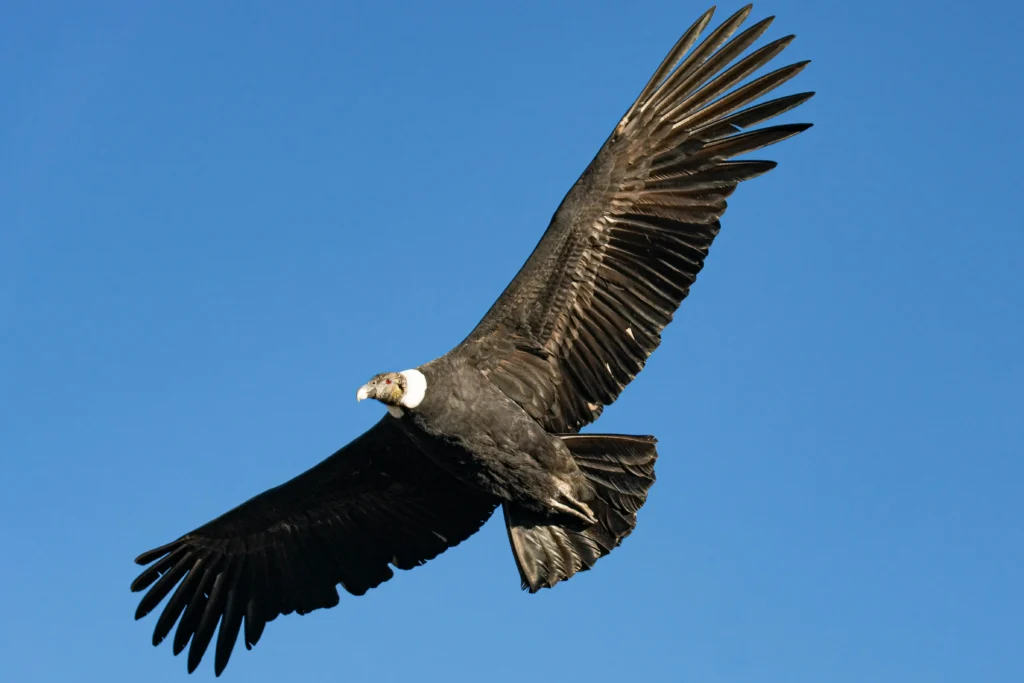
The Andean condor is the keystone species for Patagonian birdwatching; seeing one is a transformative experience. Condors are found throughout the Andes, from the Colombian highlands to Tierra del Fuego. In some parts of Peru and Colombia, crowds gather in the hope of observing one or two. In Torres del Paine, you can reliably see groups of three or more every day throughout the park. (Our record is a group of 15 on the road between Cerro Castillo and Puerto Natales.)
LANDED guides know the thermals and the roosting sites. On a good morning, with clear air and warming slopes, multiple condors are visible simultaneously.
Species by Habitat
The Patagonian steppe, which covers most of Argentine Patagonia east of the Andes, is home to the greater rhea, a six-foot, flightless bird running across the open grassland on legs that have no interest in the elegance of flight, and the lesser rhea, its smaller cousin in the upland puna. The burrowing owl watches from fence posts. Darwin’s rhea, the Patagonian tinamou, and the pichi (a small armadillo that birders incidentally enjoy) populate the same habitat.
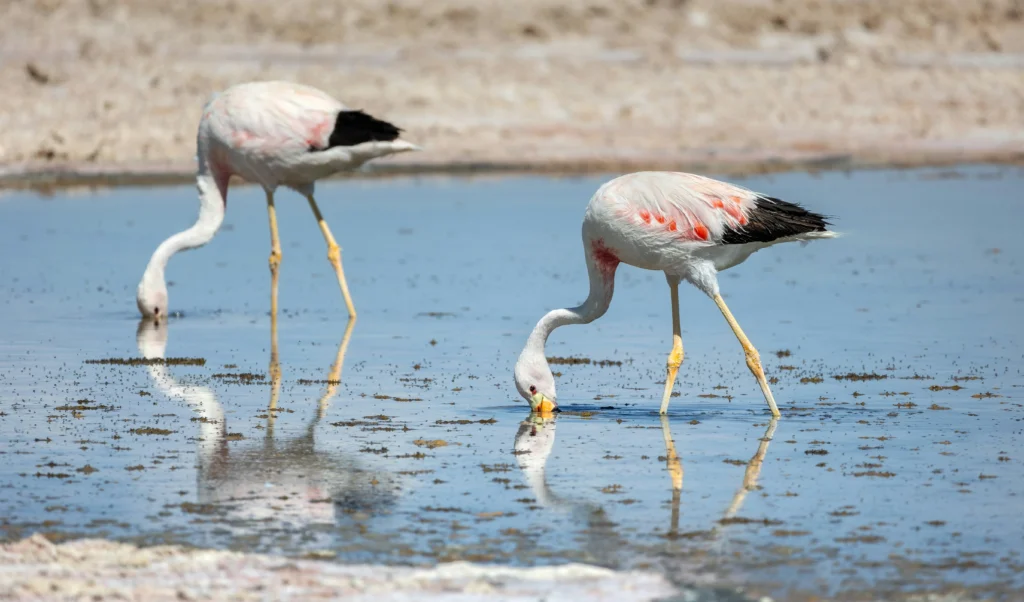
The Andean wetlands and high-altitude lakes produce three flamingo species: Andean, Chilean, and James’s in concentrations that can number in the tens of thousands at Laguna Colorada in Bolivia and remain substantial at the Atacama salt lakes and the puna lakes of Argentine Jujuy. The Chilean flamingo is also present in Torres del Paine and the Carretera Austral region.
The temperate rainforest of the Lake District and Chiloé holds the Magellanic woodpecker, the size and weight of a small crow, with a crimson head that the birder who sees it for the first time will spend an unreasonable amount of time photographing. The chucao tapaculo and its voice (a series of accelerating barks) is heard before it is seen, which is almost always.
Peninsula Valdés and the Coastal Patagonia
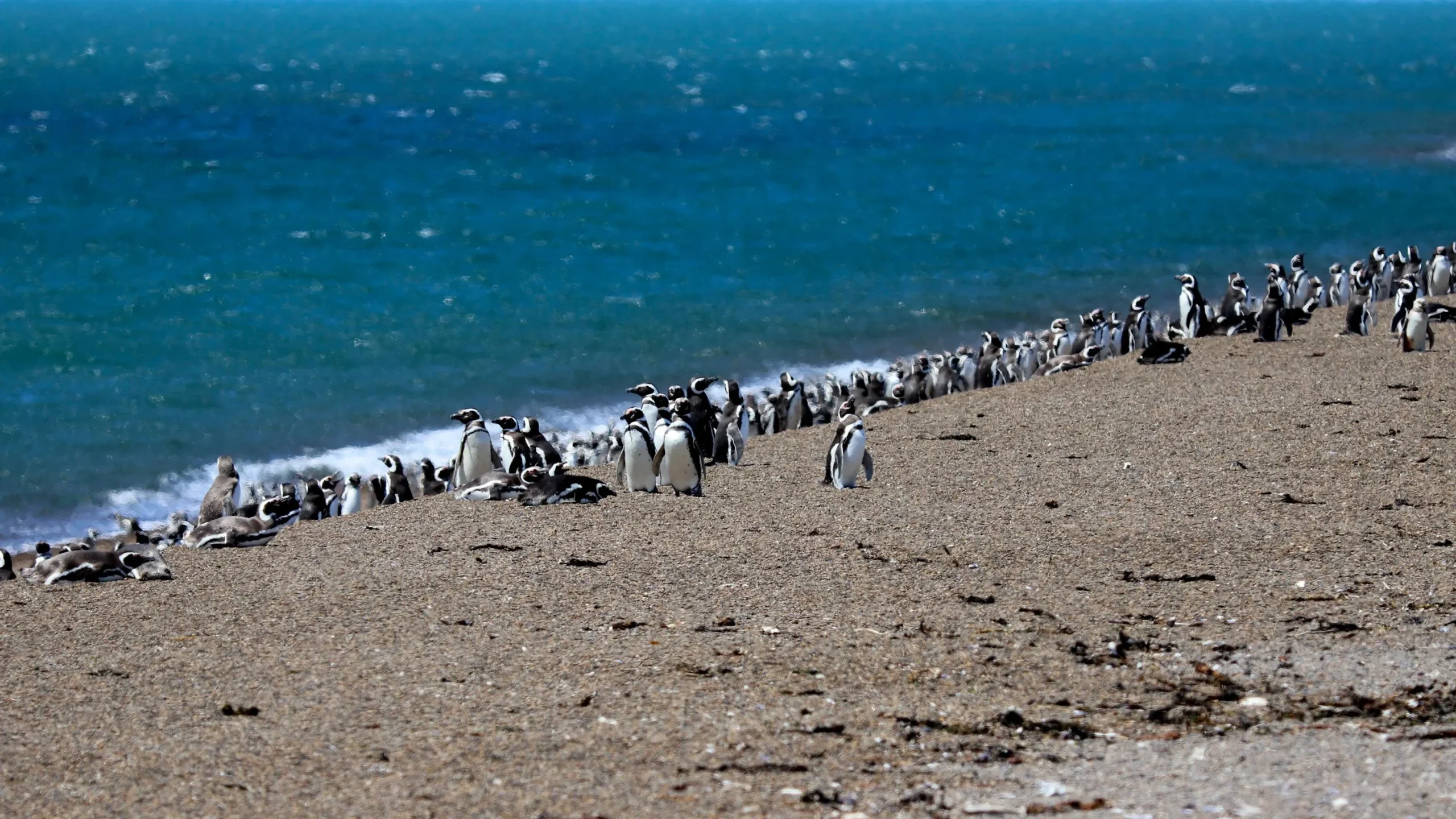
The Atlantic coast of Argentine Patagonia is home to the world’s largest Magellanic penguin colony at Punta Tombo, two hours south of Trelew, where between half a million and a million penguins nest annually between September and April. Peninsula Valdés, the UNESCO World Heritage Site three hours north of Trelew, combines penguins with elephant seals, southern right whales, and shore birds in densities that justify a dedicated two-night stay.
Planning a Birding Itinerary
LANDED designs dedicated birdwatching programs in Patagonia, working with specialist guides in each region. A well-designed ten-day itinerary can combine the steppe species of Argentine Patagonia, the forest birds of the Lake District, the coastal concentrations of Peninsula Valdés, and the Andean species of Torres del Paine — each transition producing a list reset and a new set of targets.
“In this harsh environment, it is humbling to such seemingly delicate creatures living wild. How does the White-crested Elaenia make a life and raise young here in the wind and cold? Those small birds have inspiring grit.” – John Montgomery, Co-Founder of LANDED
“The condor is a living symbol of the Andes, master of the peaks, where the spirit of the ancient mountains resides.” – Mario Vargas Llosa
Request a private consultation with a LANDED travel designer to plan a Patagonia birdwatching itinerary.