
This is a guide to the wildlife you can encounter in the Galapagos Islands. It is, necessarily, incomplete. The Galapagos contains many more species than are listed here.
Which species live on which Galapagos Islands? We answer your question on: The Galapagos Islands and Species.
Why the Galapagos Is Different
The Galapagos Islands have been isolated from the South American mainland for millions of years. Their colonizing species—carried here by wind, current, and chance—evolved in the absence of terrestrial predators. The result is an animal kingdom that does not fear humans. This condition must be experienced in person to fully appreciate. It’s what we imagine when we think of Eden.
The Galapagos Islands sits at the confluence of three ocean currents—the Humboldt, the Cromwell, and the Panama—creating marine conditions that support extraordinary biodiversity, including species found nowhere else on earth.
The Birds
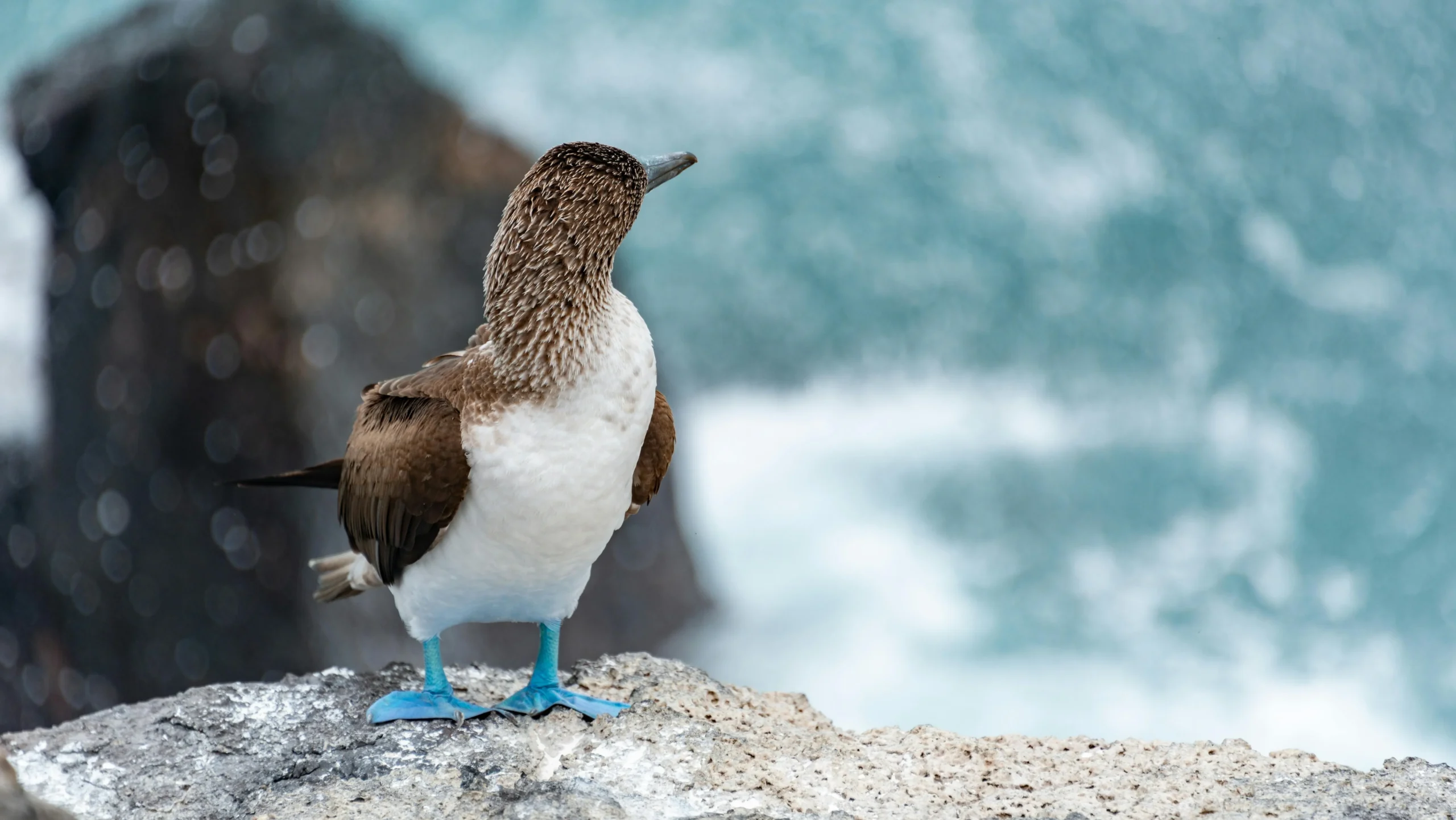
Blue-Footed Booby (Sula nebouxii excisa)
The blue feet signal of reproductive fitness; the more vivid the blue, the healthier the bird. Males display those feet at every opportunity, and during breeding season the sky fills with their headlong plunge-dives into the sea, a sound like a series of small explosions. Occasionally, you’ll find individuals whose feet are more green than blue. These birds fish by dive-bombing—arrowing into the ocean en masse. Their skulls are designed to absorb that impact while protecting the brain. Easily seen on Española, Isabela, and North Seymour.
Waved Albatross (Phoebastria irrorata)
With a wingspan reaching 8 feet, the waved albatross is the largest bird in the Galapagos. During courtship, pairs perform an extraordinary dance: bill-clacking, sky-pointing, waddling bows, and a full-body shiver. They are found almost exclusively on Española Island, where they nest from April through December. The sound of a large albatross colony—the continuous clacking and calling—carries on the wind from half a mile away.
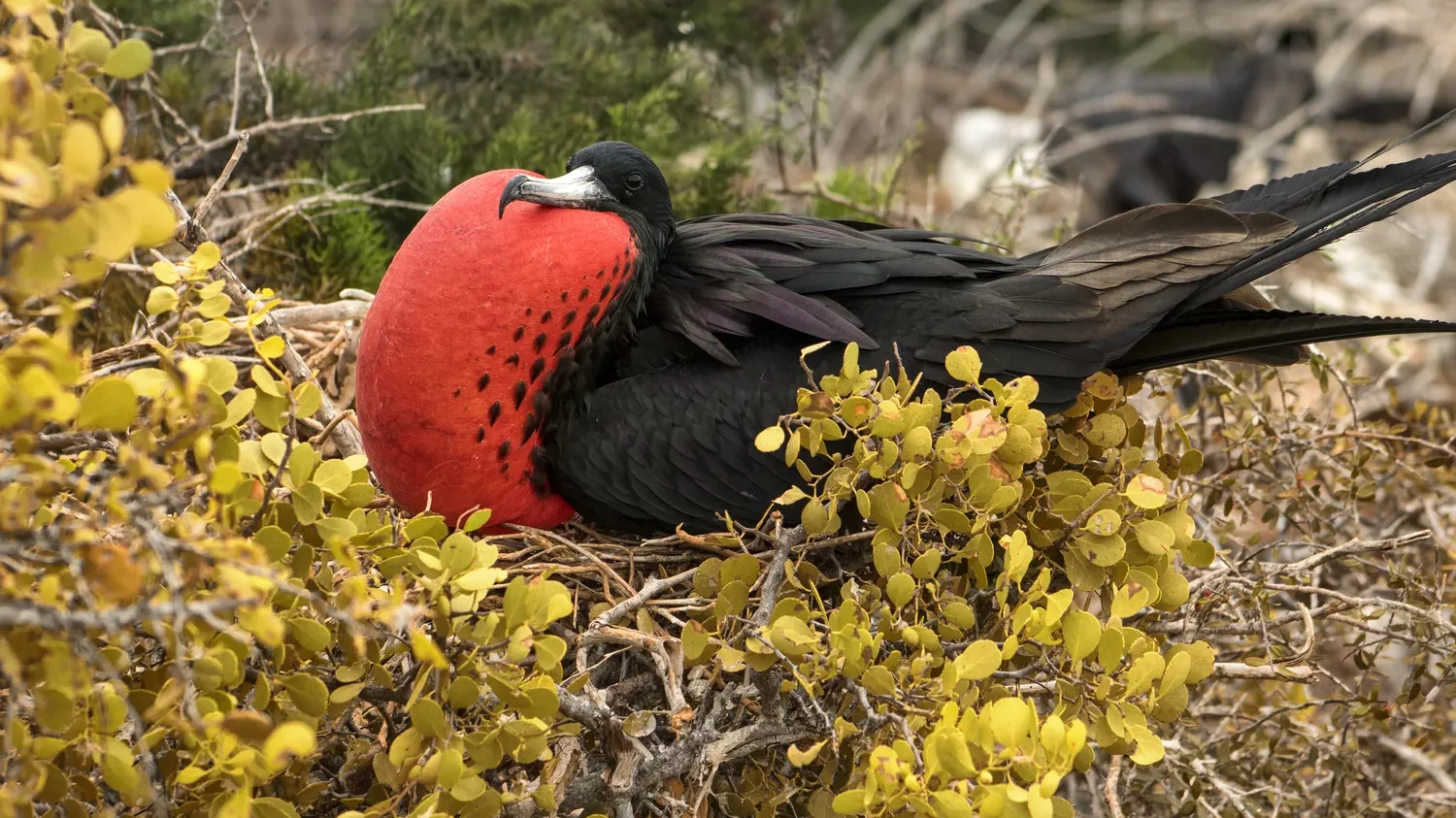
Magnificent Frigatebird (Fregata magnificens)
The males inflate their scarlet gular pouches to the size of a small balloon during breeding season, hanging from the scrubby bushes while the glossy black females circle overhead. North Seymour Island holds one of the largest frigatebird colonies in the Galapagos.
Galapagos Penguin (Spheniscus mendiculus)
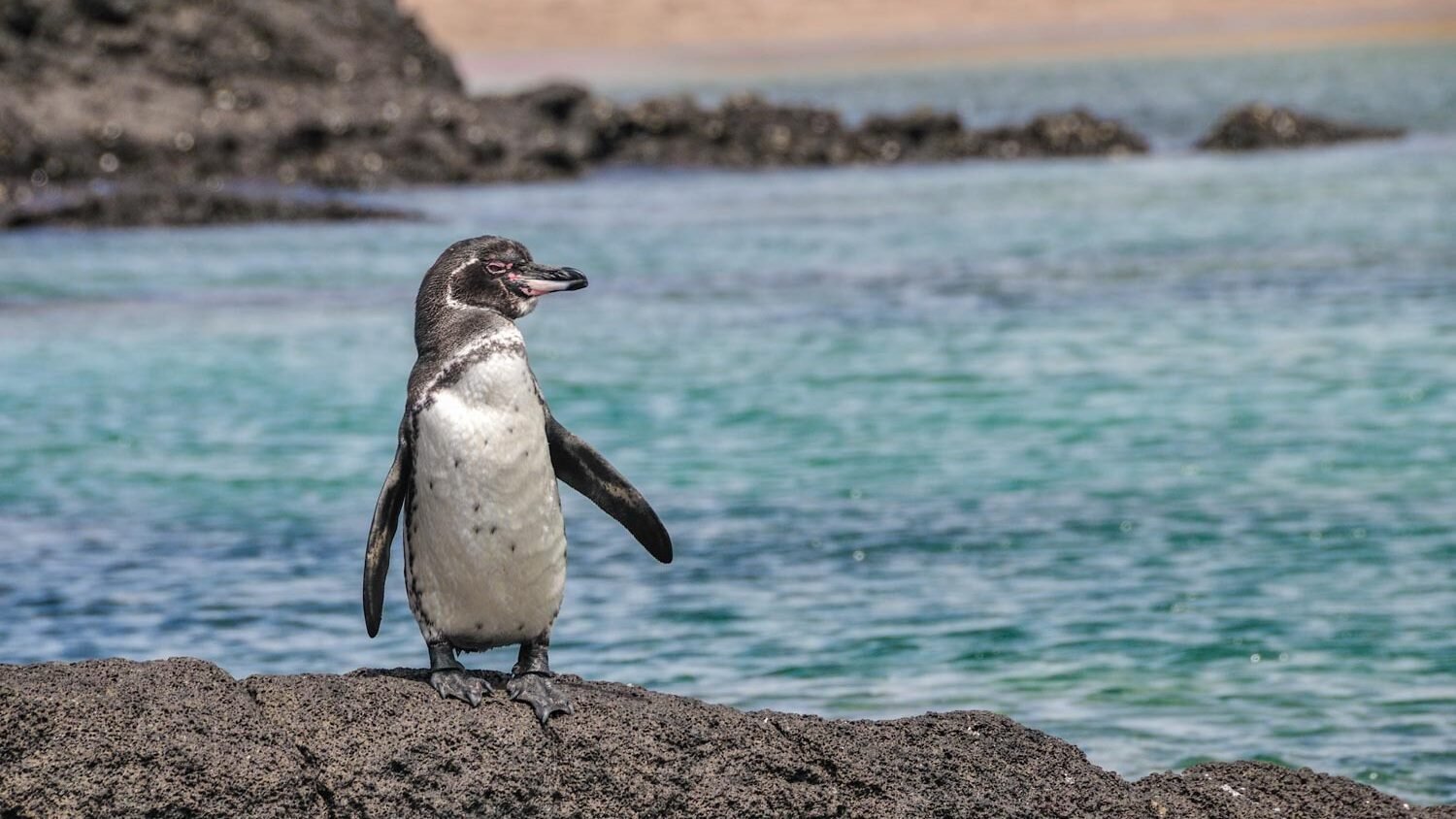
The only penguin that breeds north of the equator. They are small—the third-smallest penguin species in the world—and they prefer the cooler waters of the western islands, particularly around Fernandina and the western coast of Isabela, but also at Bartolome. Snorkeling alongside them is a highlight.
Galapagos Flamingo
Found in brackish lagoons on several islands—Floreana, Isabela, Rábida—flamingos feed in the shallows with an inverted sweeping motion, their bills filtering brine shrimp and algae. The pink deepens with diet. On Rábida, the rust-red beach, the crimson palo santo trunks, and the pink flamingos in the lagoon create an otherworldly color combination.
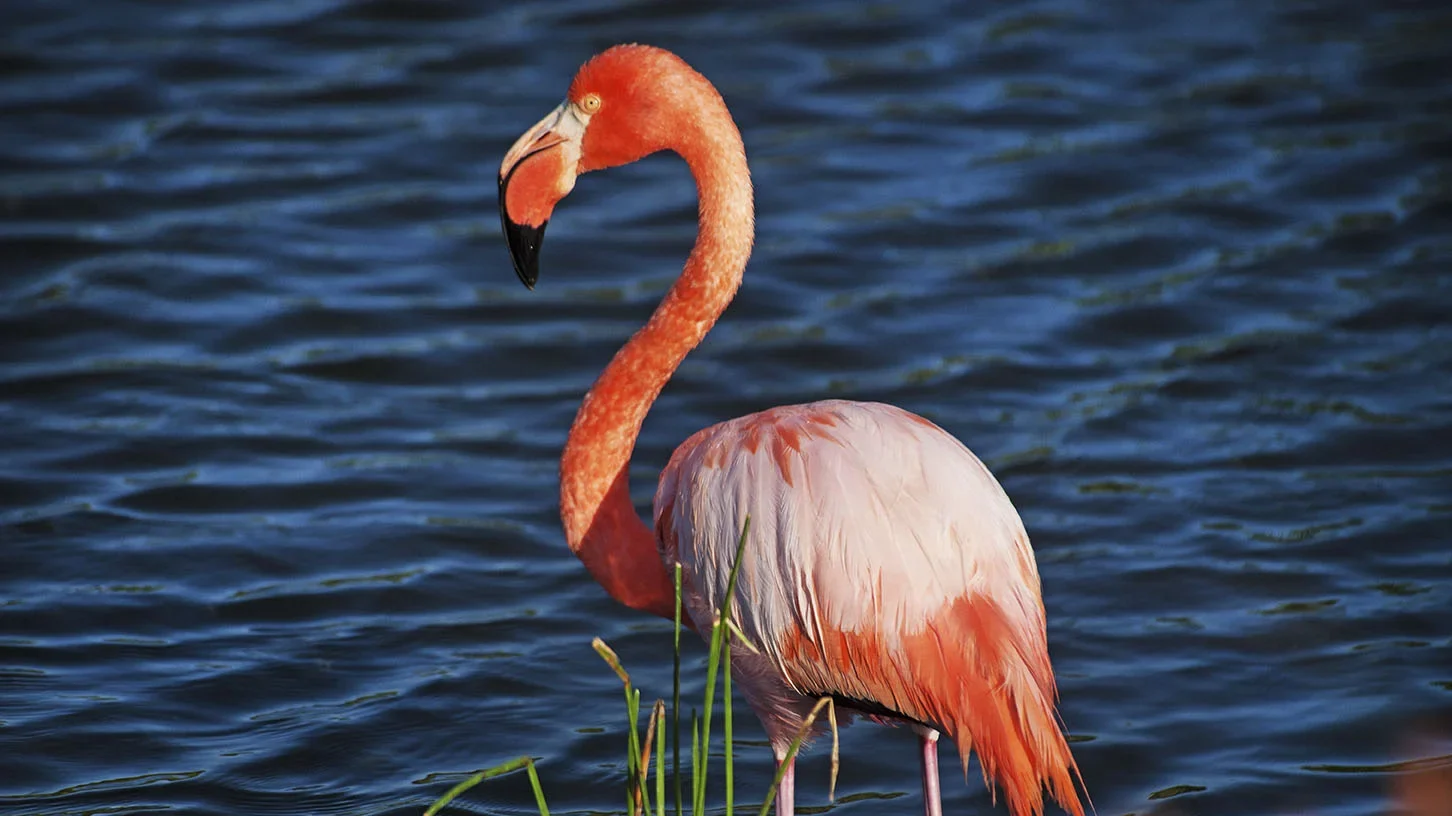
“It is still the most fantastic wildlife place on earth, bar none. Incredibly, every other week I still see and capture behaviors and events I had never seen before — such is the richness of this near-pristine archipelago.” – Tui De Roy
Galapagos Marine Life
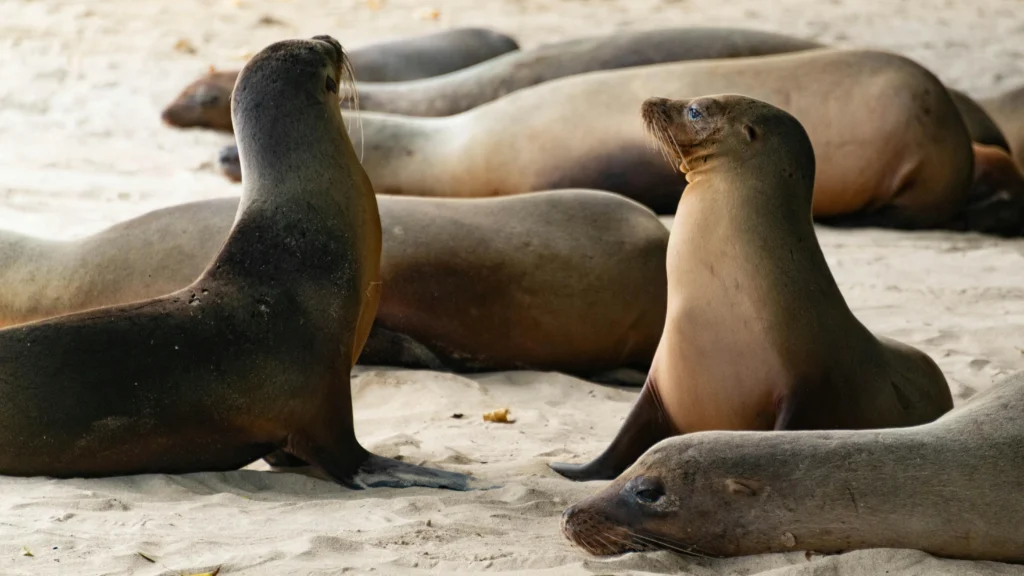
Galapagos Sea Lion (Zalophus wollebaeki)
The social stars of many Galapagos beaches. Sea lions bark, nurse pups, haul out on any available surface. In the water, they are fluid, fast, playful, given to swimming right up to your snorkel mask. The Golden Retrievers of the Galapagos.
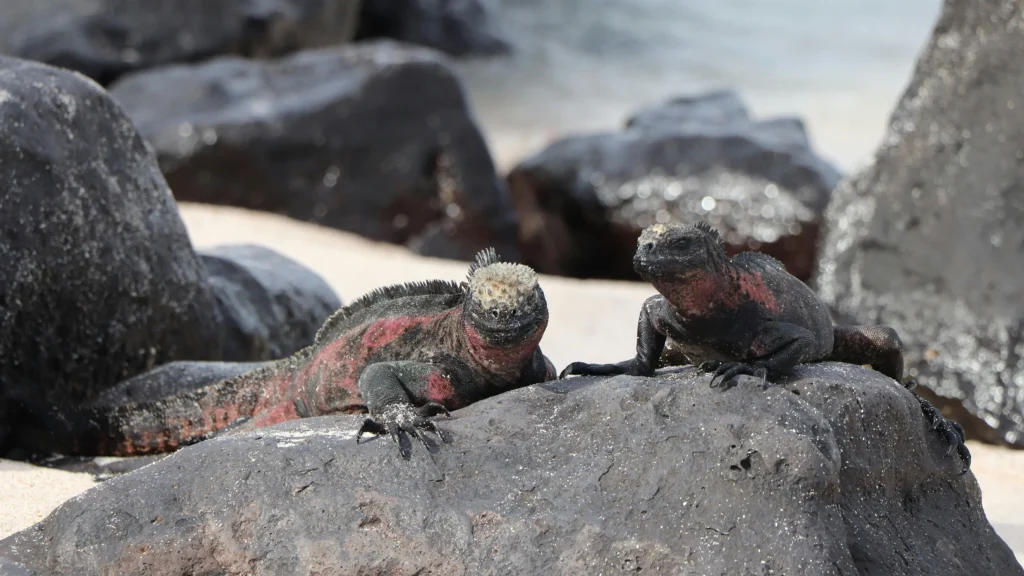
Marine Iguana (Amblyrhynchus cristatus)
The only marine lizard in the world. The model for Godzilla. They warm themselves on the lava in vast communal heaps, occasionally sneezing salt through special glands in their nostrils. Their black and grey scales absorb the heat of the volcanic rock; on Española, during breeding season, the males flush green and red. They dive to feed on algae on the ocean floor, holding their breath for up to ten minutes in water cold enough to drop their body temperature dangerously, trusting the sun to restore them.
Galapagos Shark and Hammerhead
The clear blue water of the outer islands—particularly Kicker Rock, Darwin Island, and Wolf Island—holds opportunities for dramatic shark encounters. Hammerhead sharks congregate in schools of hundreds at Darwin and Wolf between June and November, but you can also see them at the islands near Santa Cruz. They circle in slow spirals in the blue.
Galapagos sharks, whitetip reef sharks, and occasional whale sharks appear with regularity. The light underwater at these sites, filtered through blue and silver, is unlike anything above the surface.
Galapagos Terrestrial Wildlife
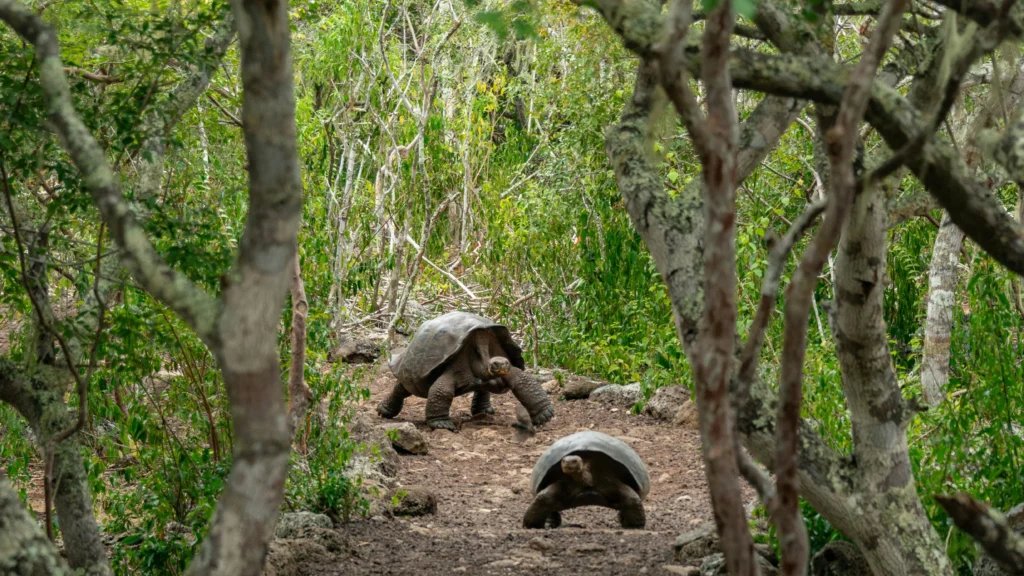
Galapagos Giant Tortoise (Chelonoidis spp.)
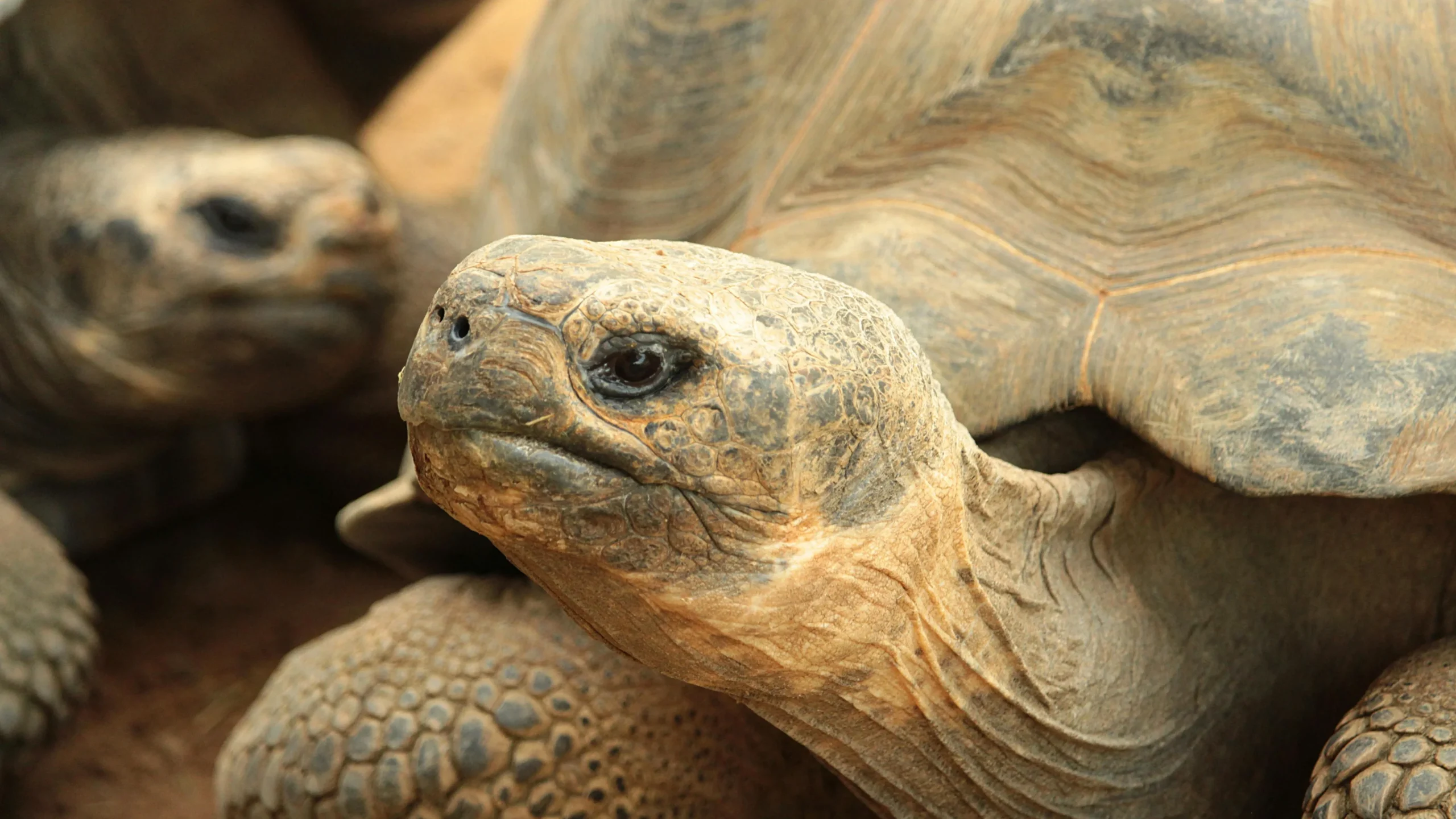
Fifteen species of Galapagos giant tortoise exist, distributed across the different islands—each shaped, over millions of years, by the particular food sources of their island. They can weigh more than 850 pounds and live more than 170 years.
In the highland tortoise areas of Santa Cruz and San Cristóbal, you can encounter them at close range. They move through tall grass with deliberate, prehistoric patience. For young children, it’s like encountering a dinosaur. For anyone, it’s magical.
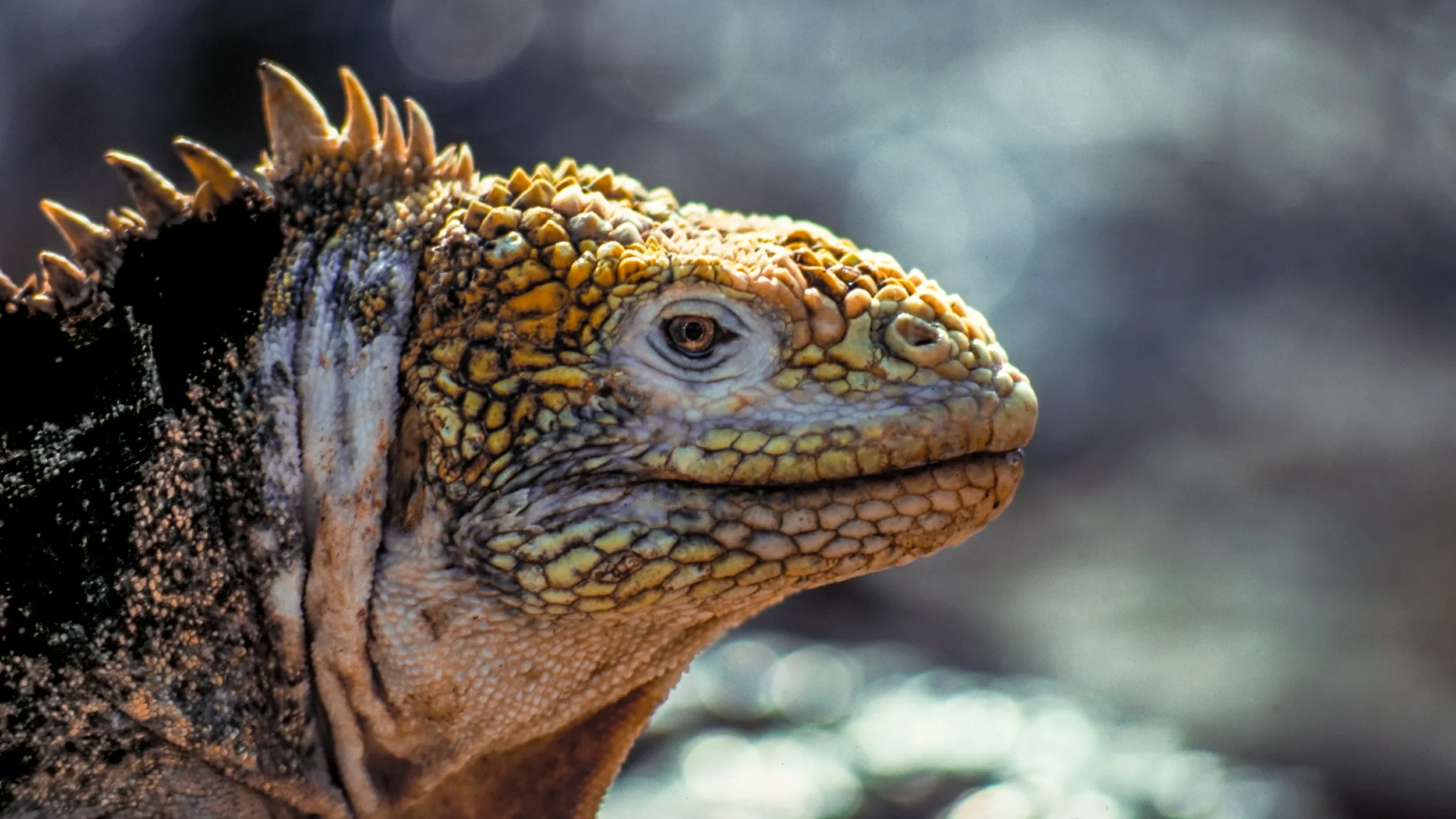
Land Iguana (Conolophus spp.)
The yellow land iguanas sit in the shade of prickly pear cacti, occasionally eating entire pads spine and all. They are one of the few animals that appear to notice the visitor—not in fear, but with a calm, assessing intelligence that feels oddly mutual. You’ll find them on many islands, including Baltra and South Plaza.
“The trip was a huge success. Galapagos was perfect, and Peru was great–not easy for a family of 20. Your on-the-ground team was fantastic–very knowledgeable and accommodating. It was beautifully organized–the trip of a lifetime. A wonderful introduction to countries you love, and now we know why!” – Judy Cormier, LANDED Traveler
When to See What
Wildlife in the Galapagos is present year-round, but specific highlights align with the calendar. Waved albatrosses: April through December on Española. Sea turtle nesting: December through April. Penguin breeding: May through January. Whale sharks at Darwin and Wolf: June through November. Marine iguana breeding coloration: December through January. Baby sea lions: June through November.
A tailor-made LANDED-designed Galapagos jourey sequences islands and activities to align with the season, your interests, and the rhythms of each species.
We provide month-by-month details on weather, temperatures, and wildlife activity on this page: When to Visit the Galapagos