
The Galapagos Conservation Trust estimates that the Galapagos Islands receive approximately 275,000 visitors per year. Each of them arrives in an archipelago that the Ecuadorian government has designated as a UNESCO World Heritage Site, a UNESCO Biosphere Reserve, and a Ramsar Convention Wetlands Site simultaneously—an acknowledgment of the extraordinary and fragile nature of this place.
The question of whether tourism helps or harms the Galapagos is serious and ongoing. The honest answer depends largely on how the tourism is done.
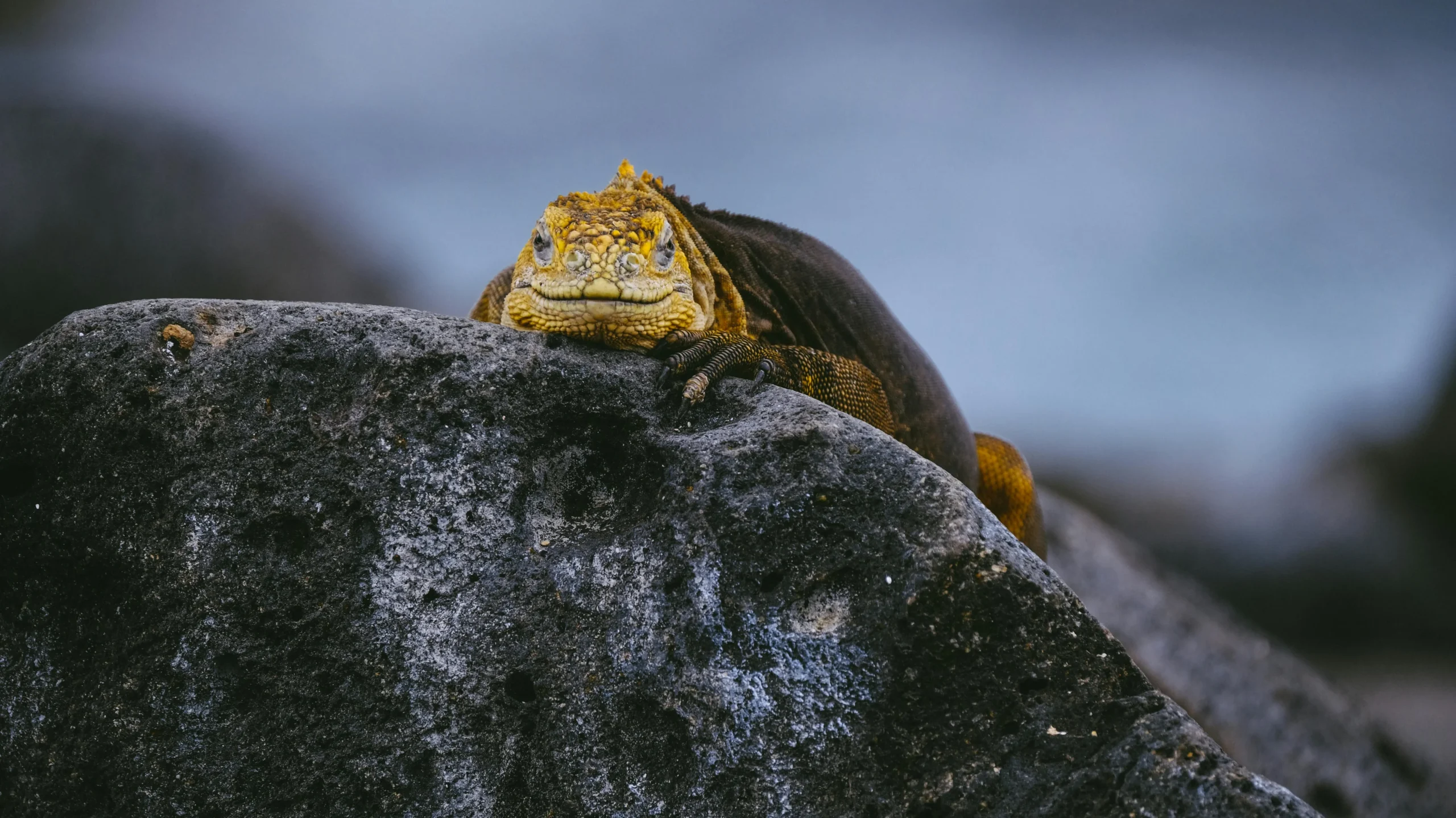
The National Park System
Approximately 97 percent of the Galapagos archipelago is protected as national park—visitors may land only at designated visitor sites, and must be accompanied by licensed naturalist guides. The system is strictly enforced. Guides are trained and certified by the Ecuadorian national park authority; vessels are licensed and allocated visitor-site access. There is no equivalent system of environmental oversight for visitors anywhere else in Latin America.
LANDED works exclusively with licensed, reputable operators whose vessels carry fully certified naturalist guides. But that’s the minimum. Further, we’ve carefully selected yacht, catamaran, villa, and hotel partners who go above and beyond the requirements—in efficiency, water conservation, and waste mitigation and treatment. Many of these partners also make meaningful social contributions to educational and conservation projects.
The partners contributing the most to conservation and social goals are often those who target the premium and luxury visitors. The Galapagos is a place where the external costs of “cheap” travel are all too costly. LANDED favors vessels and land-based accommodations at the smaller end of the spectrum; these options provide a richer visitor experience, and a lower environmental burden.
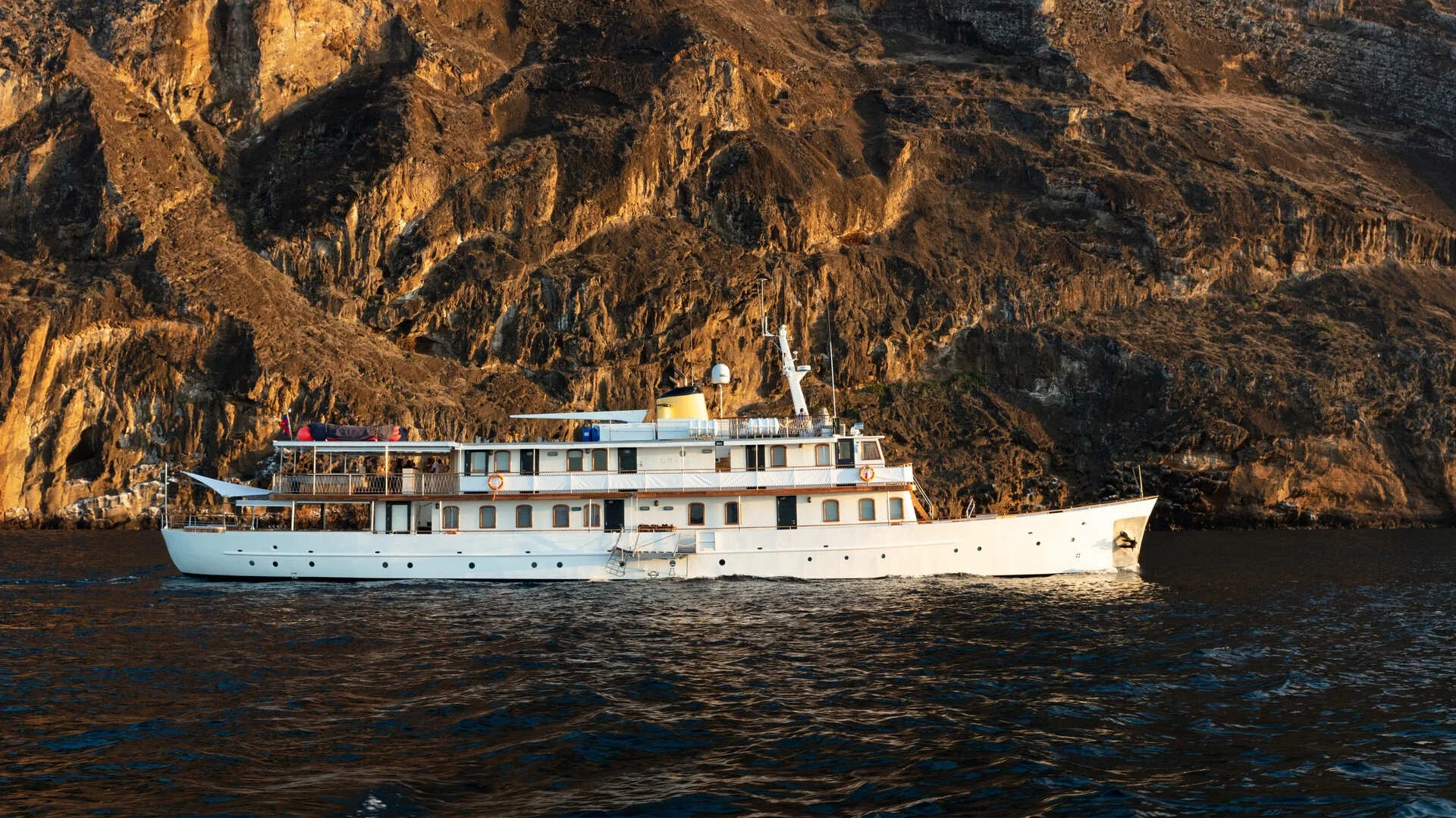
Choosing the Right Vessel
Smaller vessels have smaller environmental footprints—less fuel consumption per passenger, less noise, less physical impact on landing sites. They also deliver a better experience. In the Galapagos, sustainable choice and quality choice are highly correlated: the small, well-managed private yacht or catamaran is both the most responsible and the most rewarding way to see the archipelago.
LANDED recommends vessels that participate in the Galapagos National Park’s voluntary reporting programs, that use mooring buoys rather than anchoring (to protect the seafloor), and that conduct pre-landing wildlife briefings with passengers—explaining not just what to see, but why the behavior rules exist and what they protect.
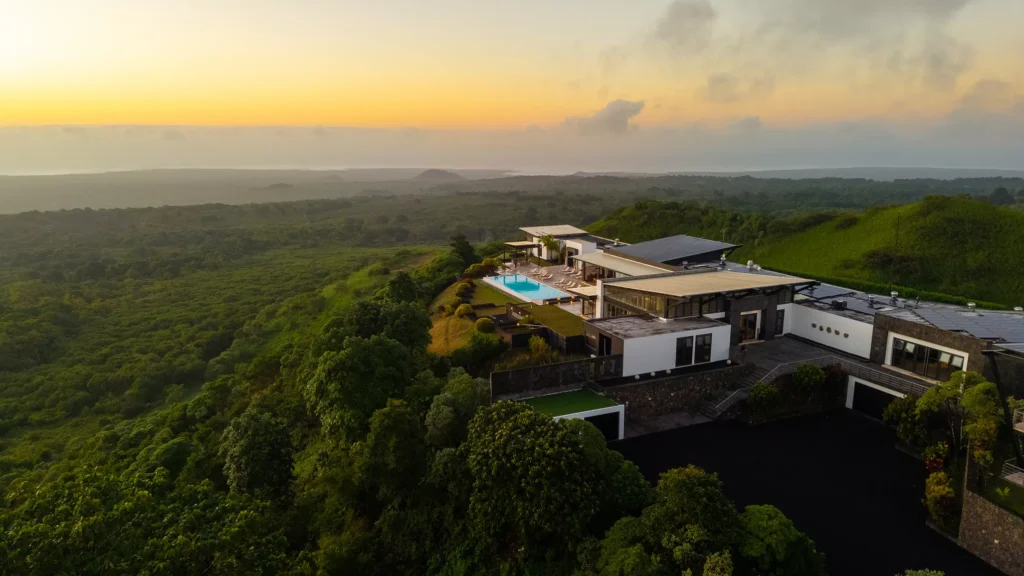
Land-Based Options
Our land-based options are similarly conservation-minded. They invest in the community through education and training, carefully manage waste, work to restore native plants and remove invasive species, preserve habitat, and are mindful of water consumption. They offer luxury that is appropriate to these arid islands.
Invasive Species: The Ongoing War
One of the greatest threats to Galapagos biodiversity is the introduction of invasive species—plants, insects, and animals that have no natural predators in the archipelago and can devastate endemic populations with terrible efficiency. The Ecuadorian Galapagos National Park maintains strict biosecurity measures: all incoming passengers are inspected, food items are restricted, and vessels undergo decontamination protocols.
It’s not just the goats, dogs, and cats. For example, Hill Raspberries, introduced in the late 60s by a well-meaning gardener, have spread as birds eat and disburse them. They now form dense thickets on five islands, choking out native Scalesia forests.
Responsible travelers assist in the effort to keep invasive species out. How? By following decontamination procedures diligently, avoiding bringing organic materials to the islands, and choosing operators who brief passengers thoroughly on the biosecurity stakes. Your clean boots matter more than they might seem.
The Galapagos Conservancy and Tortoise Restoration
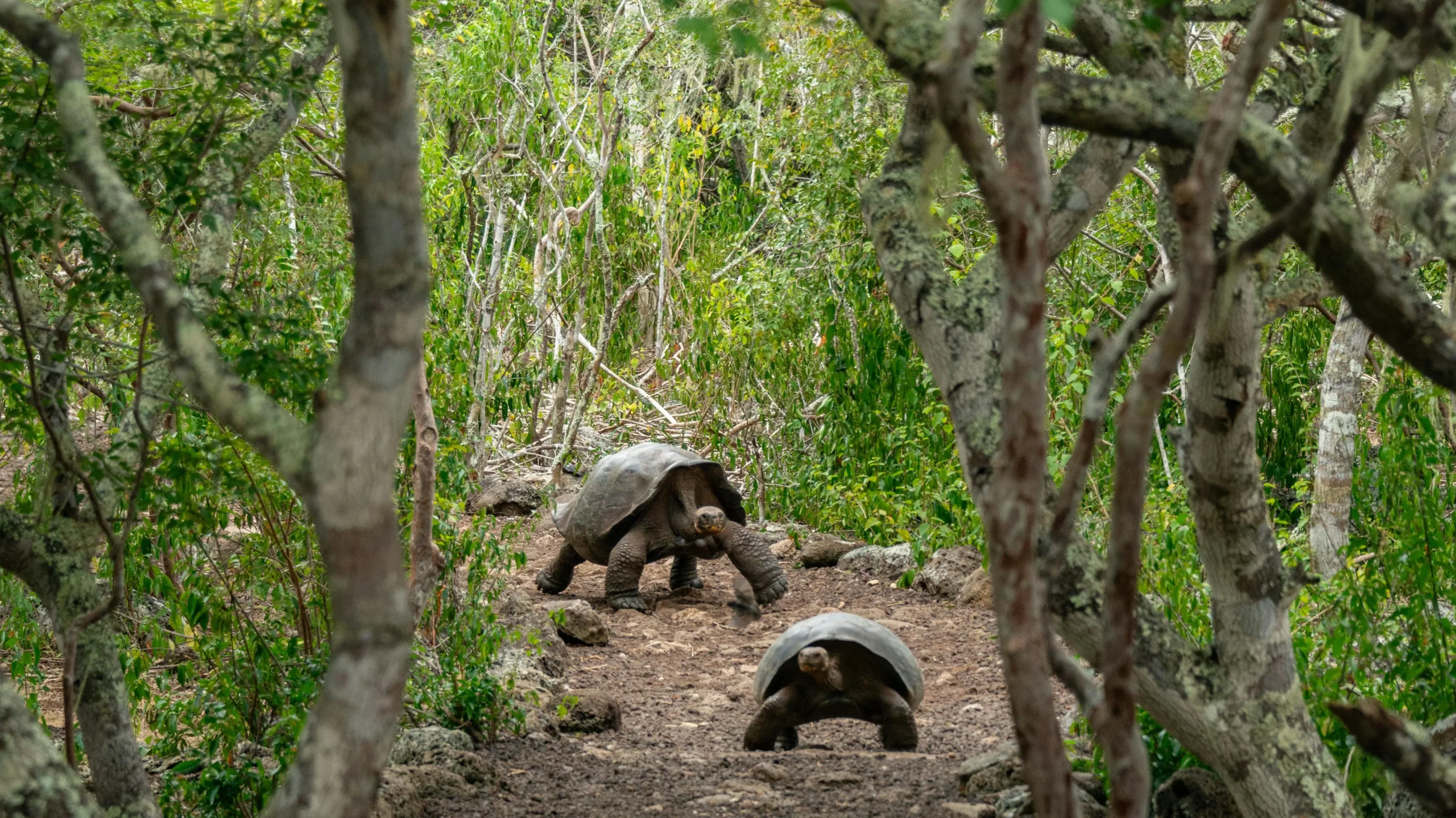
The Galapagos Conservancy’s giant tortoise restoration program—which has captively bred and released many thousands of tortoises of multiple species over the past four decades—is one of the great conservation success stories in the world.
Española Island’s tortoise population was reduced to 14 individuals in the 1970s; today, more than 2,000 tortoises roam the island’s interior.
Visitors to the research and breeding stations can observe the efforts and meet the next generation of tortoises before their release.
PRICING NOTE
A PORTION OF THE GALAPAGOS NATIONAL PARK ENTRANCE FEE FUNDS PARK OPERATIONS, CONSERVATION, AND RESEARCH. LANDED ALSO RECOMMENDS A DIRECT DONATION TO THE GALAPAGOS CONSERVANCY, WHERE $50 TO $500 PER PERSON FUNDS SPECIFIC CONSERVATION PROGRAMS THAT TRAVELERS CAN FOLLOW AFTER THEIR JOURNEY.
“LANDED was wonderful in taking care of every detail to make our trip a fabulous experience that we will never forget!! We want to come back in 5 years when our other grandchildren are old enough to appreciate all that the Galapagos offers!” – Carol Z, LANDED Traveler
“After many years of return visits, these far-flung islands still captivate me. Now, my fascination is ornamented with memories: a hike with friends in the Fernandina lava fields; hammerheads on a dive with Erynn at Gordon Rocks; our daughters surfing at Tortuga Bay; a snorkeling session with sea lions amid curtains of diffused light in an Isabella grotto. On and on. Gifts and treasures.” – John Montgomery, Co-Founder of LANDED
“Isolated oceanic islands are the great natural laboratories of evolution. They enjoy this status for two rather different reasons. For the first, practicality, they provide nature’s closest approach to the controlled and manageable conditions that every scientist tries to create in laboratory experiments.” – Stephen Jay Gould