
A curated guide to the tables that define the city — from the world’s greatest parrilla to the garden where Buenos Aires goes vegetarian.
Buenos Aires has always been a city that takes eating seriously — not as an occasion for ceremony, but as a daily commitment to pleasure, to sobremesa, and to the particular intensity of being alive in Argentina. Time together at table is not incidental. It is the point.
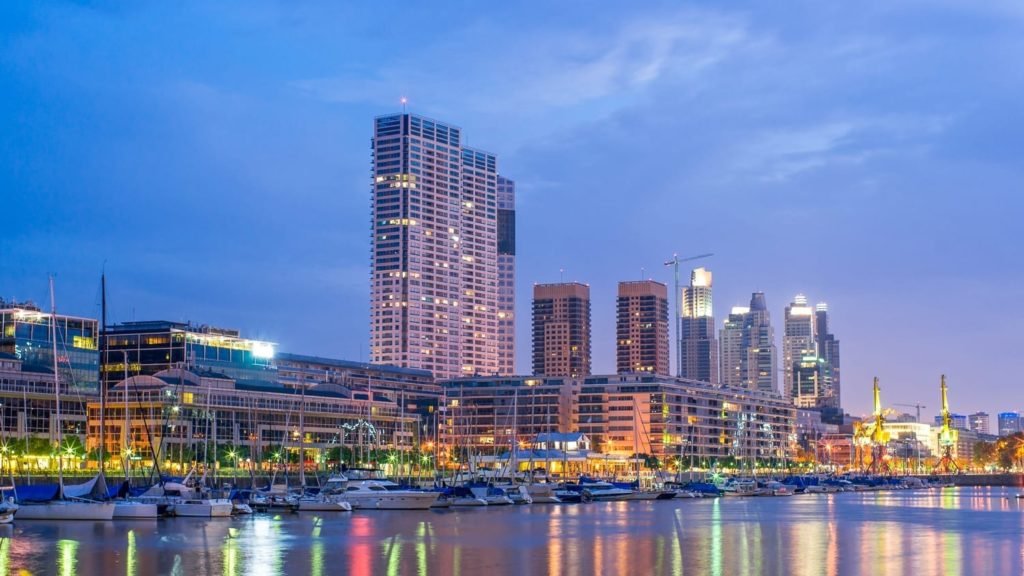
What has changed in recent years is the arrival of a new generation of chefs who have returned from the world’s great kitchens — Copenhagen, San Sebastián, Stockholm — and brought something unprecedented back with them: not the desire to imitate, but the confidence to be uncompromisingly themselves. The result is a dining scene of startling range: multi-starred performance art menus and cash-only empanada counters, garden restaurants conjured from abandoned lots, and a steakhouse so good that Lionel Messi has been known to take risks for a taste.
This is not a ranked list. Buenos Aires is too good a city for hierarchies. Consider it, instead, a map of the essential — ten tables that, between them, say something true about where and what this city is in 2026.
PALERMO · PARRILLA
Don Julio
The cathedral of Argentine beef
There are restaurants that are good, and then there are restaurants that are a form of argument — a sustained, evidence-based case for a particular way of understanding the world. Don Julio is Argentina’s argument that a parrilla, elevated to its highest possible expression, belongs in the same conversation as the great restaurants of the world. The argument has been accepted.
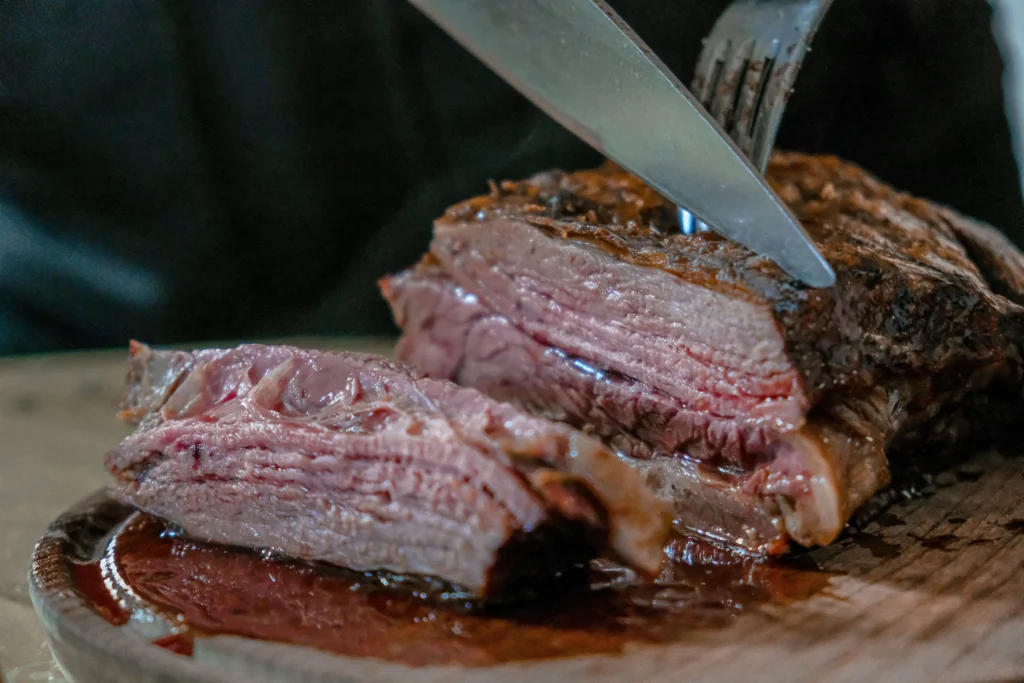
Two Michelin stars, a World’s Best Steaks title, a place in thetop tier of the 50 Best lists: the accolades have arrived, and Pablo Rivero wears them with the unflustered calm of a man who has always known exactly what he is doing. Yes, BsAs has other less celebrated but worthy steakhouses. That fact takes nothing away from Don Julio’s simple greatness.
“Walking through the door of this restaurant is akin to immersing yourself in the culinary culture of Argentina, and enables you to understand its passion for meat, which is seen here as a family legacy.”
— Michelin Guide Argentina
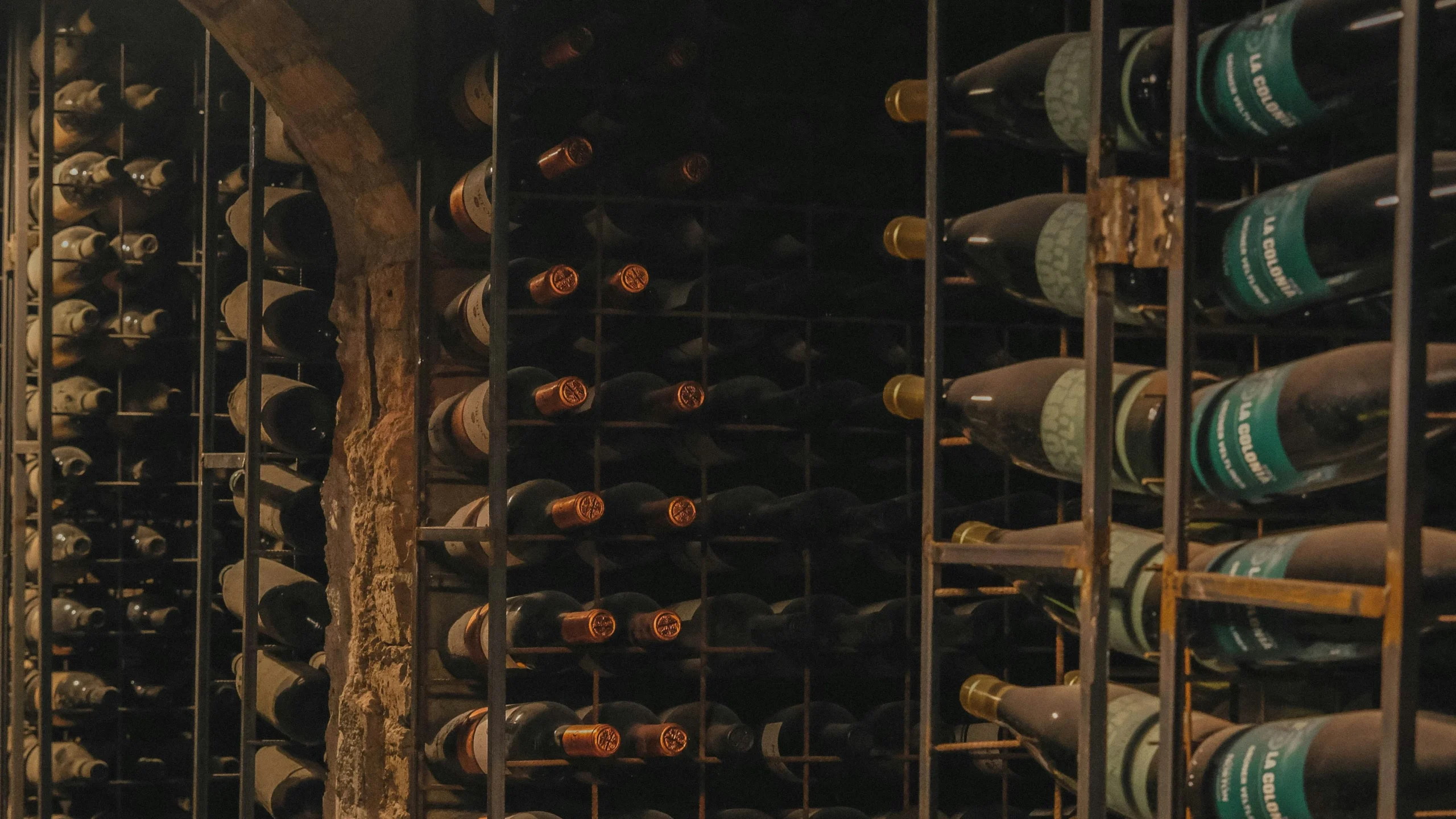
The restaurant occupies a chamfered Palermo corner that has belonged to the Rivero family since the 1990s. Pablo’s grandmother was a butcher; his parents raised cattle on the Pampas. That lineage is visible in the dedication: every cut is dry-aged in the in-house butchery fifty meters away, on a programme that runs from twelve days for tira de asado to twenty-eight for the great boneless steaks. The quebracho wood burns white and clean, and the V-shaped grill ensures no dripping fat corrupts the smoke. The wine list — more than four thousand Argentine labels, with bottles signed by satisfied guests lining the walls — is among the finest
on the continent. Come for lunch if you can. Stay longer than you planned.
ADDRESS
Guatemala 4691, Palermo
FORMAT
Mollejas, vacío, spinalis
ACCOLADE
Up to 90 days ahead
RECOLETA · FINE DINING
Aramburu
Argentina’s only two-starred table
Gonzalo Aramburu describes himself, with some justification, as the last of the Mohicans. He opened his restaurant in 2007 in a neighborhood where taxis refused to go, and he has outlasted every other fine dining establishment of his generation. Many of his beloved contemporaries — Chila, Tegui, El Baqueano, Tarquino — are memories. Aramburu remains, and in 2024 it became the first and still only restaurant in Argentina to hold two Michelin stars. The distinction was earned, and it was not a surprise.
“With a creative vision anchored in research and technique, he designs an artistic 16-course tasting menu with seasonal products, reimagining classic Argentine cuisine.”
— Latin America’s 50 Best Restaurants
The restaurant now sits at the end of a cobbled Recoleta passage, behind floor-to-ceiling windows through which diners watch the kitchen operate with the precision of a laboratory. The single tasting menu changes with the seasons and, within the seasons, with whatever has arrived that day from the web of small producers Aramburu has spent nearly two decades cultivating. King crabs from Tierra del Fuego. Saffron from San Juan. Cassava from Misiones. Jerusalem artichokes from Tandil. The menu is Argentina, taken apart and
reassembled by a chef of uncommon intelligence. You will leave having eaten the most considered meal in the country.
ADDRESS
Vicente López 1661, Recoleta
FORMAT
16-course surprise tasting menu
ACCOLADE
2 Michelin Stars · Relais & Châteaux
VILLA CRESPO · FINE DINING
Trescha
The wunderkind of the Buenos Aires table
Tomás Treschanski opened Trescha in March 2023 at the age of twenty-four, with eleven seats arranged at a single cedarwood counter, the most expensive menu in Buenos Aires, and a test kitchen upstairs that runs liquid nitrogen, centrifuges, and aroma extractors with the seriousness of a biotech lab.
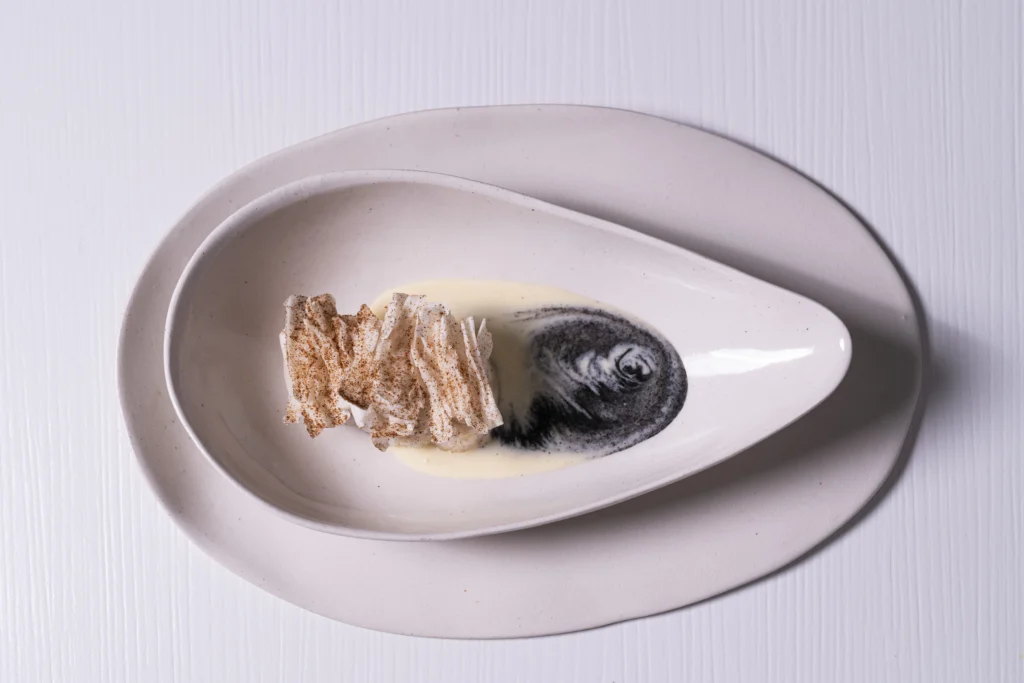
He had trained at Frantzén in Stockholm, Azurmendi in San Sebastián, and Le Cordon Bleu in London. He was awarded a Michelin star within a year of opening, and the Best Young Chef prize to go with it — the youngest recipient in the Americas. None of this was an accident.
“His cuisine, guided by Argentine products and research, challenges cultural and technical boundaries.”
— Trescha Restaurant
At Trescha, the fifteen-course tasting menu changes every three months and is constructed around some four hundred producers across Argentina. Each diner receives a small booklet of the chef’s notes and doodles on every course — a gesture entirely characteristic of Treschanski’s approach, which manages to be simultaneously precise and playful.
The kitchen is visible from the counter; the wine programme draws on decades-old Argentine bottles of startling depth. This is Argentine cuisine as it might become, assembled by someone who has travelled the world and returned home with the clearest possible sense of what home actually means.
ADDRESS
Murillo 725, Villa Crespo
FORMAT
15-course counter, 11 seats
ACCOLADE
1 Michelin Star · Best Young Chef 2024
PALERMO · SEA FOOD
Crizia
The sea, rendered in fire
Gabriel Oggero began this conversation with the Argentine coast twenty years ago, long before anyone else was paying attention to what the Patagonian sea could offer a serious kitchen. He had to go and find it himself — the artisanal fishermen, the small producers, the oyster farmers at Carmen de Patagones whose bivalves now arrive at Crizia daily. In 2025, the Michelin Guide arrived at the same conclusion Oggero had reached two decades earlier, and gave Crizia its first star. A green star for sustainability had preceded it the year before.
“For me, work has always been about dedication and a serious approach, with the sea acting as my great inspiration.”
— Gabriel Oggero, chef-owner
The restaurant occupies a Palermo loft with the informal confidence of somewhere that has always known its own worth. The oyster bar operates as a proper destination in itself — halfdozens arrive baked Rockefeller with bacon, or topped with a gin and tonic granita that is one of the more arrestingly good ideas in the city.
The Puro Mar tasting menu unfolds as a sustained meditation on what Argentina’s coastline can produce: amberjack, grouper, Patagonian toothfish, scallops, langoustines, all treated with the same respect Oggero’s beefobsessed compatriots reserve for a fine steak.
ADDRESS
Fitz Roy 1819, Palermo
ORDER
Oysters, Puro Mar menu
ACCOLADE
Michelin Star + Green Star 2025
PALERMO BOTÁNICO · JEWISH ARGENTINE
Mishiguene
A diaspora on a plate
Tomás Kalika chose the Yiddish word for crazy as his restaurant’s name, and the spirit of that choice saturates everything that happens inside it. The food is elaborate, abundant, and unabashedly Jewish — from the mezuzah on the door to the klezmer clarinet that plays on Friday nights when the place transforms, with some seriousness of purpose, into a Shabbat celebration. But the cuisine is also, improbably and precisely, Argentine: the pastrón is a ribeye cured for ten days, smoked over quebracho wood for four hours, steamed for
fourteen more.
“I am an Argentine. I am a Jew. I trained in Israel. Why would I make better French food than a French chef? The secret was finding myself, a strong concept, and cooking honestly.”
— Tomás Kalika, chef-owner
Mishiguene has been on the Latin America’s 50 Best list for eight consecutive years, won the Chefs’ Choice Award, received a Michelin recommendation, and earned Kalika the 2024 Best Chef Award. More importantly, it is full every night with a clientele that is predominantly local— a rarity in a city currently overwhelmed with gastronomic tourism. That tells yousomething true about what kind of restaurant it is. Come with hunger and a willingness to be surprised by the distances food has travelled to reach the table.
ADDRESS
Lafinur 3368, Palermo
DON’T MISS
Pastrón, varenikes, Friday Shabbat
NOTE
Michelin selected · 50 Best Latin America
PALERMO CHICO · GARDEN RESTAURANT
Casa Cavia
The art of the long lunch
The building was designed in 1927 by Norwegian architect Alejandro Christophersen, and it looks it — in the best possible sense. It sits on Plaza Alemania in Palermo Chico like a small, self-possessed aristocrat, housing under its roof a restaurant, a cocktail bar, a bookshop, a perfumery, a flower shop, and a publishing house. The creative director, Guadalupe García Mosqueda, trained as a documentary filmmaker, and the attention to every sensory detail — lighting, staff uniforms, the specific weight of the tableware — reflects that background.
“If we were to look for an expression that defines the culinary philosophy of this restaurant, it would be “loyalty to local ingredients.””
— Michelin Guide Argentina
Chef Julieta Caruso leads a kitchen that is entirely female, and her menu carries the confidence of someone who has thought deeply about what Argentine produce can become. Vegetables take the lead; fish and meat play supporting roles. The lunch is the thing: a seasonal menu that now draws on produce from Casa Cavia’s own orchard, served in the walled courtyard garden with its central fountain, in the kind of unhurried afternoon light that makes Buenos Aires feel like what you’ve dreamed it is. Come early, stay late, and allow the afternoon tea to extend into cocktails. What’s the rush?
ADDRESS
Cavia 2985, Palermo Chico
DON’T MISS
Lunch and afternoon tea
NOTE
Michelin Guide Argentina 2025
PALERMO · PARRILLA
Hierro
Fire as a philosophy
Four friends from Bariloche — Francisco Giambirtone and Santiago Lambardi, among them — arrived in Buenos Aires with a conviction: that fire is a language, and that the parrilla concept had not yet said everything it had to say. Hierro Casa de Fuegos is their argument.
Every item on the menu passes through the grill; the Black Angus beef is vacuum-aged onsite before meeting quebracho charcoal; and even the vegetables — beets, carrots, sweet potato — are cooked with the same ceremony accorded to a prime cut.
“Hierro doesn’t just want you to eat well; it wants you to understand that fire, too, can mean sophistication.”
— Time Out Buenos Aires
The dining room is luminous and cosmopolitan — a muscular Dogo Argentino as the restaurant’s emblem, a serious cocktail programme from Lambardi (who invented the Cynar Julep), a wine list that takes its cues from a knowledgeable team. The sweetbreads in green onion sauce with chicken jus and lemon syrup are one of the better arguments for offal in the city. The provoleta arrives with smoked pear and spiced honey, which is the version that will ruin every other provoleta you eat. Hierro has taken the Argentine parrilla and made it unafraid of itself.
ADDRESS
Fitz Roy 1722, Palermo Hollywood
DON’T MISS
Mollejas, ribeye, smoked provoleta
NOTE
Also at San Telmo
CHACARITA · MODERN BISTRO
Picarón
The neighborhood restaurant that became essential
Maxi Rossi opened Picarón in December 2020 in a former factory on Dorrego — before Dorrego became the gastronomic street it now is — with a logo of a giant bear on a tiny bicycle. The logo is a statement of intent: balance, improbable but achieved. Rossi spent ten years cooking in Barcelona, including time in kitchens of serious technical ambition, and he brought back something unusual for a Buenos Aires chef of his generation: a genuine commitment to vegetables, not as a concession to dietary preference but as the most interesting things in the kitchen.
“Chef Maxi Rossi builds dishes around vegetables with real intention, not as an afterthought.”
— Allie Lazar, Pick Up the Fork
The picarones themselves — sweet potato fritters with spiced Mascabo honey and a touch of nduja — are named for a Peruvian dessert and have been on the menu since opening day. Alongside them, the small plates career across Asia, France, Peru, and Italy without ever losing the thread of something honest and Argentine underneath. The tonnato maiale — a reimagined Argentine Christmas classic with smoked bondiola pork, anchovy-tuna sauce, and lattice-cut chips — is the kind of dish that resets your expectations of a recipe you thought you knew. The Michelin Guide recommended it in 2024 and again in 2025, which says something after the guide’s decades long snub of South America. Come hungry, come with an open mind, and accept that you will want to eat the entire menu.
ADDRESS
Dorrego 1536, Chacarita
DON’T MISS
Picarones, tonnato maiale, smoked prawns
NOTE
Michelin selected 2024 & 2025
VILLA CRESPO · VEGETARIAN
Chuí
The jungle oasis that rethought the vegetarian restaurant
Four young partners looked at an overgrown abandoned lot beside the San Martín railway tracks in Villa Crespo and saw what it could become. What it has become is one of the most genuinely pleasurable dining rooms in Buenos Aires: a semi-open industrial warehouse edged by a garden of wild, untamed plants, with an open kitchen at its heart and, visible through glass, the cabinets of cultivated mushrooms and jars of house-made pickles and preserves that supply the menu. A train rumbles past every twenty minutes. No one seems to mind.
“Chuí was so good that I went two times during my time in Buenos Aires and arguably was the best restaurant I tried during my stay — including many Michelin-rated restaurants.”
— Google Reviews
Chef Victoria Di Gennaro has worked in Argentina, Chile, Brazil, and the Netherlands, and she brings that breadth of reference to a menu that is entirely vegetarian but never earnest about it. The oyster mushroom milanesa — with silky potato purée and brown butter — is the dish that ends the conversation about whether vegetarian food can satisfy in the same register as meat. The sourdough pizzas, fired in a wood-burning oven with combinations like sweet potato, oyster mushroom escabeche, basil pesto, and cashew, have their own devoted following. Chuí is proof that a great restaurant and a great evening have nothing to do with whether anything on the menu had a heartbeat.
ADDRESS
Loyola 1250, Villa Crespo
DON’T MISS
Mushroom milanesa, sourdough pizza
NOTE
Open lunch through late dinner
RETIRO · REGION AL ARGENTINE
Costumbres Criollas
The empanada as architecture
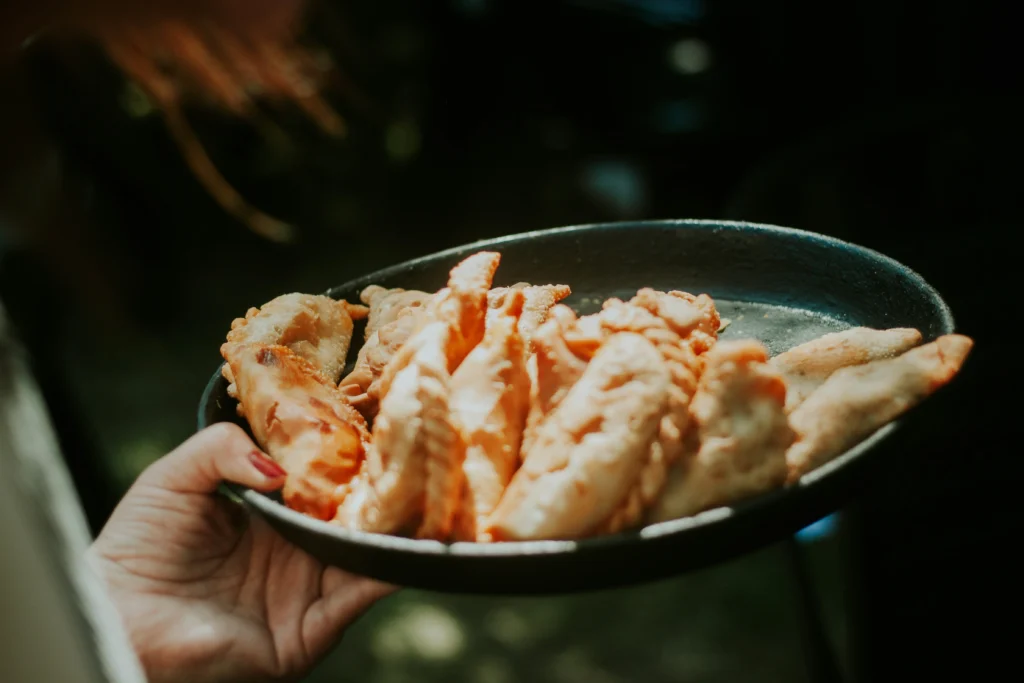
A list of Buenos Aires restaurants that includes only fine dining is a list with an argument missing. The city’s culinary soul lives also in its small, unhurried, cash-preferred corners where the food has been made the same way for generations and the question of whether anyone will ever award it a star has never arisen. Costumbres Criollas, tucked near the Retiro district, exists on this list for a single, inarguable reason: it makes the best empanadas Tucumanas in Buenos Aires. Quite possibly in the country.
“No se puede explicar con palabras lo que son las empanadas decarne al cuchillo. Tanto la masa como el relleno son exquisitos.”
— Buenos Aires local, Tripadvisor
The empanadas Tucumanas are small and tightly crimped — the traditional repulgue of the northwest — with a pastry that holds its shape precisely long enough to reach the mouth before releasing a flood of juiced beef cortado a cuchillo (hand-chopped, never minced), seasoned with the careful restraint of a kitchen that knows exactly what it is doing. There are also humitas, tamales, and locro in the cooler months.
The room is modest. The phone rings constantly with delivery orders. None of this is the point. The point is the empanada, which represents something that all the tasting menus and starred kitchens in Buenos Aires cannot: the long patience of a regional cuisine carried intact across centuries and two thousand kilometers, arriving on a small plate in the capital with its dignity entirely intact.
ADDRESS
Esmeralda 1392, Retiro
DON’T MISS
Empanadas Tucumanas de carne
NOTE
Cash only, baby · Arrive early
Buenos Aires does not make it easy to leave the table.
The meal extends into conversation, which extends into coffee, which extends into the particular Argentine ritual of the sobremesa — the long, unhurried sitting-after, in which the table becomes the real destination and the food was merely the occasion to gather. A city that has built an entire social culture around the act of lingering together at the end of the night is not a city that takes restaurants lightly.
What makes these ten tables essential is not only what they serve, but what they each, in their different registers, understand about what a restaurant is for: the feeding of hunger, yes, but also the creation of a moment that memory chooses to keep. Book as far ahead as you can. Go hungry. Stay late. And do not, under any circumstances, rush the sobremesa.
“Gastronomy in Argentina is in an excellent moment. This moment is the result of the immense work carried out over a long time by chefs, winemakers and producers.”
— Tomás Kalika, chef of Mishiguene