Podcast: Play in new window | Download
Subscribe: Apple Podcasts | Spotify | TuneIn
LANDED Podcast 003
Sunniva Sorby
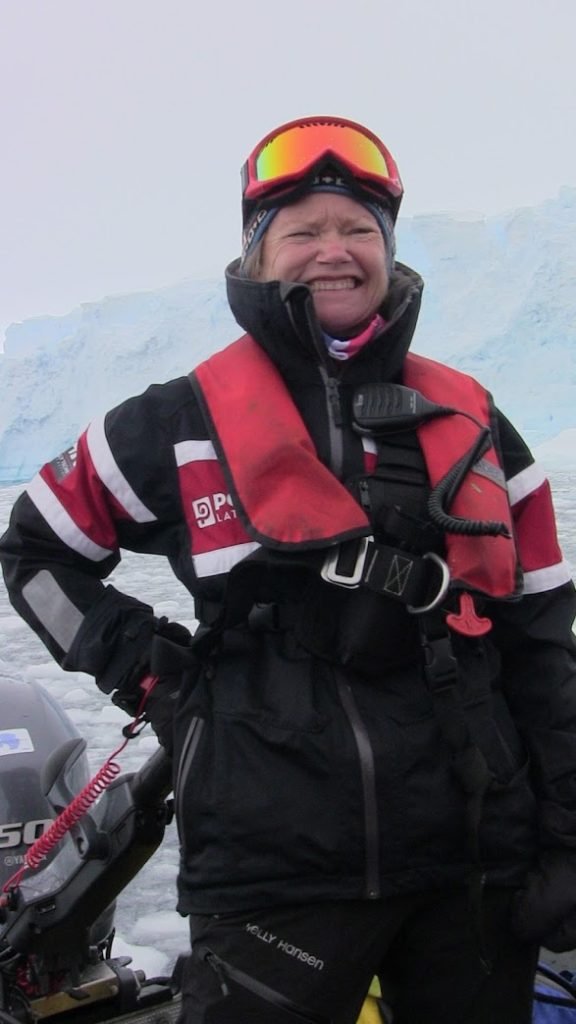
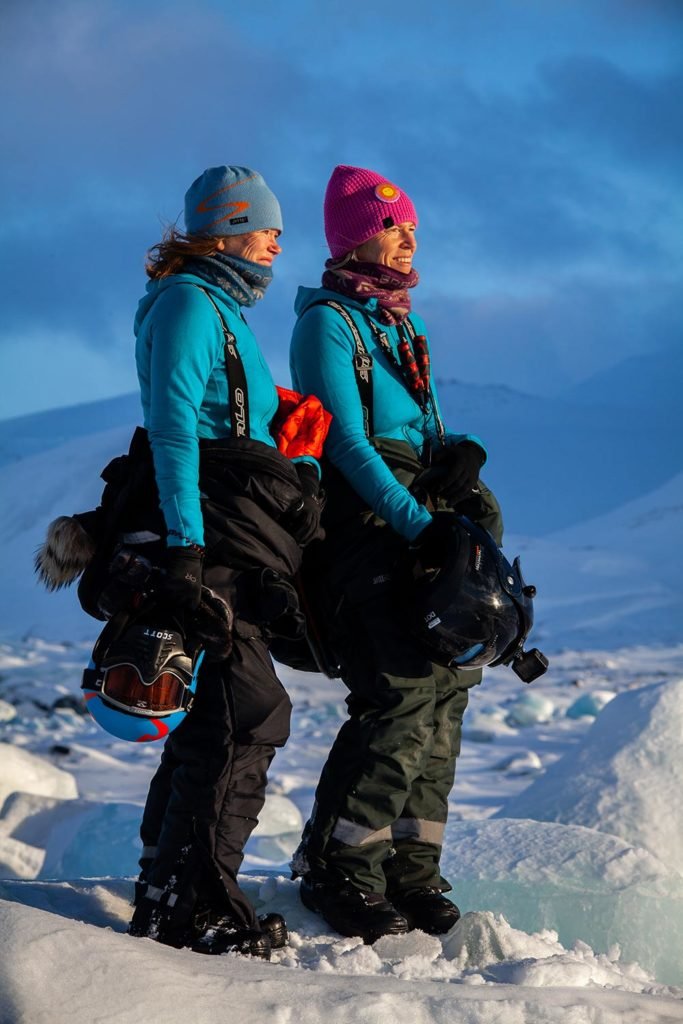
Sunniva, or Sunny, is a polar explorer, fundraiser, motivational speaker, and friend. Although she’s disarmingly friendly and self-effacing, Sunny has jaw-dropping resilience and strength.

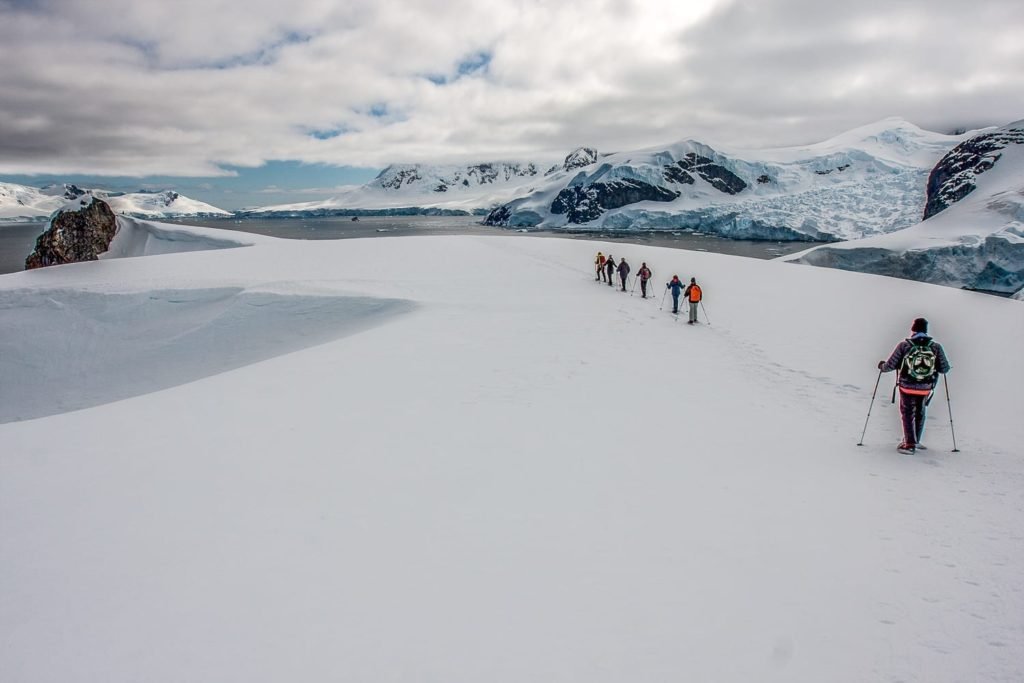
In 1993, as part of a historic four-woman expedition, she skied 67 days across Antarctica, covering more than 700 miles in -60 degree weather.
Headwinds topped 50 miles per hour. Each woman pulled 200-pound sled. They were the first women’s team to reach the South Pole without the aid of sled dogs or motorized vehicles.
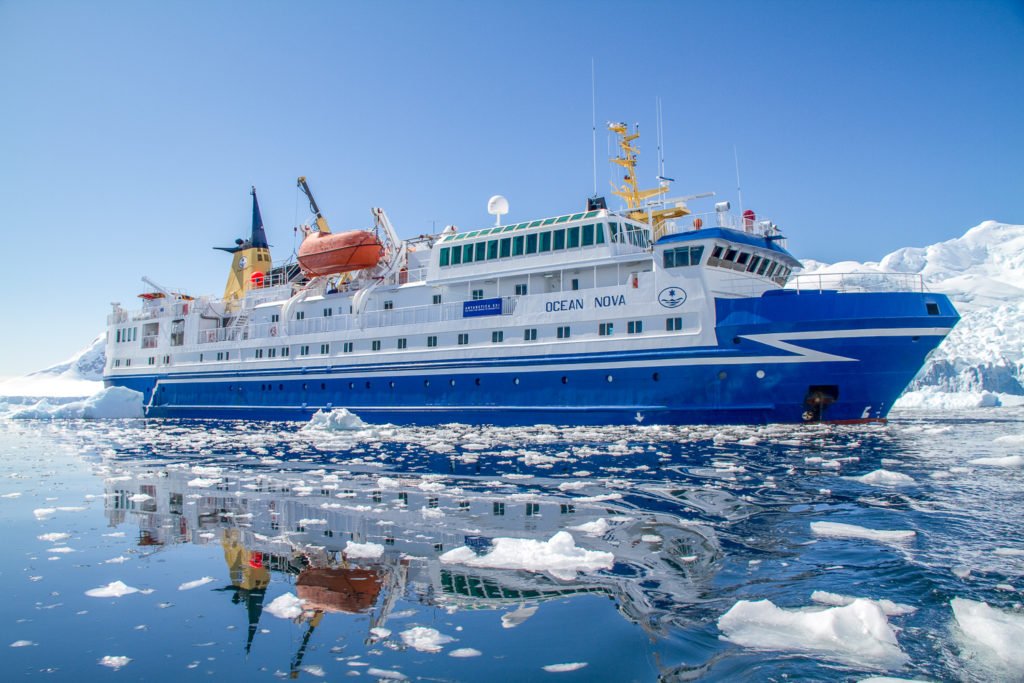
Since then, she’s returned to the Antarctic dozens of times, and how services as Director of Sales for Polar Latitudes, a leader in polar expedition cruising.
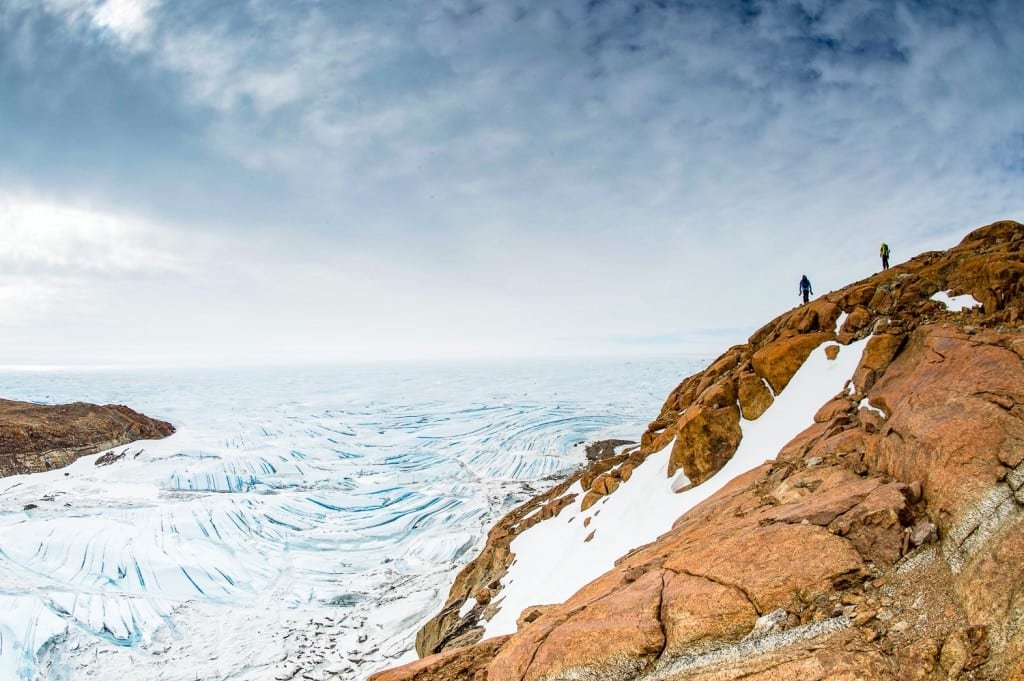
She’s also completed expeditions on Kilimanjaro and the Greenland Ice Sheet. Now, she’s preparing to overwinter in Svalbard in a hut, in a regional inhabited by polar bears.


Show Notes
If you’d like to contribute to Sunniva’s overwintering project, the website is Hearts in the Ice.
Rather read than listen?
Find the transcript below
Sunniva Sorby, welcome to the podcast. I’m honored to have you with us. You’re near Oslo, Norway today.
Sunniva: I am. John, thanks for inviting me. I’m in Tønsberg, which is where I was born. It’s about an hour and a half from Oslo.
And you’re visiting your father, is that right?
Sunniva: I am. He is 91 and he’s on a little bit of a decline. So, it’s a really special time to be here with him and my family.
I’m so glad you can be there with him. It’s the holiday season when we’re speaking, and I know he appreciates having you there.
Sunniva: It’s been really special so far. The only downfall, I have to be honest, is there’s no snow! It’s green; it’s like spring here.
We’ve talked about this recently! All right, so would you tell us about that one time when you skied with three other women across Antarctica to the South Pole? Do you remember doing that?
Sunniva: I do remember that! It’s one of those life-defining moments from 22 years ago that I can’t forget. It was a time in my life when I was so hungry for self-knowledge—which every 20-year-old is, and if you haven’t figured it out in your 20s, you’re 30 and trying to figure it out. I had an opportunity to join this history-making expedition, which I had no clue at that time what that really meant. To me, it was an opportunity to be part of something physical and scientific. We were doing research on ourselves, and it had a broad reach to school kids around the US, Canada, and Europe.
I joined with only four months to prepare because a team member had dropped out. So I was a woman who showed up eager, naive, and just hungry to be stripped of all my layers and comforts. It was kind of a female version of Into the Wild. Just a quest to understand: what’s the purpose in this lifetime? What’s my purpose?
I joined this group of three women who had known each other for about 5 years. We left the US and flew to Punta Arenas, Chile. We were delayed two weeks, and then we started off on this ski expedition. The intention was to go all the way across Antarctica—1,500 miles—which would take close to 4 months. What ended up happening is really the heartbeat of the story: we didn’t make it all the way across, but we made it to the South Pole. That was a historical first for women. In the process, we redefined people’s perceptions of what they thought was possible for women in an otherwise male-dominated world in Antarctica.
We all had our own different journeys on that expedition, and mine was full of a lot of physical pain—I became very sick. My story became the thread through the entire expedition documentary. All of us discovered great strength, but as a team, we came together through sickness and pain. The biggest gift that came out of it for myself, Ann Bancroft, Sue Giller, and Anne Dal Vera was that the four of us went as a group of friends and came back as friends. We really connected with the kids who were following us. When you’re down in the dumps and can’t find a reason to lift your head up and keep going, it was for the kids. Our story became a grassroots movement for the kids who believed in our abilities. Today, 22 years later, I don’t forget it because it represents the power of people, collaboration, friendship, love, belief, and faith.
And these are school kids who helped fundraise for the mission and were tracking your progress from their homes in pre-internet days using maps and regular updates via radio. They were also learning about the science of what you were doing, is that right?
Sunniva: That’s right. We put together different curriculum components for them because we wanted a living project they could follow and be inspired by—covering science, history, nutrition, social studies, and geography. It was very exciting for us to know that kids had little pushpins on wall maps. Every three nights, when we radioed out a recorded message, they would call in to track our progress. Because it was pre-internet, it was perhaps even more powerful—there was no immediate gratification or back-and-forth communication.
Right. This mission took how long to plan?
Sunniva: Close to five years. It was a huge project.
And you came into the project just a few months before departure.
Sunniva: Yeah! It’s funny to reflect on that because I was living in the “minor leagues” compared to the others. I had done lots of trips—nothing solo—and had experience in a lot of different things, but I certainly wasn’t operating on the same level as the other women. When a person drops out of a 5-year plan…
…it turns everything upside down! So the group had done a Greenland trip as a dress rehearsal, and one of the team members realized mentally that she wasn’t ready for Antarctica or didn’t have the drive she thought she needed, so she dropped out. You were living in San Diego, and over dinner with a friend, you learned there was a need. As you two talked about who would fit this role, you said to yourself, “It sounds crazy, but it’s me.”
Sunniva: Yeah, I’ll never forget that moment! I’m sure a lot of people can relate to that moment when somebody looks you in the eye and gives you a compliment or sees something in you that you haven’t acknowledged in yourself. Over dinner that night, my friend Deborah—who had interviewed Ann Bancroft for a feature story—told me that Sarah Harrison had dropped out and they were secretly looking for a fourth. Like most people at the time, I thought, “What women are going to ski across Antarctica, and why?” She explained the research, the impact for children, and bridging the gender gap in physical sports.
Immediately, I felt I wanted to support them, perhaps by getting gear since I was in the outdoor industry and had great connections. Then she looked at me and said, “I think you would be a perfect fit.” I looked at her like she was crazy! But moments later, it sunk in deeper, and I was almost afraid to admit to anyone that I wanted to be part of this.
Describe your role within the group. Everybody had primary and secondary responsibilities, but your primary role was research.
Sunniva: That’s correct. On every expedition, everyone has a primary responsibility, but collectively everyone does everything else.
And you had no formal research experience before, right?
Sunniva: None! All I was doing was facilitating the data collection. We were working with the University of Minnesota, who were collecting physiological data. John, here’s what I had to do: every 3 days, every 3 hours on that day, all four of us had to spit into a test tube! The tubes were 3 inches tall and 1 inch in diameter. They were measuring our biorhythms, performance peaks, and the impact of a high-fat diet on our cycles and team dynamics. Making sure everyone did that sounds easy, but when you’re out there surviving, you don’t feel like spitting into a tube! I was also responsible for compiling our daily psychological questionnaires.
And these weren’t just a few test questions—there were hundreds every night!
Sunniva: Hundreds! Every night! In the documentary Pulls Apart, there’s a scene where I’m interviewing Ann Bancroft and ask, “What are you doing?” She says, “I’m filling out the questionnaire.” I ask, “What’s one of the questions?” She replies, “How did you cope today? Did you cry, pray, write, read?” Then she says, “There’s another question asking how I feel right now—depressed, hungry, sad—but there’s no option for ‘irritable,’ because this questionnaire is making me irritable!”
You skied from the coast to the South Pole carrying 200-pound sleds each—no dogs, no mechanized transport, and no men on the expedition. This was truly pioneering in an era when expeditions were primarily run and financed by men.
Sunniva: That’s right. What was truly pioneering was that this was before extreme sports and expeditions became glorified by modern marketing or deemed “sexy.” Women weren’t in that world yet or accepted as extreme athletes. It was extreme even for men, and for women to be doing it was really out there.
Sunny, who did you think you were? You were living in San Diego, with no prior extreme expedition experience and no research background. But you felt a calling to do this. You loved the outdoors, you were a fantastic skier, and you were self-confident. You had spent time growing up in Canada and Norway, and you were even planning a canoe and hiking expedition across North America from New York to Nome. So this wasn’t totally foreign to you, but still… who did you think you were? Was there a sense of destiny or a calling that gave you confidence?
Sunniva: That’s a great question. Without question, I was called to do this. Looking back at what I had been planning—a canoe trip following old fur trade routes from New York to Nome—I was drawn to the idea of a long-distance journey. At age 30, even though I grew up comfortable, I felt that to grow and understand the core of my heartbeat, I had to be stripped of comforts first. I didn’t know how else to get there except through physical challenge because I grew up in a very physical world.
Tell me about your family and growing up.
Sunniva: I’m different from my siblings; I’m most like my father. He is a retired sea captain who was always pushing boundaries with a strong sense of responsibility, duty, and purpose. I learned a lot from his yearning to be out there, to lead, and to teach. I wanted to learn how to be in charge of myself so I could teach others to feel comfortable in the wilderness.
I found tremendous peace and curiosity in nature as a kid. Engaging with people in the outdoors was one of the most connective, gratifying things for me. Growing up, I felt life was becoming too insulated from natural elements, and I wanted to get back to that. I think I would have been a fabulous pioneer woman!
67 days of looking at whites, grays, and shades of blue. On the expedition, people started to suffer mentally, and you suffered physically. You told me you hit a point where, due to tendinitis in your neck and severe stomach issues, you collapsed. There was a moment where the bottom fell out. Is that accurate?
Sunniva: Yes, there was. And Oh my gosh, I just realized—it was on this exact day, December 23rd, 22 years ago! I was completely done. Physically, I had zero left in me to keep going. Mentally, emotionally, and spiritually, I had nothing left. I felt emotionless and completely stopped.
Stopping out there is very dangerous because it’s -20°C to -35°C. When one person stops, the whole team stops because you move as a group. It was rock bottom, and I wasn’t sure if I had anything left to keep going.
What happened next?
Sunniva: It was a moment of truth for all of us. Anne Dal Vera, who was in charge of our nutrition and food planning, was severely depressed at the time. When I had my breakdown on December 23rd, we had a team meeting inside the tent. Out there, it’s do-or-die: if you don’t move, you run out of food and fuel, and help is 3 days away if you radio out.
We discussed: do we evacuate Sunniva? An evacuation would cost $300,000. If Sunniva leaves, does Anne go too? And if those two leave, do Sue Giller and Ann Bancroft continue as a pair? The world was watching us—some expected us to fail, but many were pulling for us. We felt a deep responsibility to our supporters and the school kids.
We decided to keep moving, and I recommitted. My mantra growing up—something I probably read on a fridge magnet—was Winston Churchill’s “Never, never, never give up.” When I realized this trip wasn’t about me and that it would be selfish to quit, everything shifted. Recognizing that this mission was much bigger than any one of us was the collective glue that brought the four of us together. When we got out of the tent on December 24th, it was like a whole new team.
So what got you through it? Is it fair to say it was a bigger purpose and an unselfish drive?
Sunniva: Completely. The selfish thing would have been to give up.
Some people look at exploration as self-serving or hollow. Yet at the point of collapse, you dug down to a totally new place and found the resource to keep going because of a bigger purpose—the hopes of women, school kids, and supporters worldwide.
Sunniva: It was huge. When I hit complete breakdown in body, mind, and spirit, I was able to shed my ego—who we think we are. Because I got so sick, my sense of self was stripped away. When that melted, I realized I was part of something bigger, and that bigger thing was my purpose. Through that meltdown, I found true purpose in this existence. We all have gifts, and it’s our responsibility to figure them out rather than remaining insulated.
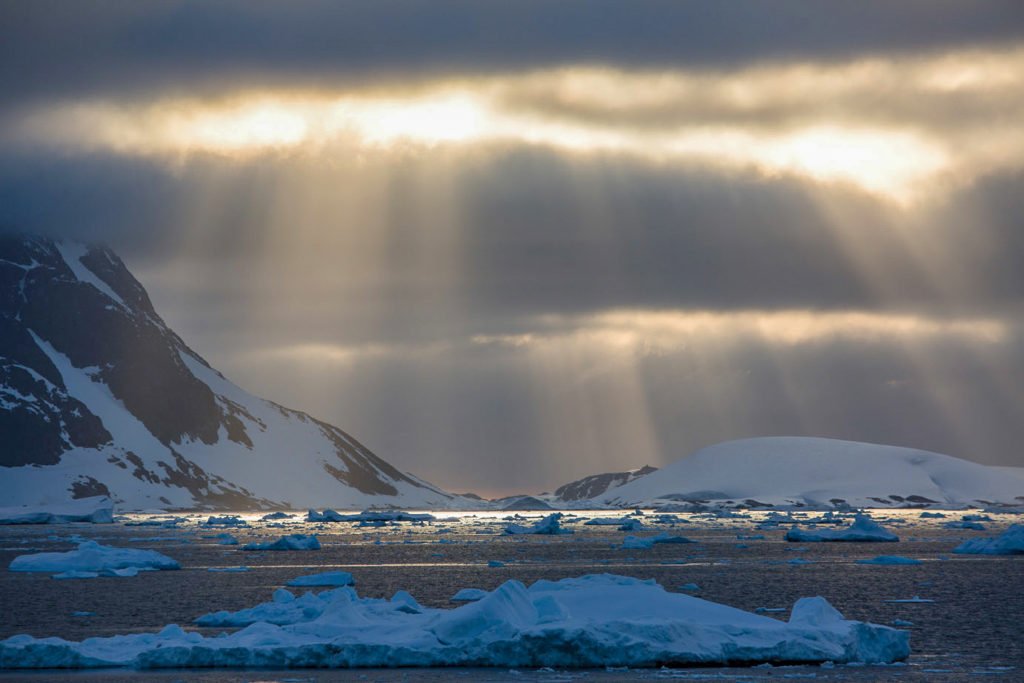
I’m absorbing and respecting all of that. You and I have talked about this several times across the Drake Passage on the Antarctic Peninsula. When I think about that place, the beauty of what you’re describing becomes so clear. Antarctica is otherworldly—it’s as close to space as you can get on this planet.
Sunniva: I completely agree! It is pure, wild, and humbling like nothing else.
Even traveling there in comfort, you are reduced by the sheer enormity, historical value, and ancient scale of the ice sheet. It defies description.
Sunniva: It’s more of a feeling than a list of facts. Having been down there dozens of times, it’s fresh for me every time because it acts as a mirror. There’s a quote by Margaret Sanger: “Perhaps the desert is no more than a mirror to make large what you truly are.”
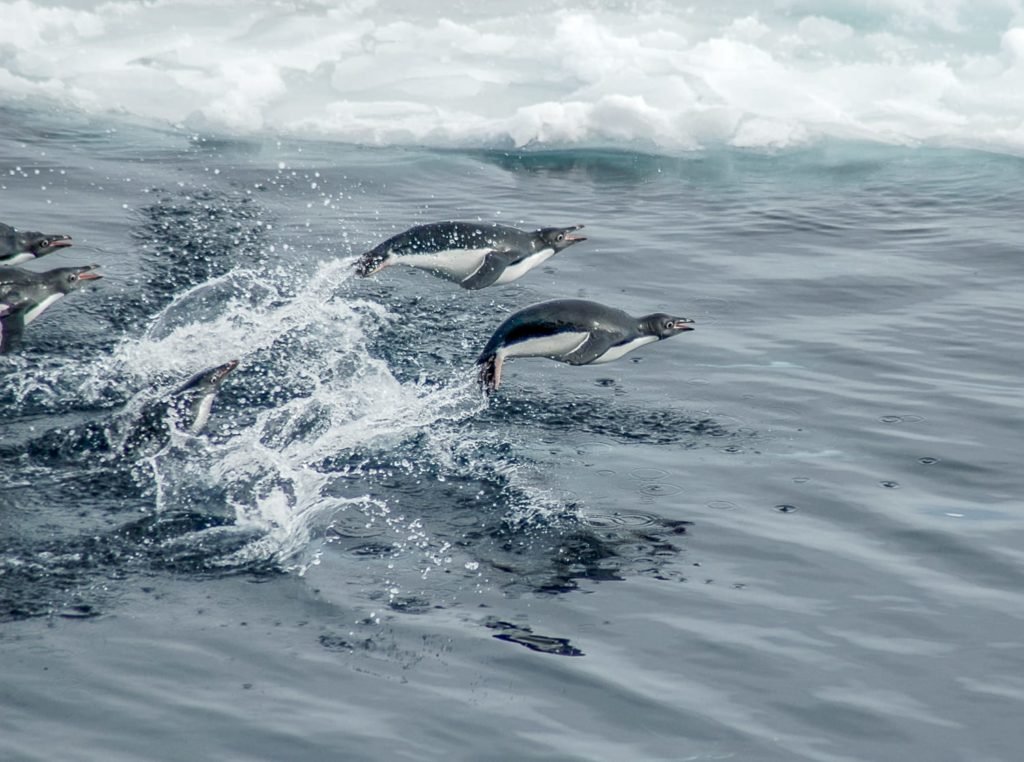
People go to Antarctica expecting to see penguins, icebergs, and glaciers. But really, they go down there to meet themselves exactly where they are at that point in their lives. In one of the most hostile, cold, windy, and dry environments on Earth, you are reflected in the light, the ice, and the fearlessness of the wildlife. People are reduced to sheer gratitude for where they are and who they are. It’s a profound wake-up call. I’ve had one-on-one conversations with people on the ship decks where everything freezes around the moment and they realize something pivotal in their lives.
I saw people in tears down there! We had a day at Wilhelmina Bay kayaking with humpback whales, and we even spotted a lost juvenile emperor penguin.
Sunniva: There he was!
We were kayaking alongside people from all over the world, including a senior executive from one of the largest oil companies in the world who was ecstatic, playing in the moment like a child.
Sunniva: That was an amazing moment to watch! His ability to just play and be in the moment was childlike and special. You can’t visit Antarctica without feeling a deep desire to protect it.
You now take people to Antarctica regularly. But not too long ago, you took a special trip with your father on a boat in Norway. Can you tell us about that?
Sunniva: My dad traveled the world as an oil tanker captain, but he had never traveled up the coast of Norway on the Hurtigruten—the historic coastal mail route connecting coastal fjords and communities. My siblings and I gifted him a Hurtigruten voyage for his 90th birthday. As he was declining with dementia at age 91, we took him last October.
It was a fantastic trip. Being on a ship staring out at the ocean unlocked a flood of memories and stories from him.
You told me that even as his memory for facts declined, his feelings remained vivid. Tell us about the special staff member on the boat who connected with him.
Sunniva: That was so powerful! On the ship, there was a Swedish crew member named Katarina who ran the gift shop. She was beautiful inside and out. My father, ever the charmer, was smitten by her grace. She would take his arm, walk him around deck four, show him maps of where we were sailing, and engage with him. His eyes went from staring down at his feet to looking people straight in the eye.
At the end of the voyage, my father walked up to the counter, took Katarina’s hands, looked her in the eye, and told her in Norwegian how much of an impact she had on him and how beautiful her violin playing was. My sister and I were in tears watching them! Afterward, we sat outside on deck seven, and my dad was quietly shaking his head. I asked, “Daddy, what are you thinking about?” He said: “I just don’t understand why I have to remember numbers, because I get so confused. But I never forget how I feel. And when I get to talk about how I feel, things come out of me that make me feel really alive.”
That is so moving. History tells us how things were, but poetry reminds us of how it felt—and our elders communicate the poetry of life.
Sunniva: It’s so true. Just today, I took him to visit an artist friend named Dagny, and they were reciting poetry verses together effortlessly from memory!
He sounds like a super charming guy!
Sunniva: He really is—a gentle, kind, disarmingly honest man.
You’re no slouch either—you’ve also skied across the Greenland ice sheet and King George Island! You don’t pick easy challenges, do you?
Sunniva: Sometime I’d love to go to a beach with a small backpack, but that’s just not what I’m used to! I’m still learning.
What nuggets of advice would you pass along to people?
Sunniva: We must never lose faith in humanity or in our ability to transform what is wrong. And we must never doubt our abilities. I don’t feel extraordinary compared to anyone else, but I see extraordinary potential in everybody. Sometimes we just need to look at family, friends, or colleagues and give them a compliment or share something great we see in them—that might be the permission they need to do something extraordinary.
We need to keep community, curiosity, and conversation alive by traveling, being vulnerable, and connecting with nature.
What’s next for you? Any big plans?
Sunniva: I have a big plan percolating inside me for another long expedition—perhaps in the Arctic again. When a calling sinks deep into your soul, it takes over and becomes your purpose. It’s that state of flow when everything aligns.
Sunny, you’re a rockstar! Always a pleasure to spend time with you.
Sunniva: Likewise, John! Thank you so much. Lots of love and big hugs.