Podcast: Play in new window | Download
Subscribe: Apple Podcasts | Spotify | TuneIn
LANDED Podcast 004
Brazilian style with mad genius Bob Shevlin
Bob Shevlin is a true character.
In person, he’s the definition of cool: “cool doesn’t say much, but it knows what to say.” He’s a creative genius, but he’s humble and a little camera shy.
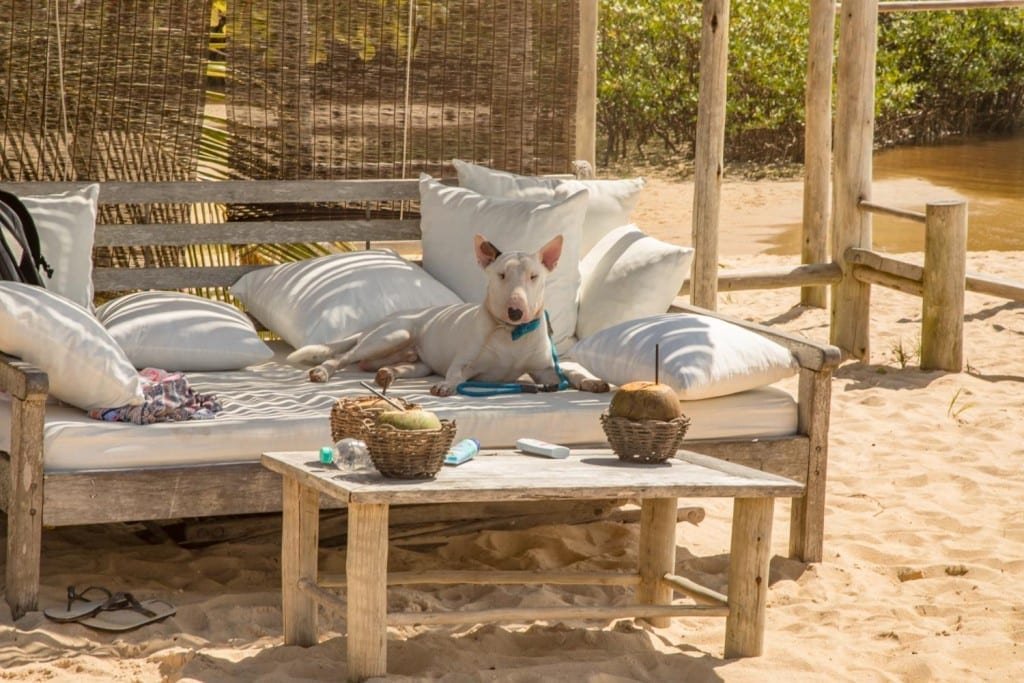
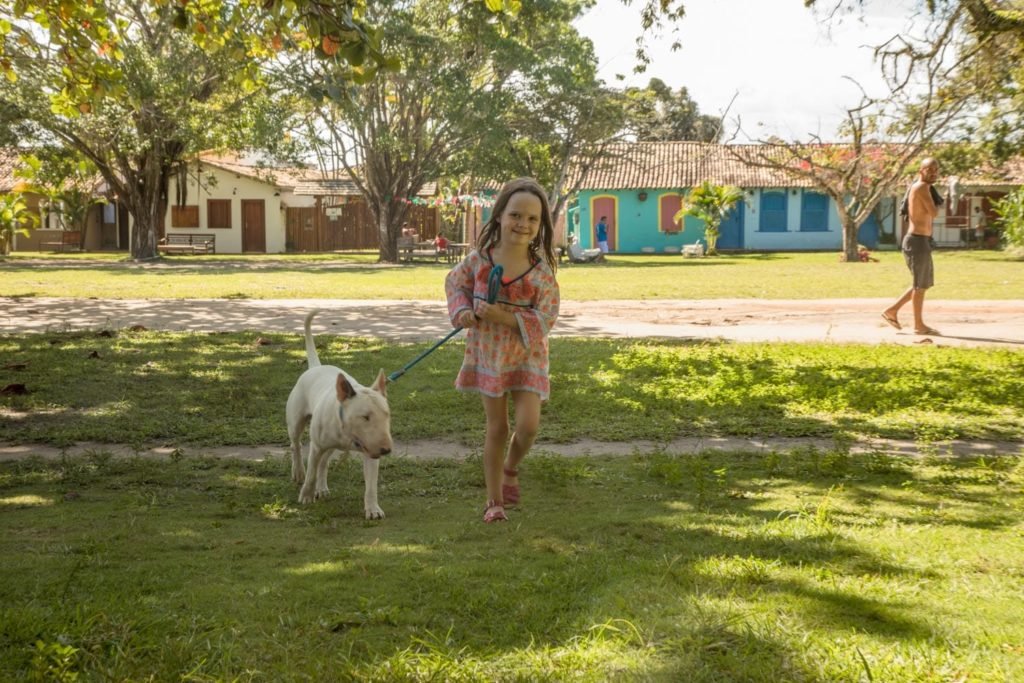
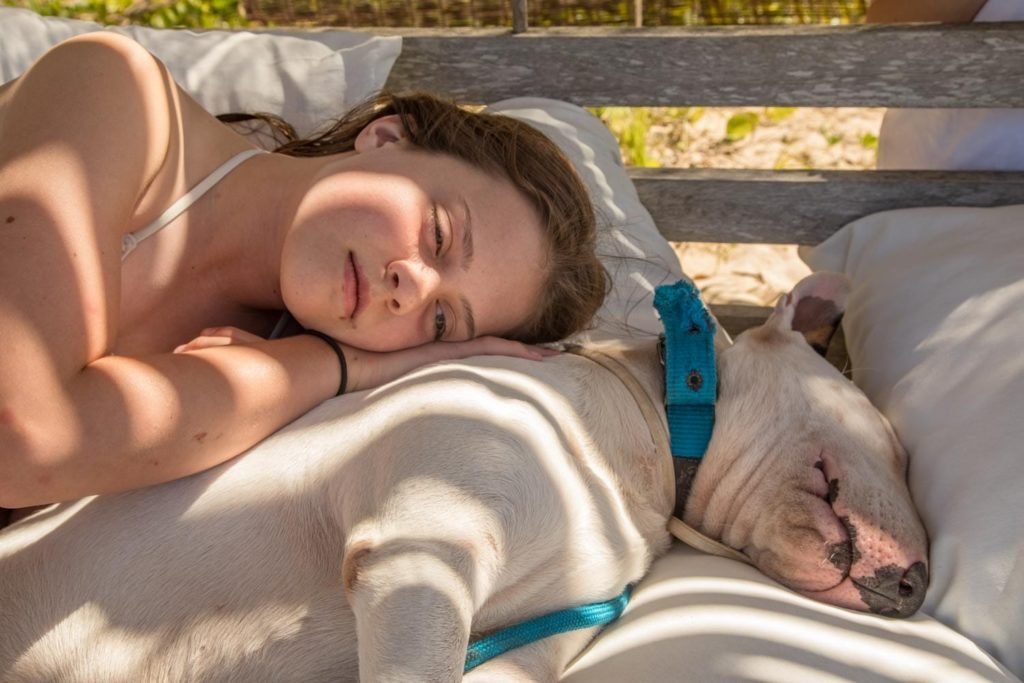
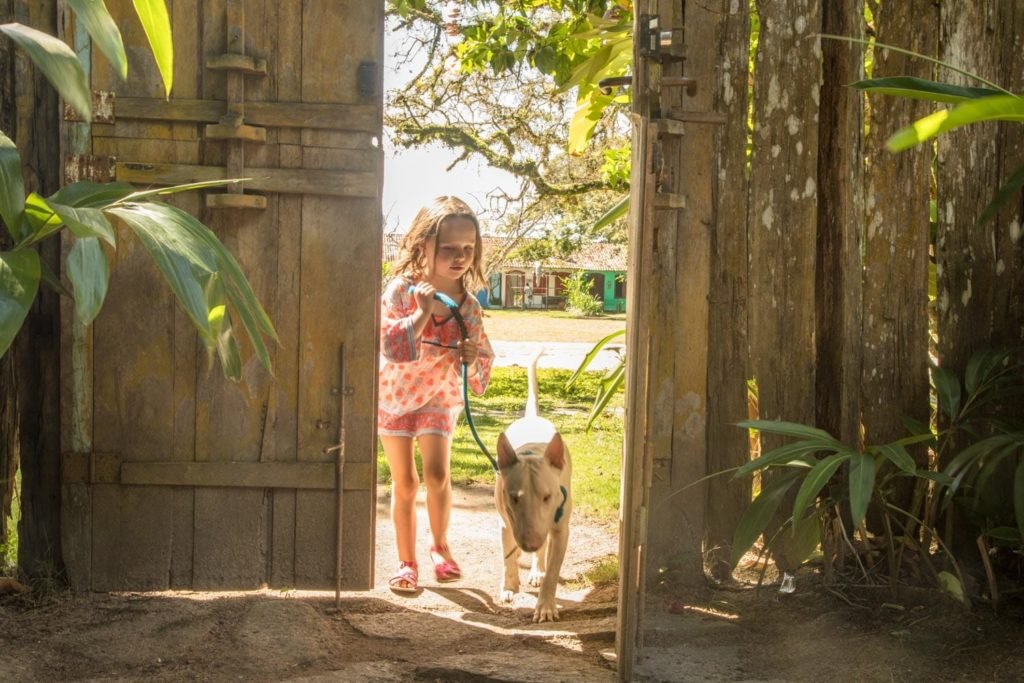
That’s why I’m posting a photo of his bull terrier, Zero. Happily, Bob was willing open up and offer he backstory to his unforgettable hotel in Trancoso, Bahia, Brazil.
We met Bob in 2015 at a conference in Switzerland, a few years after our first visit to Uxua. Seeing him for the first time, from across a hotel dining room, I remember thinking, “That guy knows more about fashion than I’ll ever know. Either that, or he’s um pouco louco.” (He also looks like he can benchpress multiples of his bodyweight.) By the time that conference ended, Bob had become one of our favorite people in the hotel biz.
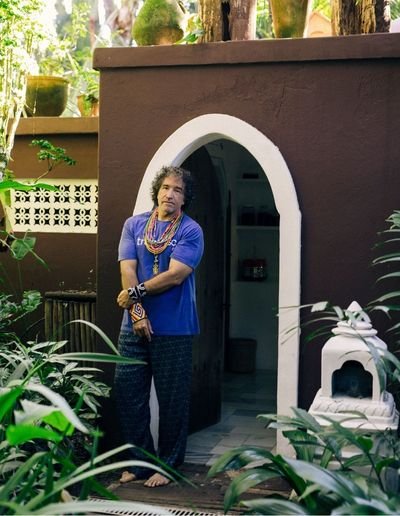
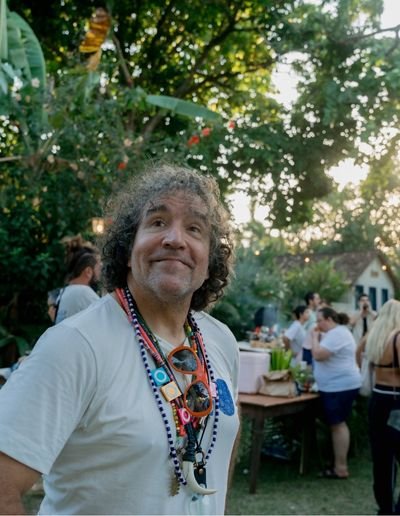
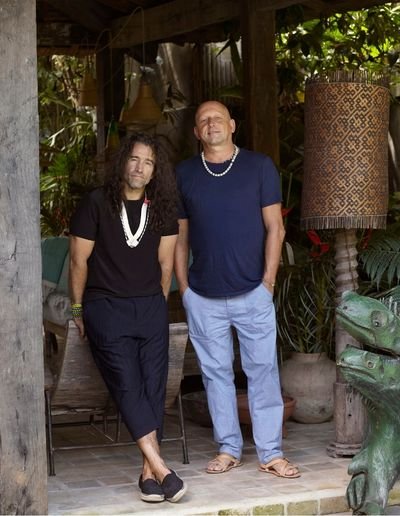
Bob and his business partner, Wilbert Das, are known worldwide for their sense of style and artistry. They also deserve much of the credit for preserving the essence of Trancoso, helping locals understand how special their community is, while earning fair value for their increasingly rare craftsmanship and skill.
If you’ve never been to Trancoso, put it on your list near the top. If you want to enjoy it to the fullest, stay at Uxua.
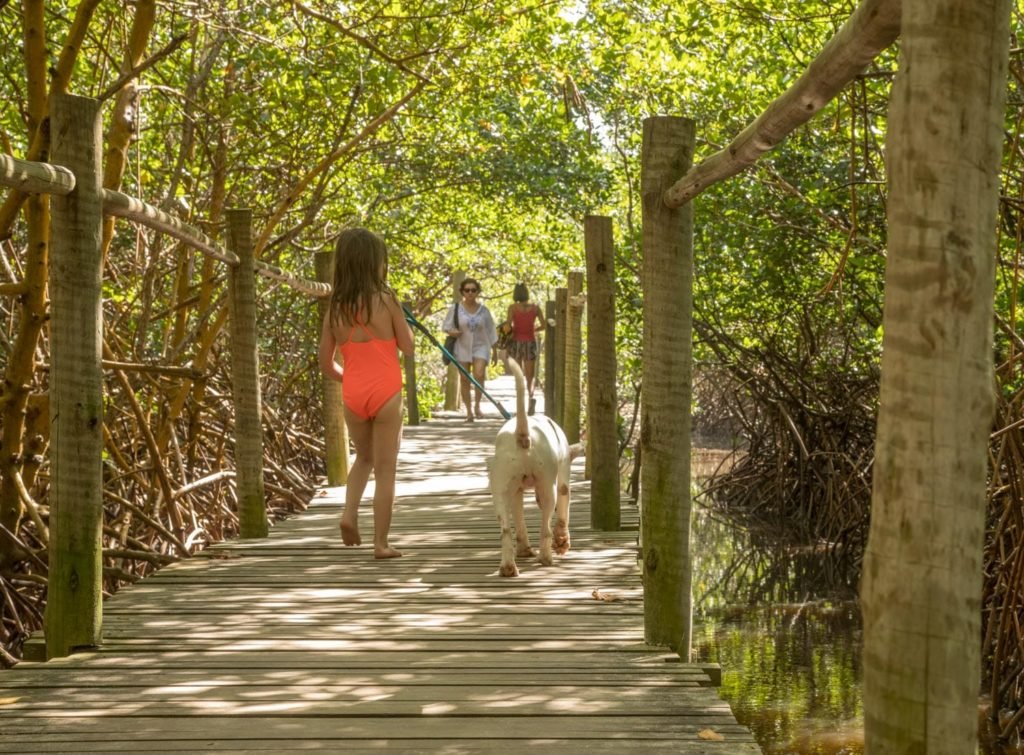
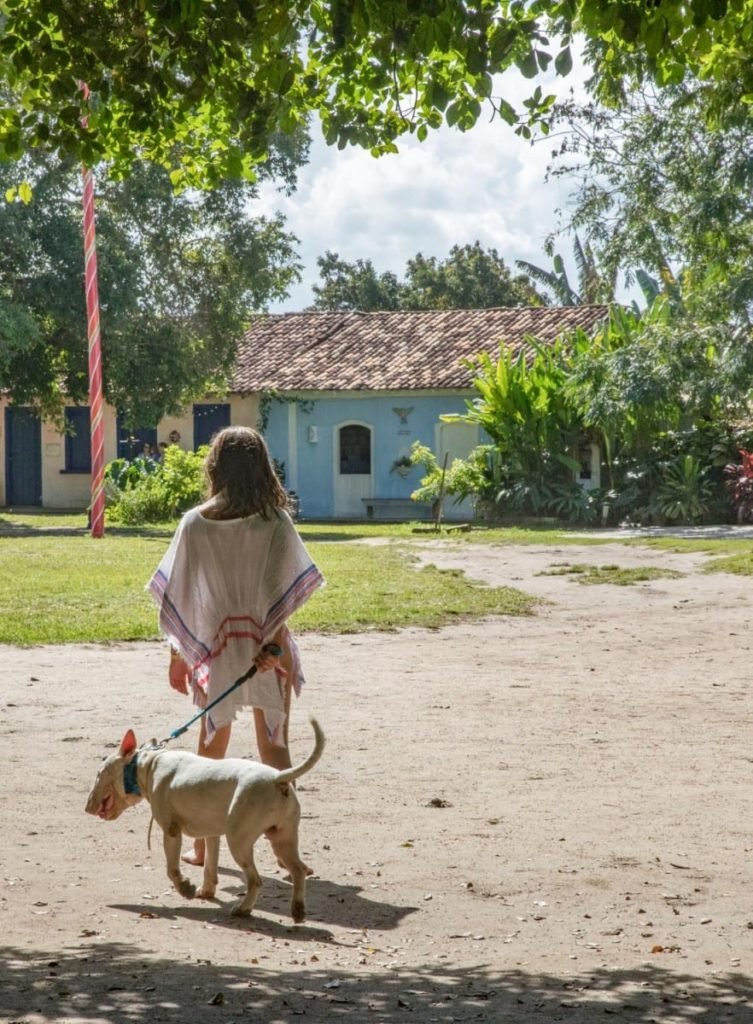
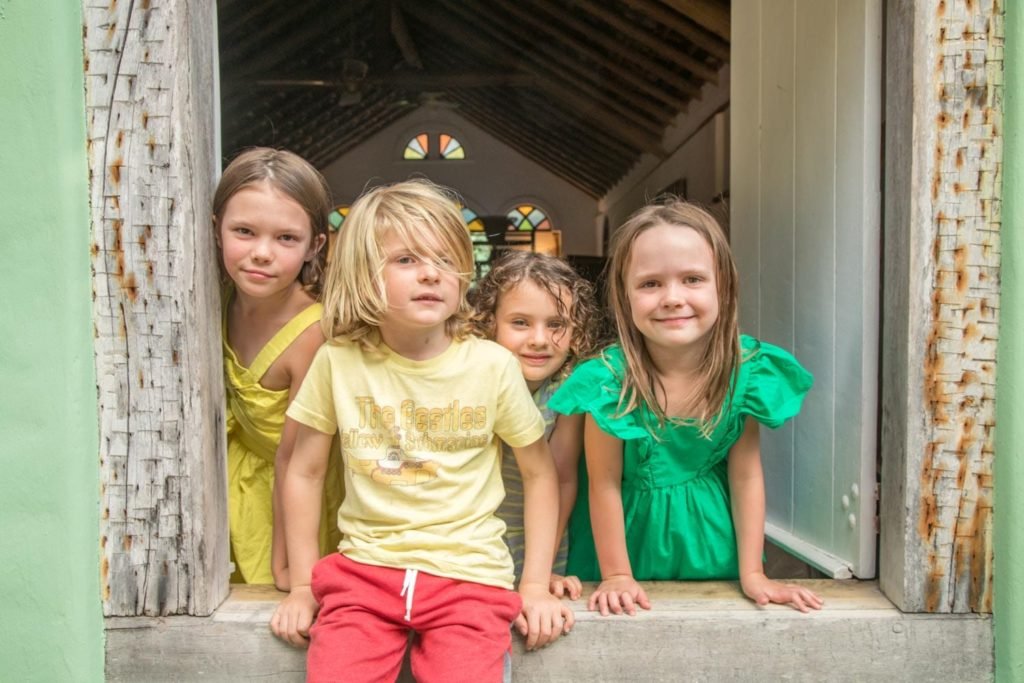
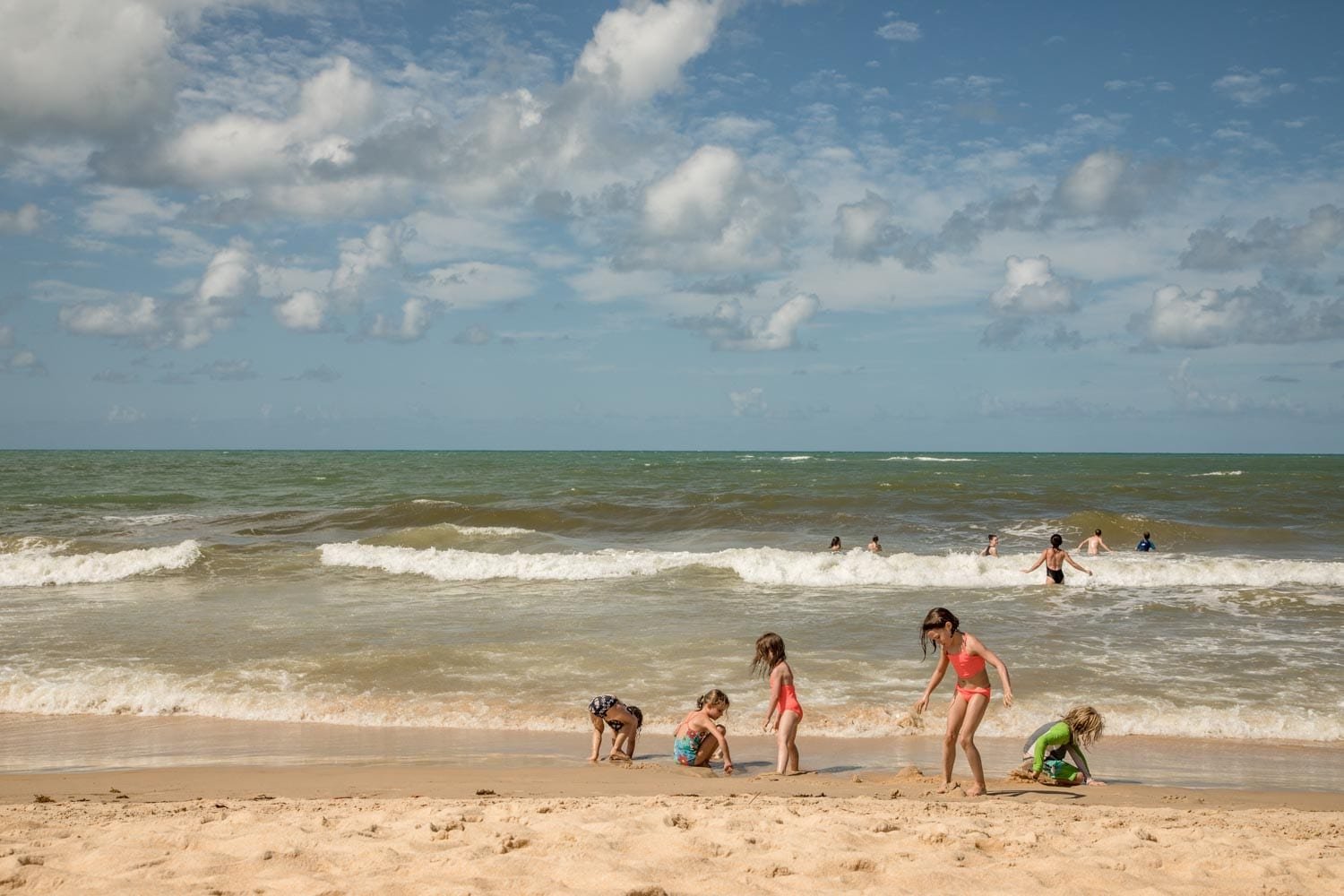
Back to Zero for a minute. This gentle bully is a local legend. We borrowed him during our 2018 invasion of Casa Anderson. He made my kids’ day. Sure, he bit my arm and I had to drag him down the beach, but he also helped us feel right at home.
Trancoso, we miss you.


Show Notes
If you’d like to learn more about Uxua’s local artisans, check out Uxua Casa. Sure, a that custom chair might take a year to make, but it will be worth the wait.
Bob Shevlin, welcome to the podcast. Bob, thanks for joining us.
Bob: Hi John, happy to be here.
Friend, where are you today?
Bob: I’m in Trancoso on the edge of the rainforest here in the south of Brazil.
Yeah, one of my favorite towns in Bahia.
Bob: It’s my favorite.
Bob, you’re, I think, half of the creative genius and a co-owner and founder with your partner, Wilbert Das, of UXUA Casa Hotel in Trancoso, which, you know, if you do a quick Google search, you’ll see you guys are appreciated by just about every design magazine there is. And…
Bob: Thank you.
…a favorite of many travel magazines, too.
Bob: Yeah, I appreciate you calling me half of the creative aspect here. That was generous. My partner is a designer, Wilbert Das, and he was at the top of the game in the fashion world for many years. Down here, he probably has 99% of the creative input—well, not 99%, but he brings out a lot of creativity in the local artisans and craftsmen he works with, and I contribute just a little. I’m maybe a little more of a storyteller, and I’m very involved in social projects, and Wilbert supports that very much, so we’re kind of a perfect partnership.
The first time I visited the hotel—I don’t know, this was probably six years ago, seven years ago with my wife—Wilbert took us around, and he was on the property. One of the things we’ll never forget is that he was living in a room for a month, then he was moving to another room for a month, and every time he went to a room, he was inspecting it and checking it for what could be done to improve the room. And many of the improvements he was making were also making use of local materials or local artisan work.
Bob: Yeah. You know, I will say that goes back to the root of this project, that style they have of going into all the different houses we have. We bought 11 of them, and we’re changing them all the time. The original appeal of coming to Trancoso, if you want some backstory, was that we were working in the fashion world quite a few years ago. Wilbert started, I think, as a designer in 1988, and by ’92 or ’93, he was creative director of an Italian fashion company, and I came and began working there with him, I think, in about ’95.
In those years, fashion had seasons. There was this wonderful concept of a spring-summer season and a fall-winter season, and in between, you had nice breaks. It was a great lifestyle to be in the fashion world then. So we would spend a couple of months every year traveling, looking for paradise all around the world. We both also like architecture and furniture design a lot, and we began to get in the habit of, when we could scrape together a little bit of savings, we would always put it into buying old properties in different parts of the world that inspired us, places that needed a little bit of love and a little bit of restoration. We began doing restoration projects around the world. It was not really intended to be a business or anything other than a way to take our minds out of this very fast, ephemeral fashion world into a different kind of creativity, which is a little more permanent.
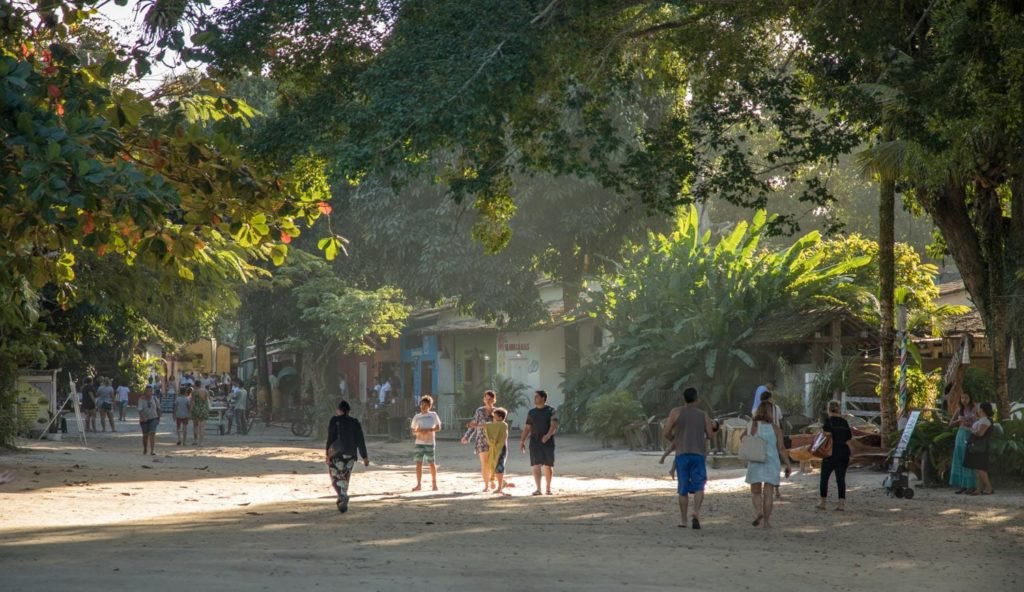
Traveling around the world and looking for paradise places brought us to Trancoso eventually. Normally, our routine was always to visit these little places in the world and not go back—not go back in the sense of not stopping looking for new places. So you restore a house or a property and just move on. But Trancoso has a really particular appeal, which is that until about 25 years ago, this town, which dates back to about 1550, was pretty much cut off from the rest of Brazil and the rest of the world. There were no roads connecting it, there was no electricity, and until 25 years ago, things that they needed in Trancoso, they were making.
This being a place where, of course, in Brazil you have spectacular wood, they were doing amazing work with wood, but they were also doing nice things with ceramics, with textiles, but everything made by hand. And of course, made in a very organic way because they were using only materials they had here, and also doing a lot of recycling. When you don’t have a flow of raw materials and merchandise coming into the place where you live, you tend to get pretty creative with recycling.
So we started with getting a home here, a little simple kind of… You know, the style of the homes here, I can best describe as if you would give a five-year-old a pen and a piece of paper and say, “design a house.” That’s kind of what you have with the little simple houses of the village.
And did you let the kid color the house?
Bob: Yes, and I let the kids color the house because they like color here. But these simple homes were very inviting for us to restore. Once we started working, tapping into that artisanal skill—which, here, I’ve got to say, you know, this is a remote and small place, but the artisanal skill level is world-leading, because they never lost this skill. They were actively, just very recently, having to be self-reliant and make everything they wanted. Because it’s Brazil, because it’s a place where they also have a sense of beauty, they have a sense of liking things to be nice; they were making beautiful things.
Wilbert and I started restoring one house, and we just got off on this process. It was totally non-industrial, totally handmade, and with really fun, creative, and very joyous people, Brazilians. So we started one house, did another and another, and these houses were in a very simple condition, welcoming this kind of restoration. We never really stopped. Wilbert’s process of constantly reinventing these houses is because we’re still collaborating with those artisans today. We have a line of decor called UXUA Casa, and we’re just constantly making new ceramics, pillows, wall treatments, and new furniture out of these recycled materials and organic materials, and we’re just constantly moving them around and redecorating, rechanging. So if you come back to the hotel now, since you haven’t been here in a few years, you’re going to find that the houses all have a different flavor than when you were here, and this I quite like.
It’s a unique hotel, and we should explain it to people, and you know, we should spell it, too. It’s UXUA. So, it’s a unique hotel in that they kept each of the houses they purchased and renovated, which are all located near the main square of this town from the 1500s. And they’re loosely connected, you know; they’re sort of connected by a garden and a bit surrounded by a perimeter wall, but also open to the main square. And so you can rent a house, and each house has its own character. One of them is built up in a tree, one of them has a rooftop plunge pool, but each one has its own flavor, its own desirability. Bob, how did you take that concept? I mean, at some point you had several houses, and you must have had friends in fashion or art that were wanting to come and visit, and you started renting the place out to them. Is that right?
Bob: Yeah. You spent time with Wilbert because you know the history well. That’s exactly how the evolution occurred. When we expanded from doing one house to a couple of other houses, we kind of had to justify it in our own minds: what are we doing? We don’t need two houses, we don’t need three. The idea came to us that, because it’s such a stimulating place—Trancoso is a visually stimulating place, and I would say spiritually stimulating, because the people are so welcoming and without judgment. You know how Bahia is; you’ve been here yourself. They are kind of pure people in the sense that they don’t follow any particular religion strictly, but they’re not dogmatic towards any particular belief or anything except that you should accept and welcome people, and this is very good for the soul.
Wilbert and I had this sense that if we have multiple houses here, we could have a little creative utopia for our friends from the design world. I have a lot of friends who are out in Los Angeles in the creative industries, also writing, making movies, doing music. For creative people, we thought this could be a utopia to come for a couple of months as our guests, just to stay and get their energies back.
As we expanded even more and became six houses, seven, then I just asked this practical question: maybe we should rent the houses out? It became a little bit of an inevitability in a way because, of course, you had to start having local people work with you and keep the houses and the gardens, and it became a hotel on its own before we realized it was a hotel.
What you said about this aspect of not really having walls around it- this is really the key thing that made us want to make it a hotel, because the thing that I miss when I travel in hotels is that I don’t feel like I’m having the experience of the destination. I feel like I’m having the experience of a hotel guest in many parts of the world and not really living the village life. Obviously, a lot of people rent houses in the world to have that village feel. For me, to tell the truth, I like the services of a hotel. I like the pampering, and I like the human contact of a hotel. I prefer to meet people, local people, and talk to them, rather than stay in a house on my own. I want to feel the chance to connect with people.
So this morphed into a hotel, but one that is set completely in a harmonious way within the village, which I think is what makes it distinct. There’s no signage. The houses just look as if they are houses of the village. If you don’t know they’re there, if you don’t know that it’s UXUA, you’ll just simply think these are homes of Trancoso. That feeling for me is the magic—that’s the magic spot for us, that you can have a village experience in Trancoso when you stay on the town square in a home.
That worked. I think people are really looking for authenticity in traveling now. So from the moment we opened, it clicked. It found its audience very quickly, and still today we always emphasize keeping everything authentic. Don’t try to control the experience of every guest in the way that some hotels want to. I want people to come and stay as if they have a friend living in this town and they’re just visiting, and they can explore it in the same way somebody who lives here explores the town—walking around, meeting people. And it doesn’t hurt that these are the friendliest people in the world. They do our job for us, as you will probably recall. Nobody is a stranger in a place like Trancoso; everyone is happy for a chat and a smile, and that makes it pretty easy to do hospitality work here.
It was even to the point that we were invited to a wedding just because we happened to be there on the Quadrado. Very welcoming, very warm, and it does feel in some ways like a homestay if you were staying in the home of someone who had a very rare design ethic and who also happened to be a master refurbisher of found goods. Because, you know, Wilbert will see a bucket or a part of a boat and make a lamp out of it or a log and make a desk out of it that you’d aspire to own, and he’ll do it in a weekend with a local craftsperson.
Bob: The vibe now, I have to say, has evolved a little bit, which is what we did in the last year and a half or so, and I’m really happy with this. Like everything here, it just happened organically. Wilbert had been looking to find somebody who was still doing the traditional weaving from here. They were weaving their own fabrics, making clothes, making sails. Wilbert found a guy, and this is very much a typical story—like how Wilbert found the builders here who were starting to get away from the traditional building methods, and Wilbert brought them right back into it. Now, that is really the way to build homes: the traditional way.
Wilbert arrived at a key moment in the town’s history where it could have transitioned into a more modern, contemporary way of construction, and Wilbert came in, identified those artisans, celebrated what they were doing, and made sure they understood that they’re still relevant and that people really want this kind of work. Now, that’s really the standard in the town, to use traditional materials for building.
Wilbert now has extended it because we’ve got the homeware decor line. Wilbert was looking for a weaver, and he met a guy who was actually working as a waiter, and Wilbert said, “Someone told me that your family is the best weavers, but you work as a waiter now. Do you still know how to weave?” And the guy, his name is Evandro, said, “Oh, I have a loom in my house, and I still do it for my friends and my family.” This was just a great coincidence. We met the guy, got his loom, put it inside the hotel, and he became an employee. Now he is in here weaving every day inside the hotel gardens.
We’ve got two looms inside now, a ceramic wheel, and some people working with soaps inside the hotel gardens. That evolution, from when you were here, it always felt like home, but now it really feels like a community within a community because you have people actually in here working on these traditional crafts. We don’t explain it a lot, so the guests walk through these beautiful gardens and find somebody weaving, and it’s a surprise if you’ve come to what you heard is a luxury hotel. There are people in here making ceramics and weaving, but I love that because it feels like you’re in the real village, in the old Trancoso.
I really like that evolution of showing the craft process and the people to the visitors. Of course, all the artisans here are colorful, wonderful people, so the best thing that can happen is for a guest to ask them what they’re doing or making, because there’s going to be a friendship for sure. Bringing that artisanal process into the hotel gardens and giving it the life of craftspeople working- for me, this is my dream project. I like to not just have the hotel be this museum of beautifully made artisanal things, but actually let it be a living process of artisanal creation.
And now these products are available on your website, right? There is UXUA.com—that’s the hotel—and there’s also UXUA Casa.
Bob: uxuacasa.com is where we have the furniture and this home decor.
The furniture, uxua.com.
Bob: Exactly, exactly. And this is very much, I would say, the opposite of the trend of e-commerce and convenience. A friend told me that with Amazon in New York, you can have your orders the same day, and it made me laugh because if we make a big piece of furniture for somebody here—a bed, for example, made out of an old boat—I can guarantee you will not get a promised delivery date. You can get pictures along the way, but it will get made as it gets made. It might be six months. We’re doing a kind of… It’s the luxury of waiting when you do artisanal stuff. The small things like bags and blankets, of course, those we have, but there are people who want to order real furniture pieces made here, and those are made as they’re made. These local craftsmen have to source the materials, and they do things in their own time. It depends on the fishing season, sometimes the crops, sometimes a family thing, a new baby in the family. So it’s really the opposite of this “see it and buy it” process of the world. Even fashion now, you can buy right off the runway. We are going in another direction here: the luxury of waiting. That’s what I say.
It seems to me you’ve opened up a restaurant, too, if I’m not wrong, that’s available to non-hotel guests, right? I mean, anybody can come in now and enjoy a meal.
Bob: I’m glad you mentioned that because I had not realized you didn’t see the restaurant. That was the one thing about the hotel that gave me a bit of a conflict. We made the hotel so that, inside the grounds, it’s really quiet. There are no public bars or restaurants inside the hotel itself. You recall it’s a very jungle-like, quiet atmosphere within the gardens. But as the UXUA name spread around, of course, you had people coming to Trancoso with a curiosity to see this UXUA, but the hotel itself was a closed property. We had a beach bar, which is very nice, but there were a lot of people hungry to satisfy their curiosity about the design, style, and what UXUA is.
So we had the chance to open a restaurant facing the town square. We ended up getting another one of these little houses, and I jumped on that because it gave us a face on the town square. People who are curious about us can come and see the design. We make everything there—all of the cutlery, all of the plates, the whole thing is this UXUA story with a lot of recycled materials. So people have a chance to interact with UXUA without staying in the hotel.
The hotel is often full—it’s not always easy to get in—but nobody needs to miss interacting with us if they come to Trancoso to have a meal. The restaurant is very nice because we’re a small, boutique kitchen, so we’re doing a lot of seasonal, healthy, local cooking with a touch of international—I’d say a healthy international influence.
As you know, the hippies rediscovered Trancoso in the 1970s; they’re the ones who reintroduced Trancoso to the world. So the native people tasted quinoa and brown rice before they had potato chips, which is kind of funny. They were eating homemade yogurt from the hippies before they were getting Coca-Cola. So there is this health food tradition in Trancoso, and that is perfect to merge with the traditional, spicy Bahian food which, I don’t know if you remember, but it’s heavy and spicy.
I’m thinking of peppers, and I’m thinking of coconut and dendê, and…
Bob: Exactly, exactly. It’s wonderful food, but that was made for people who were working outside 14 hours a day. It’s very spicy. The African slaves were bringing over spices from West Africa, and this is the region of Brazil where those spices stayed in the diet, and they still really love that stuff. So it’s nice to introduce a little bit of the lighter… I don’t think “hippie food” is the technical term, but there is that route. The first restaurant in Trancoso—probably you didn’t know this—was a macrobiotic cafe 30 years ago. I still smile at that: somebody opened a macrobiotic cafe here before a sandwich shop or hamburger place. It was a macrobiotic cafe, which is still open—a wonderful restaurant called Capim Santo.
You know, I’ve eaten there, but I didn’t know that’s how it started. But this is a town where, when you’re there, everything is casual. You’re as likely to eat outside under a banyan tree with lanterns in the branches as you are to eat at a linen tablecloth inside. And there are great restaurants even down on the beach, including your beach bar and some of the beach bars like the one… well, there’s a great little shack at Praia.
Bob: Yes, Silvinha’s. It’s a wonderful meal. Cooking on a wooden stove out there on the beach in a beach shack, doing her Bahian… it’s a bit of a confluence of Indian—because she loves Southeast Asia—and Bahian flavors.
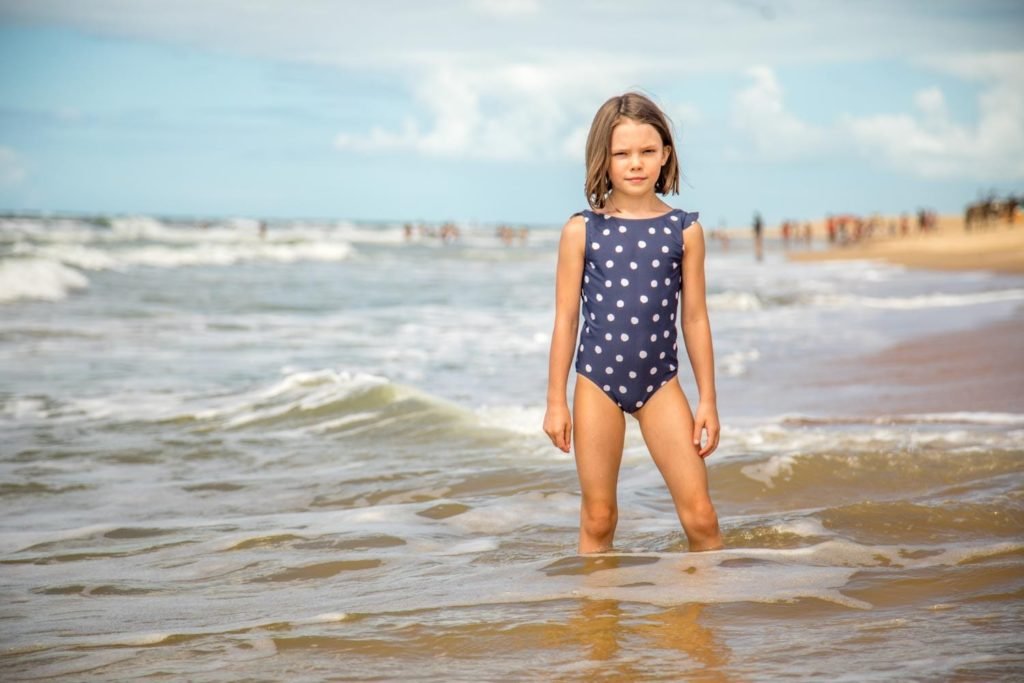
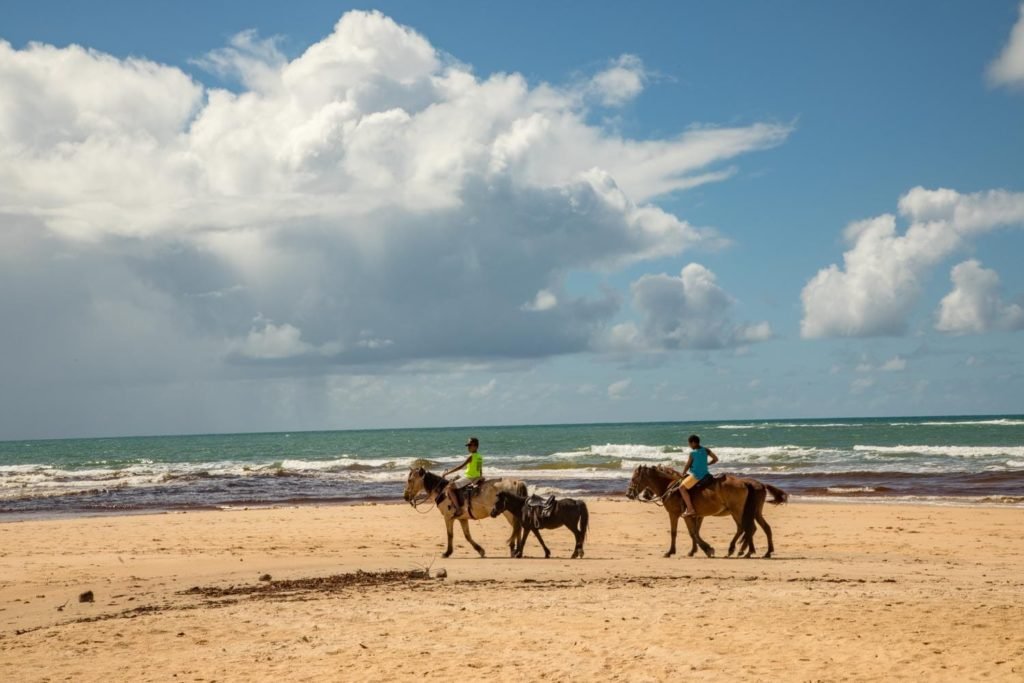
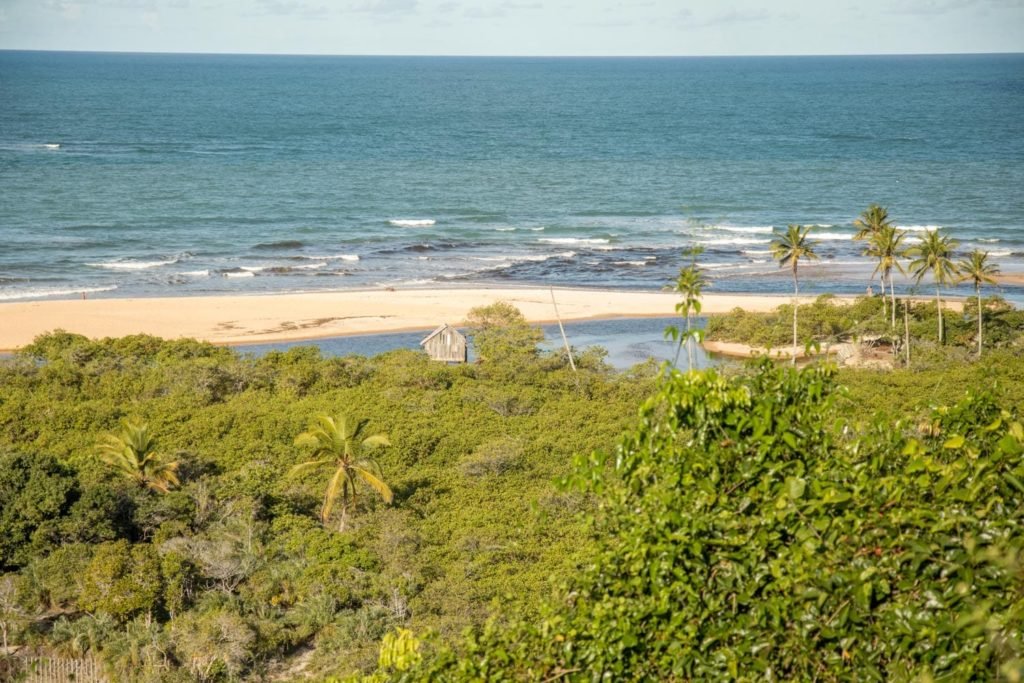
That’s a really unique meal. The local food is great in Trancoso, but you’ve had these waves, like you mentioned, of hippies and then fashion people, thanks largely to you. How is it that this magical beach town—a fisherman’s town up on a bluff overlooking an amazing beach that stretches for kilometers in each direction, where there’s no such thing as a lack of privacy, you can walk for miles and not see anyone except maybe one guy on a horse—how is it that a place like this has not been adversely affected by the waves of immigration?
Bob: It’s a lucky circumstance here, a really lucky circumstance. There’s no doubt about that. The fact that it was so isolated for so long was a small miracle, and that the first people to rediscover it were hippies and not developers is fundamental. In the 1970s in Brazil, you had a military regime running the country. The young Brazilians were not very happy in the cities; they were dreaming about getting away, checking out of society, and they started to move to Trancoso. Those hippies had connections with hippies around the world, and they started arriving here on the hippie tour from India, Nepal, Kathmandu, and Trancoso was on the map.
The first arrivals from the outside were hippies, and the local people nicknamed them clowns. They called them Biribandos; they thought they were clowns. It’s kind of funny—there’s even a book here called Nativos e Biribandos about that first contact between the local people and these “clowns,” the hippies. But the nice thing here is that because of the particular culture of Bahia, there is not really a sense of outsiders. If someone comes and settles—and by settle, I mean stays a day or two—they’re already considered part of the community. There is a real sense of welcoming. By your second day, you have a nickname; by your third or fourth day, you’ve got lovers, and if not, there is gossip that you have them. You integrate into the community very quickly in Bahia.
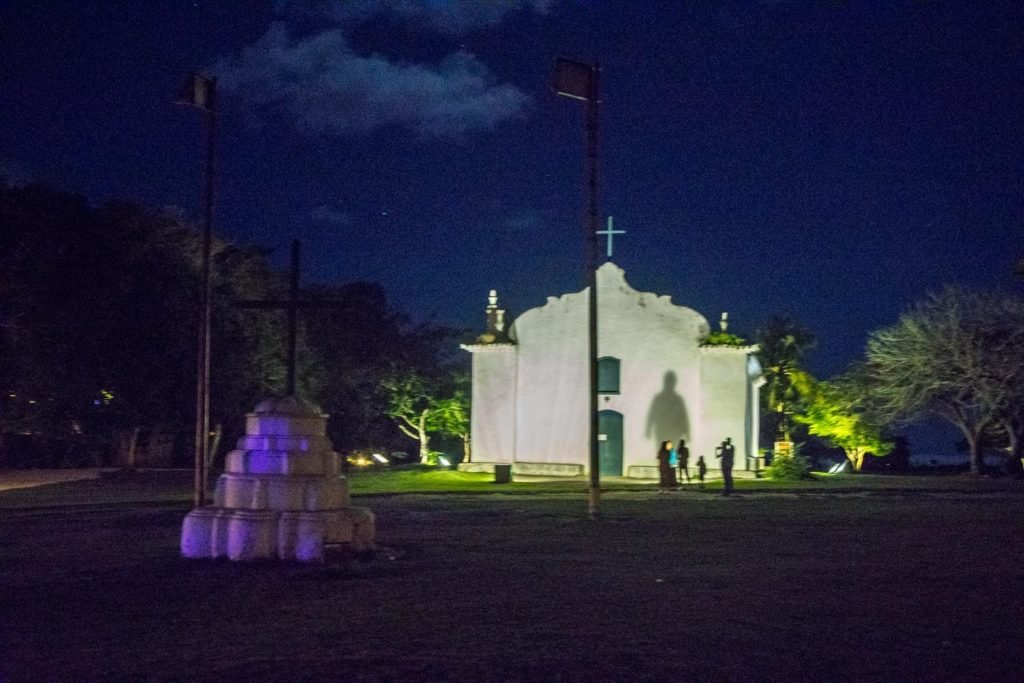
Those hippies were fundamental because they were environmentally minded. They helped influence the natives, who had their own sense of tradition and preservation. Remember, this is a town that for 500 years followed that Portuguese colonial model of a church overlooking the sea and about 50 little dollhouses around the square. The native people over those five centuries never deviated from it. One family was maybe more prosperous than another, but they never bought the neighbor’s house and combined them, and they never put a second floor on the house.
They built a bigger garden, maybe.
Bob: They respected the square. They would build a nicer fishing boat, but the town square, they liked the way it was. There was an intrinsic sense of preservation and tradition in their soul. They didn’t need any government to tell them to keep that; they didn’t need UNESCO. They did it on their own.
The hippies came and did something the natives would not have been prepared to do, but the natives understood the threat of the modern world and what it can do. The hippies did one thing together with the natives that was fundamental: they blocked the town center from car traffic. That was a brilliant decision. I don’t know how long they discussed it or labored over it, but the fact that nobody had cars at the time made it a pretty easy thing to do. It probably wouldn’t be so easy now, but they blocked the town center from cars and also began to develop this grassroots environmentalism. There was always pressure on any outsider who came here and was going to build a house on the beach not to disturb the beauty and tradition of the place. So the homes that did get built on the beach are all built back in the rainforest; they’re not visible from the sand.
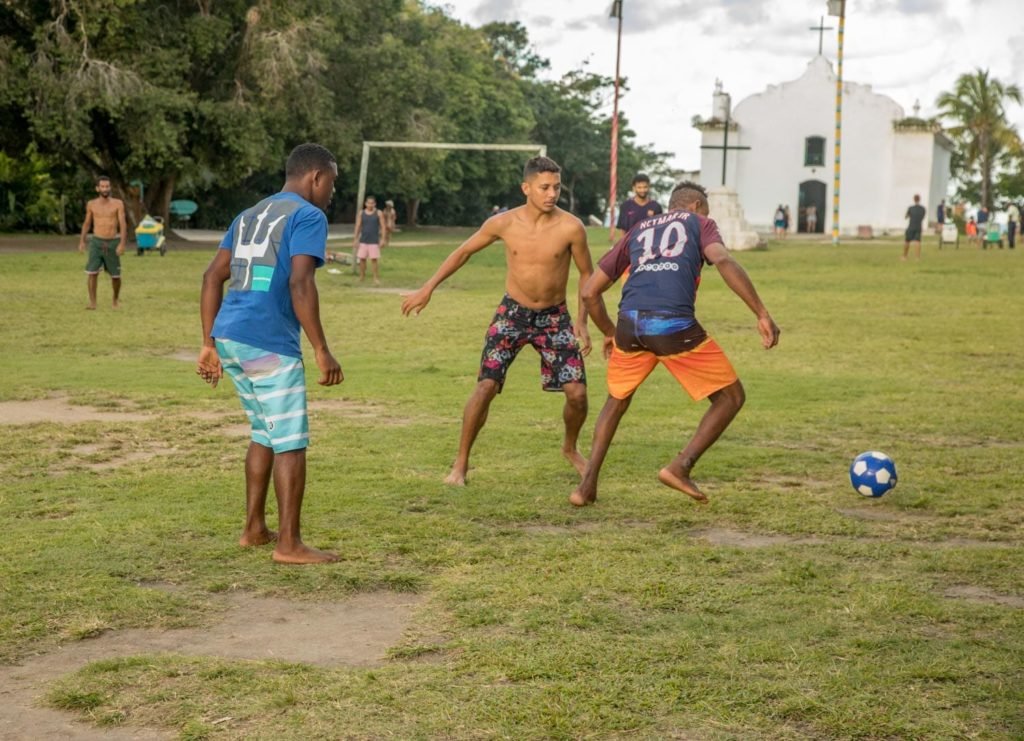
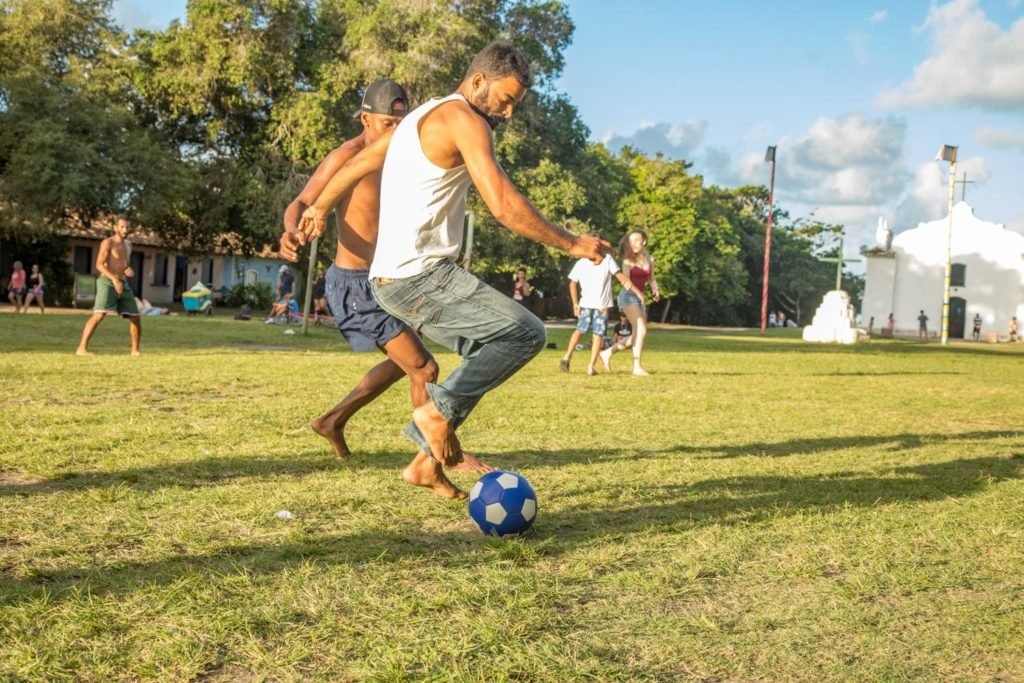
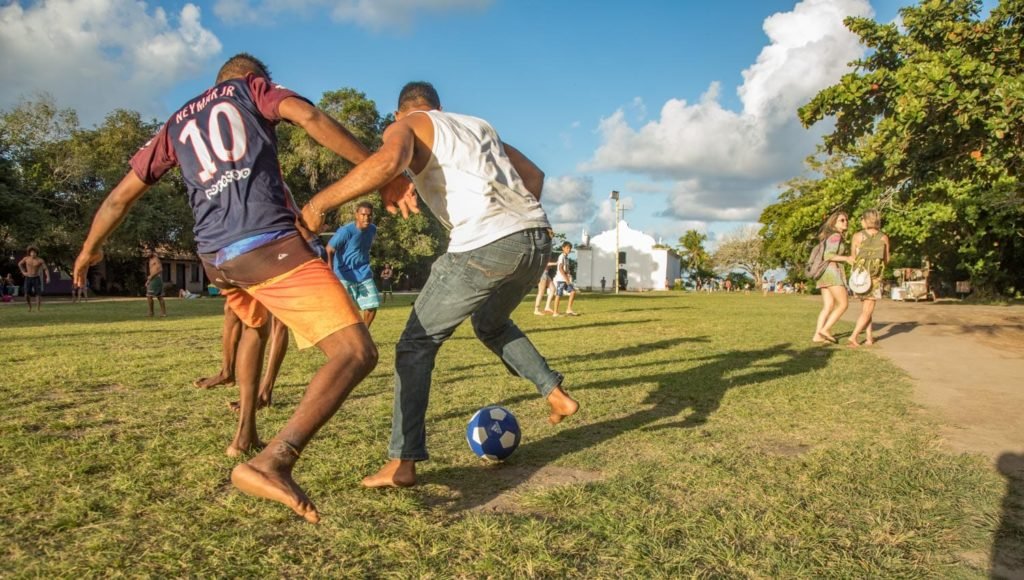
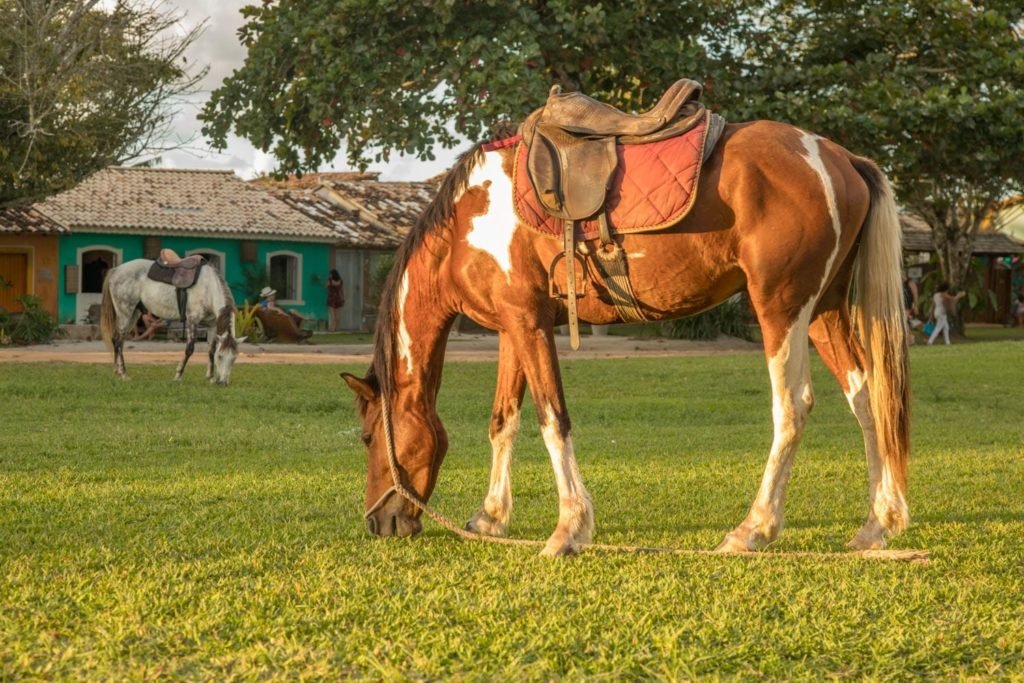
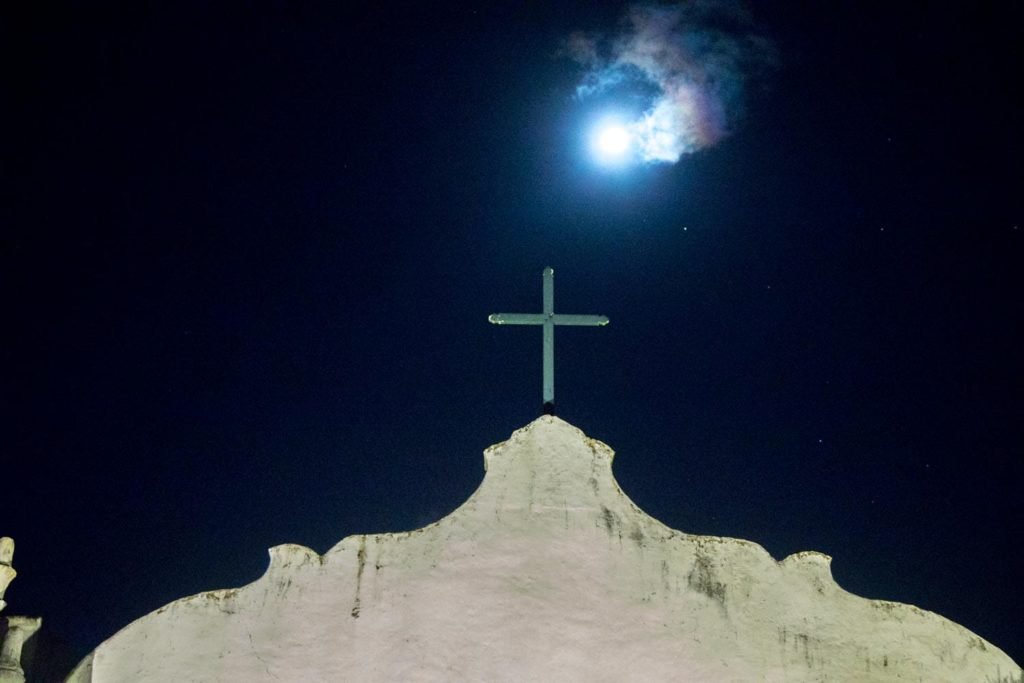
There’s almost a wall of nature separating the beach from the development. And this is one of those places where I would argue that the best location is away from the beach, up on the town, because this Quadrado, this main square, is so alive. There is a church there that’s used every day, and people are riding horses, playing soccer, or practicing capoeira on the main lawn. It’s the communal lawn that is the Quadrado.
Bob: To give a sense, it’s 400 meters—a huge, grassy town square full of horses grazing, kids playing soccer. I agree completely with you. Trancoso is a place where the soul is the town square, and it’s a privilege today to stay in the center of a village that basically feels like it did 100 or 200 years ago. The beaches are spectacular, but there are beaches all over the world. The allure for most people is this town square that somehow survived the arrival of tourism without changing its atmosphere. That’s the key victory. It’s an inspiration for a lot of people in the preservation movement because it’s a thriving, functioning niche of high-end tourism, and it’s very successful without compromising the environment. That’s the thing I’m proudest of here.
It’s so rare to find a place where anyone can feel at home. We’ve sent clients there who have to be careful with their privacy, who are trying to escape from notice or fame, and they’ve come with some skepticism, saying, “We’ll see. I wonder how long before this goes the wrong way.” And they’ve been able to enjoy themselves perfectly as people, without any harassment.
Bob: I remember very well, John. I don’t know if I ever told you, but you sent a pretty important celebrity down here, and I remember meeting her. It was by coincidence, because I tend not to introduce myself to celebrity guests. I’ll introduce myself to anyone, but I have the sense that celebrities really want to be left on their own. Usually, I’m wrong and end up discovering they’re outgoing, which is how they became famous in entertainment.
But I met her, and she was in a headdress and sunglasses, going out to the Quadrado, as if she didn’t want to be spotted in Soho. It was lucky that I met her on her first day and understood her vibe about paparazzi. I said, “Trust me, you are in a place where no evasion is necessary. Be yourself, enjoy it. This is one of those places where you can be a local.” By the end of her stay, that was pretty gratifying—she ended up participating in all the parties of the town, living a normal life, and that was very nice. Trancoso offers this now, which is hard to get in the world: anyone can come and merge in a natural way. No one here is starstruck; the key mood is just relaxed. Nobody gets too excited or hysterical over anything other than music. Music brings it out in people, but they are not celebrity worshippers in this part of the world.
While we’re on the topic of celebrity, I think we need to mention that you’re now managing the house of a friend who is also there because he finds it a place where he can relax and enjoy himself in an unusual way.
Bob: Yeah, that’s true. He very much finds it as we described—someone who in other places has a bit of self-consciousness because he is recognizable, and in the world, being recognizable is not always a pleasure. Everybody wants to disappear into a crowd sometimes, perceive things the way everyone else does, and not have to be on guard. Here, that’s really what he likes.
Did you help create his home there?
Bob: Yeah, that’s a funny story if I’ve got time to tell it, because he was a client here a few times. As I told you, when there’s a celebrity in-house—to use the industry jargon—I tend to give them space. I don’t presume anyone has a dream to meet me, so I stay on my own. He had been here quite a few times before I spoke with him. He’s a quiet gentleman; he really surprised me—a high-profile guy but with old-school manners from another era.
He expressed to me one time that he would love to be part of the community and have a home here, and he liked the town square. As you recall, there are only about 50 homes here, and you can’t multiply these old homes. He didn’t want to be on the beach; he wanted to be on the town square. As luck would have it, one of the older houses on the other side of the Quadrado, opposite the hotel, which had been bought by a hippie and had stayed in that family for 20 years, was for sale. I got in touch with him, negotiated, and came to an agreement. Our friend sent the money down, sorted all the details to have this house, and was very excited. I had been sending him pictures daily.
One day, the people selling the house just stopped answering my calls. This is Brazil, so things sometimes are a little crazy. I pursued them for a couple of weeks and finally tracked them down. I said, “What happened? You don’t want to sell the house anymore?” And they said, “No, we already sold it to somebody else.” That was a blow to my stomach. I know this is Brazil and crazy things happen, and our friend was in a position to make a higher offer, but this is Trancoso—things happen the way they happen. These people were not looking for more money; they just decided to sell to a friend of the family, and that was it.
I was devastated by this. But because this is a magical place, within two days, a piece of land very near the church on the town square came up for sale. It was one of the last little bits of rainforest that had a structure on it that had fallen down many years ago, and had never been for sale. I immediately said, “I’ll buy this piece of land. Let’s close the deal.” We closed it in one hour.
I told our friend that this had come up, and I said, “If you don’t want it, I will take it and make my own house there.” But he immediately jumped on it, and he ended up getting what I think is one of the nicest little lots of land you could have in South America: it’s 40 meters from the church, and it runs from the town square right into the rainforest. From the front, he views the kids playing football, and from his back, the social area and pool, he’s watching the monkeys swing in the trees and the parrots.
And it’s on the side where you walk down to Praia dos Nativos to your beach club. It’s unnecessary.
Bob: Exactly. If you walk from our place, you will pass in front of it just before the fisherman’s trail that goes down to the beach. It’s a wonderful house. He is in love with it, and we are in love with it because he’s a dream client. He knows we like to do things by hand and work with artisans, and to be honest, we like to pay the artisans well. Our work here is about making people want to be artisans; we want artisanal crafts to be really good, well-paying jobs, so that young people, instead of dreaming of opening a t-shirt shop, will want to learn wood carving or ceramics from their grandfathers.
He is a dream client because he is totally in line with us. He said, “Do it to the maximum limit of what you can do in an artisanal way, using recycling and all the principles we like.” He went full-stop, and the house has become quite famous—it’s on the covers of design magazines, and we rent it out. He likes it to be used for the community, and it generates a lot of income that goes back to charity projects here. It’s an iconic home of South America now.
You know, like you say, it’s been a minute. We haven’t been there for a while. I think you remember we’re coming next year, and we’re bringing our kids. So get ready. Get the dogs ready.
Bob: You’ve got to see the house! The dogs will be ready, everything will be ready for you. Last time you were here, I never took you out on the trails, so if you come this time, we’ve got more time. We can walk from the town out into the rainforest, into the woods where I take the dogs running every day. That will be another side of Trancoso for you to see.
Let’s explain to everybody listening: your accent is really unusual. It might surprise people to know you grew up in Ohio.
Bob: Yes, I am a Buckeye. I really am a Buckeye, and I still have a twin brother in Columbus, Ohio. I’m a huge Ohio State fan—Go Bucks! I love the Cavs, I love White Castle, and I still have my Midwest roots.
But when I was a kid growing up in the north end of Columbus, Ohio, I rode my bike with my mom at a shopping center one time, and I passed the first travel agency I ever saw in my life. You might think this is a funny story. My family had pretty humble means; we didn’t do a lot of traveling. We went to Cedar Point Amusement Park every summer and one time visited an uncle in Florida. I didn’t even know what a travel agency was, but I walked by this place that had all these amazing posters of places around the world, and it stuck in my mind that it looked exciting.
Another day, I took my bicycle and rode back to the shopping mall, which was far outside my geographic limits as a kid—I was breaking the rules.
You were AWOL.
Bob: I was AWOL! I think I was about eight years old. I parked my bike outside and went in. I’m sure they realized I was not the typical client. I asked them, “These posters you have on the walls, what do you do with them when you’re finished with them?” And they said, “Well, we throw them away.” I said, “Maybe could I have them instead of you throwing them away?” These people were saints; they were so nice. They asked for my address, and about a week later, a huge box of travel posters arrived at my house. There was the Great Wall of China, Mykonos, Whistler, Vancouver… My bedroom from when I was about eight years old was covered in travel posters from all around the world.
My travel destiny was set then; I wanted to see the world. When I got out of high school and went to Ohio State, I always had in the back of my mind that I was going to live outside the US. After I finished university, I started working in the pharmaceutical industry and quickly realized that was not the venture I was looking for. I packed up naively one day, set off to Italy of all places, and said, “I’m going to work in the fashion industry.” This was my poorly detailed, naive plan, but somehow it worked—I don’t really know how. Maybe the genius is in naivety sometimes.
I got into the fashion industry and worked with Wilbert. Everything I knew about fashion, I learned from him. You need a good teacher in that world. We’ve been collaborating ever since. I lived in Italy for about 20 years, so my accent has taken on who knows what kind of tones.
It’s kind of like one of your dogs, that accent, you know? It’s a little bit of everything.
Bob: It’s a mix. But you know, someone said to me here once, “You speak as if you’re speaking to children.” If you speak English to people who speak English as a second language for 30 years, it will change the way you speak English.
I love it, I love it. Bob, you’ve been super generous with your time. I know the dogs are waiting, the beach is waiting, and the guests of the hotel. So, thank you. I’ll see you in Trancoso, right?
Bob: Don’t let me miss the chance to say good luck with your podcast and new initiative. But let me say thank you, too, because we’re really lucky in Trancoso: we get cultured travelers. People who come to Trancoso are looking for nature and authenticity. There is no place to park your yacht here or compare things; these are people looking for authentic things, and they tend to be wonderful people. You in particular have sent us really wonderful clients, very wonderful people who interact with the local people here and leave a nice mark on the town. Maybe that’s why Trancoso is such a nice place, because the travelers here tend to be some of the most wonderful people in the world. It’s a filter, and they leave a mark.
I think if you ask a native person in Trancoso about New York or London, their idea is that it’s all just wonderfully friendly, generous, and thoughtful people, because those are the ones who come to Trancoso. But to you, I want to say thank you. You sent us wonderful people who became friends with us, and that’s a nice gift. God bless.
Oh, come on, you’re a friend. It’s always a pleasure to send friends to my friend’s house. And I almost forgot to ask you: what in the world is a UXUA anyway? Nobody knows.
Bob: I should have said that! It’s funny because you mentioned to the listeners to Google the word UXUA. It’s a really lucky word for us because everything you’ll find on Google for UXUA is related to us, because the word did not exist outside of this part of Brazil before us.
UXUA is a word of the Pataxó Indians, who have a reservation. Often we think of a reservation as being a sad situation, but here they’ve got 45 kilometers of beachfront and the only mountain here, which is Monte Pascoal—the first thing the Portuguese saw of the Brazilian mainland in 1500—and rainforest. They have this beautiful, autonomous territory just south of Trancoso.
When we came here, we were working with the Pataxó Indians on crafts. For a lot of the lamps and light fixtures in the hotel, we did weaving with wicker using them. There was one Pataxó in particular who is the son of the chief; his name is Hyo. And Hyo, like all the Pataxó, knows every plant in the Atlantic rainforest.
He came into our garden one day. This property had been owned by hippies in the 1970s who had lived in India before, and they brought some orchids here from India that are still growing in our garden. Hyo, the Indian, saw this plant he’d never seen before, looked at it, and said “uxua.” I learned from him that this means “wonderful” or “marvelous.” He used that word, and they don’t have a written language, so I had to take the sound and spell it U-X-U-A, and that ended up being the name of our hotel. The origin story of the name is a very nice one. I love this word—it means wonderful. There are a million stories down in this part of the world.
Great, Bob. Thanks.
Bob: See you soon. Thanks, buddy.