Podcast: Play in new window | Download
Subscribe: Apple Podcasts | Spotify | TuneIn
LANDED Podcast 013
Stephanie Bonham-Carter & Galapagos Safari Camp
Stephanie Bonham-Carter hails from northern Quito, Ecuador. While at school in the UK, she developed her love of travel and cultivated her sense of adventure. In 2003, while traveling in her home country with future husband Michael Mesdag, the two made an unplanned, life-changing bushwhack hike on the Galapagos Island of Santa Cruz.
Together, they created one of the finest tented-camp experiences in the Western Hemisphere. With just nine tent cabins and a family suite, Galapagos Safari Camp has become a model for sustainable, luxury tourism throughout Latin America.
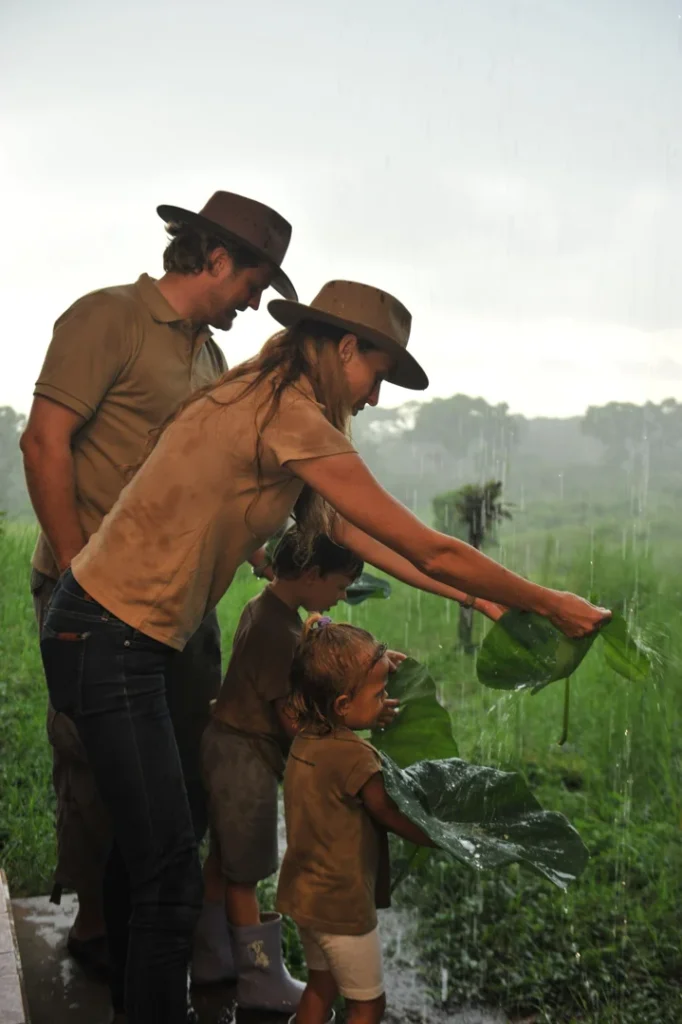
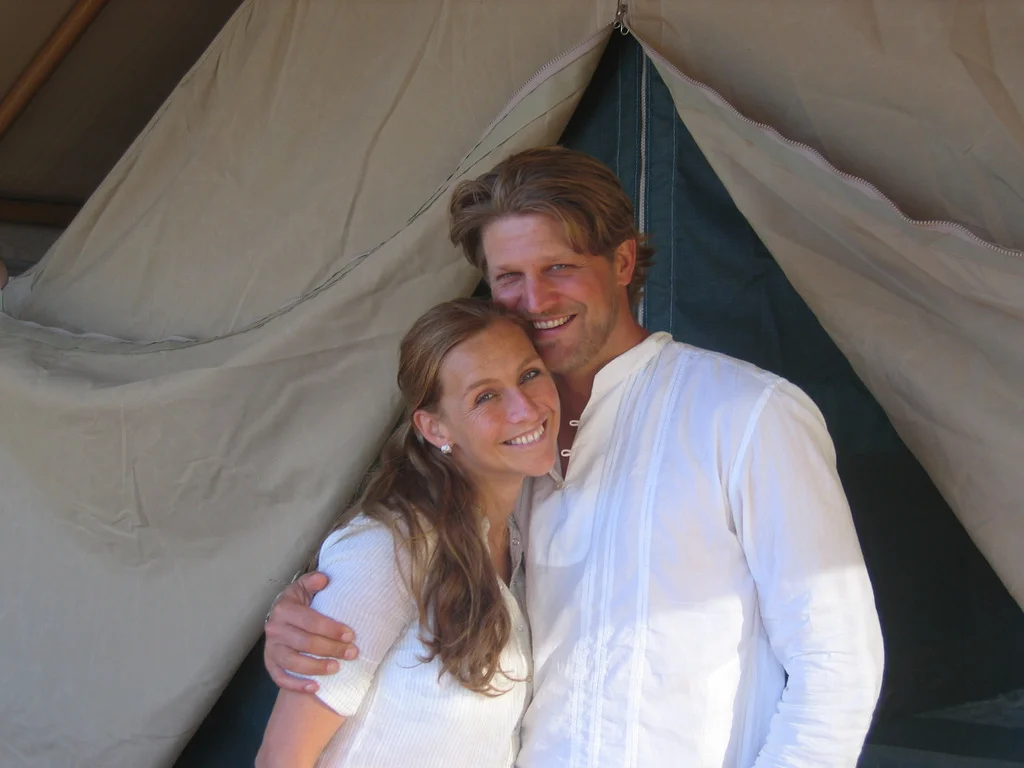
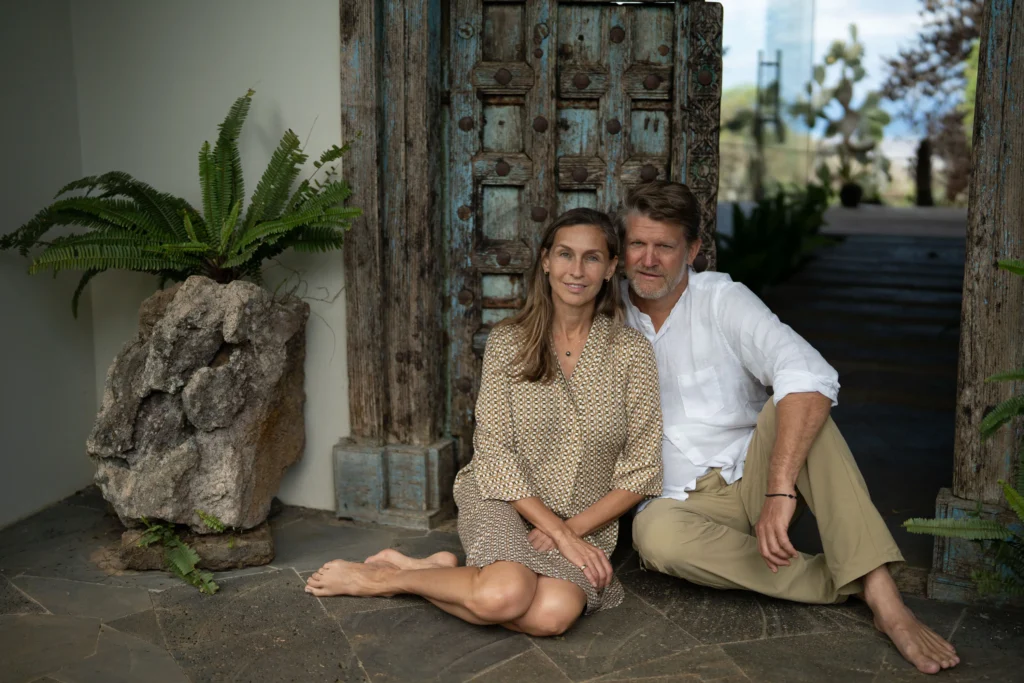
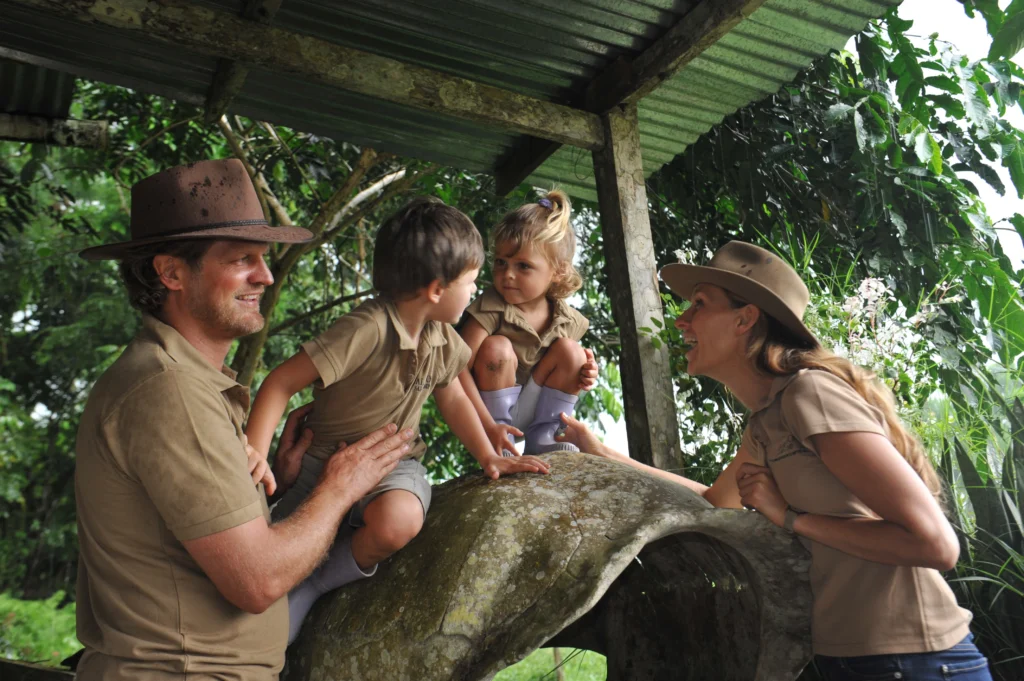
Stephanie and Michael take their Galapagos stewardship seriously; the commitment to preserve and heal their land was foundational in the conception and development of the camp, and continues to inform daily operations.
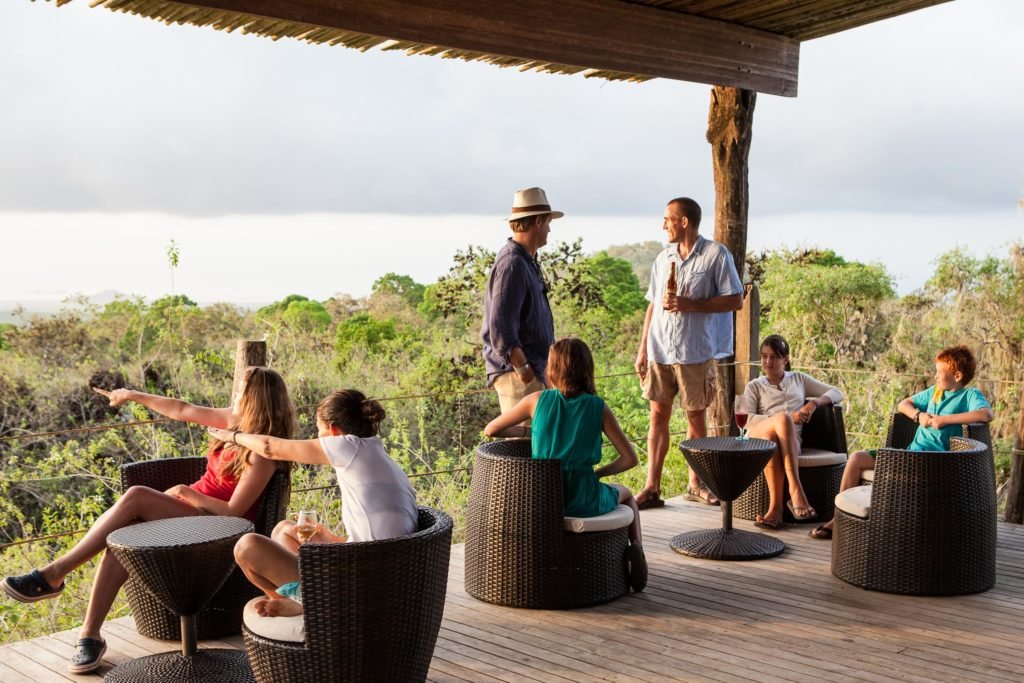
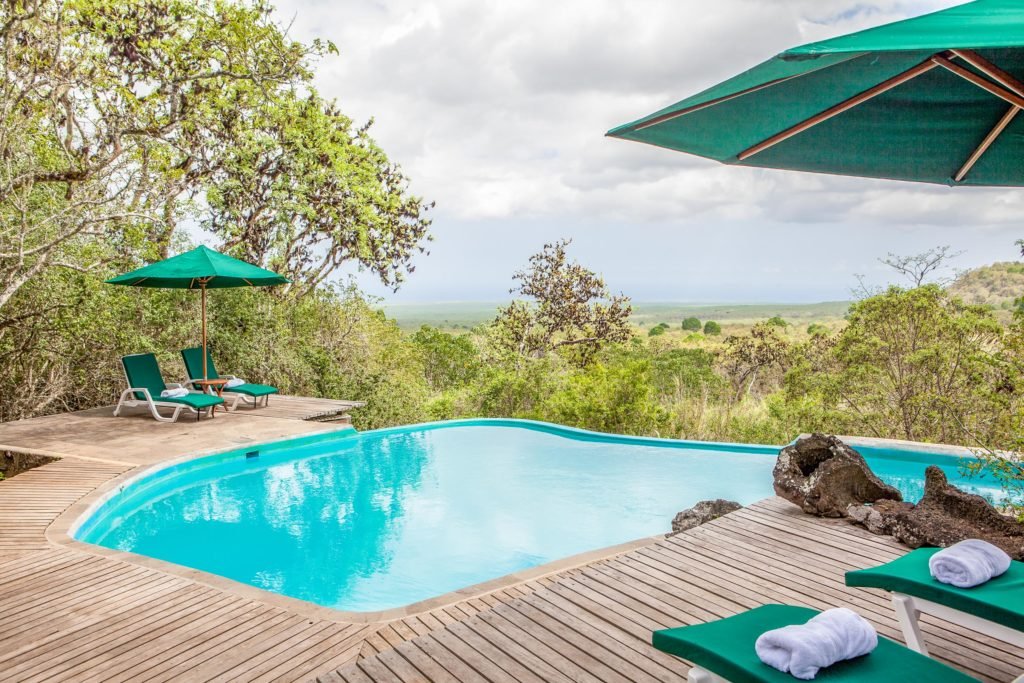
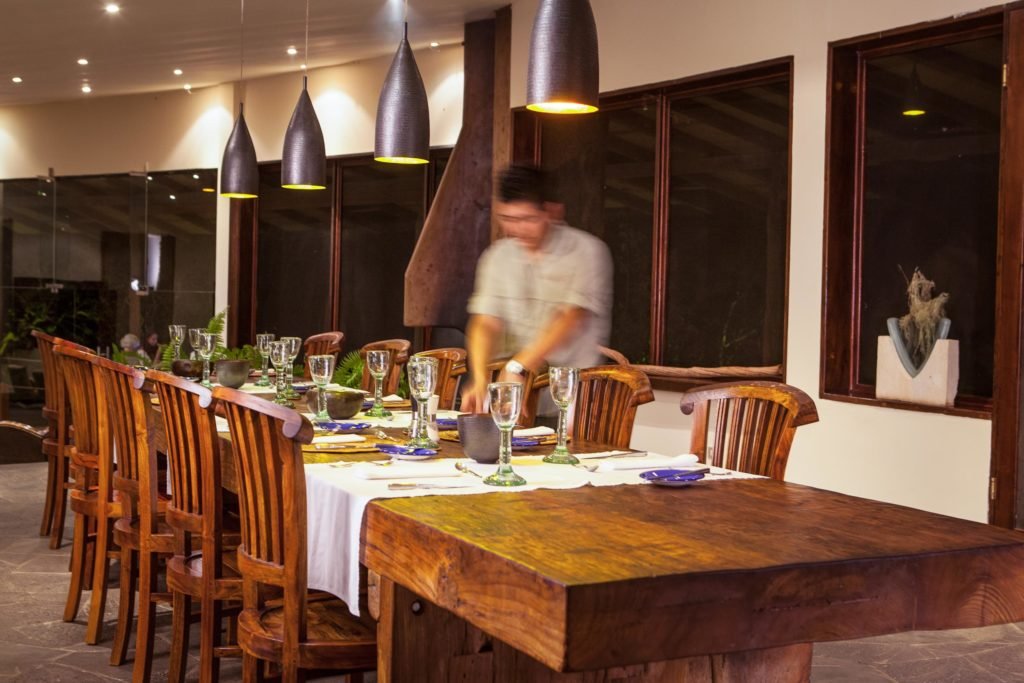
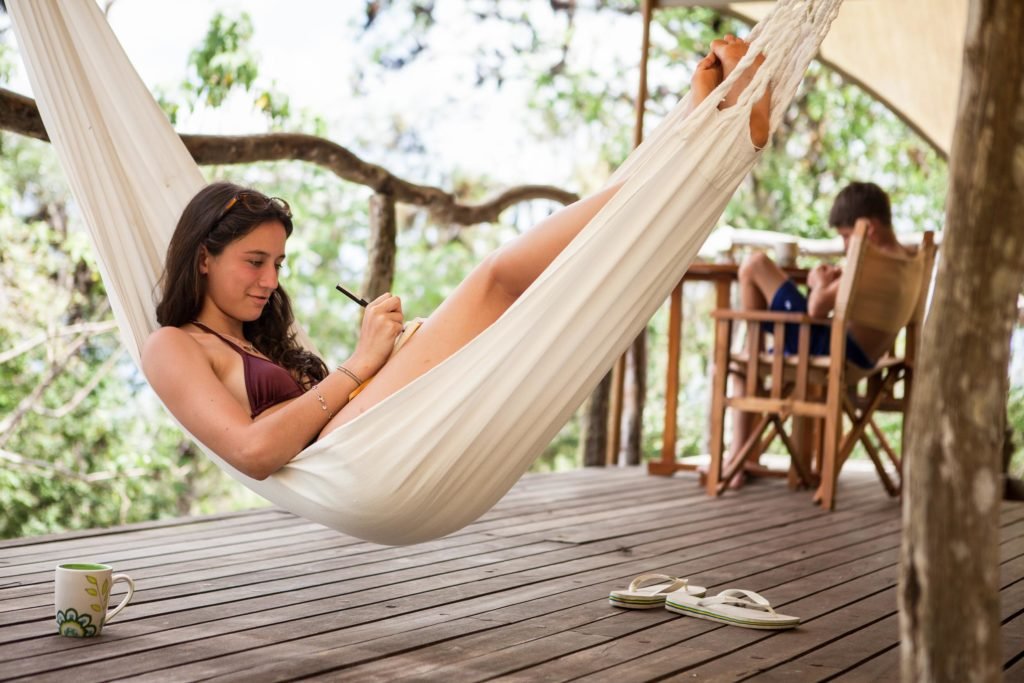
Staying at Galapagos Safari Camp is an out-and-out pleasure. The Australian-crafted tents are spacious, comfortable, and equipped with en suite bathrooms. After days spent exploring the islands and enjoying up-close encounters with endemic wildlife, guests can indulge in a dip in the pool, a sundowner at the viewing platform, and superior dinners at the main lodge.
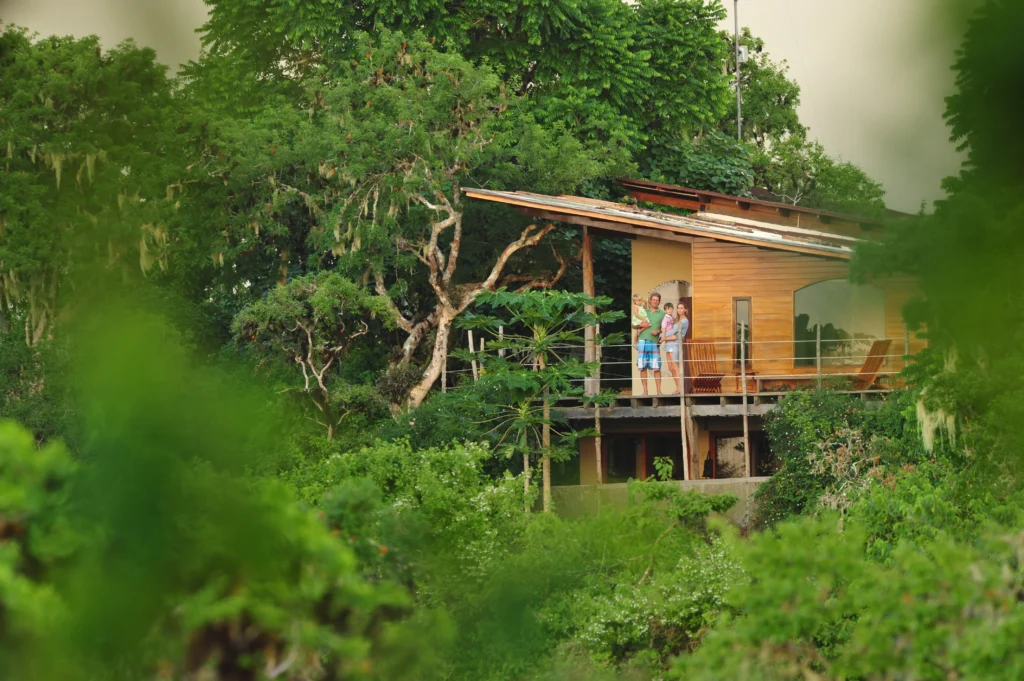
When we brought our daughters to Galapagos for the first time, Galapagos Safari Camp was our top choice. Our girls were welcomed like family, and the camp team make every effort to perfect our experience. Tiny wetsuits and bicycles were sourced for our two youngest girls, menus were adapted for the aspiring vegetarians, and the carefully selected private guide was a perfect match.
Over the years, we’ve witnessed a consistent string of successes for treasured LANDED clients at Galapagos Safari Camp. We’d be honored to orchestrate your dream trip to these enchanted isles.
Stephanie and Michael reside in Turbach, Switzerland with their two children. We spoke with Stephanie while she was in Quito, overseeing the camp’s head office.



Stephanie Bonham Carter, welcome to the Landed podcast. How are you?
Stephanie: Well, thank you, John. It’s lovely to be here and lovely to talk to you, our wonderful partners, and you’ve been so supportive during this very challenging time. So, it’s wonderful to feel alive again.
Where are you now?
Stephanie: Well, I’m in Quito, funnily enough, having spent a few weeks in the Galápagos. So yeah, I’m back in the cradle of it all.
Okay, I’m holding my envy at bay as we talk.
Stephanie: Well, actually, it’s really rather cold. So, I have to say that Switzerland’s weather seems more appealing right now.
And the family’s in Switzerland.
Stephanie: Yes, back in school. Loinaz is doing his exams. And Jasmine is also back for her last term.
Well, I want you to give my best to Michael.
Stephanie: Thank you. Thank you.
Always so adventurous.
Stephanie: I think I was at heart when I was a child, and I was here in Quito with my mother. My life wasn’t that adventurous. You know, my mother was quite conservative and not very outdoorsy. So I think that when I became a teenager, and I had more freedom when I moved to England, there were all these other doors that were opened, and I took every opportunity that was available, and I wanted to try everything, and I wanted to go everywhere and I was very curious about the world. So that’s when my love for travel and adventure started.
What’s your earliest or what is your strongest or favorite memory from that time of travel?
Stephanie: That’s a good question. But I don’t think there is one particular moment; it was repeating that excitement of going to a new place. It was like a Russian door that needed to be opened. And the deeper you went, the more you found. And so the excitement of going to a new country, new culture, different language, different food—that was food for thought, food for soul. And yeah, it became addictive, I suppose, until I met Michael and we decided to go on our Galápagos adventure.
Where did you two meet?
Stephanie: In Spain, in Ronda in the south, in Andalusia, which is where Michael’s parents lived at the time. They’re Dutch, but they had moved to the south of Spain, and that was a family home. So through mutual friends, we met each other. And I have to say, when I saw Michael, he really encapsulated sort of an adventure man, and everything seemed to be possible.
He cuts a dashing figure, Michael.
Stephanie: I don’t know what it is about him, but yeah, there was the promise of the adventure, and it was very much delivered, I suppose.
So you probably brought him back to Ecuador.
Stephanie: Yes, I did, but there was no intention there. The sole intention was to introduce him to an essential part of me. As I was coming here on holiday, I had no intention of moving back, really, but I loved visiting. And so when he joined me, and we explored the country together, it was important for me because I allowed him to get into a part of me that wasn’t immediately obvious to the eye of anyone who would have met me back in Europe, you know? And the fact that he understood it so easily- the culture, that he could speak the language—it was an easy way of going deeper.
So, you traveled around the Andes, the coast, the Amazon, and eventually the Galápagos.
Stephanie: Yes. I can’t remember the order, but we did quite a lot of the country at the time. And we went to the Galápagos with no intention of anything. So everything that happened afterwards was very spontaneous, and it was an instinct almost, you know, as if it was meant to be there and then, for however long it lasted, which allowed us to have the kids there and to have their initial years at camp in the raw and wild way that we had hoped it would be.
Would you take us back to that special day when you arrived at the farm that would become Galápagos Safari Camp?
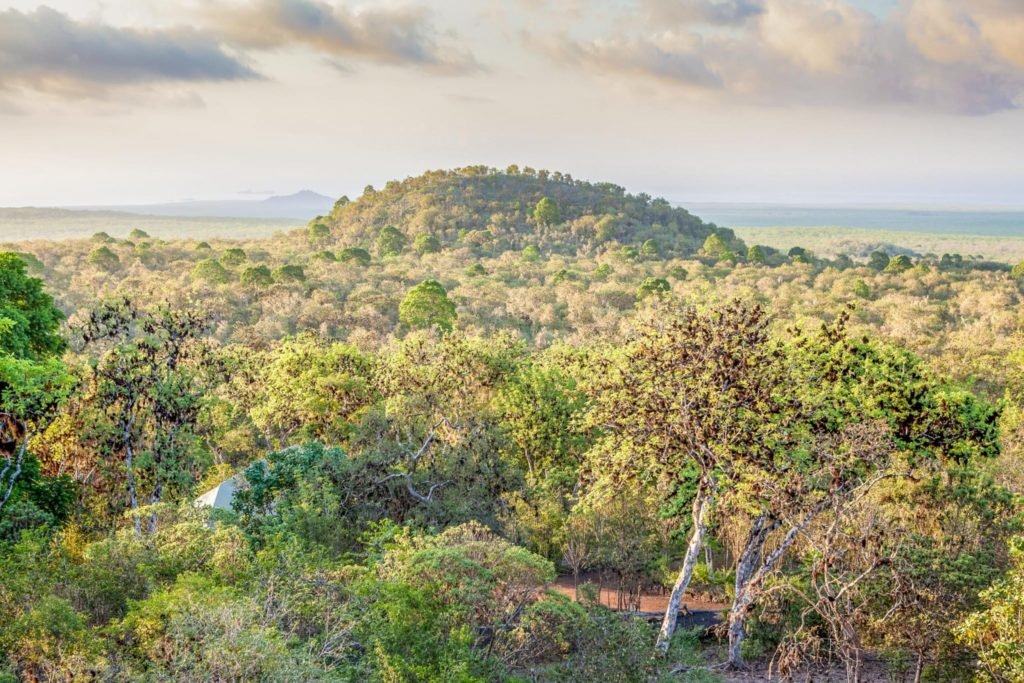
Stephanie: Yes. We were staying in Puerto Ayora down in the port. We were doing a land-based experience. We were doing a lot of diving, and we decided to go up to the highlands. And we took a couple of bikes and went to look at the tortoises. And there was a gentleman; his name was Miguel Ángel Arias, a charismatic person who had been in Galápagos for a long, long time. He too had made a life there. He had his family there, and he ran a little place, you know, a chalet, the first one. And so we started talking to him, and Michael—you know, he loves to find out about property and talk to locals, and so he’s very sociable, Michael. And so they were talking about it, and then he found out that there was this property for sale which was not very far, and it was quite late in the afternoon already. So of course there’s me thinking we ought to get back because otherwise it’s going to be dark, knowing the equator, 6:00 and suddenly it’s dark. And I suppose it was around 4:00 or something, and we thought, “Okay, if we’re going to walk that much…” And there was that one moment when I almost said to Michael, “It’s too late, let me go back.” And for some reason I didn’t. I said, “Okay, let’s go and check this out.” But imagine, had I said no, we wouldn’t be having this conversation. So we walked there, and you know the farm, you know the property, and you know that there is a road to go up to the lodge, but at the time there was no road. There was only a little cattle path with elephant grass, which was literally taller than I was, and I was wearing my little flip-flops! So imagine lava rocks and tall grass and walking… There was nothing for such a long time. It was flat and elephant grass, and I thought, “What are we doing?” But anyway, it was adventurous, and at one point Miguel, this gentleman, climbed up a tree. It was so funny. There he was climbing up like a monkey! And of course we had to follow him, and when we did and we looked at the stunning view—and you know the view, of course, you can look onto the northern islands, you see Baltra and you see the Daphnes, and then on the west you can see all the way up to Isabela and Pinzón and sometimes Santiago—so it was just mesmerizing, and that was the time and the particular point and we said, “Okay, let’s dream.” So yeah, that was the story.
I love it so much. The world is richer for you taking that hike.
Stephanie: Well, it’s a bit romantic, I suppose.
What was the biggest challenge in bringing this dream to reality? Was it nothing but a challenge?
Stephanie: I’m laughing because, of course, the toughest part wasn’t the dream, but the reality. And not the reality of living there, building—I mean, that’s beautiful—but the reality that any project needs to be financially sustainable, and to keep that alive, it entails making it into a business. And the business part is—I mean, I don’t love it, I’m not interested in it, but it needs to be done. And so that reality is all-consuming sometimes, you know? I don’t know if it makes sense to you, but…
Well, it does. I mean, traveling the world was our dream and encouraging people to love the places that we care so much about, and doing that in a way that’s financially sustainable for a family—well, that’s a challenge. I just spoke with Hans Pfister from Cayuga, who you probably know, and we talked about the three legs of the stool, the triple bottom line: one being economic, one leg being environmental, and one leg being social, and the balance that needs to be there. But if you don’t have the economic, the other two are impossible.
Stephanie: Impossible, impossible. And I think that it’s very easily forgotten. You know, one thinks, yes, as you say, the social and the environmental, but if you don’t have that essential layer that holds it there, everything goes to pot. That’s why I think so many very good projects don’t see any fruition, because if you don’t have the financial sustainability behind the project and the long-term vision to make it independent eventually, it very much stays there.
If one were to look at the Galápagos on a map and think about, well, you know, only maybe 5% of the landmass is available for human habitation, I would probably build a hotel on the coast. It’s interesting that you built in the cool highlands of Santa Cruz. Why did you choose that maybe unusual location?
Stephanie: It’s a good question. Several factors. I mean, it was the very first property that we looked at without—we weren’t looking. Then we thought, “Okay, we love this. There is potential here. We would love to live in the Galápagos and make a life there.” But then we started comparing and looking at all the properties. And the beauty of this particular one is that it is surrounded by the national park. So development is inevitable, but being looking onto the national park, any development there would be delayed if it ever happened at all. So that view was guaranteed. In two fronts, we have the national park, and the road ends where we are, and we only have one neighbor on the east side, and that is a farm. So we felt more sheltered from that perspective, from the developmental perspective. Then, what’s interesting about the property—which actually we didn’t know about when we made this decision to buy it—is that the weather in Galápagos changes a lot and you have a lot of microclimates, and you can be sitting meters away from another place that sits in the cloud, but we’re slightly lower. So we’re in the transition zone, which makes it interesting from many perspectives. The flora is a blend of lush vegetation and more arid vegetation, so you see that contrast. Also, during the hot season, it’s cooler, so at night you are seldom hot, and during the cold season it’s mild as well, and the cloud sort of sits right next to us, but not quite on us. So, we also love the view from there, whereas if you are on the coast—which of course is beautiful to be on the beach—there is more development. I mean, the places on Galápagos where you are allowed to build, which are close to a beach, are the small towns, right? So we didn’t want to be there either. So many factors, I suppose, and we like to be a little bit far removed from the crowds.
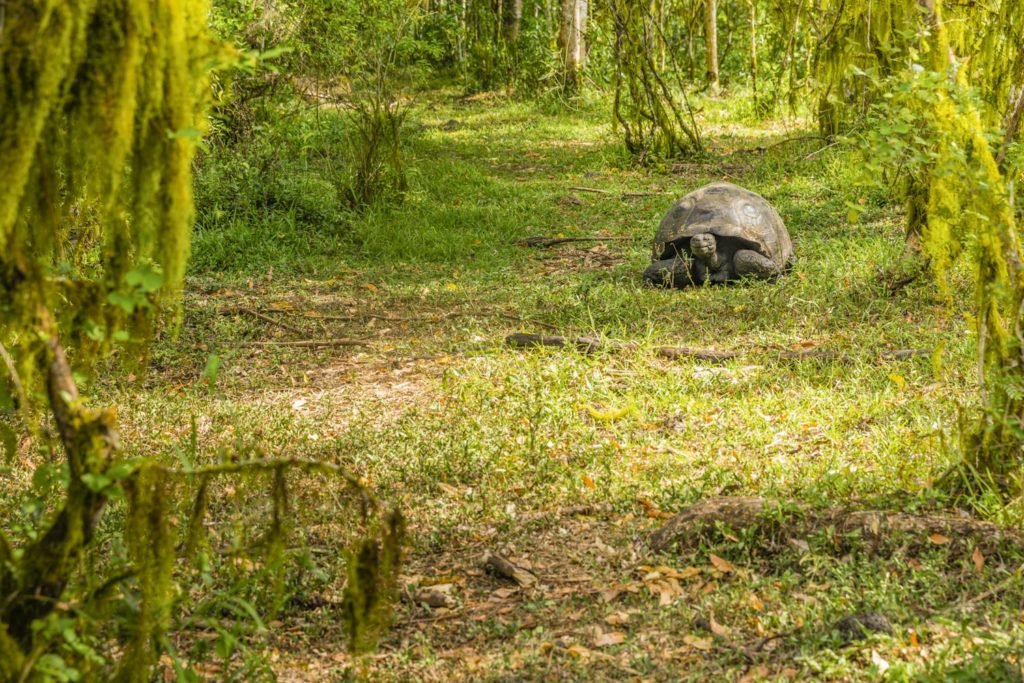
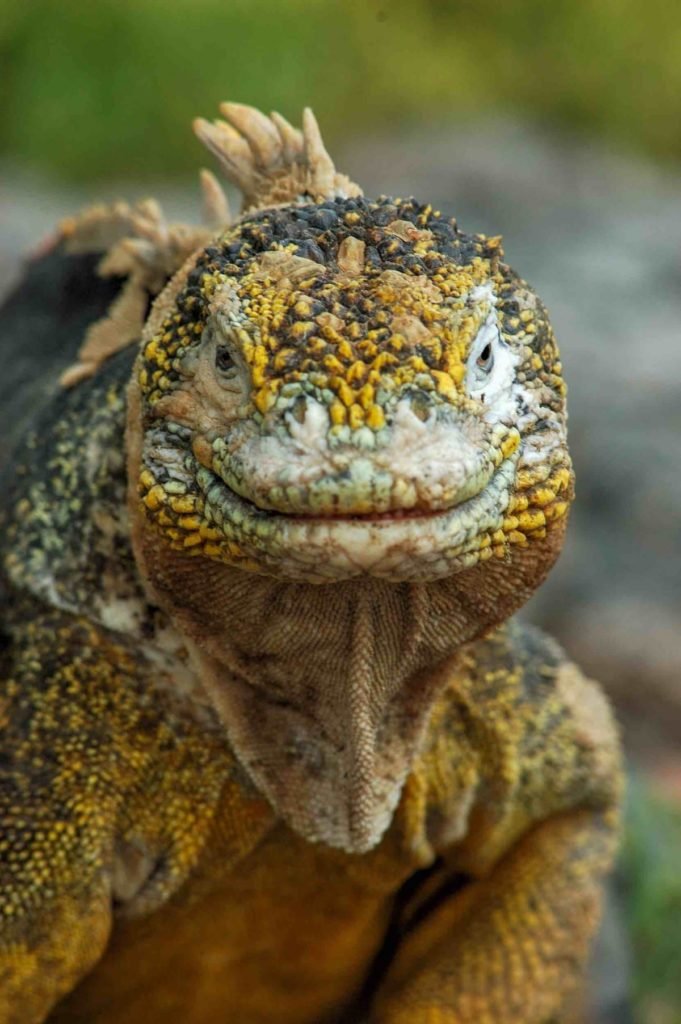
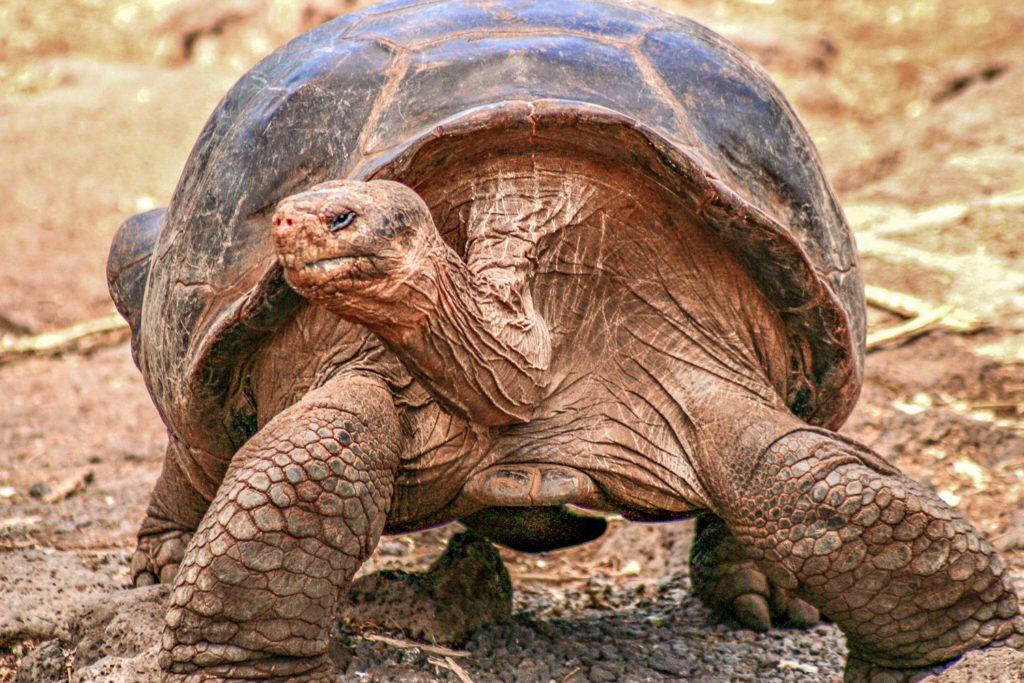
Yeah. The dream of Galápagos is one of unspoiled wildness, of a time and a place where the animals have no natural fear of human visitors, and one where nature is undisturbed. And you don’t get that in Puerto Ayora. As nice as some of the properties are, as soon as you leave, you’re in the middle of a street with lots of advertising and little motorbikes and cars, and it’s just like any town on the mainland as soon as you’re a block from the coast. What’s so special about Safari Camp to me is that “time before time” feeling of being in the tents, or at the viewing platform, or even at the restaurant, and looking out on this sea of green in an island chain that’s pretty arid. But here’s this sea of green in these highlands that catch the clouds and bring the mist. You’re never uncomfortably cold or uncomfortably hot; it’s a Goldilocks climate. But you look out on these islands really floating in the sea, and they just go on, mountains beyond mountains, and then to have the wildlife so close, in fact engaging in the property—giant tortoises meandering about on their way to and from the coast, mockingbirds and warblers sort of flitting in and out of the restaurant. You don’t get that anywhere else.
Stephanie: No, it is rather special. I have to say, I do love it. That’s a beautiful description. Yeah. You know, now that I went back—of course, the kids hadn’t been back for two years, you know—so I was curious to see how they would react, but it all comes back to life. And we all just adore that, you know, in spite of all the challenges. It’s the one place where you can really feel that you’re not you. You’re not trapped in your body or in your ego or in your identity. You are just part of the cosmological energy, you know. It’s very special.
What has adventure meant to you as a family, or this adventure, and to who Loinaz and Jasmine have become, who they are?
Stephanie: Of course, the choice of the adventure was Michael’s and mine, and the kids were born into it, so for them it’s perfectly normal. They were born into it and that’s how they grew up. I mean, Loinaz grew up walking barefoot on lava gravel and tripping over the pavement when we took him to Quito, and Jasmine grew up thinking that the wildlife around her was perfectly normal. And of course, we traveled back and forth to Europe and we travel around the world a lot as well, so for them, I think that they will only understand it in retrospect when they’re older. But I think that what it has given them is—you can’put it into words, it’s deeper. It’s that communion with nature, that communion with the environment, that ability to be fearless like the Galápagos creatures are, you know, in a natural environment which doesn’t come naturally to all children, you know. Again, we don’t really question it, but when we were hosting at the camp before we moved to Quito, I do remember seeing a lot of children coming and they were not in their natural environment, you know. So for them it took a bit, they needed to adapt. So there is a difference. I suppose the strengths, the skills that they developed as a result of this are more at a soul level, if you see what I mean. I don’t know if that makes sense.
I spent three years on an island as a child from 8 to 11, and it is the part of my childhood that I think of when I think of being young. We had jungle all around us and white sand beaches and clear blue water and interesting cultural events happening, little villages to explore, and rivers and shrines in our backyard, and all kinds of wildlife to catch or pursue, and typhoons that would roll through every once in a while. So it was a magical childhood, and I don’t know that I appreciated it until I was in my 30s, maybe.
Stephanie: Right. You see, it’s in retrospect when one looks at—when one has more understanding, right? What do you think that gave you?
A kind of confidence, a sense of at-homeness in wild places, and the idea that I’m not tied to one place—that’s not my identity. I’m a sojourner, a vagabond, and I take me, the me of me, with me as I go to explore and experience new places. Is that… I don’t know. I haven’t worked it all out. I’m sort of renting these ideas. But if my children feel the way that you feel when they are older, that will make me a very happy mother.
When I think about Safari Camp and your vision for its development, the phrase that always comes back to me is “appropriate luxury.” This is an arid climate; fresh water is scarce and precious. Tell us your goals for the development.
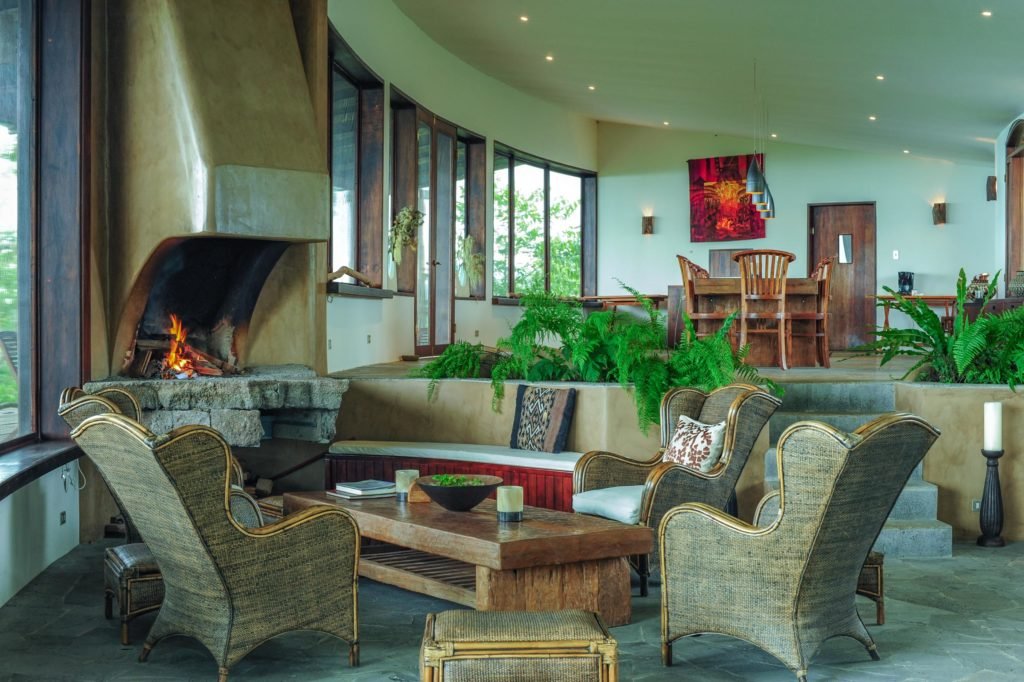
Stephanie: Our goals were—I think we have accomplished our goals when we had to make the decision of what type of experience we wanted to create, how we were going to build it and make it concrete. For us, it was common sense. Now that we’ve worked in the industry for a long time and you hear all the eco-sustainability blurb, you know, it’s inevitable. We never thought about that; we only thought about what made sense in that particular place at that particular time. And we felt strongly about having a minimal impact, leaving a light footprint. So the idea of the tented camp was what made the most sense. Had we decided to build a hotel, for example, I couldn’t have stomached that because I would have felt that I was just imposing on this very pristine and beautiful environment. So we wanted to be mindful of how we did things, and so we actually spent a lot of time with several architects and advisers to see where we could place the tents so there would be natural airflow and then, on the other hand, enough shelter during the drizzly season. When we built the lodge, which needed to be on the highest point, the reason why it’s semicircular is not because we wanted to make it pretty, but because we were following the ground. And, you know, I’ll never build anything semicircular again! But it made sense because we were following the land. The water collection as well—Michael with his Dutch genes has been very into making sure that we were as sustainable as possible with the water collection, because of course there are no fresh water sources in the Galápagos, so the water situation is complicated. Or like the details about building that could be easily managed, and they are not complicated or expensive or, you know, it’s not rocket science; it’s just choices that one makes. And then, of course, it was our lives, so we got involved with reforestation and understood the drama of introduced species, and so how to reintroduce endemic species, which is an ongoing project that takes a very long time. I mean, the vegetation around the lodge—what was when we arrived, which was pure elephant grass, to what is now, you can see how the endemic flora starts interacting with the shade, and you have the wonderful undergrowth with local and endemic vegetation. It’s an ongoing project. Goals at the moment: one of our big, big goals was to be completely solar. We’re only partially, but that project got stuck as a result of the pandemic. I mean, we were there, we got the permits, we were ready to roll, but the investment that requires we weren’t able to do for the time being until we can recuperate a little bit. So that would be one of our goals. And I think that to be able to show the local population and indeed the world that there are ways of having tourism projects that are mindful, environmentally friendly, but a quiet voice rather than the sort of huge marketing shout-out—that’s what’s at the core of what we do.
You’ve been very light on the land. These tents are all on platforms. Were the tents—I seem to remember they were made in Australia. Were these custom fabrication?
Stephanie: Yes. Well, we sourced them in Australia and they’ve been amazing. We worked on them, so we built an extension suit, so to speak, so we made them custom. And everything about the camp, the furniture, everything has been chosen by us. I mean, Michael and I can tell you where the last bit of everything that’s in there comes from and the reasons why we chose them. But one thing that I actually forgot to mention that I think is important to discuss is that the model that we followed in terms of minimal impact is not just about the camp itself, but the type of experience. We always thought that less was more, and so as a result, you know, we could have built a camp double the size of what we have, right, which would probably make it a more interesting financial proposition, but we decided against it because we wanted to keep the experience more private, more manageable, and also for the environment. I mean, the more people that you have, the more impact that you are going to have, right? So we wanted to make sure that we had enough people so that we wouldn’t just think of people as numbers, so that we could actually interact with them, so that we could make them feel at home, and also so that we didn’t have masses coming to the archipelago, right? When I see a lot of people going to and fro, it just sort of feels like cattle rearing. We didn’t want to do that. And that led to a type of experience that I don’t think is easy to replicate, especially because it’s so labor-intensive and time-consuming. When we create our safaris, you know, whether it’s a couple or a family or a group, we work around them and their needs. And so it’s not as if we’re bunching people together so that the numbers work. And I think that also shows the type of mindfulness that we’ve chosen to have with the way that we do things and the way we run our business.
These tents are not in any way a hardship to stay in. They have beautiful hardwood floors, ceiling fans, and space heaters, which aren’t usually needed. No air conditioning would be required here because of the ventilation and the ocean breezes that come up the mountain, but, you know, en-suite bathroom with all the things you would expect. We do have like a coffee station, and water to drink, and there’s a balcony with nice deck chairs to sit out and watch the sunset, sliding glass doors there. You know, the bedding is top-notch, there’s a security box to lock up your things if you wish. But they’re elevated, so it’s not uncommon to have guests write us and say, “I was having coffee on the deck this morning and a giant Galápagos tortoise walked right under my deck as I was having coffee.” Birds come to visit. And you said it, but I want to make sure I understand: when you arrived, this whole area was just ranch land, it was just elephant grass, and you’ve rewilded it, reforested it with endemic trees. You would never know that visiting now. It doesn’t look like secondary forest.
Stephanie: No. Well, yeah, it’s an ongoing process. As I said, it takes time and it’s been interesting to see how it’s changed. Yeah, I mean, now there is so much vegetation that in some areas we need to perhaps start thinking of pruning so that we don’t lose the view altogether, you know. But yeah, it’s come to life and it feels a lot more endemic as a result of it, I think.
What is the ideal stay? How many nights would you recommend?
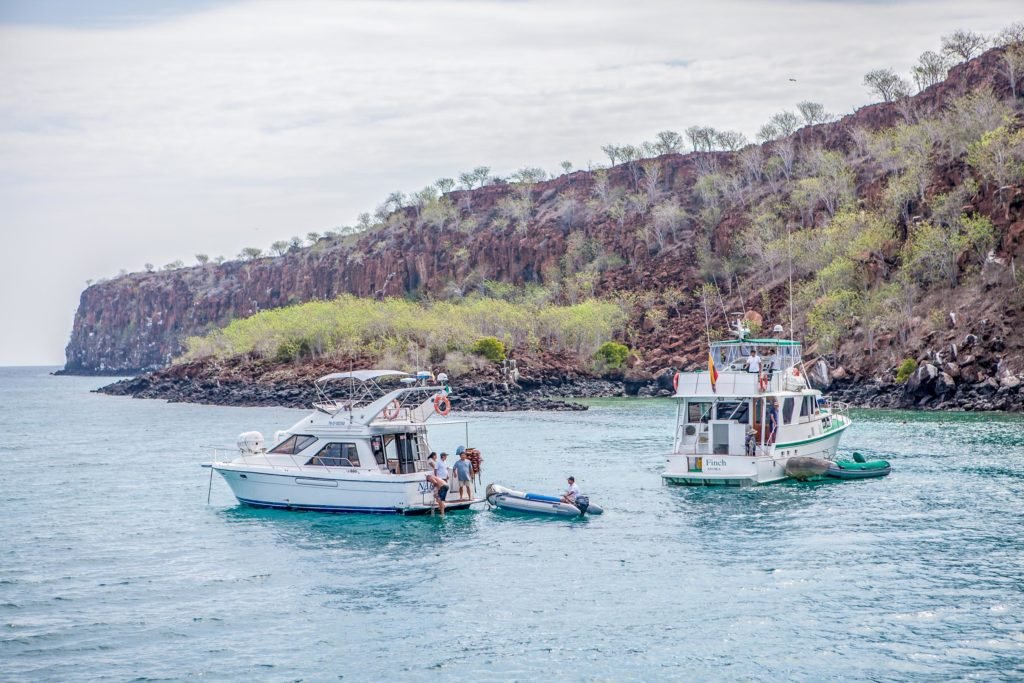
Stephanie: When we first started with the camp, I would say that 90% of people would go on a cruise and then they come and stay with us for one or two nights. And interestingly enough—so of course the cruises tend to be seven nights, most of them—and now, after how long—I mean, Loinaz is 14 years—most of our guests actually don’t do a cruise and stay with us as a full safari. The minimum safari, I would say, is four nights, which is almost too short. I think ideally six nights gives you a proper sense of place, enough time to also rest, because if you’re traveling, it is tiring, so you want to find a balance between having just time to appreciate where you are rather than just go, go, go. So the pace is also—you know, if people just come in and out and it’s all such a rush, you don’t allow yourself the time to appreciate it. So I think four would be minimum, ideally six, seven nights. There are four different islands which are uninhabited that we go to visit—up to four, you don’t have to do four—and you go to these islands for the day. And so if you’re not cruising, you get to see other parts of the archipelago that allow you to also appreciate the Galápagos environment in its pristine form on islands where the human touch has been limited completely in terms of—you know, no one can live there, so you can go and visit under regulations, right? And on Santa Cruz itself, although it’s the more developed island, again, development is concentrated in specific areas, so you can also do plenty of things there which are fun activities: you can kayak, you can go to beaches and swim, and other experiences that we can incorporate there, biking and so on. But, you know, even at camp, as you were saying, there’s so much wildlife around you that it’s a matter of sitting down and just taking it all in. So yeah, that’s a very long-winded answer to your question, John!
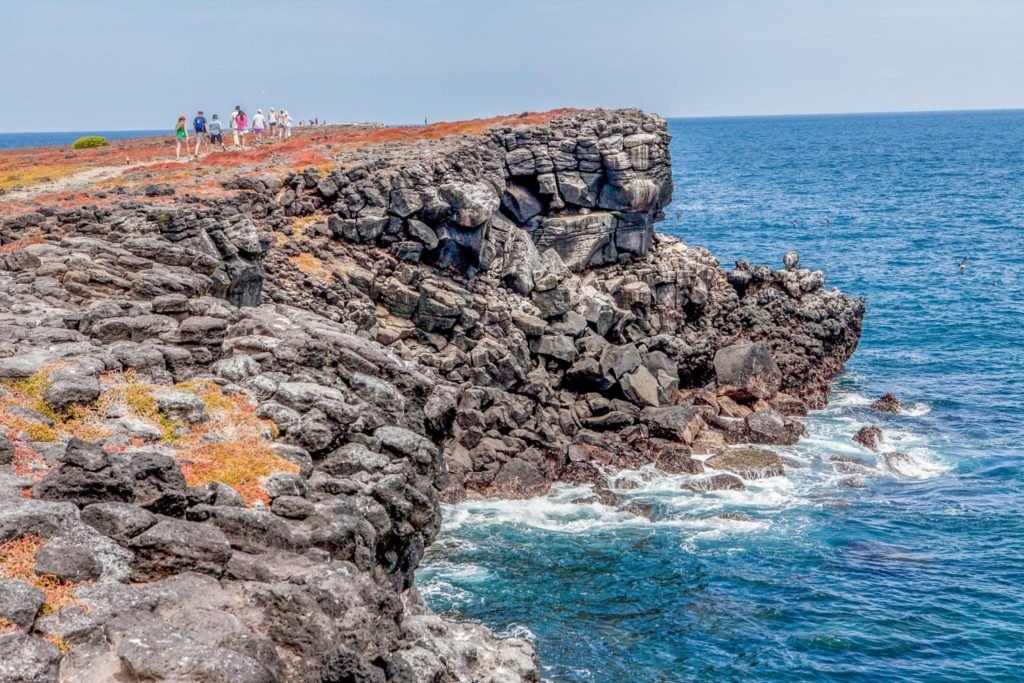
But it’s an ideal location because you’re in the cool highlands. You’re maybe—I don’t remember—25 minutes from the northern port, the ferry that takes you over to Baltra, and then maybe 25, 30 minutes from Puerto Ayora to the south. So if you set off from the north, you could go to Bartolomé or North Seymour, and from the south to South Plaza or Santa Fe, and really get a feel for not just the island of Santa Cruz, which has all the volcanic features and organic coffee farms and tortoise reserves and the Darwin Center, but those other islands that are so different: Santa Fe, Plaza, low eroded uplift islands; Bartolomé, volcanic, higher, totally different species. You can swim with penguins there. And then North Seymour is sort of the—if you only had one island to choose, that might be the one, because you’ll see so many of the species that you’ve heard about in one location.
Stephanie: Absolutely. But the beauty is to compare and contrast, because of course that’s when you realize how species have adapted and evolved, and it’s good to get that sense of the Galápagos by having a few island visits.
We think about diversity when we think about the Galápagos, or island speciation anyway, but the landscape itself is so diverse, you need to see more than one island.
Stephanie: Yes, absolutely.
You’ll miss it. And they are all so special and different. What type of person makes the ideal guest for Galápagos Safari Camp? Who enjoys it most?
Stephanie: I would say people who have an open mind and an open heart and an open soul, those that are willing to—well, they’ve seen a lot and they’re not looking for the air-conditioned room, they’re not looking to replicate their ordinary life when they travel, you know? Nature lovers—absolutely, you need to love nature. If you don’t love nature, then there isn’t much point going to the Galápagos. And families—I think that it’s so lovely for families of all ages, and especially when you have grandparents and parents and children and you see them all together and interacting. It’s a place where they can reconnect with themselves, with each other, with the environment. But I think being open and flexible and appreciative of nature is the magic formula.
Yeah. People are surprised to learn that Galápagos is an ideal location for families with younger children, and I sometimes compare it to an African safari for them, which usually has a minimum age of 12 to 14, depending on the camp, because safety is a real issue in Africa with wildlife interaction. In Galápagos, these animals are curious and may approach you. You keep your distance, but they may approach you, but that’s not the risk. It’s more about: can you listen to some instructions and follow instructions about boat safety? But we’ve had so many multigenerational families come and tell us later, “That meant everything to our family, we’re planning to come back.” And then taking our own girls there—I think Mimi was four when we brought her, and the wide-eyed wonder watching her at Chato 2 see a giant tortoise come through the forest at her. And I have a photo of it; I’ll put it with the podcast.
Stephanie: Okay!
It was like watching her and Pippa stare into a Triceratops’s eyes. There are places like the Galápagos that offer more than just time to be away and to relax; they nourish the spirit. What is it that makes Galápagos so special for you?
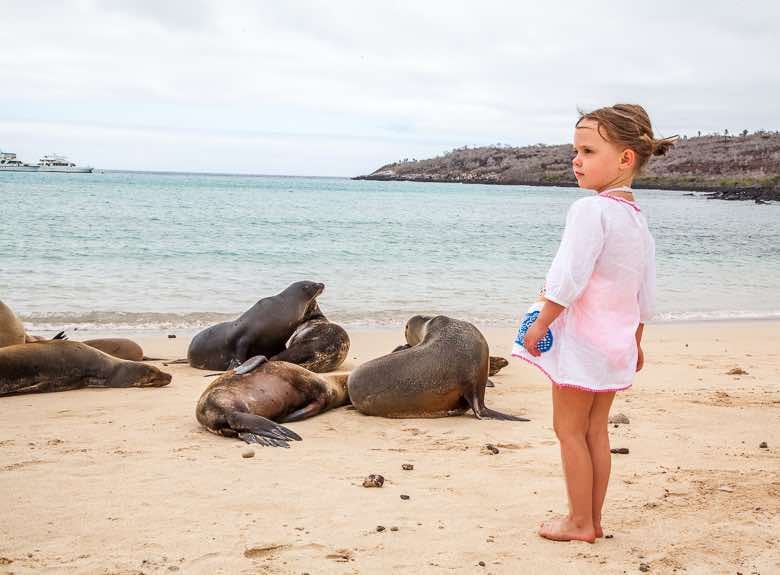
Stephanie: I was thinking about it in this last visit when we went back with the family and watching the kids and talking to the guides, and I could never answer this question probably until now, actually, because I knew how I felt, but I couldn’t put it into words. And I think now I understand a little bit the reason why. There is a sense of peace, there is a sense of just being. You’re just there with nature, you know? You’re snorkeling with a shark minding its own business, you’re snorkeling with sea lions and the pups come and play with you, and everything feels so harmonious—as you’re having breakfast and birds come to your table, or you just observe the tortoises walking past your tent or wherever you are in the Galápagos—you have this feeling of harmony. And one of the things that transpired in this last trip was the guide told us that these animals, of course, are fearless. We know that. We know that they’re fearless because they have no natural predators. They survive, they live, they interact without fear. Whereas as humans, we’re full of fear. We’re always anxious, we’re fearful of this, we’re fearful of that, we’re constantly defensive, we’re constantly running on a treadmill. You know, wherever it is, there is a sort of underlying fear and anxiety to most of us. And when you go to the Galápagos, that’s almost as if you hit pause, and you just are. And suddenly you are no longer trapped in your body and you’re no longer a victim to these very intense, quite negative emotions. You just are, and you blend with the natural environment. And I think that’s what it is.
Fear is the little death.
Stephanie: Yeah, or the big one, or the constant one!
The constant one. What do you hope your guests will take away from their time in the Galápagos?
Stephanie: Peace and feeling at home—and not at home exactly, you know, at the camp, but in their environment. And I think that we largely achieve that. I love it when I see guests there or the feedback that we get and they do say, “You know, I felt as if I was home.” And at that point I think, “Yes, yes, yes, we’re doing it right!” And we’ve created a space that facilitates that. Listen, if we can achieve giving someone that little moment of reconnection, I think that’s a gift. And it is very touching that it is the type of place that inspires others to find that space and that moment of gratitude, of connecting, of being, and that’s special.
Well, you’ve touched on this, but I’d love to have your mind on how tourism is essential for preservation of the Galápagos.
Stephanie: We all know that there are two faces to tourism, right? There is the extractive part of tourism when you look at it worldwide, when we’re discussing volume and numbers and business. But there is another very benign and compassionate and caring face to tourism where you find that virtuous circle of everyone benefiting from it in a kind and sustainable way, where people learn to care about their environment, where some of the tourism dollars can also go into projects that can make a difference socially and to the environment. And I think that the Galápagos naturally lends itself to that because it is a national park, and that is a fact: 97% or 98% of the archipelago is national park. The marine reserve is hugely important, and the government recognized that and has, as you know, taken steps to enlarge the area of the marine reserve. There are plenty of projects to either study, explore, or preserve the natural environment, and all of that, whether we like it or not, requires money. I mean, it’s the reality of it. So when there is no tourism, that stops, and projects get halted, and that has a very negative impact on the environment and socially. Again, whether we like it or not, there is a local population which will grow, and development which will need to be controlled, and it is a local population that needs to be educated. They need to be made aware of their environment and how to preserve it. If these people are in need, they will inevitably have to engage in other activities which will have to be extractive, right? We’ve seen that with fishing in the past; there have been projects that have managed to somewhat limit that. So it’s a fine balance. But I do think that if there was no tourism, I mean, the local population is not going to disappear overnight, and they will need to get engaged in other activities, and again with all the projects that can contribute not just to the Galápagos, but to the world to understanding the natural environment and the impact and how potential solutions, right?
Galápagos is so worth preserving. It’s so worth our care, our stewardship. It must survive for future generations, and the best hope we have of preserving the ocean and the islands is teaching people its value. And to me, there’s maybe no substitute for experiencing it firsthand on a small scale that’s appropriate, that’s not extractive, as you said, that gives back to the local community and doesn’t extort the animals or the islands—you know, small group, 16:1 guide ratio, small boats. If you look at our website, it’s almost exclusively the smallest boats. That kind of experience, life-changing experience and transformation from a visitor to an ambassador takes place when you get that one-on-one interaction with the species and the landscape.
Stephanie: Yeah, absolutely. I think it was Sir David Attenborough—and of course he’s a hero…
May he win the Nobel Prize!
Stephanie: …but one of the things he said which stuck to me was—you know, I can’t quote him precisely, but it went along the lines of: you can only care and look after what you know, and in order to know, you need to experience it. And this goes hand in hand with what you’re saying. The moment when you visit the Galápagos and you have this type of experience, you do become an ambassador. It becomes personal, and when something becomes personal, you care for it, and it’s not just a holiday, you know.
These islands are such a big part of your story, your family. Do you miss them terribly?
Stephanie: I miss them terribly. I think we all miss them terribly, but you carry them in your heart, you know. And of course we miss them terribly, and it would be absolutely lovely to be able to be closer, but there is plenty of time in life. And during this last visit with Loinaz and Jasmine and hearing them say, “We’d love to come back,” and the thought that at some point in their life they might be able to go back in some capacity to contribute—you know, who knows? I mean, Loinaz has always been—well, both actually, Loinaz and Jasmine have always been very science-oriented—who knows where they might end up and what they might do? And with the experience they’ve had, to be able to go back and do something positive, not with the camp, but for the islands, that would be lovely.
Why is travel meaningful for you?
Stephanie: Because it gives me a different perspective, more understanding. It opens my mind, it opens my heart. I think that in our human nature, the norm is to see things from one perspective, from our perspective only. When you go and see things, places, people, you have to put yourself in their shoes, or it’s the learning component of it and, yeah, the open mind.
Stephanie Bonham Carter, thank you for your time. My best to Michael, your son, your daughter, and to the camp. And it’s an honor to count you as a friend.
Stephanie: John, thank you. Thank you very much. And thank you to Erin and the girls. And I hope that each one of them will be able to come and stay and experience the camp from a different perspective, too. But thank you for your time and your support always. Thank you.
I do know a young lady who’s very interested in coming to be part of the camp soon.
Stephanie: I know, I know! And I can’t wait!
Right. All the best.
Stephanie: Thank you, John. Thank you.