Podcast: Play in new window | Download
Subscribe: Apple Podcasts | Spotify | TuneIn
LANDED Podcast 025
Sustainability & Social Change with Reyna Oleas and Roberto Plaza
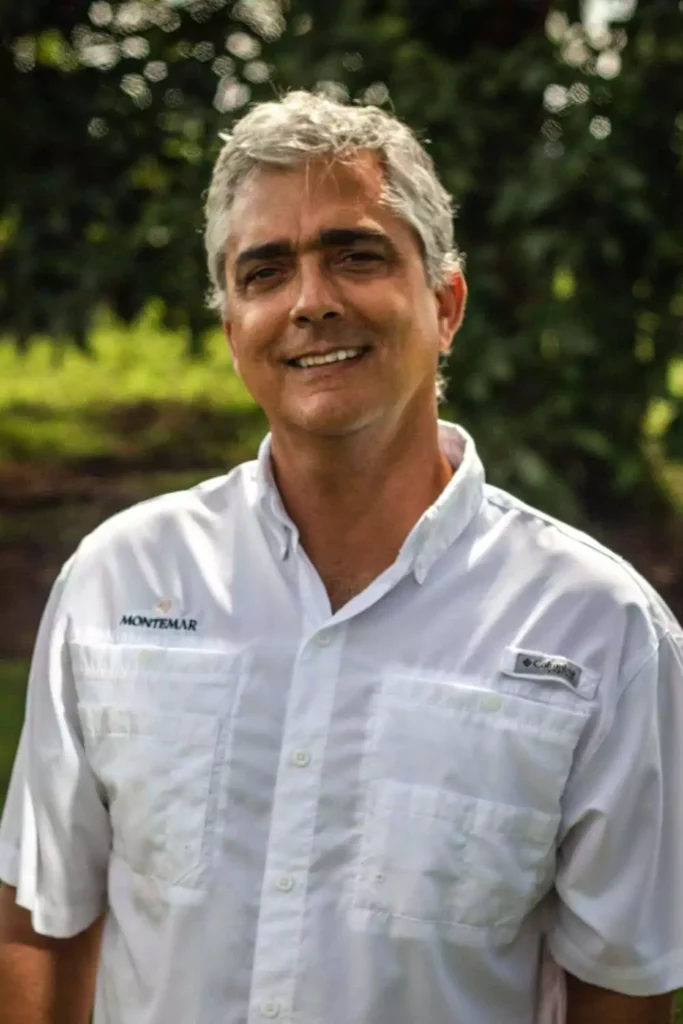
In this episode of the LANDED podcast, we talk with our Galapagos friends and Ecuadorian power couple Reyna Oleas and Roberto Plaza who devoted their talents to the Galapagos sustainability and conservation. Located in Santa Cruz’s highlands, Montemar’s private villas is a holistic project in the Galapagos, combining luxury tourism, organic farming, and species conservation. Under Reyna and Roberto’s guidance, the Montemar project has grown well beyond their property and has become a center for the community and science.
Reyna and Roberto tell us how the project was born, Montemar’s development and what it has meant for them as a family, as well as the crucial part they played for the community during the pandemic. When frontiers were closed and there was no money coming in from tourism, islanders were struggling to prepare a bowl of soup for their families. Working with other special people from the Galapagos and the goodwill from so many, Reyna and Roberto talk about the strength of an ‘illuminated community’ and the work of love from everyone involved.
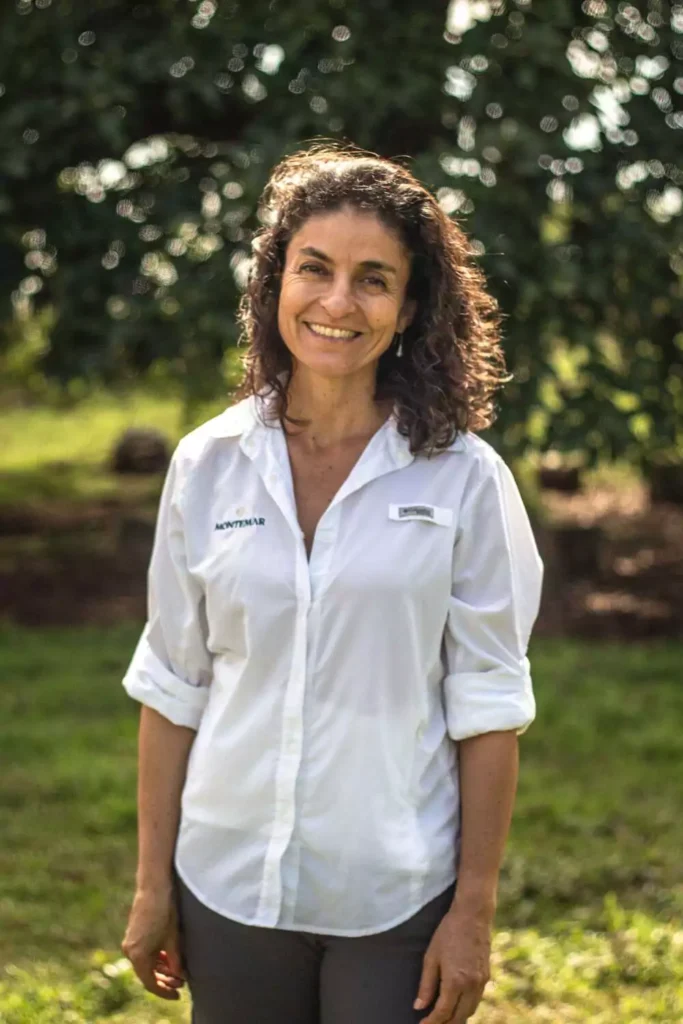
This episode is more than just a Villa pitch; it’s a walk through a community’s struggle and how Reyna and Roberto’s efforts, helped ‘activate’ so many others to create real change within the Galapagos. As we learn their journey, we find ourselves admiring the courage and commitment if the local community who played a big part in keeping the pristine form of the Galapagos Islands.
Whether you have visited the Galapagos or there is a trip on your radar this episode will bring greatest appreciation to the area’s engagement and responsibility towards the residents and their surrounding nature. Reyna and Roberto’s in an inspiring story that will hopefully encourage us all to think about the common well-being and how we can help those in need.
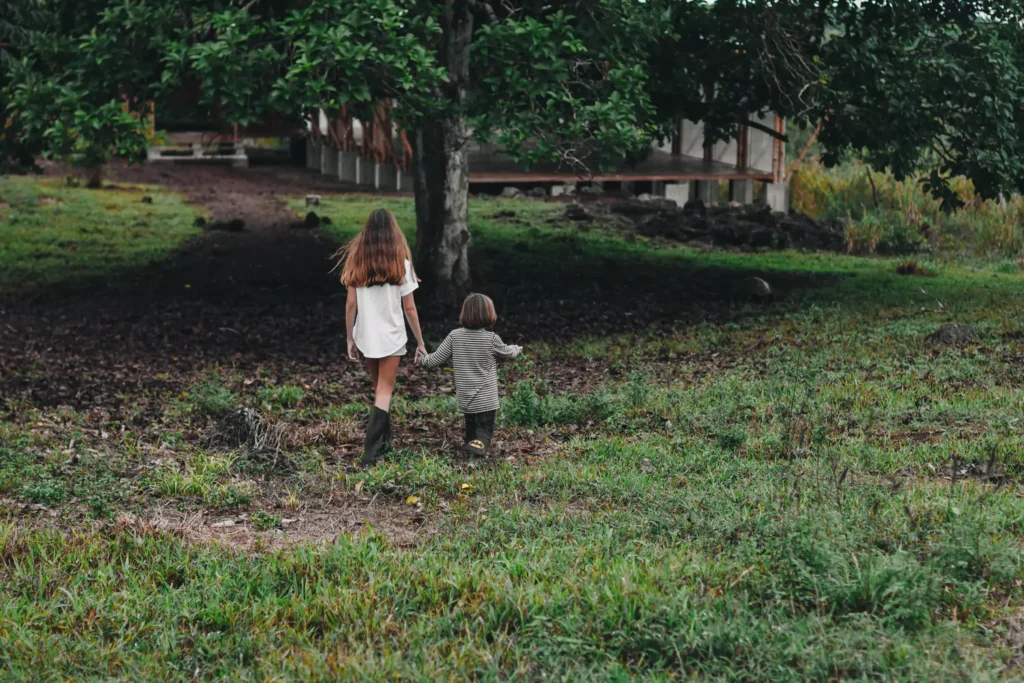
“We did it by heart because it’s what we love. We identified what we wanted to do as a family life project. And I believe that all these components were born from what we believe in and not because there is a market for. It’s the path want to walk as a family because we believe in it.”
Montemar Villas
Website: https://montemar.ec/
Instagram: @villasmontemargalapagos
Rather read than listen?
Find the transcript below
Reyna, Roberto Plaza, thank you. It’s a pleasure to be here with you. We’re here at Montemar in the highlands of Santa Cruz Island. The cloud is covering the mountain right now, and because of that, we have some rain, which is really rare in the Galápagos. What a pleasure to be here on your yoga platform. Thanks for letting us be here with you.
Roberto: It’s really a pleasure.
Reyna: It’s really a pleasure to have you here, John.
Erynn was able to come and stay here a few months ago. I don’t know if you remember, but I came in around 2016.
Roberto: I remember, I remember.
And I was so impressed. But a lot’s happened since then, and Montemar has really evolved. Do you want to tell us about the project?
Roberto: Well, the Montemar project started roughly 15 years ago when we bought this property, which was an abandoned farm that was totally covered with invasive elephant grass, blackberries, guavas. But we fell in love with the place because of its location, the view of the ocean, and the knowledge that we were in tortoise territory—which for us was like a blessing, the idea of thinking that we can develop a project up in the highlands together where the tortoises live, you know. And so when we started this, it was really just the idea of a family project, like a life project for the family. We were not thinking that it would become all that it is right now, really. I mean, it’s been a blessing having this place and being able to develop all these things. Now the project, after all these years, has different components: agriculture with coffee, and that actually supports the rehabilitation of the ecosystem for tortoises and allows us also to help scientists—and the scientists help us to understand better the needs of the tortoises—and also the sustainable houses. Now we were able to develop, with the help of an amazing civil engineer from Quito, Miguel Sango, these unique architectural and engineering designs of these sustainable houses. And well, all the many other things that have come along the way—then getting involved with the community and, you know, like flowers blooming, more beautiful things happening around like the vegetable garden, the yoga place, the artisan shop. Yeah, it’s been an amazing ride.
Reyna: And we’re happy to share that with our clients, which is probably the most amazing blessing we have—to be able to share with people all these things.
You’ve become a catalyst for the community and really a center. You have your own gravity, maybe, within the community.
Reyna: I won’t say that everything gravitates around us. Actually, we’re not the only ones, let’s say, that lead these groups. There’s other wonderful people also leading this collective, like Alberto Andrade…
Roberto: Yeah, he’s like the leader of Frente Insular Reserva Marina, which is this collective…
Reyna: …and many other beautiful souls.
Roberto: And he’s a beautiful soul that has the ability to naturally be a leader for everybody, you know. And so we found this fantastic soul, and together we have been able to achieve things that probably alone each of us would have never done.
Reyna: Yes, but it was this grouping that allowed us to grow. So I think it’s the goodwill of so many people that has allowed us to do the things that we’re doing. And I usually say that if I were thinking in a regular way of designing a socially responsible program, for example, I would have to hire I don’t know how many dozens of people in order to execute all the things that we have been able to execute. But it’s not because of us—it’s because all these wonderful minds came together and are putting energy to make things happen.
Roberto: Yeah, and put in other words, if we would have sat down before doing all of this and tried to write down what we were going to do, it probably would have never happened. But I guess that at the time when we decided to start walking this path after all our background and experience before this, that is what allowed us along the way to improvise and organically start identifying the opportunities by heart to put all these different things together. If we would have tried to do this same project when we just married, let’s say 30 years ago, probably not, because we didn’t have all the experience in the different fields of conservation, training with NGOs, and knowing all the problematics—me as a guide and as a consultant with the National Park. That nurtured us enough so when we started walking the path of this project, everything—the opportunities were obvious, were clear for us, maybe not for other people. And we did it by heart because of what we love. We identified what we wanted to do as a family project, a life project.
Reyna: And I do believe that all these components that are born from what we believe—which is a bit different—that I usually make a clarification: it’s not something that we are doing because there’s a market for it, and it’s not because people are interested and we want to give people what… this is the path that we chose as a family because it’s the path that we want to walk because we believe in it.
During the pandemic—the pandemic was difficult for everyone worldwide. It was almost a matter of life and death for the Galápagos community, right? It was not possible to bring food in. Do you want to talk about that experience and what it taught the community, and your role as participants in that?
Reyna: Yeah. So in that time, there were few boats bringing things for humans in the Galápagos. The frontiers were closed, and nobody was able to get in and to get out. And lots of people with no savings, in an economy that was based on tourism, didn’t have much money, and many people were struggling to prepare a bowl of soup for their families. And for us, what was amazing is that we got to meet many people—many, many people like us—that were willing to think of the “we” before the “me, myself, and I,” as I always put it—to think as a community, to think as a community and in the common well-being and not only my well-being. And that space in time allowed all of us to meet, because we’re many of us, and we are just one little grain of sand. There are beautiful souls from every economic level, from every academic level, from every social level that COVID allowed us to meet. So when we met and we looked into each other’s eyes, we were like, “You know, there’s people in bad shape; we need to do something.” And we were thinking—it was a conversation—and one thought, “You know, there’s lots of farms that have products that are not gathered because there’s nobody… they couldn’t pay people to gather fruits or vegetables. Why don’t we ask permission to gather those things?” And the other was, “Yeah, let’s do it.” And somebody else and somebody else joined. And then the other one communicated with another one, and I say that there wasn’t a big matrix of quantification—it was like a beehive. When there was a vibration of one of the little bees, the other one responded, and then the other one responded, and we became active. We always use the word “activate.” So when there’s a challenge, we activate. We get aware, and we start to put our radar on of how we can help. So one contributed with the truck, the other one helped us volunteer to pick because we needed hands to pick…
Roberto: …and the other one paid for the gas, the other one brought food in order to feed the volunteers…
Reyna: …someone brought tools if it was needed. And we went every week with this group of beautiful souls to pick things. And then another group was in charge of distributing the things that we brought in baskets, and then another group was in charge of identifying the people in need in order to give the baskets. So it was not us; it was the strength of a community. And I love this saying—I read it the other day, and for me it was so meaningful—I think it was Buddha that said many, many years ago that the next illuminated being was not going to be one human like it has been in history, many wonderful souls that have guided spirituality, but it’s actually going to be the strength of an illuminated community. And that’s how I felt, because it was a work of love. There was no economic interest behind it. Nobody was getting anything beyond the satisfaction of knowing that all of us were in better shape. So more than 5,000 baskets were distributed in that period of time.
Roberto: 5,700! He repeats that all the time!
Reyna: So it wasn’t us, and it wasn’t him. It was all of us, and we couldn’t have done it without them.
Roberto: It was like a snowball…
Reyna: …like a snowball. So at the beginning, we put the truck. Also another neighbor, Roberto, drove the truck or I drove the truck. Volunteers came. But then when people knew that we were helping, they said, “Oh, we also want to help.” A lot of people wanted to help and didn’t know how. But when they realized we were doing this, other people said, “Oh, what can I do?” If they had a grocery shop, they said, “Well, I can donate maybe oil, maybe rice”—other types of products that were not basic things you harvest here.
Reyna: So in that way, the baskets were more complete, you know. And it was incredible.
Roberto: And for example, during that time, if someone was identified who got sick, had a problem, needed medicine, we activated, like Reyna said. So everybody spread the word, and everybody put in as much as they could to get the medicine for that person and make sure they were okay. One of the things that we found out because of those hard conversations is that there were a lot of young people that were having lots of challenges. If you’re stuck in a tiny house with not a lot of things to do during COVID, with maybe hard situations at home, you needed a place to have fun. And that’s how another little project started. We decided that we should take young members of the community out to the ocean to do things. So one person had a couple of kayaks, another one had another kayak, and Roberto had a little sailboat. All of us put the things together, and we went to the ocean. That was a wonderful opportunity for kids that had never explored aquatic sports to do it. And I still remember with lots of love, I was on a paddleboard with one of the girls in our community. While I was paddling, the girl told me… I asked her, “Did you like it?” And she was like, “Yeah, I love it.” “Is this the first time that you’re doing paddleboarding?” “Yeah.” “Do you want to try?” And she grabbed the paddle, and she was paddling and paddling. And I asked her, “You’re doing such a great job! You really look like an expert.” And she turned around and said to me, “I am an expert.” I was like, “Wow, yeah! Where did you do it?” “No, this has been my dream my whole life, so I’ve been practicing. So I’m an expert!” To realize that a girl on an island…
Roberto: She was eight or nine.
Reyna: Eight or nine. She didn’t have access to the ocean, for example, to things that would be so valued in another place. It was so heartwarming, and we knew that we had a big path in front of us. So we decided to start doing that more often.
And that was the same girl that made you stop along the way because she saw a blue-footed booby she’d never seen before, and she grew up on the island her whole life.
Reyna: So we were paddling by the cliff, and there was one blue-footed booby that just landed in Academy Bay. And she’d never seen one. We learned that—and it’s a reality here—many kids don’t go to the ocean often. Many do not know how to swim. Some of them put on a mask for the first time, putting their face down and seeing fish for the first time.
When you live on the Galápagos Islands, one of the most privileged places on Earth for marine wildlife and land wildlife… and that absence of a link between local people and this magic place…
Reyna: It’s an inspiration to keep walking and searching for options, finding paths of how we can put humans in contact. Because I do believe—we do believe—that if you don’t know something, it’s really hard to love it, and worst of all, fight for its protection.
Looking at a giant avocado tree, maybe three tortoises underneath it, and your farm up the hill here… you were able to feed people from these resources on your property. Do you think that the pandemic and sharing the way you were able to changed people beyond just building the community? Maybe you changed people’s lives about what they thought they could achieve.
Roberto: Well, I think with any project, it’s difficult to change a lot of people with one project, but if you can change a few—one out of 20—and make a difference in their life, that’s a multiplying effect that is amazing. We have the story of Ian. Ian is the son of Ana, who works here making crochet. Ian wanted to be part of Frente Insular, but his mother was a little afraid that maybe he would find kids who were a bad influence. But finally, little by little, we won Ana’s trust, and Ian started coming to the different activities. When he found the garden, he started doing one in his own tiny little garden. He was the first one to volunteer every time there was work to do in the garden. He found his vocation. He wanted to study agriculture, and with the help of us and many more people linked to the things Frente Insular was doing, he was able to earn a scholarship in Costa Rica at EARTH University.
Reyna: EARTH University—amazing!
Roberto: So he got a scholarship covering part of his living expenses over there. With Frente Insular and many people helping, Montemar also helps send money to him. He’s so committed—he’s the best student, and he sends reports of his grades and everything. It would be such an honor—imagine when he graduates, he comes back and can help us be in charge of the garden and the coffee plantation! That would be the best example of how the garden changed the life of one person so fantastically.
Reyna: The amazing thing is that they not only learn the importance of being thankful… but when you ask about how we have changed lives, I really think our community changed us, too. From my perspective, it’s not only what I’ve been able to do, but this intermingling of wholehearted intentions allowed us to grow. That wouldn’t have happened if we weren’t together, because it’s like a positive cycle of good things. So yes, we changed lives, but…
Your life was changed.
Reyna: My life was changed.
So what is the name of the movement you call…
Reyna: We are together in this movement called Frente Insular.
Okay.
Sometimes when we talk to people about how special the Galápagos is, they say it’s such a shame that people live there. And I think, “You haven’t met the people who live there yet.” The Galápagos exists as it is today—97% protected, 3% occupied by human beings—it exists in the pristine form we find it in today, unlike other island chains we could talk about, like the Canaries or Hawaii, because of the courage and commitment of the local community. Can we talk about some examples? Maybe Alberto is a good example. Reyna, do you want to…
Reyna: I believe that there wouldn’t be conservation as we know it without people living here, and without tourism either. At the end of the day, tourism brings entrance fees to the National Park that finance conservation, and philanthropy is an important part of conservation here. If people do not come to the Galápagos to see it and fall in love with it, there wouldn’t be philanthropy to finance patrolling and conservation. So I cannot see the Galápagos as we see it today if there weren’t committed people in the community. There are many examples. One is the creation of the Hermandad Marine Reserve, recently created in a joint initiative with Costa Rica, Panama, and Colombia. A beautiful project that has been in the minds of many people for many years. But it was after the big intervention where they caught that big Chinese vessel illegally fishing inside the Marine Reserve…
Roberto: They were using fish aggregating devices…
Reyna: …with hundreds of tons of protected species inside their storage.
300 tons! And they were caught inside the National Park.
Reyna: Yes, they were caught while they were inside.
This is an illegal fishing technique coming into protected areas.
Roberto: It’s illegal to be in the protected area and harvest species, many of which are endangered.
Reyna: The vessel was captured in 2017.
Roberto: They crossed from west to east from the northern part of Isabela, passing above Santiago, above North Seymour… prime waters of the Galápagos Marine Reserve.
Reyna: So the vessel was captured, and the storage place was opened. That’s when we saw the dimension of the fishing capacity and what we had lost—it was irreversible, all the animals were dead. But the vessel was captured, and people in the community identified that it was important to make this problem visible to the world.
Roberto: Visible!
Reyna: So everybody could know what was happening. They started a big campaign with the support of many people. Famous people started calling—soccer players, actors—asking what was happening. To make a long story short, they organized a big march with the local community…
Roberto: Little kids dressed as sharks! A big protest!
Reyna: …and we wrote a manifesto.
Roberto: And the guy leading this was Alberto. He’s a humble former fisherman, right now a radio communicator here. He educated himself as a communicator when he realized all the damage the fishing industry was doing. He shifted to protecting instead of just harvesting the ocean.
Reyna: And it was Alberto with the help of many other people. For me, the main issue is it’s not one person—it’s this social tissue, knitted by the activities of each of us. If one person writes a manifesto, good luck, but nothing happens. But if you get many thousand signatures for that manifesto, then it’s a different story! You are requesting your government to expand the Marine Reserve and create a corridor connecting with Cocos Island in Costa Rica so migratory species have a better future. It was all of us signing, protesting, and walking the path. Alberto was the natural leader using his voice, but there were others leading and gathering people, like Nicolás Schiess, Eddie Salazar… guides, but activists in conservation.
Roberto: Fast forward the story: this pressure from the local community triggered international bilateral and multilateral negotiations. Having international attention on something that wasn’t discussed before became a reality. So now there is a tangible expanded reserve!
Reyna: I couldn’t think of that without the local community. When they called everybody to march, ending at the park with Alberto reading the manifesto publicly before sending it to the government, it was the first time since we’ve been in the Galápagos that absolutely everybody from different sectors walked together—politicians of different parties, scientists, farmers, taxi cooperatives, market vendors, everybody! I get goosebumps thinking about it, because it was a demonstration that 100% of the community wanted to protect the Marine Reserve.
Roberto: The Special Law of Galápagos, passed in 1998, established all the restrictions—controlling growth, immigration, who can work here, buying real estate. That was an initiative from the local community through dialogues over many months. Without the Special Law of 1998, this place would be completely different!
What I see when I’m here talking to people in the Galápagos is so much pride in how special these islands are and how they must be protected. There’s a self-will to keep things pristine.
Reyna: People care about the environment and the local community. But like everywhere in the world, there are people with different views who may not be comfortable with those limits. But more and more people are joining this path of keeping nature in the best condition we can.
Tourism is your number one industry, and transportation mostly related to tourism is number two.
Roberto: But on the other hand, everyone would like to grow economically, relating economy to well-being. So protecting limits creates a conflict in the minds of people—wanting to improve their living standard while recognizing that conservation is the reason they have a business.
Reyna: It’s the dilemma of growth worldwide, reflected here at a micro level. Humanity has defined success as economic wealth and consumption. But that model isn’t environmentally sustainable. If everybody wants more cars and bigger houses, no earth can sustain that. In Galápagos, you see easily how growth impacts nature—more hotels need more building materials brought by boats that may bring invasive species, needing more staff, requiring water and sewage. Everything is exponential.
Roberto: We are reflecting on a tiny scale the challenge humanity faces on the big island called Earth.
Reyna: If our minds and souls are in peace, we realize we don’t need many things to be happy. But consumerism constantly tells us, “You’ll be happier if you buy this.” Here, being connected with the community and nature gives the deepest satisfaction and peace.
And what I love about coming to Montemar and sending guests here is that it allows that opportunity to really connect with nature and the community. There’s a feeling of thankfulness, peace, and gratitude for this special place.
Roberto: I would like to say something: take Galápagos as an example, and wherever you live, try to be more conscious of your community and your impact on your local ecosystem. To save ourselves as humans, we need to connect as a community and protect our own backyards.
It’s great to be with you.
Reyna & Roberto: It’s really great to be with you, too!