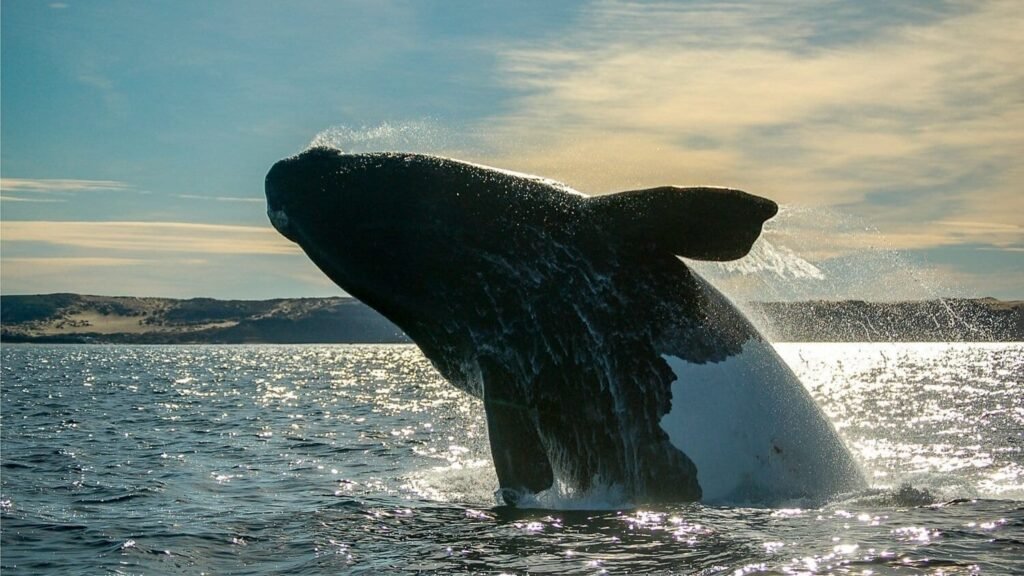
All of my close encounters with whales have been exhilarating, but seeing whales en masse with your family amplifies the experience. We motored to the middle of a channel, and after another hour of searching, suddenly we were in the middle of a super aggregation. Waves of whales surfaced alongside our boat, spouting and back scratching on the hull. My daughters were squealing with a nervous mix of absolute joy and wide-eyed frenzy. Those whales arched slowly, tails lifting before descending. Then another wave of giants arrived. Up ahead and alongside, flukes and full breaching. This went on and on and on. By the end of the day, our faces hurt from smiling, and we had exclaimed ourselves hoarse.
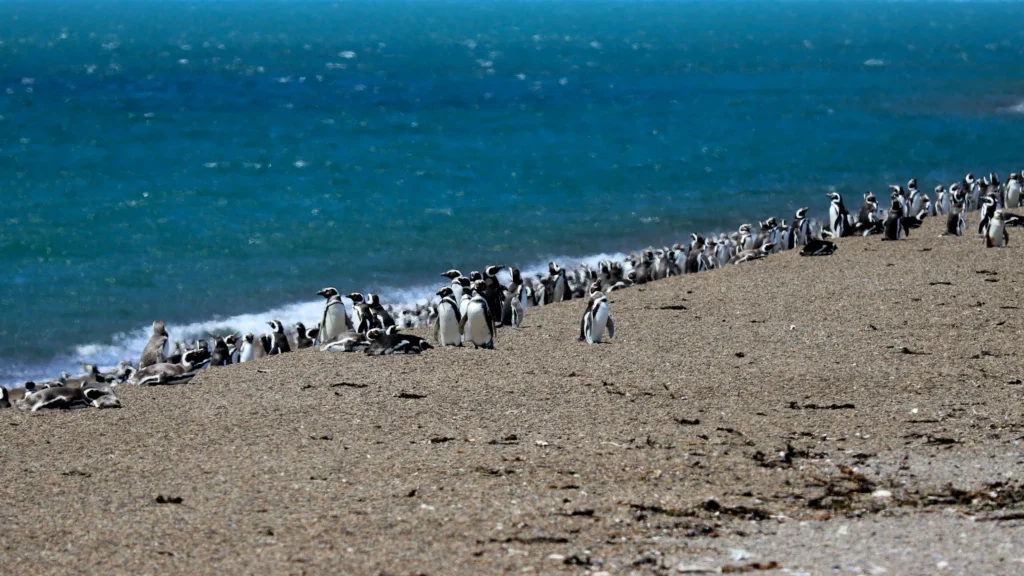
Peninsula Valdes, on the Atlantic coast of Argentine Patagonia, is one of the world’s most important calving grounds for the southern right whale. Between June and December, approximately a thousand individual whales congregate in the peninsula’s two main bays—Golfo Nuevo and Golfo San José—to calve, nurse, and mate. From Puerto Madryn or Puerto Piramides, the access to this ocean sanctuary is straightforward. Nearby are large colonies of Magellanic penguins and Southern elephant seals. Orcas prowl the coast near sea lion colonies in this same region.
The Southern Right Whale
The southern right whale was so named because it was the “right” whale to hunt: slow-moving, buoyant when killed, full of oil, and cooperative enough with ships to make the process deadly efficient. Innate approachability nearly resulted in the total loss of this species. By the mid-twentieth century, the southern right whale population had been reduced to less than a thousand individuals.
Protected since 1935 in Argentina and recovering steadily since, the southern right whale population in the South Atlantic now numbers roughly ten thousand animals. Peninsula Valdes receives the same families year after year—females return to the bay where they were born, bringing their calves. Fluke markings and the annual matrilineal return makes individual whale identification possible across decades.
The Season
Whales begin arriving at Peninsula Valdes in June, with numbers building through July and August. September and October are the peak months for mother-calf pairs and for behaviors such as spy-hopping, tail-slapping, and competitive mating. The whales begin departing in December.
Beyond the Whales: Peninsula Valdés
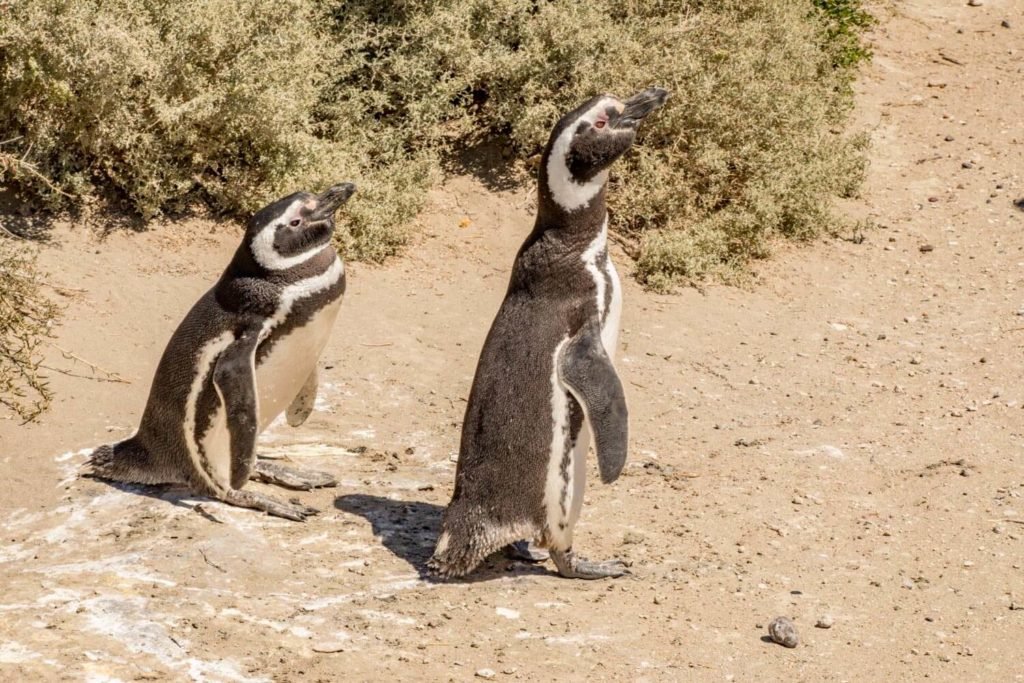
The Peninsula Valdes coastal ecosystem is a UNESCO World Heritage Site. Magellanic penguins arrive in September and remain through April; the colony at Punta Tombo, two hours south of Madryn, is the world’s largest—between 500,000 and a million individuals. Southern elephant seals breed at Punta Norte from August through November. Orcas hunt in the surf at Punta Norte in March and April—beaching themselves deliberately to catch sea lion pups, a behavior documented at this beach and almost nowhere else on earth.
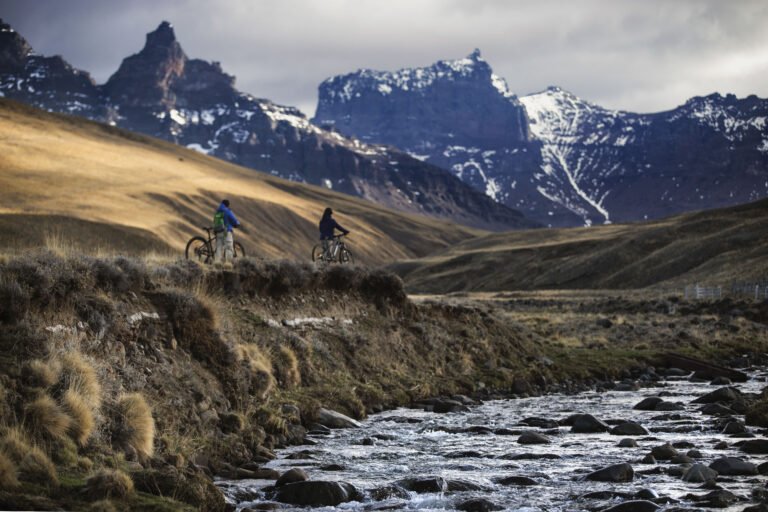
The peninsula’s interior is dry steppe—home to guanaco, rhea, Patagonian, and armadillo. A full day on the peninsula moves between the coastal spectacle and the quieter pleasures of the inland habitats.
Planning Your Visit
Puerto Madryn is the primary gateway, three hours south of Trelew. The whale-watching boats operate out of Puerto Piramides, one hour from Madryn. Private charter boats can be arranged. LANDED designs Peninsula Valdés programs as part of broader Patagonia itineraries, typically combining two or three nights on the peninsula with Buenos Aires, the El Calafate / El Chalten area, and the wine country.
“In Patagonia, whale watching is not passive. It’s a transformative, mind-blowing experience of anticipation, proximity, and encounter.”–John Montgomery, Co-Founder of LANDED
“The southern right whale is every bit as magnificent a creature as the humpback.”—Nick Carroll
PRICING NOTE
LUXURY FULL-BOARD PATAGONIA LODGES TYPICALLY RANGE FROM $1,639.44 PER PERSON PER NIGHT BASED ON DOUBLE OCCUPANCY. TWO NIGHTS IN PUERTO MADRYN OR PUERTO PIRÁMIDES IS THE MINIMUM WORTHWHILE STAY; THREE TO FOUR NIGHTS WILL ALLOW YOU TO REALLY ENJOY THE AREA’S BIOLOGICAL ZONES. LANDED INTEGRATES PENINSULA VALDÉS INTO BROADER PATAGONIA PROGRAMS AT VARYING PRICE POINTS, DEPENDING ON THE FULL ITINERARY.
If you want to experience coastal Patagonia’s sea mammal and penguin populations at their highest densities, the Valdes Peninsula region is the right place. Visitors usually plan on two or three nights in this area. LANDED designs custom travel throughout Patagonia, South America, as well as in the Antarctic. Every LANDED journey is a hand-made original, tailored to your tastes and requirements.
Request a private consultation with a LANDED travel designer to include Peninsula Valdés in your Patagonia itinerary.