Podcast: Play in new window | Download
Subscribe: Apple Podcasts | Spotify | TuneIn
LANDED Podcast 024
Gabriel Saragovia’s Costa Rican Eco-Sanctuary Journey
Join us as we traverse the lush, untamed landscapes of Costa Rica with Gabriel Saragovia, the visionary behind Rio Perdido. Gabriel, a Colombian native with a rich family history of migration and resilience, shares his captivating journey from his formative years in South America to spearheading sustainable tourism in his adopted land. Together, we traverse his life’s path, unveiling how his passion for preserving Costa Rica’s natural beauty is more than a mission—it’s an inspirational adventure that redefines what it means to travel responsibly.
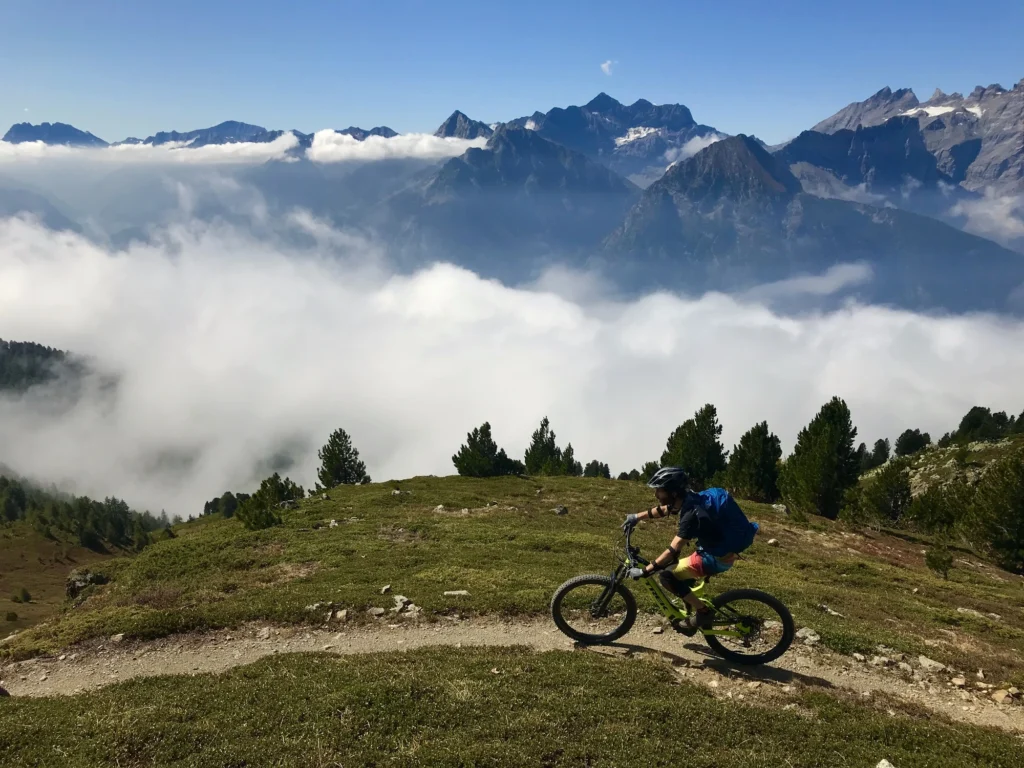
Prepare to be transported to the lesser-trod corners of Costa Rica, where aridity meets the emerald embrace of volcanic terrain. We journey from the savanna-like climes of the north, reminiscent of a tropical Utah, to the awe-inspiring thermal rivers that flow beneath the Miravalles volcano. With the guidance of local experts, we uncover a Costa Rica apart from the postcards—a land where warm thermal rivers defy expectation and hidden waterfalls beckon the truly adventurous spirit. Rio Perdido stands as a testament to Gabriel’s dedication, marrying state-of-the-art eco-friendly design with the raw allure of the natural world, creating a sanctuary where adventure is woven into the fabric of sustainable comfort, setting the stage for a travel experience that harmoniously resonates with the heartbeat of the earth.
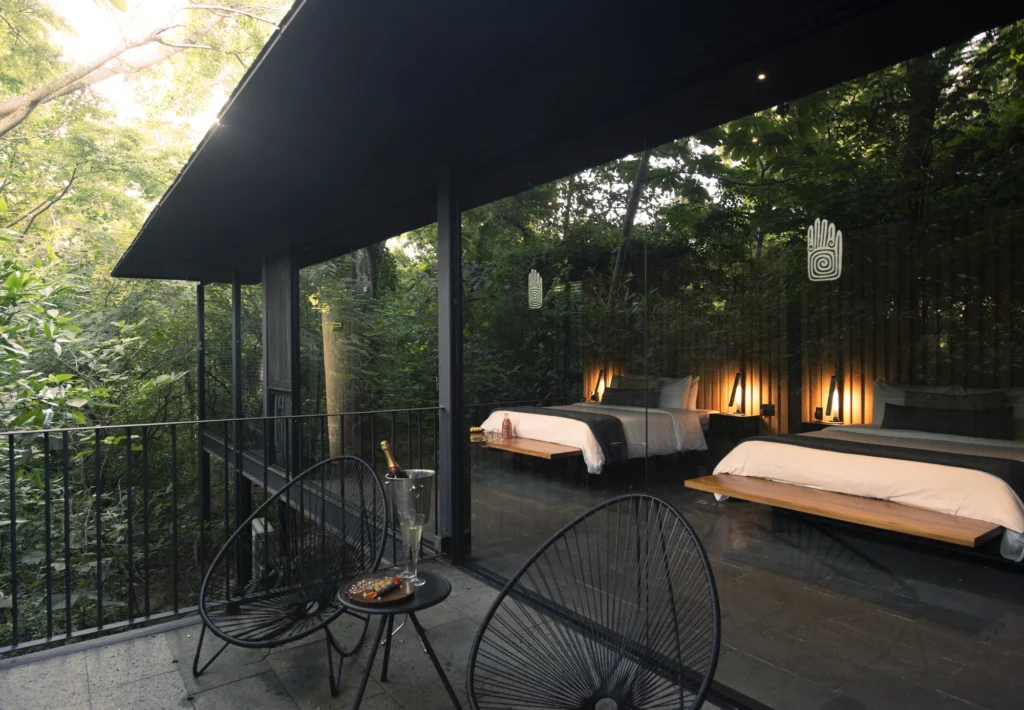
“For me it’s so crazy to think that I get to work and create with an amazing group of people, and operate and provide a product that people are experiencing in a place that I certainly consider one of the top, most beautiful places in the world.”
Rio Perdido Hotel
Website: https://rioperdido.com/
Instagram: @rioperdido
Rather read than listen?
Find the transcript below
Gabriel Saragovia, it’s been too long, man.
Gabo: John, it’s always really nice to catch up with you. Always.
When I think of being with you, two strong impressions come to mind. One is racing through the trees on bikes at Río Perdido. And the other is the first time we had a real conversation, which was on the Australis in Punta Arenas headed toward the Chilean fjords.
Gabo: Right, right! I was just rehashing those stories to my two boys…
You and I have a few adventures to catch up on. We’ve been delayed. A dream deferred, as they say. So hopefully there’ll be plenty of time for that. Your family is Colombian, is that right?
Gabo: It’s not quite that simple. My father was born in Colombia, but his parents were basically refugees coming out of northeastern and eastern Europe in the ’30s. And my mother’s situation is similar, but her family migrated originally to Uruguay. So I am second-generation South American, born in Colombia.
Great. You had to leave Colombia. Things were complicated in the early ’80s, and I think from there you went on to Florida?
Gabo: First Florida, then a little bit later in the Carolinas. A few months in Italy towards the end of my studies, where I fell in love with a lot of things over there. And I’ve now been in Costa Rica for 20, 21 years.
Okay. And your dad had connections to tourism in Costa Rica, right?
Gabo: In the early ’90s, he came to visit a college friend—a close friend who was an architect as well. They had studied together. And his friend took him around the country. My father was very happy with what he saw and got involved in what today is known as Tabacón Resort.
Yeah, this is one of the classic, sort of the first wave or second wave of real international Costa Rican tourism, a thermal spring hotel just outside of La Fortuna with the then-active Arenal Volcano in the background.
Gabo: Yeah, it was making daily eruptions.
So you got involved in working at this hotel?
Gabo: Well, while I was in college in the ’90s, I wasn’t too involved—I was involved from afar. And then out of college, I did a couple of interesting job stints in Florida, and the second one was in tourism, but not yet with any of the family projects. And that actually was what really started me in tourism.
You saw the potential.
Gabo: I just learned. I became a student of tourism.
It’s not a business that is taught, I don’t think.
Gabo: Right.
It’s something that you and I and others like us—we had other career paths, right? But the freedom of it, the creativity that was still available appealed to us, right?
Gabo: Correct, correct, correct.
So you worked in tourism for a couple of years in Florida. Your father had a connection to a classic hotel in one of the tourist hotspots in Costa Rica. And eventually you decided to move to Costa Rica and see what you could make of it.
Gabo: After working in the industry in Florida, I wanted something a little bit more hands-on and, as I mentioned before, maybe a place where I could take my love for travel and tourism, mix it with the things that I had learned not just in college but through my life—whether it was in creative expression in the general arts or in the taught sciences. And I think Costa Rica could offer me that canvas.
I wonder if you had come for family vacations and done some exploring on your own before you made that choice.
Gabo: I did, I did. Again, my father had gotten to know Costa Rica in the early ’90s. In 1993, he made a wonderful decision to take myself, a good friend of his, and my best friend, who was his friend’s son. It was a father-and-son trip with my best friend, and we came here in 1993 and saw a really good portion of the country in a short time—exactly what I advise people not to do! But I actually appreciate it because otherwise I wouldn’t have seen so many different places and gotten this first greatest hits view of Costa Rica…
…which turned out not to be the greatest hits. Like once you get to know the country, you’re like, “Whoa, I have countless destinations in this country that are completely off the beaten path that all these people who rave about Costa Rica don’t even have a clue exist!”
I have a special softness for San Gerardo de Dota, but I can’t get anyone to go.
Gabo: Oh, it’s so beautiful! And we’ve always thought about that. We’ve always thought about how there are like four hotels that you can choose from in the entire area, which is wonderful because it means it’s been kept small. But when you tell me that it’s hard to convince people, I believe it. And I hope this doesn’t come off in a bad way, but you don’t even hear English there. Like most of the people—you’re an amazing exception to the rule—but you tend to hear more European languages coming from there. And I know that England is in Europe, but it sounds very different than American English. So when you’re out there, you don’t really hear Americans. And well, I am American—I consider myself American—and I love my American friends. When you get to a place, and you don’t hear American English at the very beginning—again, this is going to sound horrible, but it usually is a good sign!
If you go to a sushi restaurant and everyone eating there is Japanese…
Gabo: Yes!
…well, that’s probably a sign that this food is going to be a good experience.
Gabo: Great analogy! My favorite Korean spot here in San José in Costa Rica—like, there are times when you go inside and you know that every single person sitting down there is from Seoul, South Korea. So you know you’re in the right place.
All right. So you had this grand adventure with your best friend and the two dads, and something about Costa Rica stuck with you. Not just the family connection—there was more than that.
Gabo: Yeah, a lot of things here pulled at my heart. You know how they’re always talking about how there are Blue Zones?
Yeah.
Gabo: And it’s a great concept, but obviously there are a lot more than seven Blue Zones in the world. I mean, there are a lot of places in the world where every element that a human being needs for wellness is aligned. We can talk about that later because that’s a subject that really is a passion for me.
Yeah, it’s more than the water. It’s much more about purpose, about family, about feeling like you’re needed.
Gabo: Well, the water and the air are definitely essential, but as you’re saying, to get the social aspects of it together—if you ain’t got love, you ain’t going to live to be… That is so primary and it’s true, and that’s where we’re mostly lacking. Manhattan residents are always talking about Manhattan’s finest, which generally now refers to the water. They talk about their shale-filtered, naturally filtered water as the best…
It’s good.
Gabo: But where New York usually lacks is on these interactions with nature and chill social environments.
Yeah.
Gabo: And we have that here in Costa Rica, plus if you’re in those Blue Zones, plus the clean air and the clean water.
I got to live in one of the Blue Zones for three years: Okinawa. But are you living in Guanacaste now? Are you in Escazú? Where are you?
Gabo: I am not in a Costa Rican Blue Zone. I am near the capital.
Okay.
Gabo: And I’m mainly here because my children are getting an amazing education at a couple of schools here. And the truth is that the few sacrifices that you actually have to make when you come live in a country that’s south of the border—the few sacrifices that you make turn out not to actually be sacrifices when you realize that what you considered to be sacrifices were things that you absolutely did not need. That was the main problem.
You have two sons.
Gabo: Yep.
You’re married to a wonderful Costa Rican, and when you said the things that drew me here, I said, “There are various things that drew me to Costa Rica.” Priscilla’s family is from where?
Gabo: Yeah, she’s a Costa Rican of a couple of generations. Well, her mom was born in Nicaragua and her great-grandmother on that side—their grandparents were Spanish, French with a big mix, you know, what we like to very eloquently call mutts.
I’m a Kentucky and Idaho mix. It’s probably not too pretty on paper, but I enjoy my background, I enjoy my history.
Gabo: Well, hopefully we’re brothers somewhere not too far in the past.
Well, closer or further, we’re brothers. Now, your love of Costa Rica, it’s based on comparison, too. I mean, you’ve been all over Europe—Switzerland, Norway, Italy. I know you’ve been all over South America. But the area where your hotel is based, where Río Perdido is, where you found this land—one of the top five most beautiful places you found.
Gabo: For me, yes. For me, it’s so crazy to think that I get to work and create with an amazing group of people and operate and produce a product that people are experiencing in a place that I certainly consider one of the top most beautiful places in the world.
So let me set the stage for people. When people come to Costa Rica, they generally come from an international airport—Liberia in the north in the Guanacaste region, or San José in the Central Valley. The north tends to be drier, right? It’s more dry forest, temperate…
Gabo: It’s actually more savanna even.
…right! When people arrive in this particular area that is not very well known by local tourism…
Gabo: They don’t really know the area that well. It’s very dry, rocky… I think I’ve told you this in our previous conversations over table, that a lot of people from your area—from Utah, Idaho, Colorado—when they get to that part of the country and come to Río Perdido, they’re like, “Whoa, this is like a tropical Utah!”
Yeah. And that is probably the best way to describe it. It reminds me of Texas. Parts of it remind me of East Africa. The coast, of course, feels like Central America—feels like Nicaragua…
Gabo: Well, what it is—part of Costa Rica. But the interior where you’ve got these Sabanero cowboys herding these Zebu cattle… it’s a little bit of a surprise to most people. When we leave Liberia, most people head straight for the coast. But instead, to get to your place, we head inland towards the cordillera. Near a town called Bagaces…
…where there’s a pretty famous waterfall, we get into some pretty rural area with, in the distance, several large volcanoes. Did you come here first on another adventure? Were you biking in this area, or just exploring?
Gabo: When you go out on a weekly or biweekly basis, you really start to get to know the country. I quickly saw the country’s main tourist spots within the first few visits, but then later I really started to get out there on rare occasions by myself, and then eventually with friends, with professionals like guides that are really, really good.
How long did it take you to find what you found, which is so special?
Gabo: One day, by chance, I was with a gentleman named Hugo Rincón—kind of like a very interesting and funny hermit with a family in Arizona. But he was spending a lot of time on his own on the skirts of the Miravalles Volcano, which, even though it’s the tallest geological part of the entire province of Guanacaste, is really not well known at all.
No, it’s very beautiful, but it’s not well known. And here you have this American-Greek guy living at the base of this thing. So it was incredible to see this totally unique place with this beautiful thermal river flowing at the base. All right, so let’s talk about the river. This is your land. Sits on a riverside, a canyon edge—I don’t know if it’s a bluff or a cliff—overlooking a black granite canyon with clear blue, almost green water in it. Just a perfect river. And it’s right at the junction of another river, a third thermal river heated by the volcano.
Gabo: That is very good, yeah. So, yeah, I remember we were in the car with Hugo—Mr. Hugo Rincón—and we were going down this really bad trail to this one spot that is very close to the convergence of these three rivers: the cold river, the hot river, and then there’s the Yurro Waterfall right in the same spot. And I’m looking at this hole that is like this union of these small but profound canyons. It was so beautiful and so different—not only different for Costa Rica, but different from anything I had ever seen. It was so cool. And then we got to go to the hot river. When Hugo said “the hot river”, I was thinking, you know, it’s probably like 28 degrees Celsius or 29 degrees, just a tad beyond room temperature…
…because that’s kind of common in Costa Rica. So going down this hill, I see this pristine, gorgeous river that would be beautiful even if it were cold. I mean, it’s a beautiful river. Even if it didn’t have hot water, it would stand out. So we get to the bottom and I put my hand in the water and I’m just like, “What?!” It was 40 degrees Celsius…
Wow.
Gabo: …around 105 degrees Fahrenheit! Coming out of the canyon, I thought to myself, “How can a place—and this speaks very well of Costa Rica—how can a place this beautiful not be a national park?”
Right. In the US, I’ve seen such beautiful places, but most of them are parkland in one way or another.
Gabo: Right! But there’s something so special about it, you thought to yourself, “How can this not have been discovered? And how can it not already be protected?” It’s like, yes, it’s owned by people and yes, they know it’s pretty, but how are there not 30 people in the river?
Yeah. How hasn’t it been ruined or misused?
Gabo: Right! It’s so refreshing every time I see that the world is a big place. Obviously, there are still a lot of amazing places to be discovered. To open this place, to make it accessible and appreciated by the wider world, you’ve put together a project people can enjoy for a day or a week. It’s pretty light on the land, it’s got some serious sustainability chops. Why don’t you walk us through the project: what is Río Perdido to a visitor?
Gabo: I like the way you asked that, and your general description is perfect because it makes me think that we did exactly that. We wanted to bring it to the world in a very sustainable way, make it safe and very comfortable, but not too comfortable. Once you make a place way too comfortable so that you can literally go everywhere in a golf cart, you kind of ruin it.
I mean, Río Perdido is pretty comfortable. So how am I earning that?
Gabo: Well, you know, there are trails that are shorter and more accessible, but 90-plus percent of the people that come are doing the rugged trails. They’re jogging, hiking, and walking. Some people have trained for ultramarathons—we have a 25-kilometer circuit that they’ll do twice in a day. So we have all sorts of people, and the people that are coming to us fortunately don’t want to be spoon-fed everything. They also want their food to be the same: beautiful and natural. We love to feed people, and we’re getting amazing ingredients…
Gabo: …but we’re not really making it so that it’s easy for you to grab with your fingers. We don’t care about that. We want people to come and see a plate of beautiful, fresh, ideally organic food sitting before them, and that they actually have to cut things and mix them with the others. There’s an element of consciousness in everything that you’re doing there. So when I say “not easy” or “not too comfortable”, maybe it comes off wrong.
I think you’re giving people an experience where they can be active, where they can maybe do things that they hadn’t thought they would do or weren’t sure about. They leave with a sense of accomplishment for some of the things they’ve dared themselves to do or pushed themselves to try. But you’ve nourished them, too. Maybe a portion of the challenge for Río Perdido is that it’s not on the beaten path. I mean, if I leave Liberia, there’s a gap of an hour and a half on the road before I reach you. And then the next major tourist spot is maybe Río Celeste, Arenal, Rincón de la Vieja… there’s not a lot right around you. This is a pretty wide-open part of Costa Rica.
Gabo: Right! Again, even though we’re geographically between areas that are well known, remember that in Costa Rica there’s no real direct line anywhere.
No.
Gabo: So the traffic kind of goes around us, and the closest road is close to 20 kilometers away—when I say closest road, I’m talking about roads with a constant flow of traffic. You don’t even hear planes flying overhead, which is very rare. It’s rare and wonderful; people aren’t used to it.
Well, it’s restorative. Yes, you’re giving up some convenience, but the rooms are super comfortable. You’re nourishing people’s bodies and their souls, giving them the chance to try and accomplish something they weren’t sure they could do or wanted to do. I’m talking about your zip lines, your Tarzan swing, and river rafting.
Gabo: No, let’s appeal to the comforts that are truly worthwhile. We often have a very fixed conception of what comfort is and what we want to be comfortable. But if we place a lot of attention to detail in comforts that may be more important in the end—and not so much to comforts that shouldn’t even be considered comforts—then we’ll be better able to enjoy a place and absorb that stimulus that is most meaningful.
Yeah, the rooms are well designed, well spaced—it’s a pleasure to be there, no hardship at all. They’re light on the land, set in tropical dry forest, with a main lodge, great food, nice views, pool, spa, and access to this trail system and these rivers where you can do things like… you have a carbon fiber zip line.
Gabo: You know what? It actually is not that uncommon now, but when we first installed them, we were definitely the first in the Americas, and we know this because the provider of that product…
Gabo: …is a company out of France, and they came to Costa Rica to offer it to us. It was approved by all these amazing associations. We weren’t going to test a zip line on human life, so these things were approved, but nobody was using them because people are afraid of change even if the approvals are amazing.
If this thing doesn’t look like what I’ve seen…
Gabo: Right! Significantly stronger than steel, doesn’t conduct electricity so you could even go in a thundershower—not that we do that, but you could—and it doesn’t make noise. So when the pulley goes across this carbon fiber…
Gabo: …it’s not making noise. And that’s another thing we take for granted. In Costa Rica, a lot of these steel zip lines make a high-pitched kind of noise, plus the screams of the humans on them…
And you’re scaring away every animal!
Gabo: But in reality, we have people screaming on our zip lines, and because the zip lines are not made of steel and the pulley is not emitting a high-pitched sound, we notice the birds maintaining their perch! They’re not flying away. The monkeys are there, and we’ve seen porcupines and river otters, which is something I didn’t even know existed in Costa Rica until I saw it!
First time I ever got to see the Sphiggurus mexicanus [Mexican hairy dwarf porcupine] is at your place.
Gabo: Nice!
We have a video on YouTube of us with our kids loving your lazy river inner-tube situation. And we come around a corner and sure enough, there’s a little porcupine having a drink, and my kids started yelling ridiculous things like, “He’s going to pop the inner tubes!”
Gabo: No, that’s awesome!
“Just leave him alone, let’s just enjoy the fact that we got to encounter him and move on.”
Gabo: That’s wonderful!
Um, but that particular species is called Sphiggurus mexicanus.
Gabo: He was kind of a yellowy green. Am I crazy for thinking he was yellowy green? They actually vary in color, and I think it depends on what’s growing on them!
If I’m coming to Costa Rica, is Río Perdido the kind of place that I come on my first trip, or is this a second or third trip destination?
Gabo: You know, that’s the first time someone has ever asked me that, and it’s a great question. I am a lover of off-the-beaten-path adventure, whether light or heavy—I really like it all. But my wife is not into extreme tourism, and we travel the world beautifully. For a person with my personality and a person with my wife’s personality, which are very different, I think a deal would be amazing.
Let’s say I’m a family with teenage kids—the kids are old enough to participate—or if I’m a couple, how many days would you recommend someone stay?
Gabo: Here’s another difficult question. Certain Europeans will be happy to stay a week. And our longest stay was a Canadian couple that stayed 28 days! We’ve had several two- and three-week stays. And those are the people that leave with the best experience—the ones that leave and say, “You changed me.” And when they say that, it’s a collective “you”—this place, your people, everything changed us. It’s very difficult for me when I travel to get into a relaxed sense of absorption and relaxation. And once you reach that level of being in the moment, which is so hard for most people living in the developed world to attain, it’s going to be much harder if you don’t give yourself the time and space to do so.
It’s common that we’ll put the active part of the itinerary first and the vacation second, because we get a sense that it takes a few days to decompress and get into the vacation frame of mind before they can really get the relaxation they need.
Gabo: For me, that’s the smartest thing to do when you travel. And that’s not something I’ve always known—I grew up in the US.
I think what I’m hearing from you, not only is that you feel yourself a steward of the land, but you also feel a sense of stewardship for people’s time who come.
Gabo: Totally. I want to go out there and I have this natural need to tell people, “Hey, what you’re going to see in the next few hours on this walk… I don’t know if we’re going to see cats like pumas and ocelots—probably not—and we’d be lucky to see tamanduas, the anteaters, and the Sphiggurus porcupine. But maybe we won’t see them. We’re probably going to see at least two species of monkeys. But the important thing is that you keep your eyes open and start to think about what you’re seeing and smelling.” If you are conscious of that and try in one minuscule way to get back to your animal instincts, the stimulus is so beautiful and changing that it justifies me getting away from my family for a little bit just to do that. We started off with 230 acres. Within a couple of years, we were at 600 acres, and as of this January, we now have 1,500 acres. Land in Costa Rica is almost US expensive! How do you justify buying that much land? Well, you make sure the business side of it kind of justifies it. And there might be a point where you become like a national park.
To care about the social, environmental, and business side of things—it seems a necessary balance.
Gabo: It is necessary. And guess what? It is absolutely economically justifiable.
One other concept I wanted to explore with you is this idea of passive wellness. I think what you mean is that even if you’re not coming for a wellness stay, the benefits are so pervasive that wellness is a result of your stay.
Gabo: Right! It’s basically that. It’s funny to hear people say, “Hey, we’re just leaving Río Perdido, we’ve been here four days, and I feel so good!” I’m like, “Yep, yep, that’s what it is!” Occasionally I’ll see people check in and check out, and they’re in a completely different frame of mind.
As a friend and a colleague in the industry, can I just congratulate you on identifying something so special, realizing a vision that’s economically and environmentally sustainable, and putting a new destination into the realm of possibility for people? Where in the past, in the touristic sense, it was a blank spot on the map… not everybody can pull that off. Congratulations.
Gabo: Thank you!
Well, Gabo, it’s always fun to talk with you…
Gabo: …man, it’s been too long since I’ve seen you in the flesh, but I think I’ll see you in Cuenca here pretty soon.
Yeah, no further than that. That’ll be in October, and I’m definitely looking forward.
Gabo: Okay, well, Utah is calling, and…
Utah is calling. We’ll be your hosts when you come.
Gabo: That’s awesome! ¡Un abrazo!
Thanks! ¡Un abrazo! Ciao.