Chile to Bolivia via the Andean Plateau
One of our greatest family road trips started in Puerto Montt and ended in Uyuni. The three-week Chile portion was mostly a cakewalk. Even with careful planning, the border crossing into Bolivia presented early-morning challenges. Those were soon overcome. What followed was a surprising day of highlights: colorful lagoons, geysers, flamingos, vizcachas, otherworldly rock formations, and memories of shared adventure. The ensuing days were even more spectacular: volcanoes, ancient sites, the unforgettable Uyuni sky mirror, cultural connections, and an endless night sky.
The overland passage from San Pedro de Atacama in northern Chile to the Salar de Uyuni (the Uyuni Salt Flat) in southwestern Bolivia is one of the great high-altitude crossings in South America. It can be done in one long day (figure ten to twelve hours, depending on stops and border crossing mischief) or divided into two (or even three) days.
The Bolivian border crossing at Paso Hito Cajon opens at approximately 8AM. The logistics are tricky, the Bolivian control agents mercurial. A little negotiation and a few incantations by your guide and you’ll be through. If you’re traveling with a private driver and vehicle, you’ll switch vehicles when you cross from Chile to Bolivia. Goodbye, Mercedes Sprinter. Hello, Toyota Land Cruiser. If you’ve ever wondered where all the vintage 80s and 90s Land Cruisers have gone, you’ll find them in Bolivia (just as all retired US school buses eventually migrate to Central America). No other vehicle is as perfectly suited for the Bolivian Altiplano. Download your playlists before you leave San Pedro.
The Route
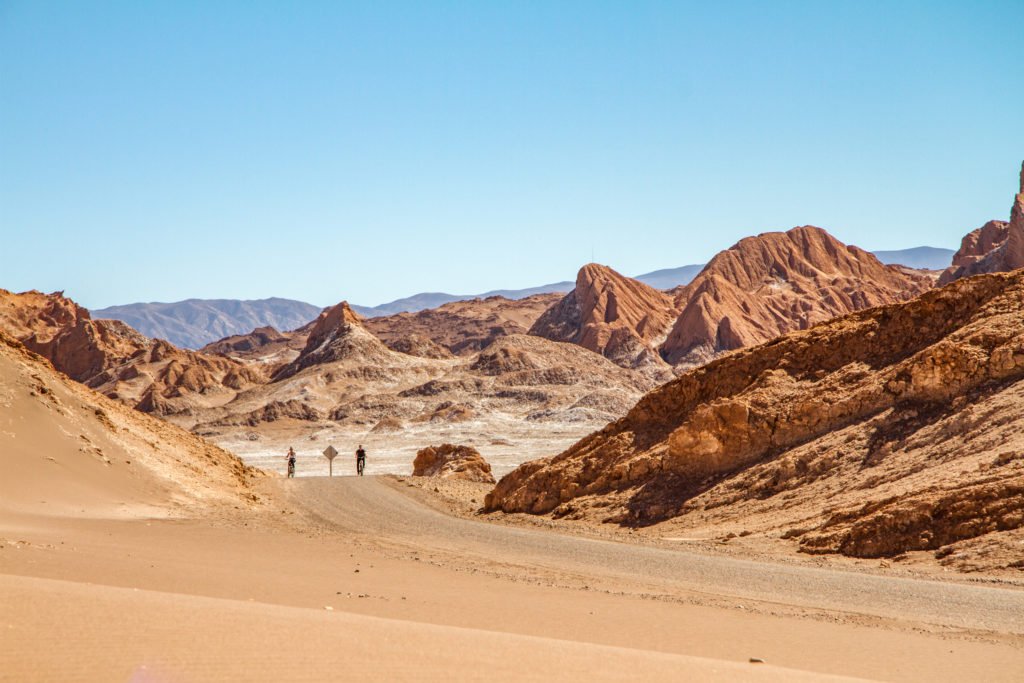
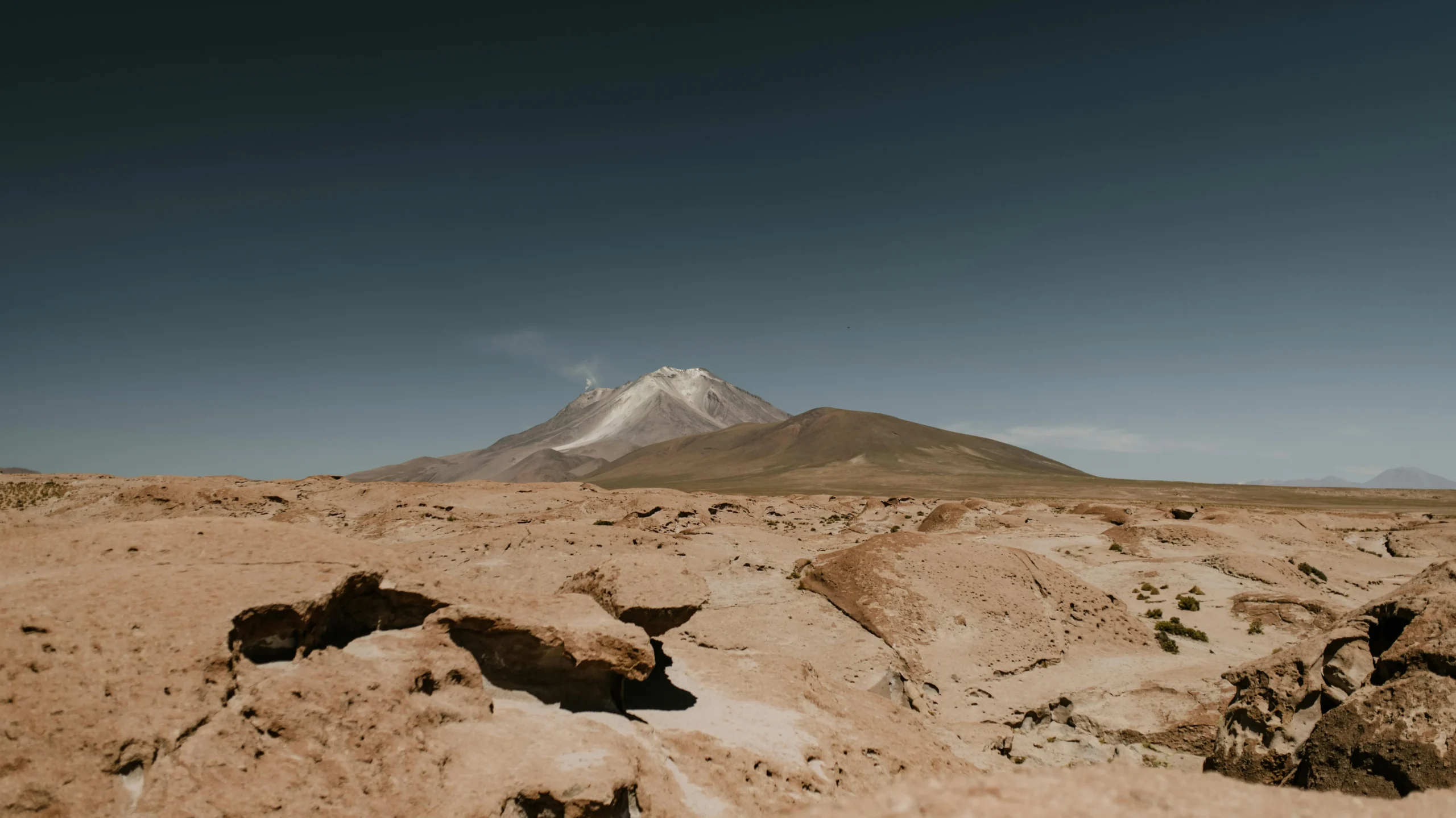
The route runs roughly northeast for more than 320 miles, through high-altitude (up to 15,000 feet above sea level) desert. Along the way, you’ll encounter gleaming salt flats, geothermal zones, ice-capped volcanoes, cultural sites, multi-hued mineral deposits, and surreal lagoons. Laguna Verde, at the foot of Licancabur Volcano, is a pale green lake infused with arsenic and magnesium. Laguna Colorado, two hours to the north, is tinted a brilliant red by flamingo-sustaining algae.
On most overland journeys of this scale, monotony becomes a theme; that’s not the case with this drive, where photo stops outnumbered bathroom breaks by a wide margin. Other stops include the Arbol de Piedra (the Tree of Stone), the Siloli Desert, Laguna Canapa, and Cerro Chulluncani. In such a landscape, it was incredible to encounter so many bird species, in addition to vizcachas, foxes, and guanacos. In the settlements, llamas and rainbow-colored quinoa fields.
LANDED arranges private overland journeys between San Pedro de Atacama and Uyuni with private guides. We custom-tailor your travel: one, two, or three days. The lodges are basic. Glamping options are available. The stargazing is phenomenal.
The route is dusty in the dry season (May to November) and may be impassable due to mud and seasonal flooding in the wet season (December to April).
“San Pedro de Atacama is an impressive destination, even for those of us who live among red rock in the Western USA. It’s a landscape of surprises and anomalies: active volcanoes, frozen salt rivers, flamingos, hot springs, and green canyons. Uyuni is even more absurd, with lakes and mountains in surreal colors. If you have the chance, stay up late to view the night sky from the middle of the flooded salt flat. It’s like being in the center of the galaxy.” – John Montgomery, Co-Founder of LANDED
The Uyuni Salt Flat
High in the Altiplano of southwestern Bolivia, the Salar de Uyuni covers more than 4,000 square miles. This is the world’s largest salt flat—a barren pavement of white infinity. The salar is the evaporated remnant of two enormous prehistoric lakes (Minchín and Tauca), once covering thousands of square miles.
The average altitude at Salar de Uyuni is approximately 11,980 feet above sea level. The town itself is modest but serves as the starting point for expeditions across the salt flats and surroundings.
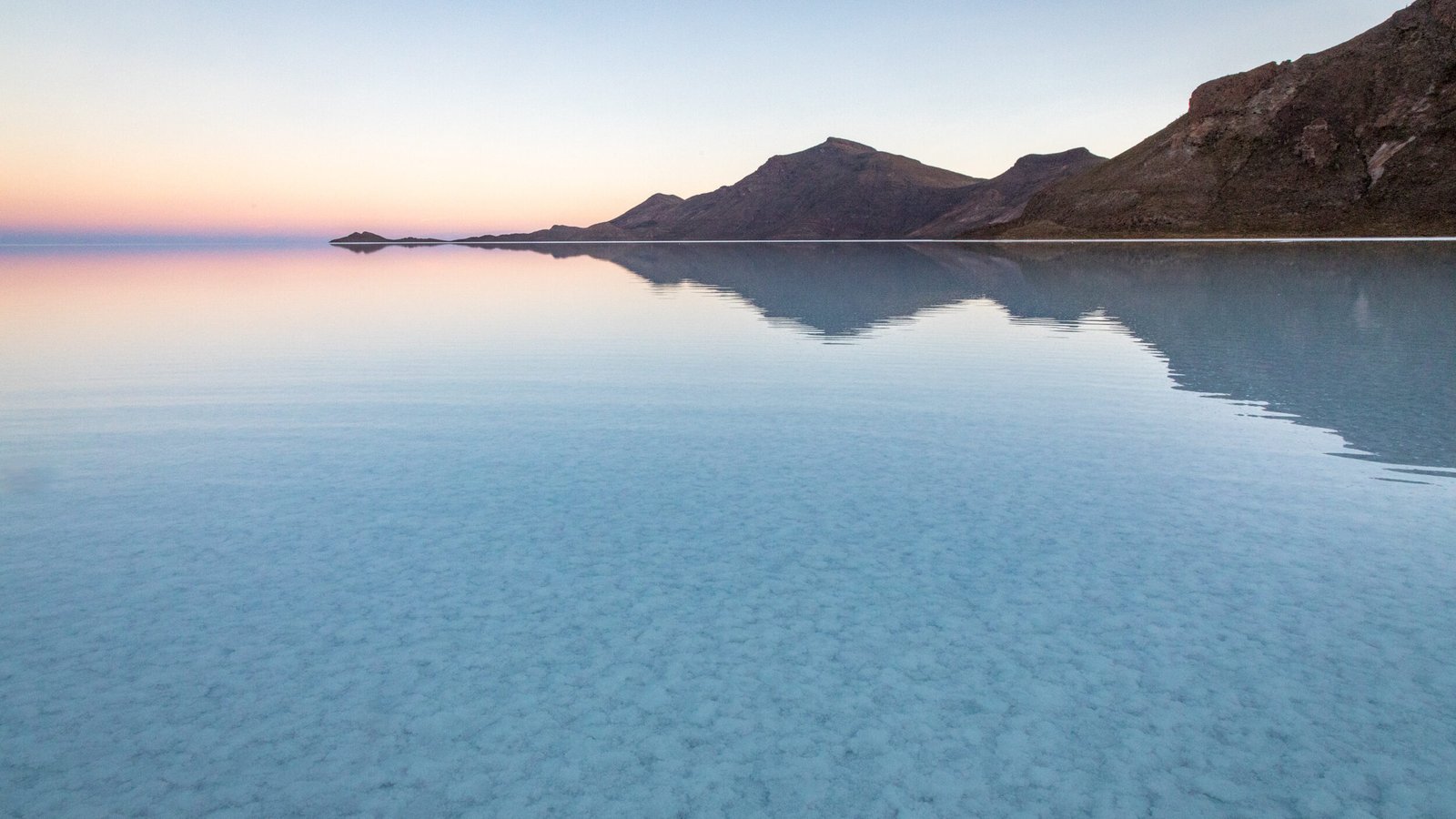
The salt flat creates mirror-like reflections during the rainy season (roughly December to March) and crisp, hexagonal salt patterns in the dry months. During the November to March wet season, the Uyuni Salt Flat (or salt pan) is flooded by overflow from the north. A thin layer of water covers the salty plain, reflecting the sky with astonishing clarity. Passengers in off-road vehicles crossing the flooded flats often enjoy the sensation of floating. Even in the dry months, portions of the salar can remain flooded, and experiencing the mirror effect may be possible. Also noteworthy: November is also the breeding season for the three species of flamingo that inhabit Salar de Uyuni.
But Uyuni is more than the salt expanse. The towns along the salar’s edge offer rich cultural connections: storytellers, weavers, llama herders, and quinoa growers. You can explore ancient hilltop forts and sacred caves, climb volcanoes, and hike among giant cacti. The night sky is reliably clear, presenting the heavens in breathtaking clarity.
“The salt flat is a sea that the sun crystallizes, an infinite mirror where the sky danced… within your silence, you hold an ancient secret; you are salt, you are dream, you are Bolivia at peace.” – Edwin Manuel Quispe Tapia
Request a private consultation with a LANDED travel designer to plan your Atacama and Bolivian altiplano journey.