October is a month of opening. In the Southern Hemisphere, spring is advancing: Buenos Aires’s jacaranda trees blooming purple, Patagonia’s trails reopening after the winter snow, the wine valleys of Mendoza and Chile in their first flush of new-season growth. The Galapagos transition from cool to warm season in October, and both the cool-season pelagic spectacle and the warm-season wildlife abundance are briefly available simultaneously. In Brazil, the Atlantic coast positions itself for peak season. October is the last month before the full Southern Hemisphere summer crowds arrive; in-the-know travelers book accordingly.
Central America
Guanacaste, Costa Rica
October is the green season’s final weeks in Guanacaste. The Pacific rains are tapering, the forest at its most intensely green, and the landscape beginning the slow desiccation that will make the dry season’s gold apparent by December. The national parks and wildlife reserves receive minimal visitors in October, and the luxury properties of the Papagayo Peninsula are available at their green season rates before the holiday premium arrives. The leatherback turtle nesting season at Playa Grande has reached its end; the olive ridley nesting continues.
Wildlife
Olive ridley turtles at Ostional — October arrivals continuing; post-nesting macaw family groups in the dry forest
Natural Phenomenon
Green season tapering — the landscape in transition between lush green and the approaching dry season
Culinary
Green season rates at Papagayo luxury properties; fresh tropical fruit at market peak; post-rains mushroom season
South Caribbean Coast, Costa Rica
October is the Caribbean coast’s rainiest month. Heavy, sustained rains from the Atlantic rather than the brief Pacific afternoon showers. The Tortuguero canal system, however, operates in any weather; the green sea turtle nesting season is ending, and the canals themselves, those waterways threading through lowland rainforest with no roads, are best navigated in the relative solitude that October’s weather produces.
Wildlife
Green sea turtle nesting concluding at Tortuguero — October final nesting females; river otter in the canals
Natural Phenomenon
Tortuguero canals in the October rains — the forest steaming, the waterways at full flow
Culinary
Caribbean coast cooking at its most local in October’s low season; fresh river fish; coconut preparations
Bocas del Toro, Panama
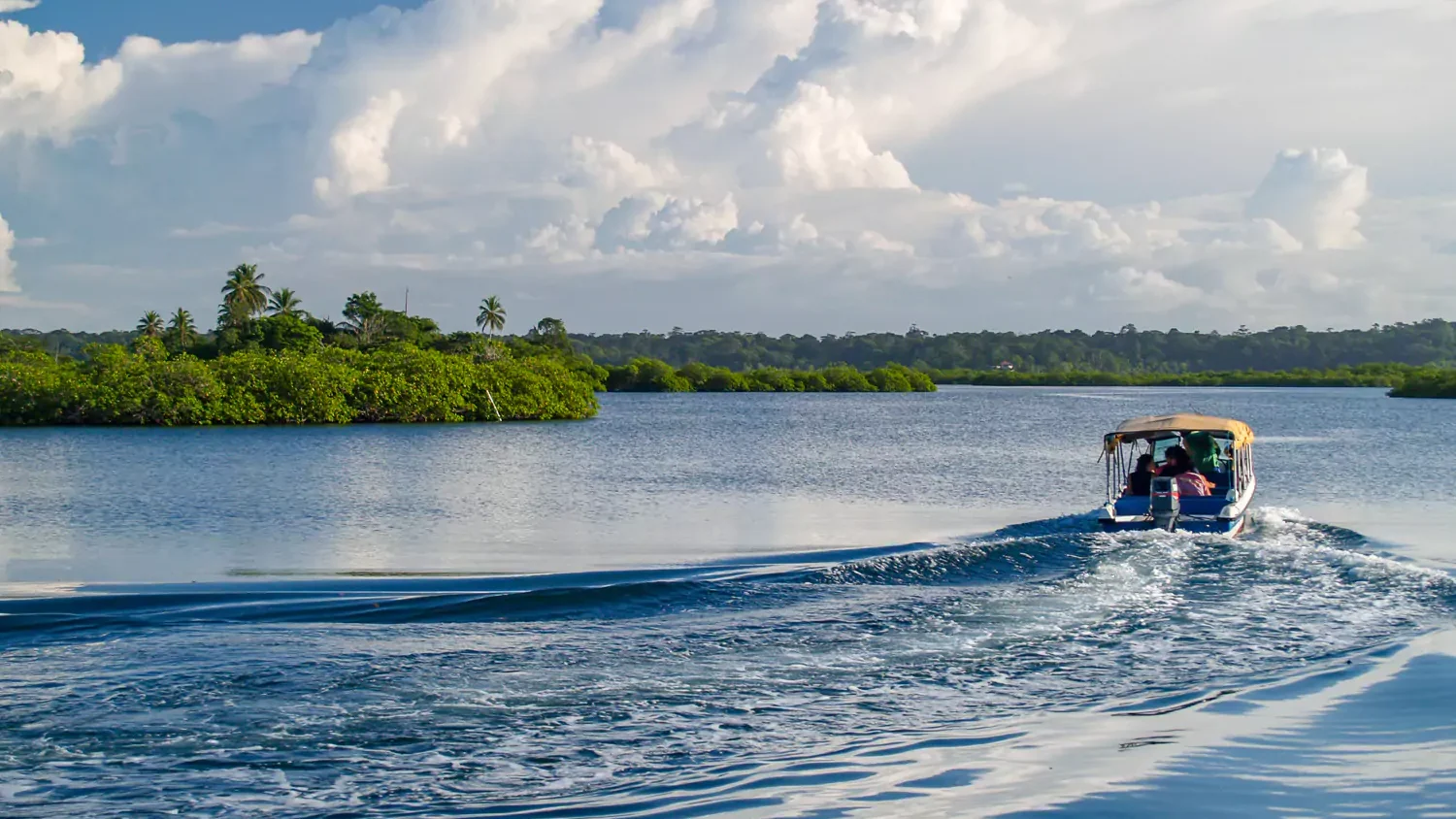
Bocas del Toro, the Caribbean archipelago on Panama’s border with Costa Rica, occupies a sheltered bay system that offers an alternative character of weather and ecology from the Pacific side. October is one of the drier months on the Caribbean in this region, a micro-climate anomaly that makes Bocas del Toro one of the better October destinations in Central America. The coral gardens of Coral Key and Zapatillas Reserve are accessible; the sloth-and-monkey spotting along the canals delivers reliably.
Wildlife
Three-toed sloth visible from canal boats; bottlenose dolphin in the bay; hawksbill turtle in the coral gardens
Natural Phenomenon
Bocas del Toro micro-climate — one of the drier Caribbean windows in October; flat bay suitable for kayaking
Culinary
Bocas del Toro Caribbean seafood; local chocolate; fresh coconut water on the islands
Guatemala
October in Guatemala marks the end of the rainy season in the Pacific lowlands while the Petén and highland areas receive their final rains of the year. The Petén jungle is at its most extravagantly green before the dry season begins. The market season of the Guatemalan highlands continues with the particular October festival calendar Santos Difuntos preparations beginning toward the end of the month, with the extraordinary kite festival of Santiago Sacatepéquez taking place on November 1.
Cultural
Día de los Muertos kite festival preparations in Santiago Sacatepéquez (flown November 1)
Wildlife
Tikal October — the forest at final wet-season density; spider monkeys and toucans in full activity
Culinary
October harvest market foods; Guatemalan hot chocolate; maize tamales at the highland market stalls
Nicaragua
October is Nicaragua’s wettest month on the Pacific, but the Caribbean Corn Islands and the Indio Maíz Reserve receive more moderate rain, and the diving on the Corn Island reefs in October’s still-warm water offers some of the finest visibility of the year. Granada and Leon are accessible year-round and October’s rains keep the colonial architecture at its most photogenic: the walls dark with moisture, the bougainvillea vivid against the plaster.
Wildlife
Corn Island reef — hawksbill turtle; nurse shark; Caribbean reef fish in October’s warm water
Natural Phenomenon
Nicaragua’s colonial towns in the October rains — the architecture most photogenic in wet conditions
Culinary
Granada’s Calle La Calzada restaurant scene; local beer from the Granada brewery; Caribbean seafood
El Salvador
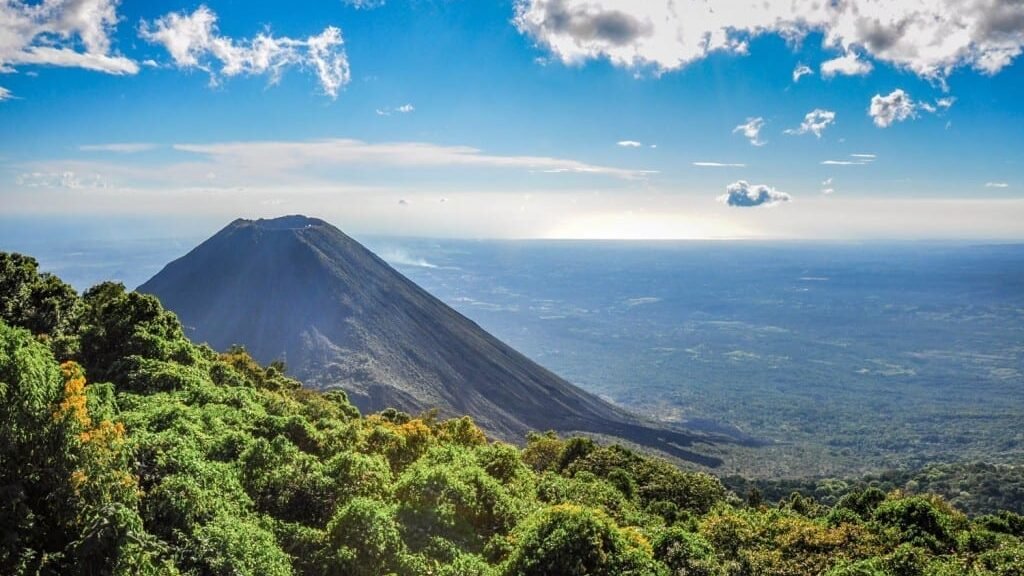
El Salvador’s rainy season is beginning to taper in October, the Pacific surf season entering its autumn phase with consistent south swells, and the coffee farms beginning to show the red cherries that signal harvest approaching. El Salvador’s archaeological heritage Joya de Ceren, Tazumal, and San Andres are visited in the green context of October’s final rains.
Natural Phenomenon
Coffee cherry red on the bushes — the visual signal of harvest approaching, visible on October farm drives
Wildlife
El Imposible National Park in October — the most biodiverse protected area in El Salvador at green-season peak
Culinary
El Salvador October harvest preview; fresh coffee beginning its first picking cycles; pupusas at roadside comedores
Colombia
October marks the end of Colombia’s Pacific humpback whale season. The whales begin their migration south to Antarctic feeding grounds, the final mother-calf pairs departing in mid-October. The Cartagena and Caribbean coast are in a brief transition between rainy periods, an October window of relative dryness that makes coastal travel comfortable. Medellín’s October climate (consistently around 72°F year-round) makes it an optimal month for city exploration, and the city’s arts scene is at peak activity with multiple festivals in October.
Wildlife
Humpback whales departing Pacific coast — the final sightings of the season in early October
Natural Phenomenon
Medellín International Poetry Festival (October) — one of the world’s largest poetry festivals, held in the city’s parks and streets
Culinary
Medellín October: Taller de Gastronomía, Caribbean coastal seafood
Galapagos Islands
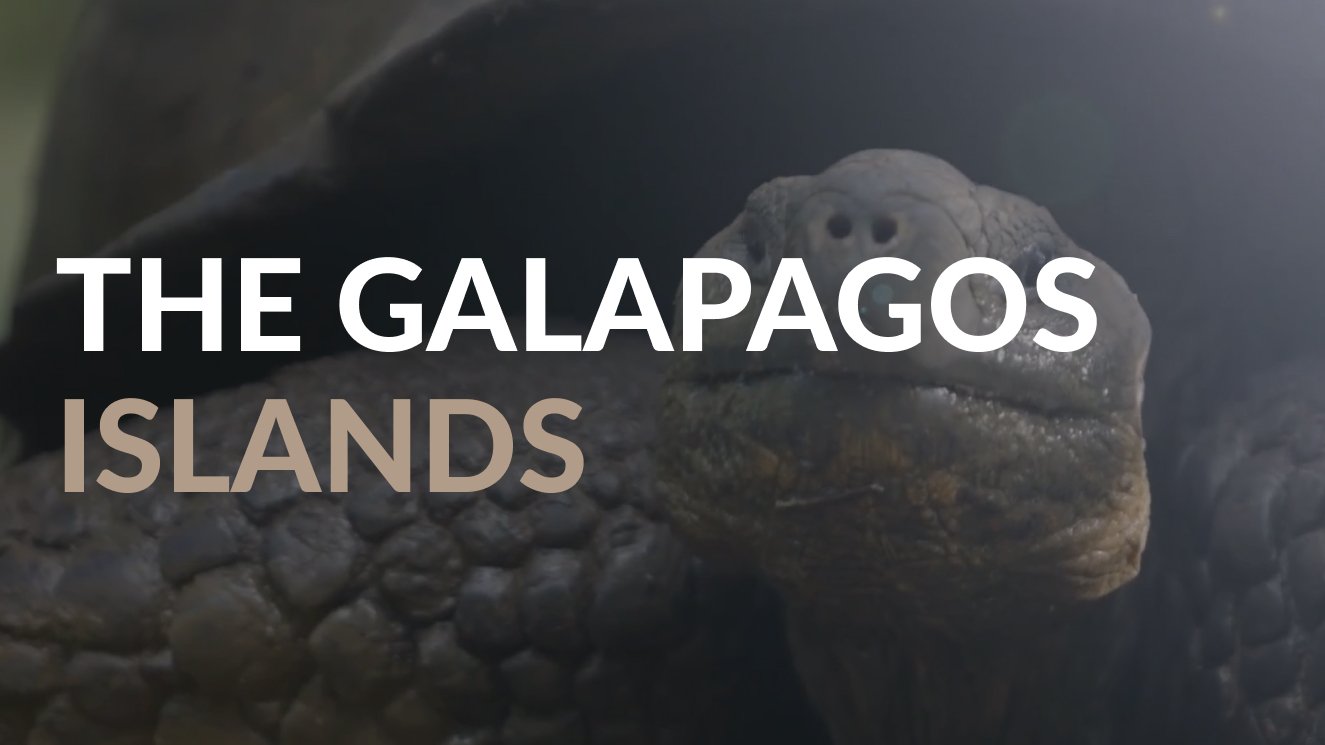
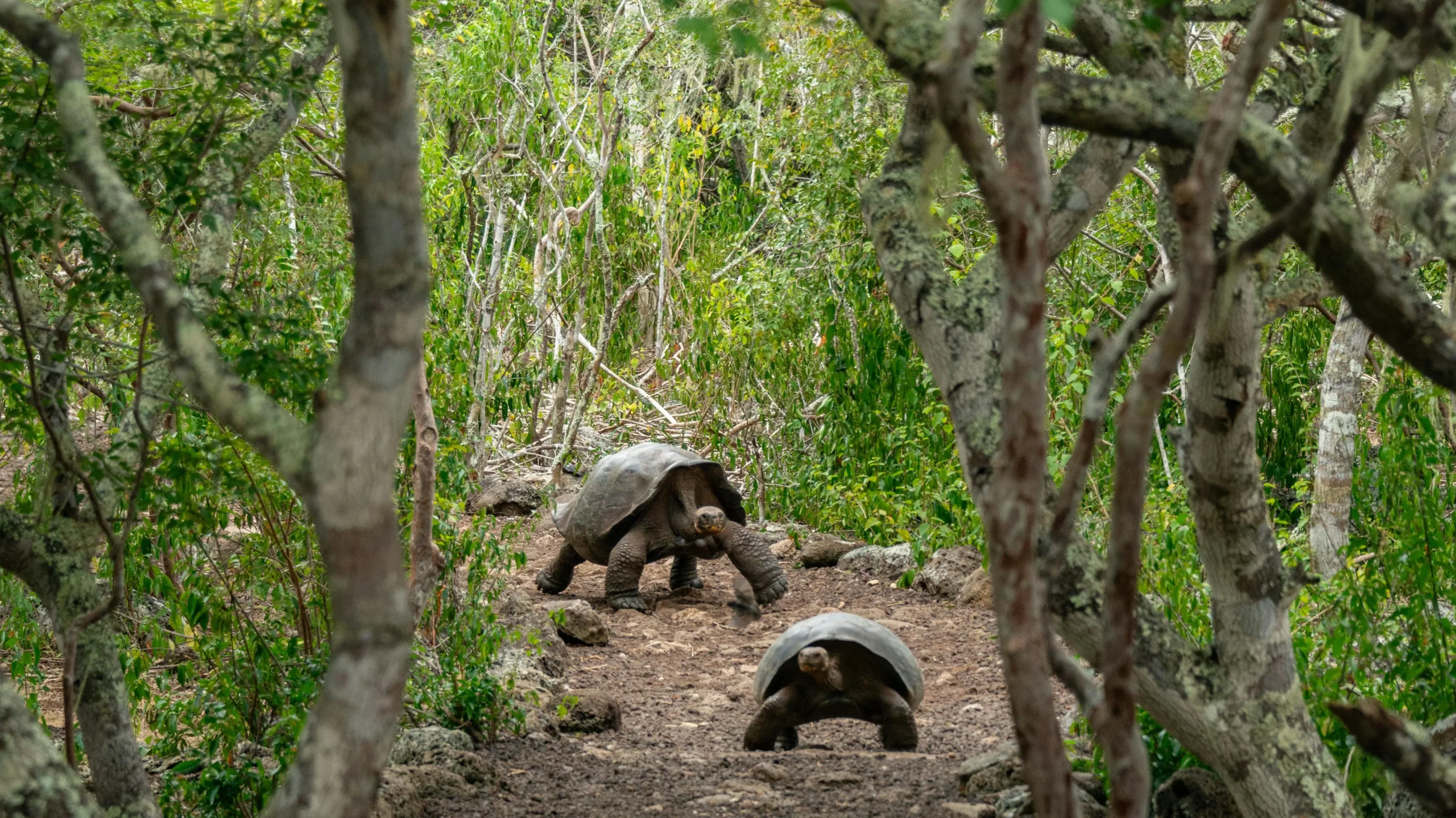
October is the Galapagos transition month. The cool Humboldt season gives way to the warmer conditions that bring the first rains to the higher islands. Both cool-season and warm-season species are simultaneously present: the hammerhead sharks still aggregating in the northern channels, the waved albatross completing their breeding season on Española before departing for their oceanic winter, and the first of the warm-season sea turtle activity beginning on the sand beaches. It is one of the most biologically complex months.
Wildlife
Waved albatross final season on Española — October departures; hammerhead schools still present in the north
Natural Phenomenon
Galapagos transition — cool-to-warm season shift; the two seasons’ species are simultaneously present
Culinary
Santa Cruz restaurant scene in full operation; locally caught fish and lobster
The Amazon
October is the beginning of the Amazon wet season. The first rains arrive in the southern Amazon, the rivers begin their rise, and the varzea (seasonally flooded forest) starts to fill. This early-wet-season period is actually a remarkably rich wildlife time: the first floods concentrate animals on dwindling high ground, and the pink river dolphins follow the rising water into the forest fringes in behavior that the dry season cannot produce.
Wildlife
Amazon wet season beginning — pink river dolphin entering forest fringes; first anaconda sightings in flooded areas
Natural Phenomenon
Amazon flood beginning — the seasonal transformation starting, the trees beginning to stand in water
Culinary
Amazonian river fish before the flood disperses them; cupuaçu and açaí in the October forest
Peru
Machu Picchu, Cusco & Sacred Valley
October marks the beginning of Peru’s wet season, the first rains returning to the Andes, the ruins of Machu Picchu beginning to take on the misty, cloud-wreathed character that gives the wet season its particular beauty. The Inca Trail is dry enough in its most famous section and the alternative trekking routes. The Sacred Valley’s highland communities are beginning their planting season, and the market days reflect this agricultural reorientation.
Wildlife
Spectacled bear increasing activity as the cloud forest rains return; cock-of-the-rock leks active
Natural Phenomenon
October transition — the first rains returning, Machu Picchu beginning its misty-season character
Culinary
Sacred Valley planting season market foods; potato varieties being planted; quinoa harvest ending
Kuelap, Chachapoyas
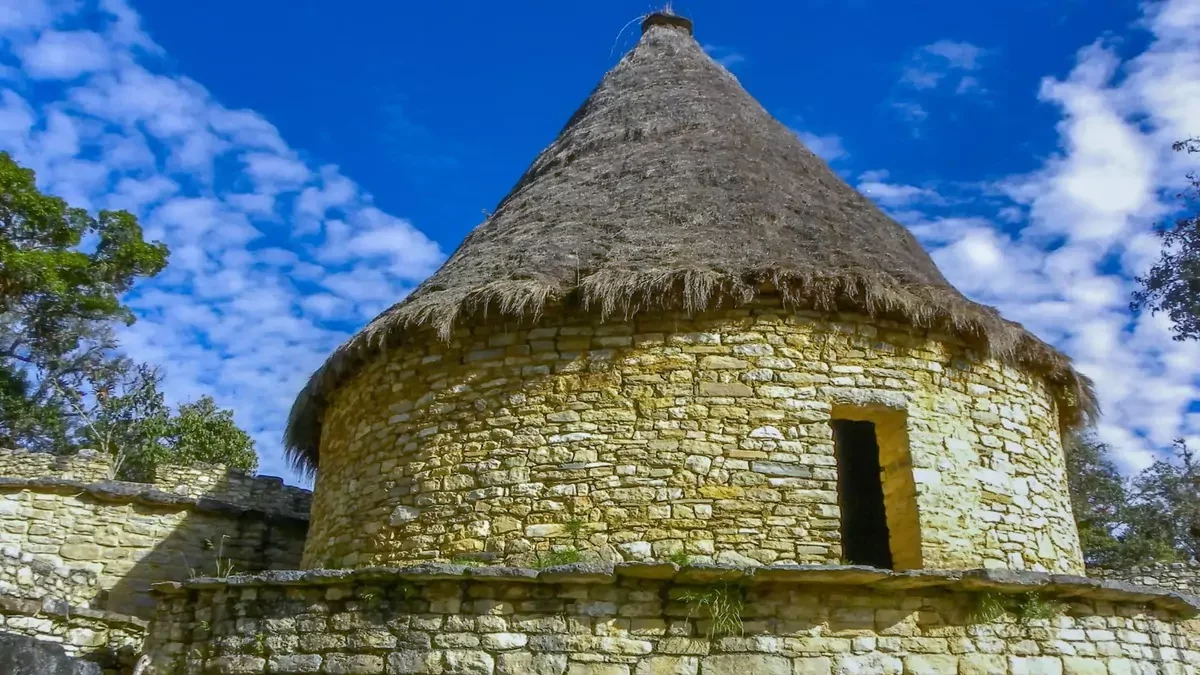
October in the Chachapoyas region is the transition to the wet season; the cloud forest trails are still accessible for the first weeks of the month before the November rains close the more remote paths.
The Kuelap fortress and the Gocta Waterfall are best visited in the October window that combines reasonable weather with the season’s minimal visitor numbers.
Wildlife
Chachapoyas cloud forest October: yellow-tailed woolly monkey; cock-of-the-rock active
Natural Phenomenon
Gocta Falls October — the beginning of the wet season adding flow to the 771m waterfall
Cultural
Kuelap fortress October — the site with the minimum visitors of any good-weather month
BRAZIL
Trancoso, Bahia
October in Trancoso is the beginning of the Bahian summer season. The weather is warming, the property owners returning from their September winter break, and the village preparing for the high season that peaks in December and January. The beaches at Nativos and do Rio are largely uncrowded, the restaurants in their October warm-up phase, and the accommodation available at rates that the December crowd will not see again until March.
Culinary
October Trancoso — the restaurant season begins again; fresh Bahian seafood at early-season prices
Natural Phenomenon
October beach solitude — Nativos and do Rio with no crowds before the December season begins
Cultural
Pataxó indigenous territory accessible in October; artisan workshops reopening after winter
The Pantanal
October is the transition month in the Pantanal. The dry season ending, the first rains arriving, and the jaguar season concluding as the riverbanks that have hosted months of concentrated activity begin to disappear under the first flood waters. The birds, however, are at a remarkable concentration in the week before the floods: jabiru storks, roseate spoonbills, and the caimans that crowd every remaining pool create a wildlife density that rivals the jaguar season itself.
Wildlife
Pantanal October transition — jabiru stork and roseate spoonbill at maximum concentration; final jaguar sightings
Natural Phenomenon
Pantanal pre-flood — the last days of dry-season wildlife concentration before the annual flood begins
Culinary
October Transpantaneira lodges; fresh river fish before the flood; traditional Mato Grosso beef
Fernando de Noronha
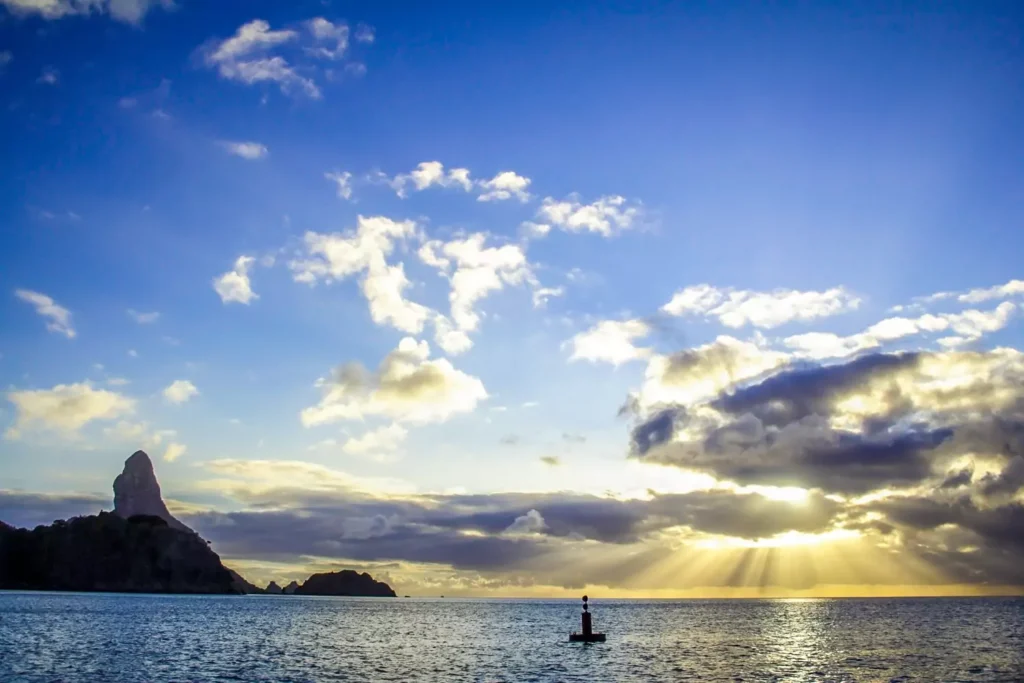
October in Fernando de Noronha is excellent. The water is warming toward the high-season clarity of December-January, the spinner dolphin pods are at full activity in Baía dos Golfinhos, and the island’s strict visitor limits ensure that the experience remains genuinely intimate. The sea turtle nesting season has ended, freeing some beach areas that were protected during nesting months.
Wildlife
Spinner dolphin peak October activity — pods growing as the warm season approaches; reef sharks in good visibility
Natural Phenomenon
October water warming — snorkeling visibility improving rapidly toward the 30+ meter December peak
Culinary
Island October — restaurants at full operation, locally caught tuna and wahoo prominent on menus
Iguazú Falls
October at Iguazú is the beginning of the spring tourist season. The subtropical forest is in new-growth green, the falls at a stable and impressive volume, and the visitor numbers beginning to increase toward the Southern Hemisphere summer peak. The Argentine Circuit catwalks deliver encounters with individual falls at close range, and the surrounding forest is alive with the first spring breeding activity of the subtropical bird community.
Wildlife
Spring butterfly emergence around the Argentine circuit; swift colony active behind the falls; toucan nesting
Natural Phenomenon
October spring Iguazú — the forest in new-growth green framing the falls; spring wildflowers beginning
Culinary
Puerto Iguazú spring restaurant openings; local honey at the market; Misiones Province craft beer
Argentina
Buenos Aires
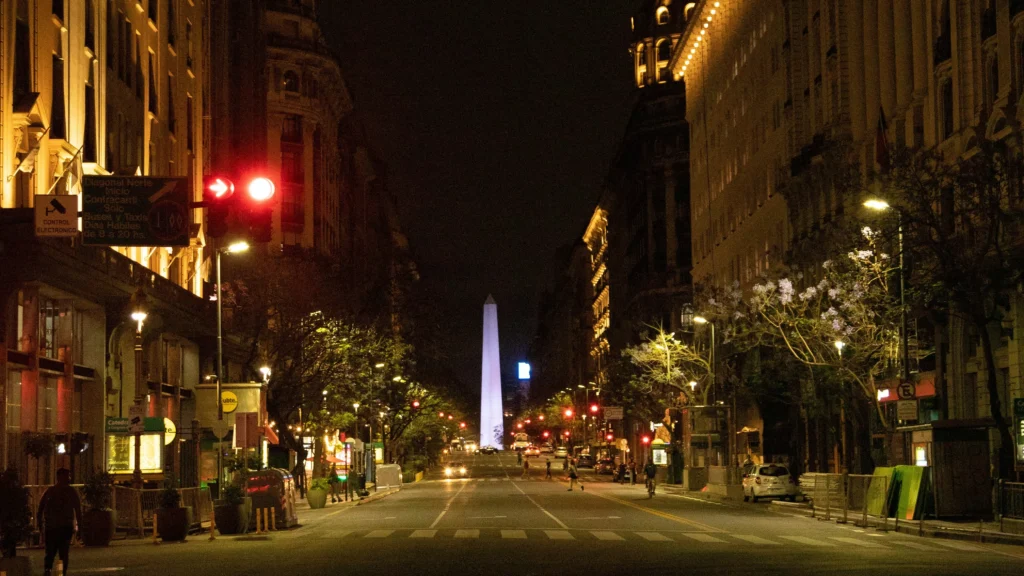
October is Buenos Aires at its most celebrated. The jacaranda trees of Palermo Boulevard in full purple bloom, the plane trees of the Bosques de Palermo fully leafed, and the city’s cultural season at full intensity. The weather is ideal: warm enough for outdoor dining, cool enough for walking, and the light has the particular quality of the Southern Hemisphere spring that Buenos Aires has always known how to make use of. Restaurant reservations become competitive again as the city’s best tables fill for the season.
Natural Phenomenon
Palermo jacaranda bloom — Buenos Aires in October purple, a visual identity as strong as the city’s tango tradition
Cultural
Buenos Aires spring theater season; MALBA spring exhibitions; tango milongas at peak seasonal quality
Culinary
Spring restaurant season: Don Julio, La Cabrera, Tegui all in October spring menu mode; Palermo wine bars
Salta & the Northwest
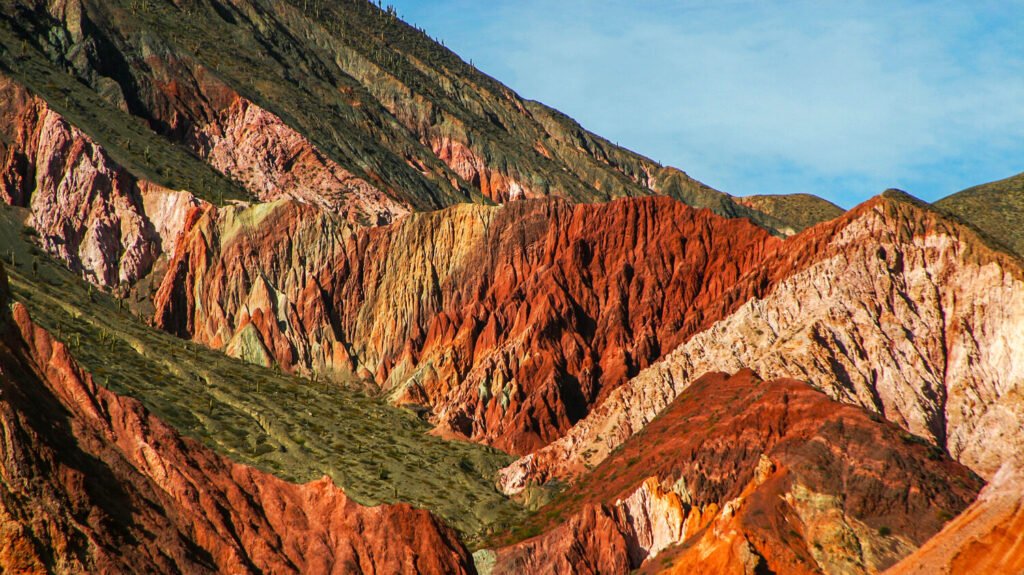
October is Salta’s spring. The Calchaquí Valleys warming after winter, the Torrontés vineyards in their first new growth, and the Quebrada de Humahuaca in the clearest air of the transitional season. The wildflowers of the Puna, those high-altitude grasslands at 3,500 meters, are beginning their brief, intense flowering season, and the multi-colored geological formations of Purmamarca and Maimará take on a particular quality in October’s light.
Culinary
Calchaquí Valley Torrontés spring harvest preparation; Salta artisan cheese; winter lamb in the highland estancias
Natural Phenomenon
Puna wildflower season beginning — the high-altitude grasslands brightening with October bloom
Cultural
October fair season in Salta; artisan market in the main plaza; colonial Jesuit mission visits
Northern Patagonia
October is Northern Patagonia’s spring. The first trekkers appear on the trails of Nahuel Huapi as the snow retreats, the waterfalls at snowmelt maximum above Bariloche, and the fly-fishing season opening on the first rivers. The Llao Llao Peninsula takes on the spring green that makes this stretch of Argentine lakeside among the most beautiful landscapes in the Southern Hemisphere. The Patagonian spring wildflower season is among the world’s best, but least hyped botanical events.
Natural Phenomenon
Northern Patagonia spring wildflower — the meadows below the snowline blooming in October
Wildlife
Fly-fishing season opening on Patagonian rivers; spring bird arrivals; first condor thermal activity of the season
Culinary
Bariloche spring lamb; early-season smoked trout; craft beer and artisan chocolate enjoyed in spring sun
Ushuaia, Tierra del Fuego
Ushuaia in October is at the threshold of the austral spring. The beech forests greening, the Beagle Channel navigable, and the first Antarctic expedition vessels beginning their season. The Tierra del Fuego National Park trails open after winter, and the combination of subantarctic forest, glacially carved channels, and the particular quality of light at the world’s southernmost city delivers a landscape that rewards the traveler who has come to the end of things looking for the beginning of them.
Natural Phenomenon
Ushuaia October spring — the Fuegian beech forest greening; the Beagle Channel at spring light quality
Wildlife
Magellanic penguin beginning to arrive at their Tierra del Fuego colonies; sea lion; cormorant; steamer duck
Culinary
Ushuaia centolla (king crab) season; fresh lamb from Tierra del Fuego estancias; craft beer in the world’s southernmost city
CHILE
Easter Island (Rapa Nui)
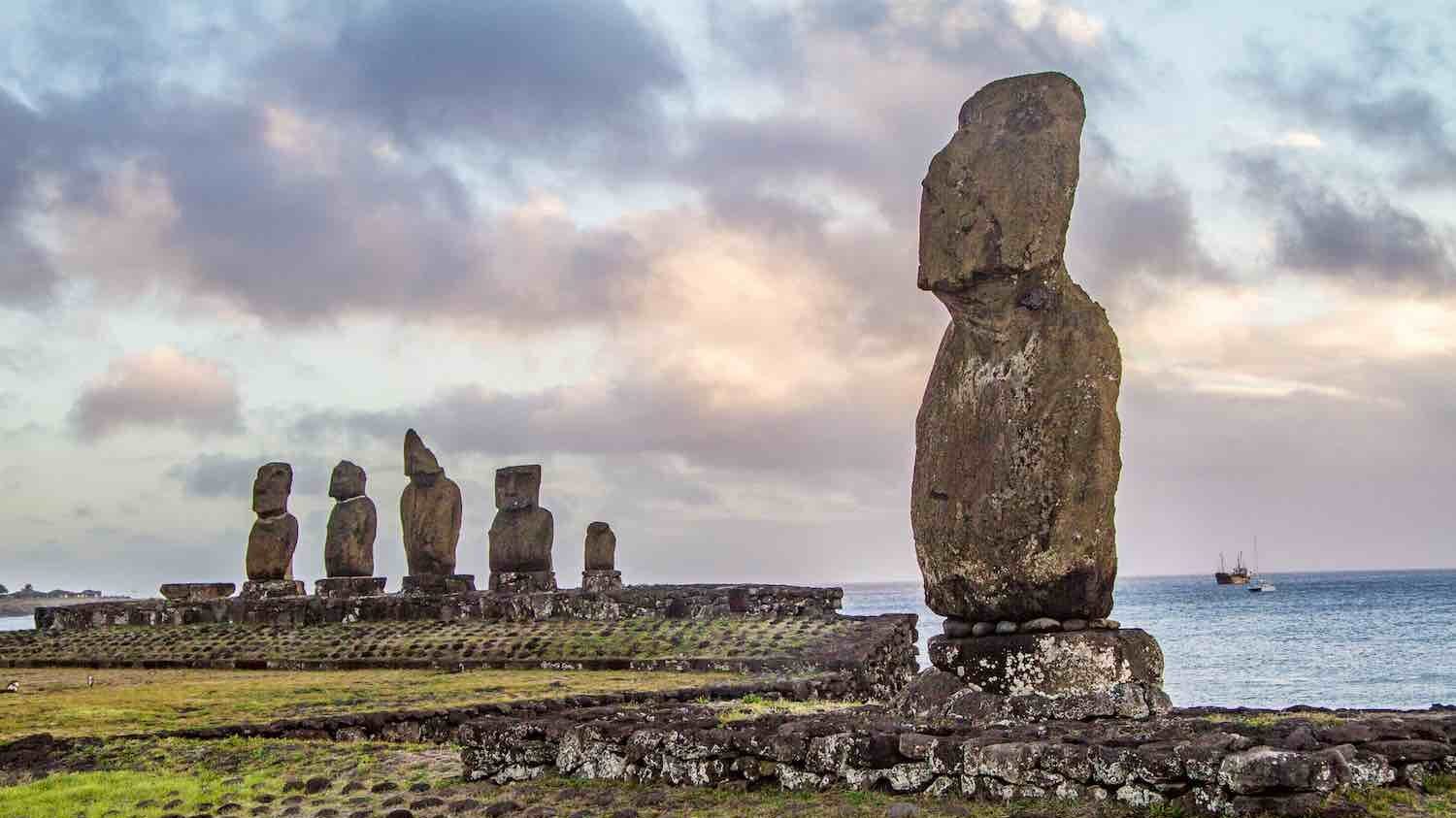
October on Easter Island is the beginning of the warm season, the weather improving from the winter months, the ocean warming for swimming, and the moai platforms receiving visitors in the pleasant shoulder-season quiet that precedes the Tapati festival of late January. The October tourist numbers are the lowest of the good-weather months, and the island rewards unhurried exploration: the Rano Raraku quarry in October’s clear afternoon light, the Ahu Tongariki at sunrise with no other visitors, the petroglyphs of the coastal path.
Cultural
Easter Island October — the moai sites in shoulder-season solitude; Rapa Nui community cultural events
Natural Phenomenon
Rano Raraku quarry in October light — the unfinished moai as close to a private experience as the island offers
Wildlife
Sooty tern colonies are active on the volcanic coastlines; green sea turtle in the warming October waters
Atacama Desert
October in the Atacama is the beginning of the spring season on the volcanic slopes — the first wildflowers appearing after the winter cold, the flamingo colonies on the salt lakes in their pre-breeding activity, and the San Pedro de Atacama tourism season building toward its summer peak. The October stargazing window is still excellent; the daytime temperatures are now warm enough for extended exploration without the winter cold gear.
Natural Phenomenon
October Atacama spring — wildflower potential on the volcanic slopes; cleaner air than summer; stargazing still excellent
Wildlife
Flamingo pre-breeding activity on the salt lakes; vicuña herds; Andean condor
Culinary
San Pedro spring menu evolution; pisco sour in the warming October evenings
Pucon & the Chilean Lake District
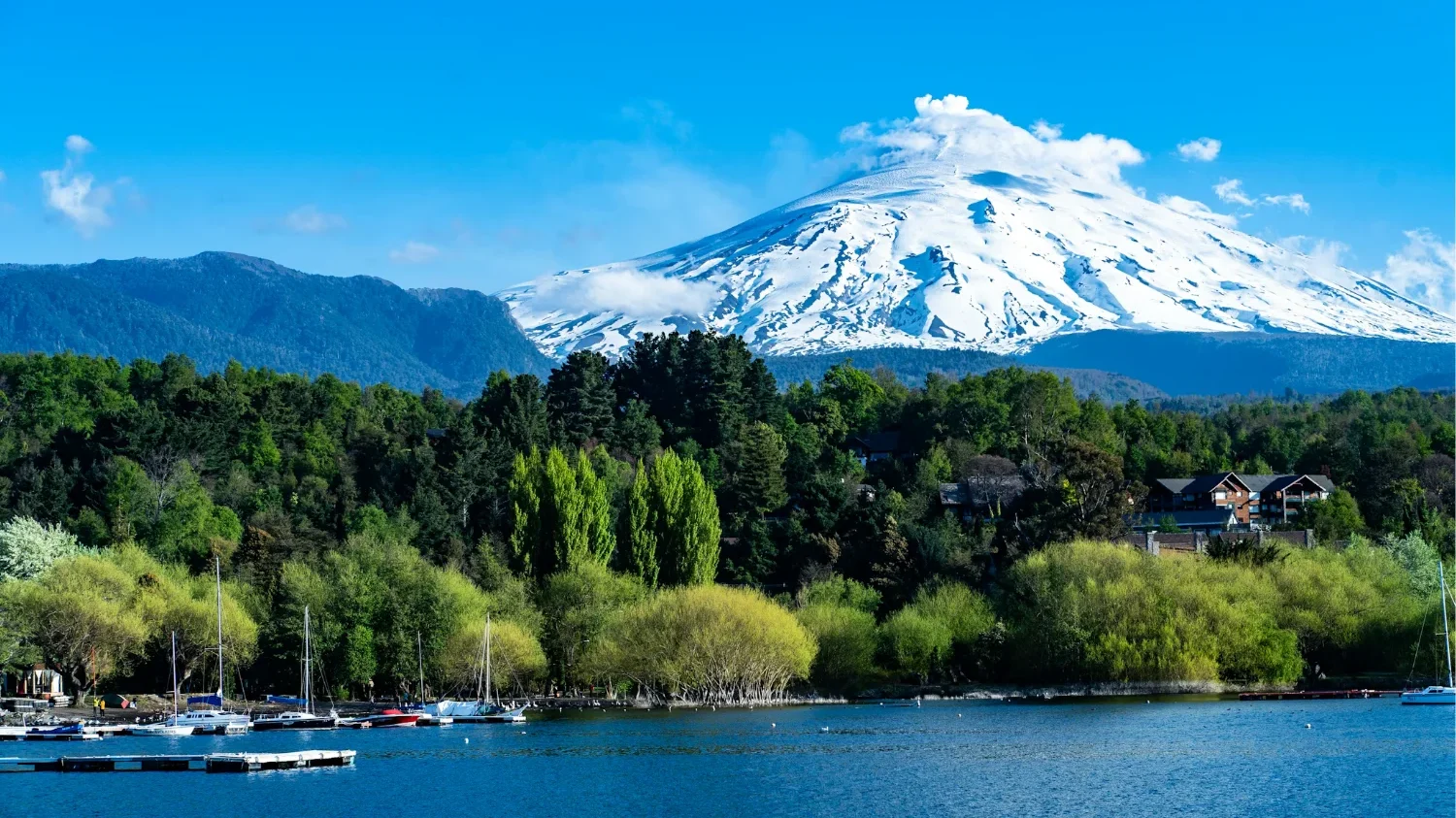
Pucon in October is a town rediscovering itself after winter. The trails of Villarrica National Park emerge from the snow, and the Trancura River rushes with fresh snowmelt, transforming into one of South America’s finest whitewater corridors. There is a particular quality to the Chilean Lake District in October that the summer months cannot replicate: the landscape in its spring becoming, the smoke from the volcano catching the low southern light, and the forest trails above the lake still holding the quiet of a season not yet arrived.
The thermal springs of the Lake District: Termas Geometricas in the Conaripe Valley, its crimson-railed walkways threading between steaming channels cut into the rock, and Termas Los Pozones with its series of natural pools above the Trancura are best visited in October, when the outdoor pools steam visibly against the cool spring air and the forest around them is in the first flush of its new-season green. Canopy access within Huerquehue National Park, with its ancient araucaria pines and the chain of turquoise lakes at altitude, opens fully in October, the high trail from Lago Tinquilco to Lago Verde offering a day walk through a landscape that has no equivalent anywhere in the hemisphere.
Wildlife
Huerquehue National Park October: Chilean pigeon; magellanic woodpecker; puma tracks on the muddy spring trails above Lago Verde; pudú deer in the araucaria forest at dawn
Natural Phenomenon
Villarrica Volcano October — the summit climb season opening; the volcanic cone casting its reflection in the lake on still spring mornings; spring snowmelt waterfalls audible from the town
Culinary
Pucón October: smoked wild boar and lamb at the lakeside parillas; Termas Geométricas post-soak dinner; Patagonian craft beer on the plaza; fresh Lake District trout in the first week of the fishing season
Torres del Paine
October is Torres del Paine at its most rewarding: the park in the days before the summer crowds discover it, the lenga beech forests releasing their first leaves in a color that runs from copper to new green as the season overtakes the hillsides, and the puma population in a period of concentrated activity as the guanaco herds deliver their calves onto the spring steppe. The calves, unsteady and conspicuous in the first weeks of their lives, make October the most reliable month for puma sighting in a park where the puma’s presence has always been certain but its visibility depends on exactly this kind of seasonal vulnerability.
The towers themselves —rose-granite pillars above ice and lake— receive visitors in alternating weather: the spring systems moving through rapidly, the towers appearing in clearing skies for hours at a time before the next cloud arrives. This is not the reliable blue sky of December; it is something more honest, and more earned. The puma-tracking excursions will tell you that October is the month they would choose for themselves, if they were traveling rather than working.
Wildlife
Puma hunting season — guanaco calves born October through November create the most intense predator-prey dynamics of the year; condor above the ice field; nesting black-necked swans on the lakes
Natural Phenomenon
October torres — the granite towers in spring alternating-weather light; lenga forests transitioning from copper winter to spring green; snowmelt cascades on the valley walls
Culinary
Patagonian lamb, king crab from Puerto Natales, Casablanca Valley whites and Carmenere; post-trek pisco sour in the lodge library with the towers in the window
Why Book in Advance
October represents the Southern Hemisphere spring booking surge. Buenos Aires October rooms for the jacaranda bloom fill quickly; the best restaurants require bookings by August for October tables. Northern Patagonia fishing lodges and trekking lodges for October-December open their season booking in April. Ushuaia for the beginning of the Antarctic season (late October) books rapidly once expedition vessels confirm their departure schedules. Easter Island in the shoulder season has limited accommodation; the best properties book 6–8 months ahead. The Galapagos transition season in October is increasingly sought by sophisticated travelers; expedition vessel October berths are typically 60–70% subscribed by March.
READY TO PLAN YOUR JOURNEY?
Our LANDED travel designers craft bespoke itineraries for discerning couples, families, and multi-generational groups — blending deep regional knowledge with privileged access to the places, people, and experiences that define each destination.