Podcast: Play in new window | Download
Subscribe: Apple Podcasts | Spotify | TuneIn
LANDED Podcast 015
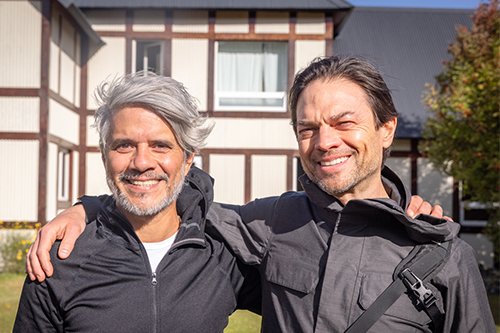
Max Eolo & Valentin Virasoro
Imagine yourself on a journey. You’re in a raw, wild landscape. Multi-colored granite peaks and glacial blue lakes line the horizon. The scale of the scenes before you is epic —amplified, intensified, mythic. It’s familiar, but new and surprising —like a waking dream. The distances are vast. In your core, you sense that you’re at the edge of the known. Moving forward is a release, a letting go, and a reconnection with some part of you you’d forgotten.
Now imagine being welcomed home here. Entering a refuge from the wind and the wildness. A home that’s fitting–appreciative of its surroundings. A place of warmth and rest. Your host greets you with a gentle smile, and you are invited into the heart of the house to relax and be restored. Refreshed, you look forward to your next adventure.
Patagonia is the stuff of legends. It is adventure. Its proportions and beauty reset some inner director. It orients you to your proper place in the natural world.
My guest today is someone who gets it —who has fully embraced the spirit of Patagonia. His name is Valentin Virasoro, and on first meeting him, you may have the sense that you’ve been friends for years. Valentin has devoted his life to welcoming travelers —to sharing what makes Patagonia singular and unforgettable. He lives in El Calafate, the deep south of Argentina —where steppe meets mountain, near Lago Argentino and the Southern Patagonian Ice Field. By trade, he is the general manager of Eolo —as nearly perfect a small hotel as can exist in a real place.

Rather read than listen?
Find the transcript below
Valentín Virasoro, it’s so great to talk to you. How have you been?
Valentín: Hey, John! Great to talk to you, too. I’ve been doing great after all these months and very happy to hear you and learn about you after all these years.
We’re recording this in the North American springtime, which means it’s almost winter in the deep south of Argentine Patagonia where you’re living.
Valentín: It is indeed. It’s the beginning of autumn and it’s actually my favorite season in Patagonia. So weather is changing, colors are fading, and days are getting shorter, which means we’re getting to the end of our season.
I hope it was a good season. I hope everything has come back strong after 2020 and 2021.
Valentín: It has, actually. It has been a great season and we were expecting less, so we were quite surprised to be working like we used to before. So extremely happy.
So, you’re my age. We are the same age—we are of the same vintage, as we say. But you were born and raised in Buenos Aires. You come from a big family. What’s a nice guy like you doing moving down to the lonely wastes of Patagonia?
Valentín: Well, same vintage—that sounds good! Yeah, I’m 51 years old. I was born and raised in Buenos Aires. I come from a very big family—I have 10 siblings, so we are 11 in total. So I was pretty much used to being the younger one, always left behind and looking up to my elder brothers and sisters. I had the chance to travel to Patagonia as a tourist myself, and after working for many years in Buenos Aires and discovering Patagonia, I thought it was a very good opportunity. And Patagonia is a land of opportunities in a way.
Yeah. You’ve always been an explorer, right?
Valentín: I think I began my exploring after I moved to Patagonia, yeah. I had a wish to explore the world, but until I started working in the hospitality industry, I didn’t venture outside. Learning from other people’s experiences gave me much more curiosity, and that’s when I started traveling all around the world. I think that was one of my biggest attributes, in a way to say, because it made me more aware of people’s needs and experiences, and delivering the kind of experiences that they expected when coming to Patagonia.
Sometimes it’s hard when you’re in tourism. It’s a little bit like going to dinner at a restaurant with a chef. You know, you’re very aware of what’s going well and what’s not going well. Do you think working in hospitality has made you a better traveler, or in some ways has it made it more difficult?
Valentín: I think it has made me the best traveler, because I get to understand people much better. So I don’t get too pushy or too demanding in a way, because I know how it is to be on the other side of the road. So yeah, it’s definitely an advantage working in hospitality.
How did you get involved in the project at Eolo?
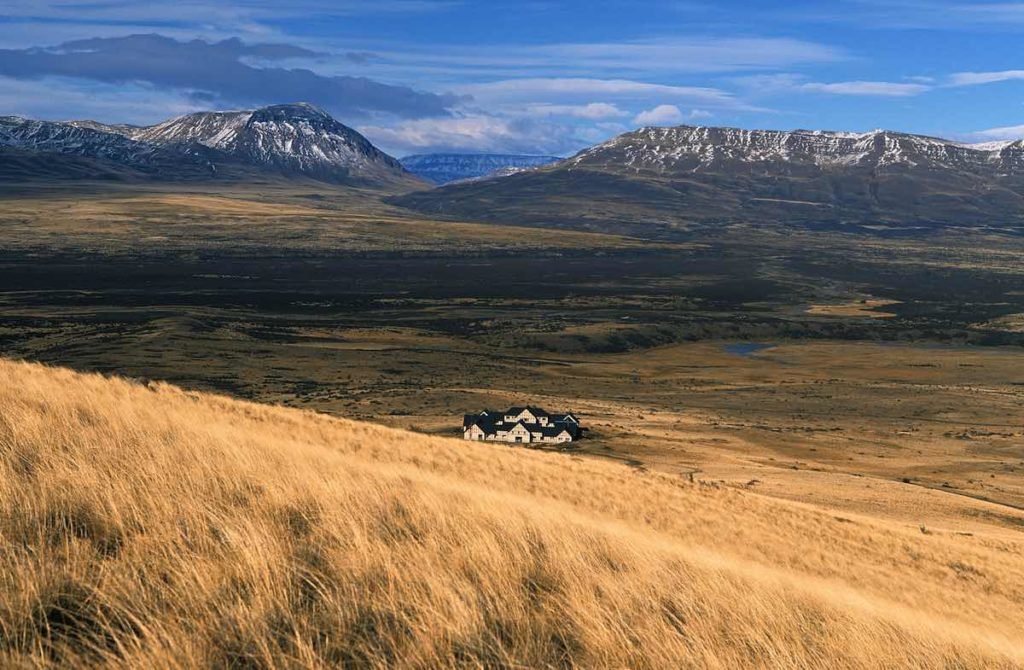
Valentín: Eolo was like a dream to me. When I first came to Patagonia, it was the first season it had opened, and I used to drive past the road and see it standing or perched on the slope of the hill. I remember driving by and saying, “I want to work there.” And it happened! Next year, Rodrigo, my boss—
Rodrigo Brown.
Valentín: —he called me out of the blue. I had only worked one season in Calafate, so there must have been something that I did right in town at the hotel where I was working. So next year I started working in the project as a front desk manager. Rodrigo saw the potential, I guess—if I may say humbly—and the next season he offered me the chance to be the manager. Which was a huge challenge for me because I didn’t have the experience; it was my first experience in hospitality. So I accepted it. I was not young—I was like 35 years old at that time.
Yeah.
Valentín: So it was a huge challenge and a huge honor.
Well, he has an eye for things that work well.
Valentín: He did, yeah.
How long have you been there? If I’m not wrong, it’s been 15 years or so.
Valentín: Yeah, actually 15, 16—depends on 2020-2021 in which we were closed and did not open. So yeah, I missed one season—one of the good seasons—but yeah, 16 years indeed.
I think my first meeting of you at the project was about 14 years ago. I came with my father and he was so excited to be there, looking out over the Patagonian steppe and hearing the wind, and far away at Estancia Alice, hearing the cattle lowing in the background, and all the crazy jackrabbits that run around outside the lodge, and the foxes. And we went for a ride with a guy named Maxi and he took us down to one of the lakes to where the geese are. I don’t know, just one of those moments that sticks with me that I’ll probably always remember about my father.
Valentín: Yeah, I can remember very clearly when you came with your father and we were just starting. I mean, we didn’t know what we were doing, actually! We were delivering the kind of experiences that we thought travelers wanted. So yes, it is very strong in my mind—that year in which we first met. There was like a bond, something created from that first moment. And then you came back with Erin and you’ve sent very good clients ever since.
We sure love Eolo. It’s one of those places that I think about coming back to often.
Valentín: Yeah, I know. Patagonia is very compelling.
If people don’t know much about southern Argentine Patagonia, what would you tell them about the place? How would you describe it to them?
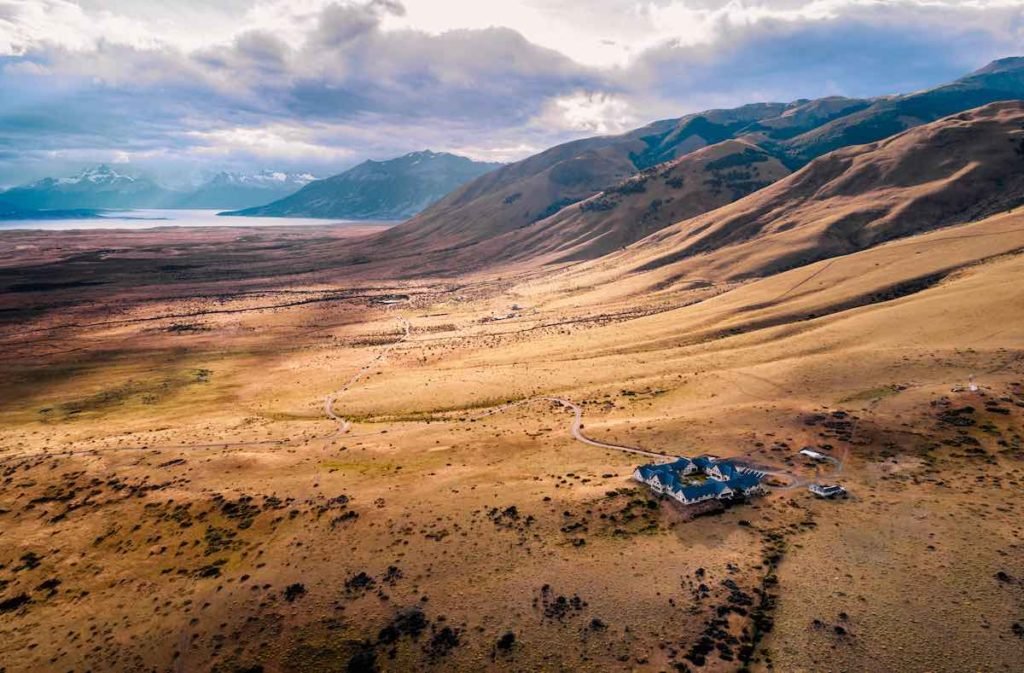
Valentín: I think what attracts people most about Patagonia is the myth that surrounds the name itself. Patagonia has a strong magnetism in itself, and people want to travel to Patagonia even though they do not know where they’re going. The most important thing here is the grandeur and the vastness and the open spaces. There are many places in the world where you can see open spaces and vastness, but here it is very strong and very dramatic in itself.
Yeah. It just gets into your heart somehow. One of the reasons we live in Utah is that it’s so similar to Chile and Argentina. In the north of Utah, we have something similar to Patagonia, and in the south, we have something similar to the Atacama. So it’s as close as I can get and still live in the US.
Valentín: I think so, yes. I think you’re also a smart person who chooses where to live and where to travel and where to share, yeah.
I’m a slave to beautiful places! I think what makes you stay in Calafate? I mean, this is a tiny town. You must really love the landscape and the people and the calling of your work.
Valentín: Yeah, it’s a good question because in many years I haven’t changed and I’m very decided to stay here. This is a place where I want to live. So every morning, every day, I keep choosing the place where I live and work. It’s ever-changing, and you never get tired of the landscapes and nature. It’s quiet. I love working with the people I work with—I’m very proud of my staff, and I enjoy doing what I do. So I think that would be the answer to your question.
How would you describe Eolo?
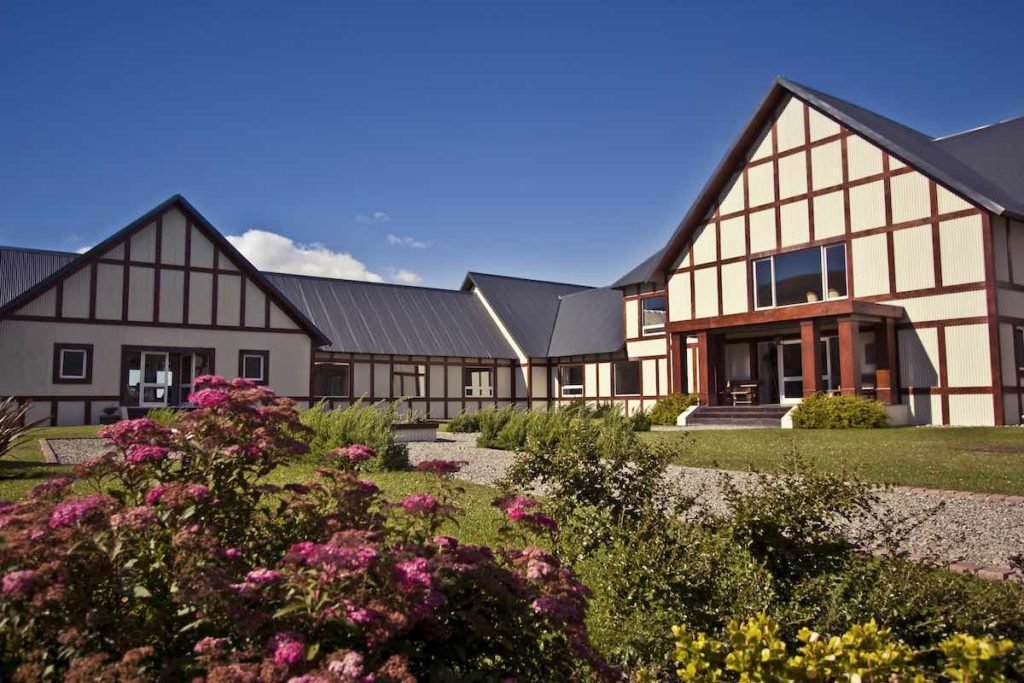
Valentín: Eolo doesn’t want to be more than it is. It’s a unique place surrounded by unique nature and magic landscape, and we provide simple things: nature, which is unsurpassable—it’s magnificent—and the people are the highlight. The experience of guests staying here is the warmth of the staff, like being hosted in a family house. Obviously, the food is going to warm up hearts as well. So all that mixture: nature, people, and good cuisine.
It is like a very warm and welcoming family home for sure. The food is a highlight.
Valentín: Yes! Like you say, it’s not so big, so it has the precise amount of rooms to be able to deliver a very personalized service, be very attentive to details, and take care of people’s needs—in terms of food and other preferences. Being isolated, not close to Buenos Aires and not even too close to town, sometimes things are a little bit more difficult to provide, but we know we have to live up to expectations.
It would seem that running a luxury hotel in a remote place like Eolo could be a challenge. Sometimes guests need or request things that are not immediately available.
Valentín: It is, but I guess through these years we have been more proactive. Like I said before, my travel experiences have taught me how to be ahead of people’s needs and expectations. So now we and the people I work with are more aware of those kinds of things. Depending on what we can provide here or get in Calafate specifically or in Patagonia as a region, we are happy because we know we’re doing the things that people are waiting for.
Does Eolo have a motto? Is there a goal that you have for each guest?
Valentín: In the beginning—and this may sound a little bit cliché—it was “the luxury of simple things.” But I think it still represents us. We do not want to be over-luxurious. What we do is correct in its way and people appreciate it. We trust a lot in the nature around us and try to respect whatever surrounds us. So yeah, I would say “the luxury of simple things.”
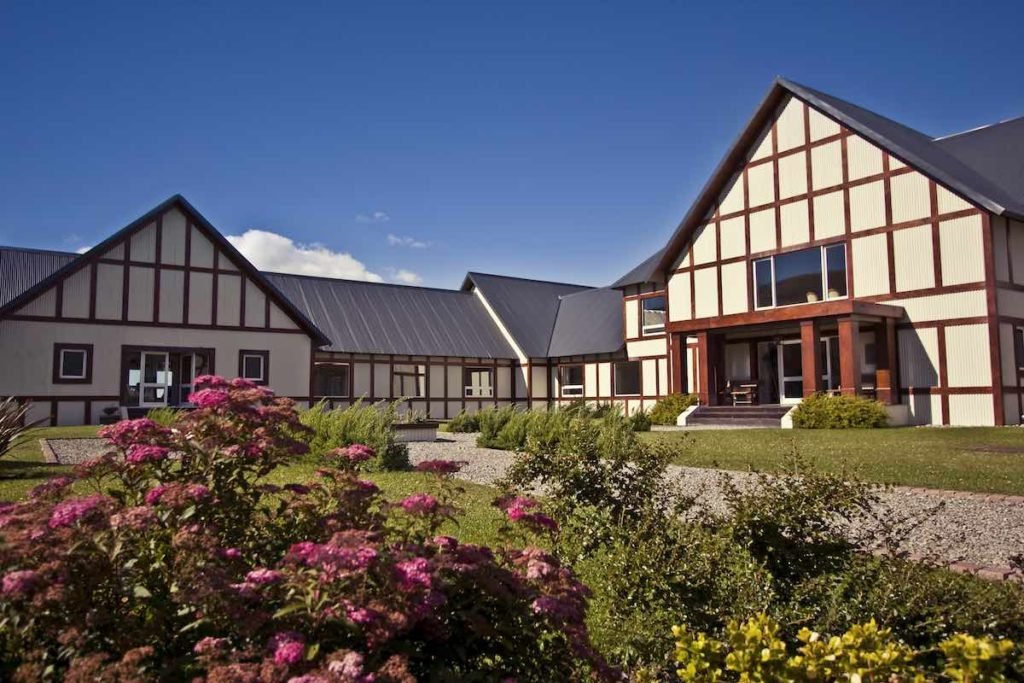
The house itself, the furnishings are quite simple and very comfortable. But the focus is always the windows in three directions—or maybe more, but in three directions you have panoramic windows. And in two of the rooms, you can have a corner room that looks out on a lake and on the mountains.
Valentín: It is not pretentious. The outside facade is very simple, the way the estancias in Patagonia were built by the pioneers—Creoles or Europeans who came to Patagonia in the early 1900s. And inside, the warmth of materials—wool and antique furniture—recreates the story of these first settlers. And the expansive views from the windows go from floor to ceiling. These corner rooms, like you said, there are only two and obviously they are the nicest, with two big windows overlooking two different views. But even standard rooms have a large window that allows you to get into nature.
How many nights do most guests come to Eolo?
Valentín: Typically two to three nights. That gives people the chance of exploring the major attraction in Patagonia, the Perito Moreno Glacier, and an extra night allows them the chance to enjoy the property, not be outdoors every day, and do part of the activities that we offer here, like horseback riding, which, like you said when you came with your father, sticks to your memories.
So typically the season when lodges such as Eolo are open is from October to maybe early to mid-April. Is that how you’re operating these days?
Valentín: Yes. Last year we opened in November expecting fewer people coming, but when Argentina opened its borders and allowed foreign travelers to come, it was actually like a normal season. So now we’re going to be closing by the end of April, which is our normal season. So early October / mid-September to late April / beginning of May—that’s standard season for us here in Patagonia.
That’s the warm season. Seasons are reversed in South America, right? When it’s winter in North America, it’s summer in South America, which is terrific. You can ski year-round if you’re willing to fly, and vice versa, you can enjoy warm weather or relatively warm weather year-round. For Patagonia, the wind is always a factor. Any recommendations on what people should bring?
Valentín: Well, the wind is a factor, yeah. Aeolus is the Greek god of the wind, so we took the name and we honor the forces of nature! In order to give some advice on what to bring: people who live in the US are pretty much used to cold temperatures and weather conditions, so layers are the best way to get dressed in Patagonia. We always say that you should dress like onions—put on layers.
If you could recommend one off-the-beaten-track activity for a guest who’s, let’s say, very active, what would you advise?
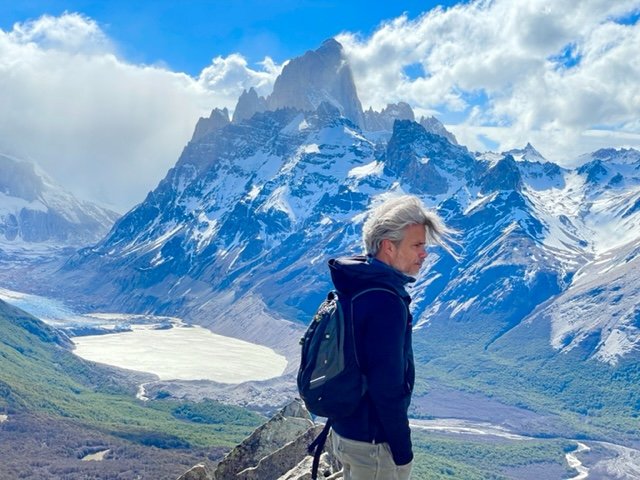
Valentín: For people who are very active, El Chaltén is my favorite spot in this part of the world. There are quite nice tracks to do on your own and be solo in the mountain, which is one of my favorite things to do. So El Chaltén as a destination itself would be my place. But obviously I’m here in Eolo in Calafate, which is the place I choose to work.
I don’t think you’re stuck! You’re happy there. El Chaltén is about a two-and-a-half-hour drive. The drive is beautiful, but you could leave very early from Eolo and still make it to the trailhead for, say, Laguna de los Tres to see the Fitz Roy Massif, and still make it back to the town of Chaltén and possibly back to Eolo in time for a late dinner.
Valentín: Indeed! And that’s the advantage of being open during the spring and summer when days are extremely long. You can start early in the morning by 7:00 a.m. with the sun already up, and be back at Eolo by 8:00 p.m. with three hours of sunlight still ahead. So we strongly recommend people who do not have the chance to stay in Chaltén as a post-trip to give it a try—drive to Chaltén, hike up to Laguna de los Tres, hike down, and drive back to Eolo. That is an experience that no one we have recommended it to has ever been unhappy with.
No, if you don’t like that, we can’t help you!
Valentín: Yes! You’d rather stay home!
There’s no help for you! A lot of people have the idea that Patagonia is only an active destination, and for sure there’s plenty to do there—you can hike your feet off every day, ride horses, go glacier trekking, go sailing, fishing, bird watching, there’s plenty to do. But we have plenty of guests, too, who are in their later years and less active, or feeling less energetic, or the difficulties of travel take their toll, and maybe they’d like to do something less intensive. We have a lot of multigenerational families. What would you advise for someone who wants to do something less intensive?
Valentín: It happens all the time. We get families with elders or young kids, and we can adapt and offer alternatives in a laidback atmosphere: enjoy good food, good wine, sit in a room with a lovely view and read a book sipping a glass of wine. And we also try to encourage them to do some things outdoors. There are very easy trails around the estancia. To our surprise, some people who thought they would never get on a horse after many years, when explained that it’s a very easy activity, come back excited and rejuvenated! There are boat trips that do not require too much effort and take you easily to see glaciers, which in other places in the world would require hiking or lifts. And Perito Moreno itself, the highlight of Patagonia and Calafate, is easily accessed by road. You just drive up there, sit in front of the glacier, hear the ice cracking, and just admire.
It’s unforgettable. If memory serves, you’re about one hour by road from the door of Eolo to the national park entrance, and then maybe another 15 minutes to the glacier trailhead.
Valentín: It is a one-hour drive on a paved road from Eolo to the national park, and the parking area to access the viewpoints is all very accessible. So you don’t need much—just have the energy and the will to see one of the world heritage beauties that you have to see in your lifetime.
This glacier is miles and miles long, a mile across, and hundreds of feet high. It advances to the peninsula where the catwalks are, and then regularly the connection breaks, the force of the water crushes the ice dam, and the cycle repeats.
Valentín: You couldn’t have explained it better! It’s precisely like that. This glacier is one of the few stable ones inside the national park, and it advances every day like a frozen river. When it touches the peninsula, it creates this natural dam, and every couple of years the blocked water creates this natural rupture. But there are still calvings—pieces of ice falling like a 20-story building from the front of the glacier that you can see just sitting on the catwalk viewpoints in front of it.
The catwalks are very easy to access. It’s not a difficult hike—they’re all steel frame grids. You don’t need special boots, just regular walking shoes.
Valentín: Exactly! Regular walking shoes and comfortable clothes. There are also paths for people with disabilities. So not much required—just admire nature itself.
But if you wanted to go crazy, you could go on a multi-day trek over the pass from Refugio Grey to Estancia Cristina, or go kayaking on a river. There’s plenty for everyone here.
Valentín: There are multiple options for varied people, and the locals are always very open to sharing their passion for the land. You’re always going to meet someone who is very passionate about the land we live in.
It’s often the case that when clients come from North America or Europe, they’re trying to see both sides of the Andes—Chilean Patagonia and Argentine Patagonia. Do people try to see as much as they can, or do people come just to see Calafate?
Valentín: On my experience, people want to cover pretty much everything, and then they realize when they come that there’s a lot more to see in both Chile and Argentina. We’re very related here in Patagonia, very close. Some people think if they explore the Chilean side, they don’t have to explore the Argentine side, but when they do, they realize there are many differences. Both are beautiful and they do not compete with each other.
No, in some parts of Patagonia it’s very different—temperate rainforest in Chile, whereas where you’re located it’s rolling steppe land, yellow grasses, ice-blue lakes, and mountains. What’s surprising to people is that although it takes several hours to cross the border from Torres del Paine to El Calafate, if you look on the map, you could drive point-to-point in 45 minutes if the border were a direct option.
Valentín: Or ride a horse from one country to the other across the mountains!
That’s on my list!
Valentín: That’s on your list, yes! Let’s do it! Let’s bring some friends!
Let me ask, are there any common myths about visiting your region or misconceptions?
Valentín: Nothing that’s misunderstood as a misconception itself. I think the myth around Patagonia is the distances, but it’s true—you have to drive to go from one point to another. People may be a little daunted before traveling, but when they experience it, the drive itself is what they love.
It reminds me of the most beautiful parts of the North American West, where it’s a 5-hour drive, but you’re enriched by the landscape and scenery on that drive. I remember meeting some very funny gauchos at a truck stop outside El Calafate—these guys were entertainers!
Valentín: Yes! There are miles where you won’t find any gas station or coffee shop, but then you come across gauchos herding sheep, mountains, glacier lakes, open spaces, and guanaco herds running across the road. In a way, it’s very much like Africa without as much wildlife, and that’s the thing about Patagonia.
So what’s next for Eolo? You’ve been operating successfully for more than 15 years, with 17 rooms, a spa and massage room, a beautiful restaurant, and lounges on a working estancia. Are there any plans to change or alter?
Valentín: Since you last came, the spa area has been renewed. The pool doesn’t exist anymore; we have an outdoor jacuzzi. We get bored eventually, so we have to do new things! We take the off-season to renew things. Given the structure, doing something bigger is difficult, but doing renewals in the rooms adds up to the experience.
To me, it’s the perfect size. If I could convince Rodrigo to never build another room there, I would be grateful—even though I curse it in high season when I need one more room!
Valentín: Yeah, but you’re able to bring most of your clients, especially good and important ones.
Speaking of renewal, you love to travel in your off-season. What’s next on your list?
Valentín: During the pandemic, I thought I needed to activate my mind, so I started learning Arabic! I think my next step is visiting a country that speaks and writes in Arabic.
While you’ve been traveling, have you had any experiences that made you think, “Oh, we should do that at Eolo”?
Valentín: Yes! One of my favorite trips was to Africa, where I stayed at Londolozi. They stopped in the middle of a safari and surprised us with a breakfast set in the middle of the bush. I came back to Eolo that same season and thought, “I have to do this!” That year, we had a celebrity guest—one of your very special clients—and after she went for a horse ride, we set a special table out on the estancia and had the chef cook for her and her fiancé. It was a brilliant, perfect day, and they didn’t expect it! I think we enjoyed setting it up as much as they enjoyed it.
When you’re away traveling, do you feel the pull of Patagonia? Don’t you miss it?
Valentín: Yes! That’s the reason why I keep coming back. Ever since the first time I came, I’ve needed to come back. Patagonia has a strong magnetism: it either kicks you off or you fall in love with the land.
It has infected me terribly! My eldest daughter will likely be working with a mutual friend of ours in Buenos Aires soon, so when that happens, I’m coming!
Valentín: You have the perfect excuse to come!
Valentín, you live well. You’ve figured it out. You know where the meaning is.
Valentín: Well, John, my friend, I appreciate all your words. A bond was created when we first met, and we both know what the other needs. That trust and confidence have brought us here. I hope we can sit down over coffee in person soon. Trust is the currency.
When I send clients to Eolo, I just know they’re in perfect hands.
Valentín: Give me a call or send me a text whenever you have clients, and we’ll do things even more special. Treating everyone as special is the best way to treat everyone.
Well, man, I love catching up with you. Thank you so much. My best to you and yours and all the staff, and give my regards to Rodrigo as well.
Valentín: Send my best regards to Erin and everyone in your office!
All right. Be well.