
A curated guide to Latin America’s ten essential bucket-list destinations — places of such extravagant natural and cultural ambition that they reset, permanently, your sense of what the world contains.
There is a moment, in Latin America, when the scale of the continent announces itself in a way that no map or photograph has prepared you for. It might come at the rim of the Devil’s Throat at Iguazu, where the noise of the water arrives before the sight of it and the mist is already soaking your clothes before you can see what is making it. It might come at the edge of the Salar de Uyuni in the wet season, when the horizon has dissolved and the sky and the earth have traded places in a reflection so complete that you are no longer certain which direction is up. It might come, quietly, when a sea lion pup crawls across your feet on a Galapagos beach and falls asleep as if you were simply another warm object in its world. When it comes, wherever it comes, it announces the same thing: that you are somewhere the ordinary categories no longer apply.
Latin America is the largest intact tropical wilderness remaining on earth, the second-longest mountain chain, the world’s greatest river, the driest desert, the oldest human settlements in the Western Hemisphere, and the cultural legacy of civilizations — Inca, Maya, Aztec, and dozens more — whose achievements modern archaeology is still in the process of fully comprehending. It is also the tango and the asado and the coffee grown in the specific microclimate of a Colombian hillside at 5,000 feet. It contains multitudes, as the best places do, and the multitudes here are of an order that resists summary.
What follows is not an attempt at summary. It is a list of ten addresses — some of them the size of a city block, some of them the size of a country — where the continent makes its argument most forcefully. We have ordered them from ten to one, knowing that any ordering is partly arbitrary, knowing that the Galapagos and Patagonia and Machu Picchu occupy the same irreplaceable tier in the imagination of any traveler who has been to them. And after the ten, a final destination that is not, strictly speaking, Latin America at all — but that is accessible from its southernmost tip, and that represents the ultimate expression of what this part of the world offers to those who want the world without limits.
ARGENTINA & BRAZIL · NATURAL WONDER · YEAR-ROUND
Iguazu Falls
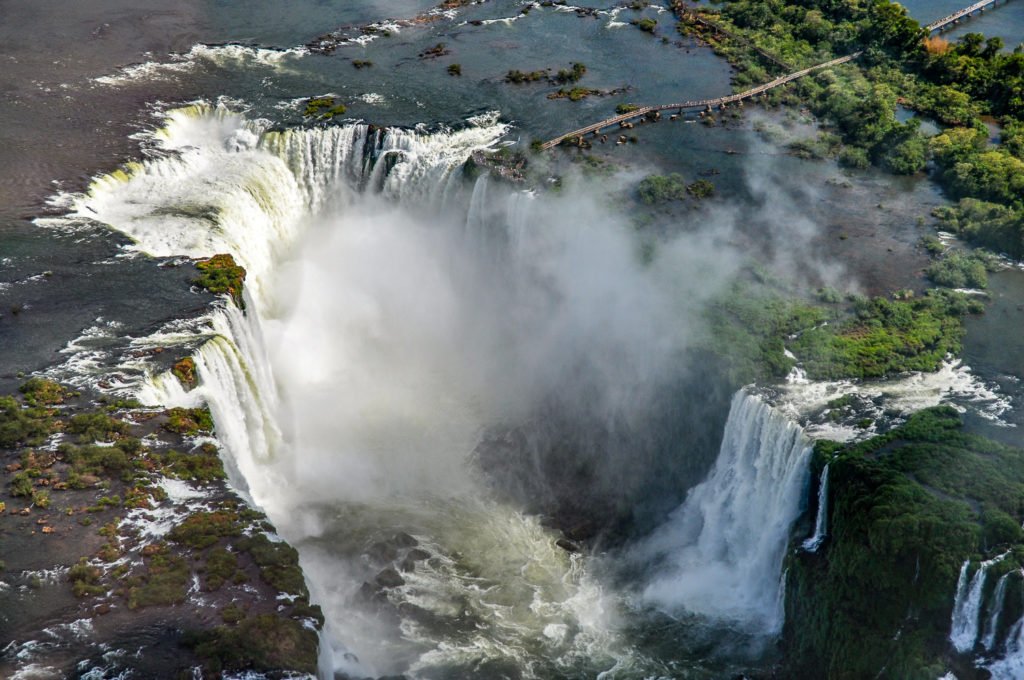
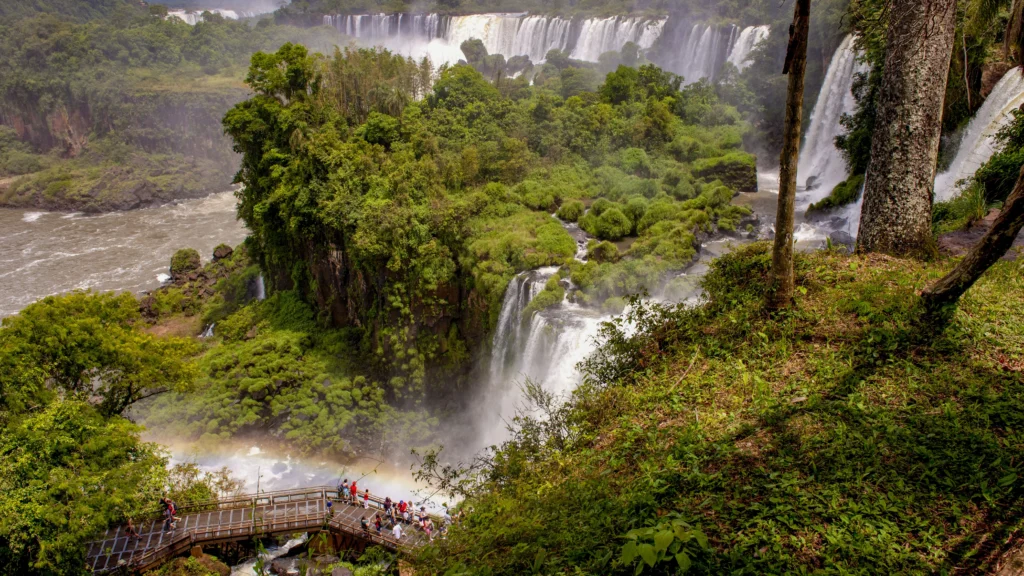
Eleanor Roosevelt, standing at the rim for the first time, is said to have uttered two words: ‘Poor Niagara.’ Whether or not the story is true, it has survived because it is accurate. Iguazu is wider than Niagara, taller than Niagara, louder than Niagara, and so much more alive — the surrounding subtropical forest pressing in on all sides, toucans working the tree canopy above the spray, coatis moving through the undergrowth with the complete indifference of animals that have never learned to fear people. The falls are not a single curtain of water but a system of more than 250 cascades spread across nearly two miles of the Iguazu River, each with its own character, volume, and acoustics.
The falls demand your full sensory presence and deliver, in return, the particular disorientation of something genuinely beyond scale.
The Devil’s Throat is where this becomes overwhelming in the best possible sense. The U-shaped chasm receives fourteen of the falls simultaneously; the noise is felt in the chest before it is heard by the ears; the mist rises high enough to form its own weather system and drenches the walkways that approach it so completely that you will be wet before you are close. This is not a landscape that permits detachment or distraction. The falls demands your full sensory presence. In return, they deliver the disorientation of something beyond scale: thundering, liquid awe.
BEST FOR
Awe
KEY EXPERIENCE
Devil’s Throat from the Argentine side
WHEN TO GO
March–May for peak water volume
PERU & BOLIVIA · ALTITUDE · ANDEAN CULTURE
Lake Titicaca
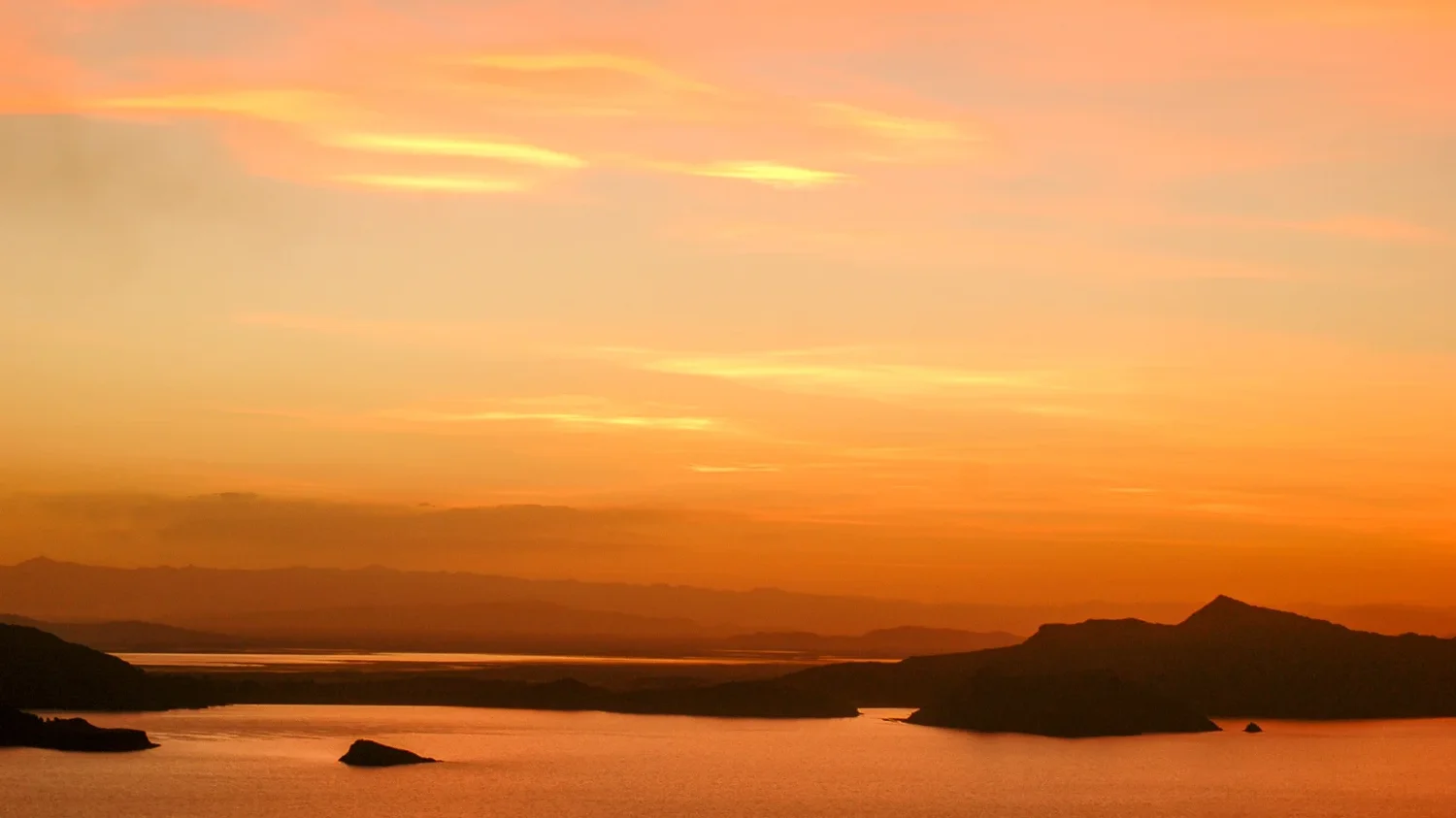
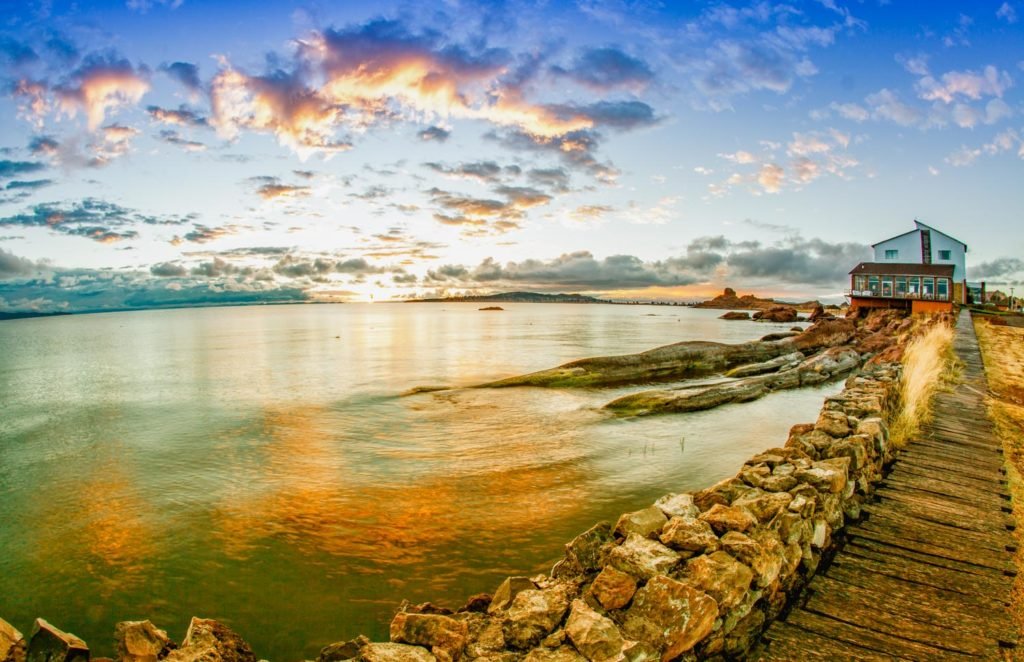
At 12,500 feet above sea level, Lake Titicaca occupies a place in the atmosphere as much as in the geography. The light here is extraordinary — sharper and more direct than at any altitude you have previously experienced, the sky a shade of blue that does not exist at sea level, the lake beneath it holding that color in a surface so still on calm mornings that the line between water and sky requires a moment of deliberate attention to locate.
The Inca believed this lake to be the origin of the world. Standing at its edge in the early morning, the cold sharp against your face, it is not difficult to understand why.
The Uros float upon Titicaca — islands of totora reed assembled by hand and renewed continuously, inhabited by families whose ancestors retreated onto the water to escape invaders centuries before the Spanish arrived. The reed islands move slightly underfoot, reminiscent of a 1970s waterbed. The reed houses smell of the lake. The Uros people still make their boats from bundles of the same material, still fish the same waters, still face a modernity that has arrived around their edges while their world floats, literally and stubbornly, apart from it.
Farther out, the island of Taquile rises from the lake with its terraced fields and its weavers — the men here knit hats and textiles with a delicacy and speed that has earned the island’s textile tradition a place on UNESCO’s intangible cultural heritage list. The ferries are slow and the altitude will humble you. Come with the time the place deserves.
BEST FOR
Cultural depth · Altitude wonder
KEY EXPERIENCE
Kayaking at dusk, cultural immersion with traditional weavers
WHEN TO GO
May–October for dry season clarity
BOLIVIA · SALT FLAT · HIGH ALTITUDE SURREALISM
Salar de Uyuni
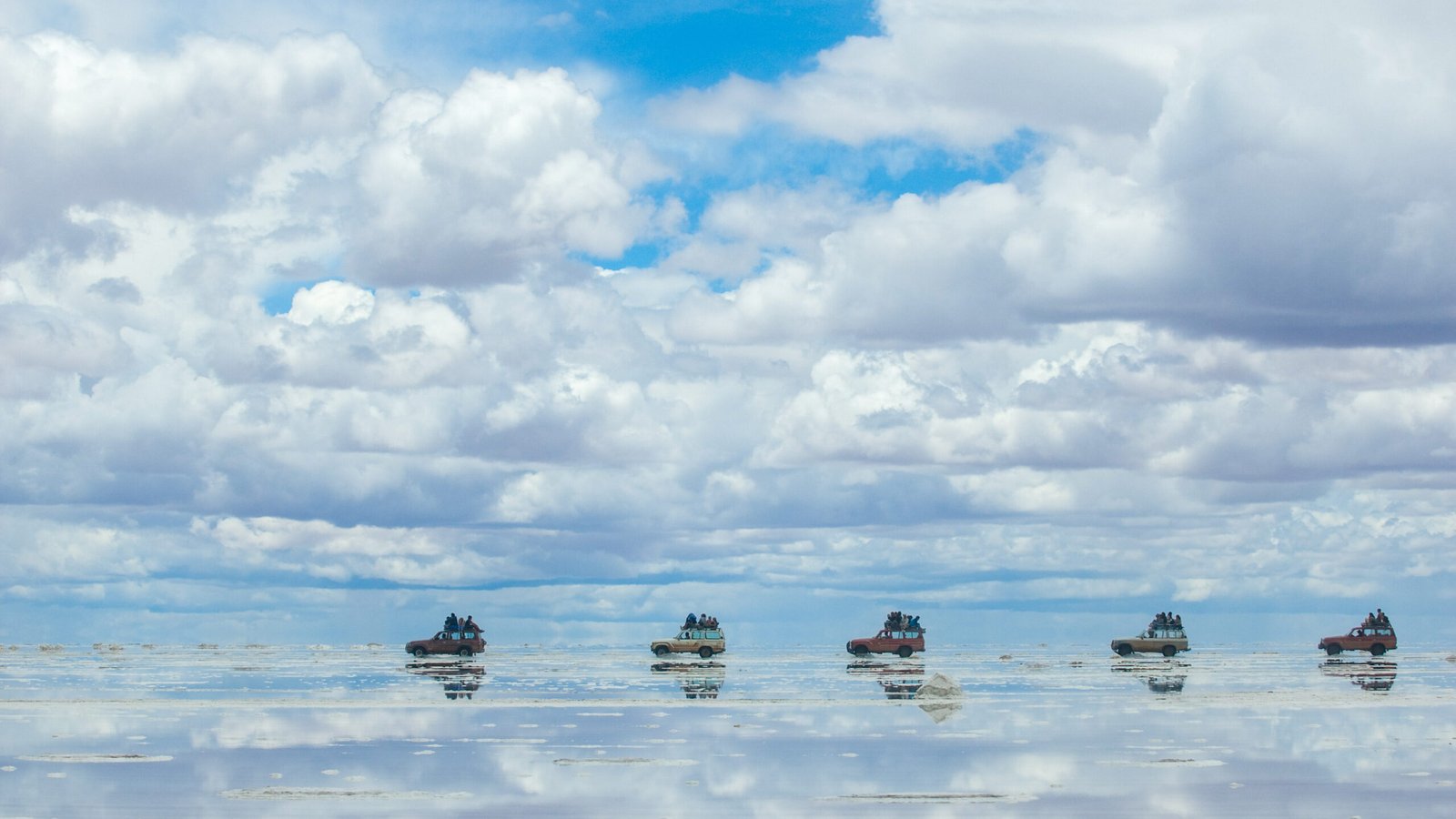
There are places in the world where the landscape is so extreme in its refusal of the ordinary that the traveler arrives first at disbelief and then, slowly, at a kind of wonder that has no sufficient vocabulary. The Salar de Uyuni is the world’s largest salt flat — 4,000 square miles of white hexagonal salt crust at 11,995 feet above sea level. Unless you’re near one of its islands, volcanoes, or the edge, there is nothing to interrupt the horizon in any direction.
The silence is of a kind that most people have never encountered outside of sleep. The light, reflecting off the white crust, removes shadows and distances so completely that the human eye loses its reference points entirely.
In the wet season, a thin layer of water covers the flat and transforms it into the world’s largest mirror. The sky appears beneath your feet. The flamingos that feed in the shallower lagoons at the salt flat’s edges — three species of them, pink against white against blue — appear to walk on clouds. Photographs taken here look fabricated. The volcanoes that line the flat’s western edge rise from the reflection as if levitating, their snowcaps impossibly clear in the altiplano air.ural heritage list. The ferries are slow and the altitude will humble you. Come with the time the place deserves.
The Salar de Uyuni operates upon the senses like a sustained philosophical jest about the nature of space. In the wet season, it turns into a celestial mirror.
BEST FOR
Surreal landscape photography
KEY EXPERIENCE
Wet season mirror reflections (Dec–Apr)
WHEN TO GO
January–March for the reflection
COLOMBIA · COFFEE CULTURE · ANDEAN HIGHLANDS
Zona Cafetera
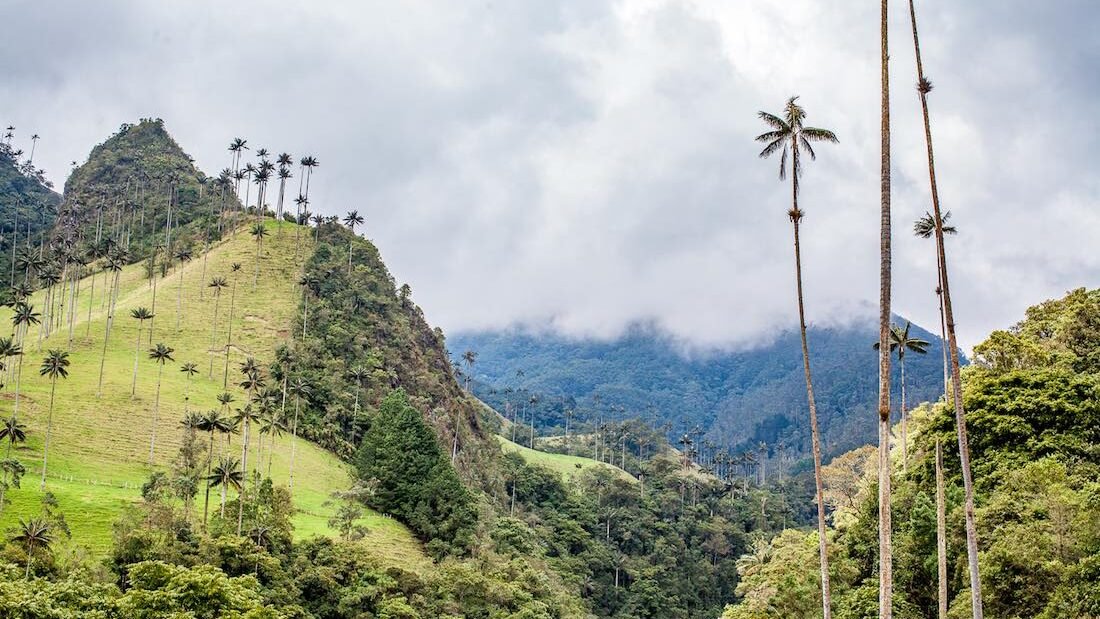
The Colombia of international imagination has been, for too long, shaped by what the country is escaping rather than what it has always been. The Zona Cafetera — the Coffee Triangle anchored by Manizales, Armenia, and Pereira, spread across the Andean highlands where cloud and mountain and altitude conspire to produce the conditions for one of the world’s great agricultural achievements — has always been something else entirely: a landscape of extraordinary beauty, a culture of remarkable warmth, and a morning cup of coffee that makes every cup you have drunk before seem like a rough draft.
The wax palms of the Valle de Cocora rise from the mist like something from Seussian imagination — the national tree of Colombia, growing to heights of two hundred feet on slopes so steep that the horses that carry you up them appear to be climbing walls. The coffee fincas open their doors to travelers who want to understand, from picking to drying to roasting to the particular ceremony of the first morning tasting, how this crop goes from a shiny cherry on a bush to a miracle in your morning cup. The town of Salento holds the square that Colombia uses as a backdrop for its national self-portrait: flowering balconies, painted facades, and the jeeps called Willys that have been running these mountain roads since the 1940s.
The Zona Cafetera is the Colombia that was always there, waiting for the world to arrive with the attention it deserved.
BEST FOR
Coffee immersion · Andean landscapes
KEY EXPERIENCE
Dawn horseback rides among emerald fields and palm groves
WHEN TO GO
December–March or June–August
COSTA RICA · WILDERNESS · BIODIVERSITY
Osa Peninsula
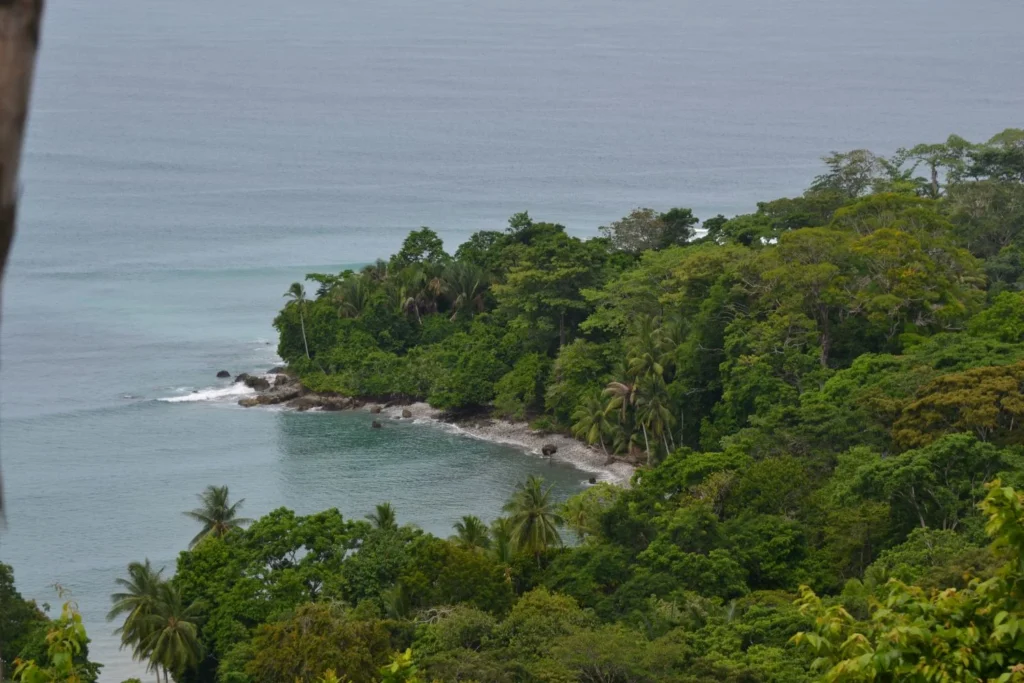
The biologist E.O. Wilson called the Osa Peninsula the most biologically intense place on earth. The number that is always cited — that 2.5 percent of the world’s entire biodiversity is concentrated in 0.001 percent of its surface area — is the kind of statistic that reads as hyperbole until you spend a morning in Corcovado National Park and count, before breakfast, four species of monkey, a pair of scarlet macaws, a tapir moving through the understory with the patient urgency of an animal that has somewhere to be, and, at the edge of a river crossing, the unmistakable rosette prints of a jaguar in the soft mud. The prints are fresh. The jaguar is somewhere close in the forest. You will not see it. You will feel its presence in a way that recalibrates, permanently, your understanding of what it means to be in a wild place.
The Osa Peninsula asks something of you — some preparation, some inconvenience, some real intention.
The Osa is remote by design rather than by oversight. The roads that reach it are rough; the rivers that cross them require timing against the tides; the lodges that receive travelers have been placed with care so as not to disturb what they access. This is a place that asks something of the traveler. In exchange, it offeres the world as it was before we began to strip it of wild power and elemental magic.
BEST FOR
Wildlife · True wilderness immersion
KEY EXPERIENCE
Guided walks in the wilds of Corcovado
WHEN TO GO
December–April for dry season access
ARGENTINA · URBAN CULTURE · FOOD & TANGO
Buenos Aires
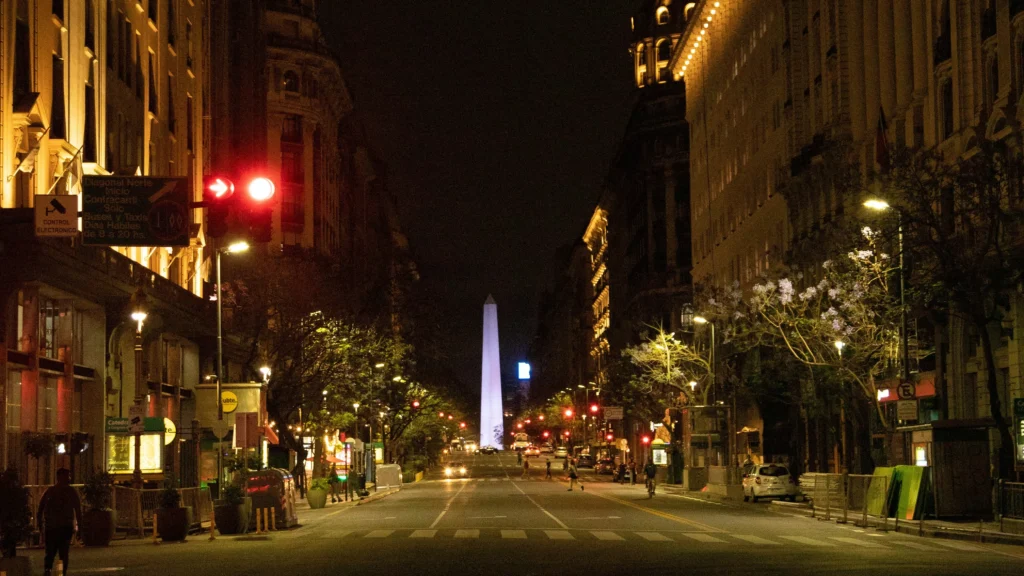
Buenos Aires is a city that has always taken its own pleasures seriously, and has always been right to do so. The comparison to Paris is older than it is accurate — Buenos Aires is nothing like Paris except in the conviction, shared by both cities, that the quality of an afternoon matters, that a bookshop is a civic institution, that the proper end to a long dinner is not departure but conversation. The architecture of the city’s older neighborhoods — Palermo, San Telmo, Recoleta — carries the ambition of European immigrants who arrived in the early twentieth century determined to build a capital equal to the ones they had left behind. They succeeded, and what they built has since been colonized by a creative energy that feels entirely its own.
Buenos Aires is a city that has always taken its own pleasures seriously — and has always been right to do so.
The tango, which began in the working-class conventillos of the port district and was then rejected by polite society, was exported to Paris. There it became fashionable, and was reimported as a national treasure. That’s emblematic of the city’s story: something raw and real, dressed up and sent abroad, returned home more appreciated. The asado is another version — a ritual of fire and patience and generosity that is as much about the time spent around the grill as the meat that comes off it.
A Buenos Aires weekend, if you allow it to happen at its own pace, will leave you with the specific regret of someone who has been a guest somewhere exceptional and had to leave before they were ready.
BEST FOR
City culture · Food · Long evenings
KEY EXPERIENCE
Milonga in San Telmo on a Saturday night
WHEN TO GO
March–May or September–November
BRAZIL · CIDADE MARAVILHOSA · CULTURE & LANDSCAPE
Rio de Janeiro
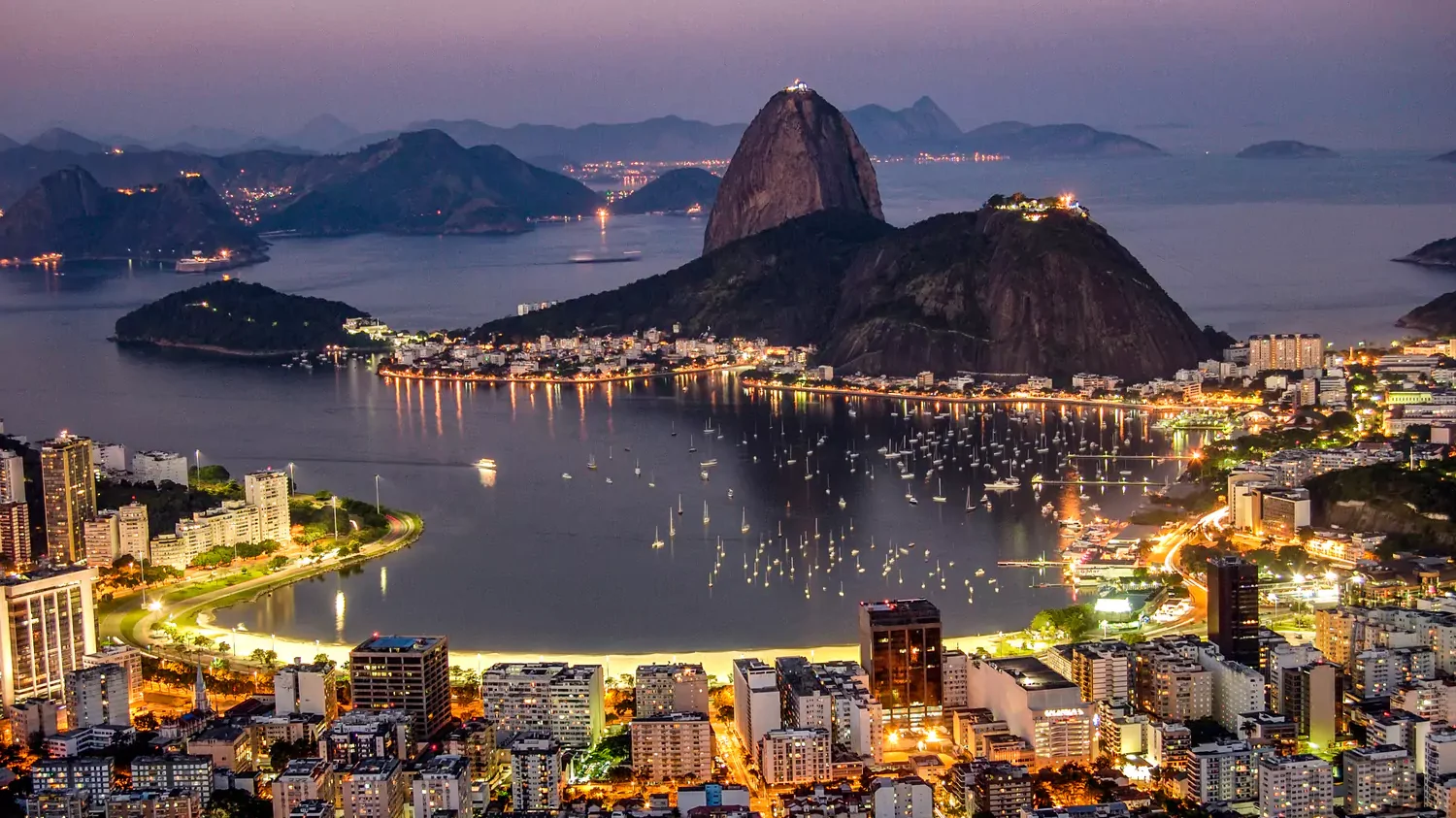
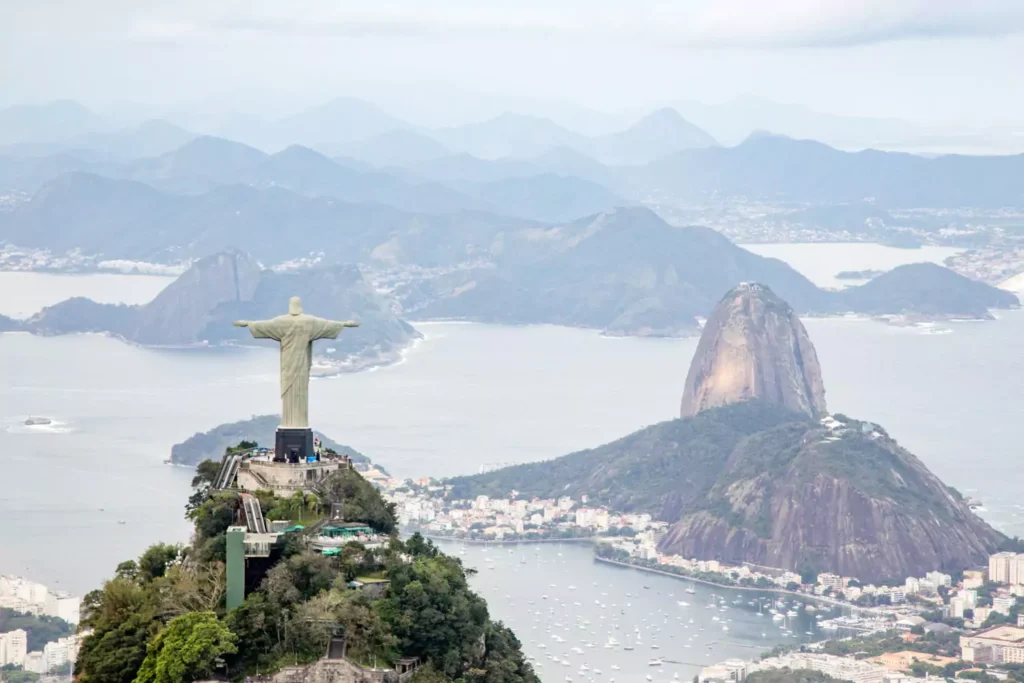
Rio de Janeiro earned its nickname — the Marvelous City — not through propaganda but through sheer, inarguable fact. Nowhere else on earth has a city been built at the collision of mountains and ocean and tropical forest in a configuration so astonishingly theatrical that seems, even to native Cariocas, like the backdrop of a dream. Christ the Redeemer stands with his arms open over the whole of it. The gesture seems to be saying: look at what you have here.
The Carioca relationship to beauty is the city’s great cultural gift to the world — the particular lightness that comes from living somewhere so extravagantly endowed with it that the ordinary becomes joyful.
The way the neighborhoods tumble from the hillside favelas to the oceanfront curves of Copacabana and Ipanema creates an urban landscape unlike anything else in South America — a city where the experience of misty altitude and tropical sea can occur within a single hour’s walk. Carnival is the amplified version of what Rio does all year: the conviction that life, properly attended to, is a festival to be celebrated.
BEST FOR
Urban grandeur · Beach culture · Carnival
KEY EXPERIENCE
Sunrise from the summit of Corcovado
WHEN TO GO
May–October outside Carnival crowds
PERU · INCA HERITAGE · SACRED VALLEY
Machu Picchu
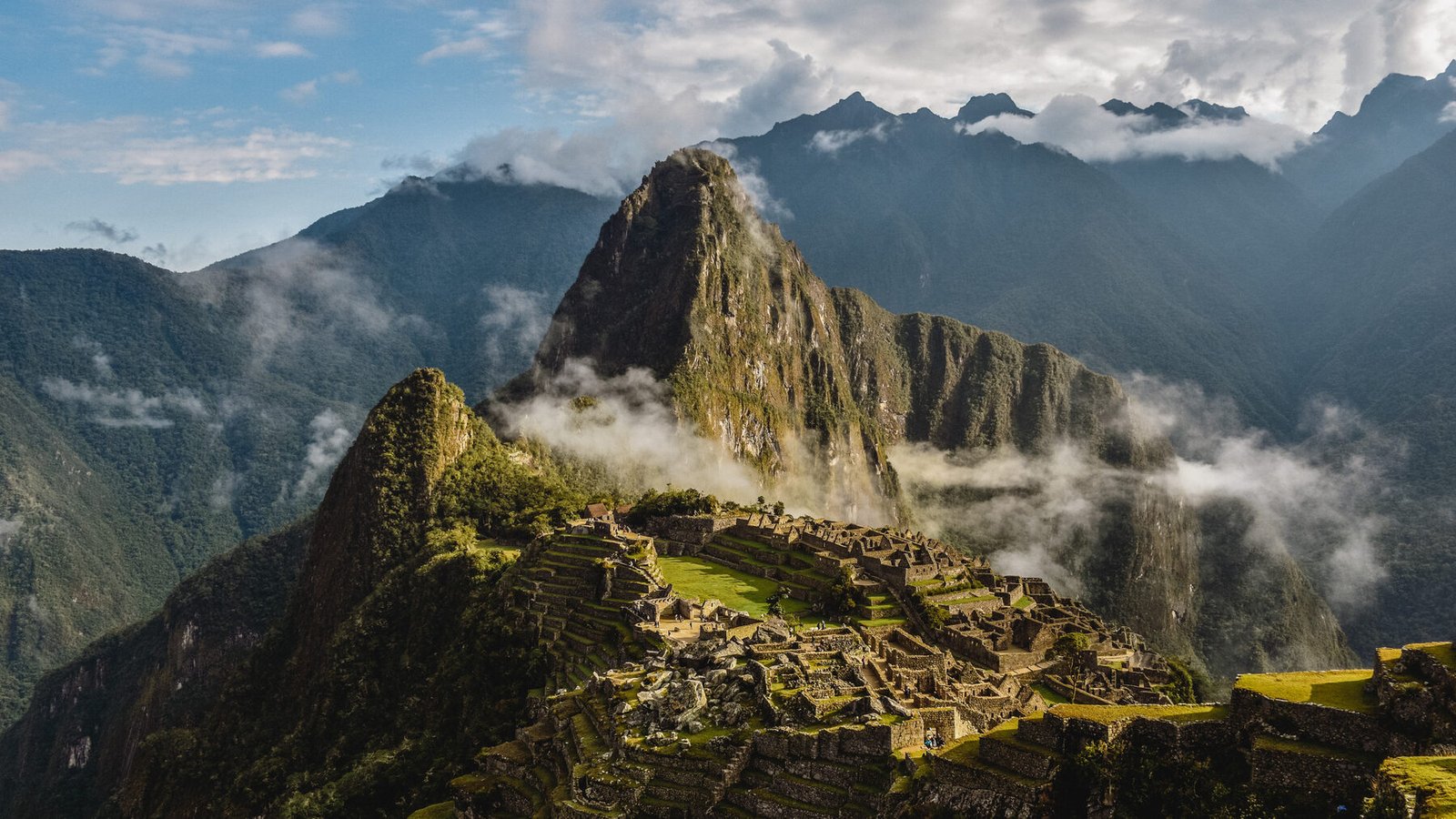
The photograph does not prepare you. This is the consistent testimony of everyone who has visited, including those who have studied the image for years before arriving, including those who consider themselves immune to the expected emotion of a famous landmark. The city materializes from the mountain mist, its terraces and temples and astronomical observatories intact after five hundred years on a ridge above a river bend so inaccessible that the Spanish, who dismantled everything else, never found it. The scale is preposterous. The angle of its placement against the peaks of Huayna Picchu and Putucusi is unimaginable in the most beautiful way. It could not have been built here, yet it was built here.
Hiram Bingham arrived in 1911 following directions from a local farmer and found it under vegetation — the most spectacular archaeological discovery of the twentieth century, and one of the few great sites whose mystery has not been diminished by the explanation. We still do not know with certainty what Machu Picchu was for: royal estate, astronomical observatory, religious sanctuary, administrative center. The Inca left no written record. What they left is the architecture itself, and the architecture makes a case that exceeds anything the archaeologists have so far managed to put into words.
The city materializes from the mountain mist on terms entirely its own. The scale is preposterous. The angle of its placement against the peaks is unimaginable in the most beautiful way. It could not have been built here, yet it was built here.
The Sacred Valley — from Pisac to Ollantaytambo — extends the thesis across a landscape that is a monument to a civilization of extraordinary sophistication. Allow more than a day at Machu Picchu. Allow more than a week after arriving in Cusco.
BEST FOR
Archaeological wonder · cultural exploration
KEY EXPERIENCE
Watching the morning mist dissipate to reveal the site
WHEN TO GO
May to October for dry season clarity; January to April for more quiet moments
ARGENTINA & CHILE · END OF THE WORLD · TREKKING
Patagonia
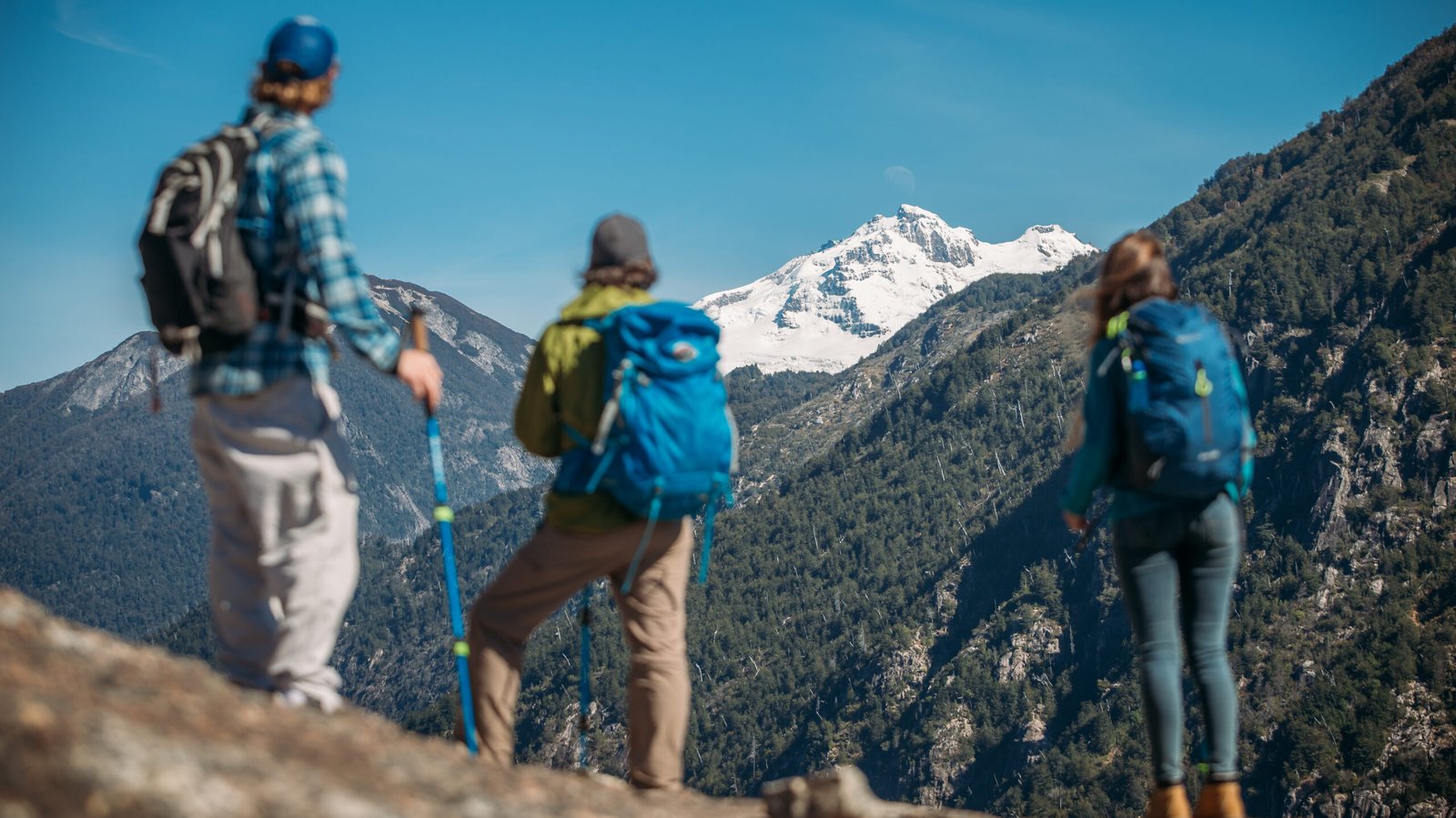
At the southern end of the world, the continent tapers into a place where the geography becomes a declaration about what the earth was when wildness ruled. Patagonia is not a single destination but a state of mind produced by scale — by the granite towers of Torres del Paine, by the glaciers of the Ice Cap, by towering ancient trees and smoking volcanoes of the north.
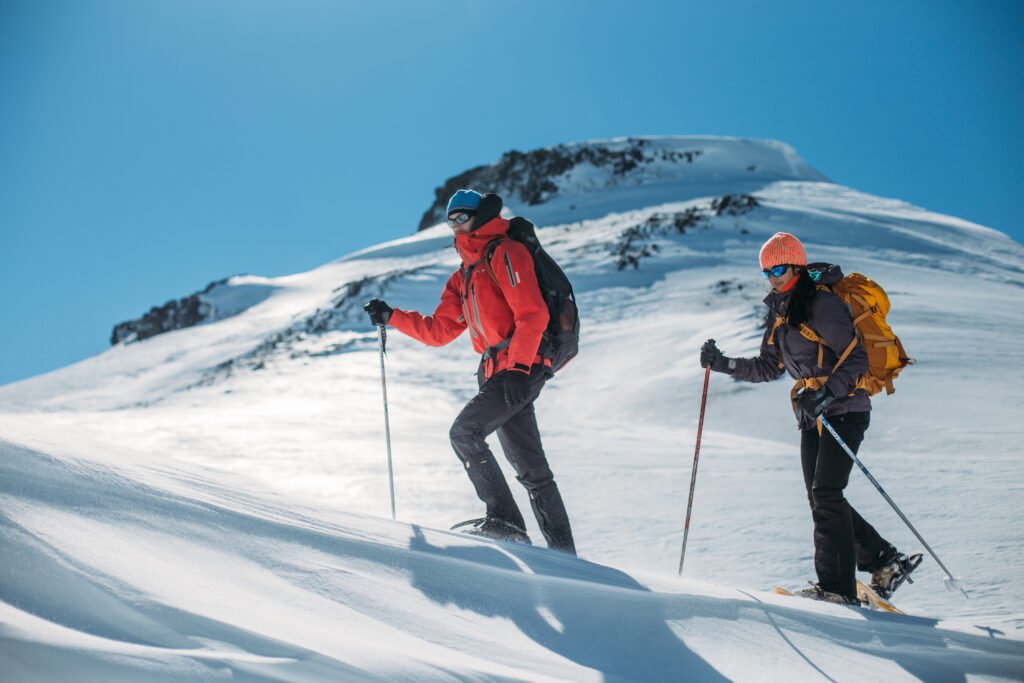
The trekking here is not scenic in the way that word is usually intended. These views cut through everything irrelevant and leave you standing, exhausted and grateful, in the presence of something that requires your full attention. Condor circle the thermals above the granite. Guanacos graze the valleys with alert awareness. Lakes achieve colors that do not exist elsewhere — a turquoise infused with glacial flour, so saturated it reads as artificial as window cleaner or a sports drink.
Patagonia rewards those who arrive on its terms rather than their own, and the reward is the specific satisfaction of having been somewhere that asked everything of you and gave back more than it asked.
The season at most lodges is short — October through April — and the weather, even at its most cooperative, is mercurial. Patagonia rewards those who arrive on its terms rather than their own, and the reward is the specific satisfaction of having been somewhere that asked everything of you and gave back more than it asked.
BEST FOR
Wilderness trekking · Glaciers · Dramatic landscapes
KEY EXPERIENCE
Riding with gauchos or trekking in places not mentioned in guidebooks
WHEN TO GO
November and March (shoulder seasons for solitude)
ECUADOR · ISLAND ARCHIPELAGO · EVOLUTION MADE VISIBLE
Galapagos Islands
Begin here, because everything here is a beginning. Darwin arrived in the Galapagos in 1835 as a young naturalist on a surveying voyage and departed, five weeks later, carrying the observations that would, over the next two decades, reshape the way we understand life on earth.
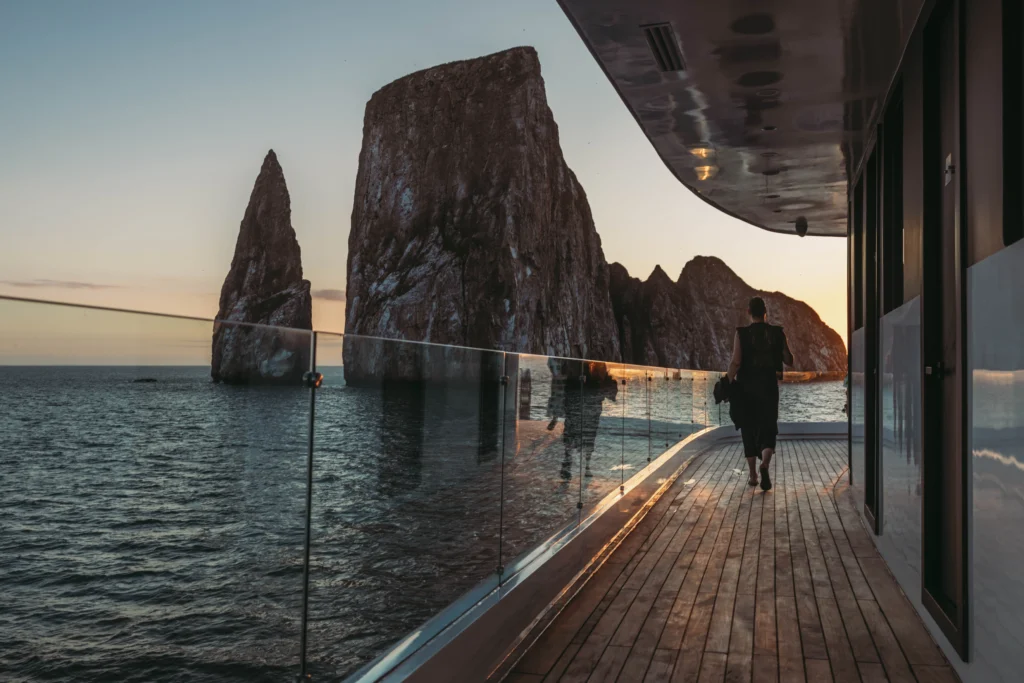
The animals here do not fear people. A sea lion pup, perhaps three weeks old, hauls itself across your feet on the beach at Española and falls asleep against your ankle. A blue-footed booby performs its courtship dance — the elaborate lifting and presenting of its extraordinary feet — within arm’s reach. Penguins and sea lions swim circles around you beneath the colossal remnants of a volcano.
The animals here do not fear people. This phrase does not prepare you for the experience of a sea lion pup falling asleep against your ankle, or a blue-footed booby dancing within arm’s reach, attending entirely to its own business.
The giant tortoises are island elders, carrying deep time in their lungs. Snorkeling alongside hammerheads and manta rays is not adventure tourism. It is a conversation with creation.
BEST FOR
The once-in-a-lifetime experience
KEY EXPERIENCE
Snorkeling with sea lions at Kicker Rock
WHEN TO GO
Year-round; Dec–May for calmer seas
BEYOND THE LIST
Antarctica
ACCESSIBLE FROM USHUAIA, ARGENTINA AND PUNTA ARENAS, CHILE
At the southern tip of Argentina, in the city of Ushuaia — the southernmost city in the world, its backdrop a wall of snow-covered mountains, its harbor full of expedition vessels preparing for the crossing — Latin America hands you off to somewhere else entirely. The Drake Passage, the body of water between Cape Horn and the Antarctic Peninsula, has a reputation that is entirely earned: two days of open ocean with no land to interrupt the force of waves that have been traveling the circumference of the globe. The crossing is the first lesson Antarctica teaches: that arrival here requires the willingness to pass through discomfort—through initiation—into a place of transformation.
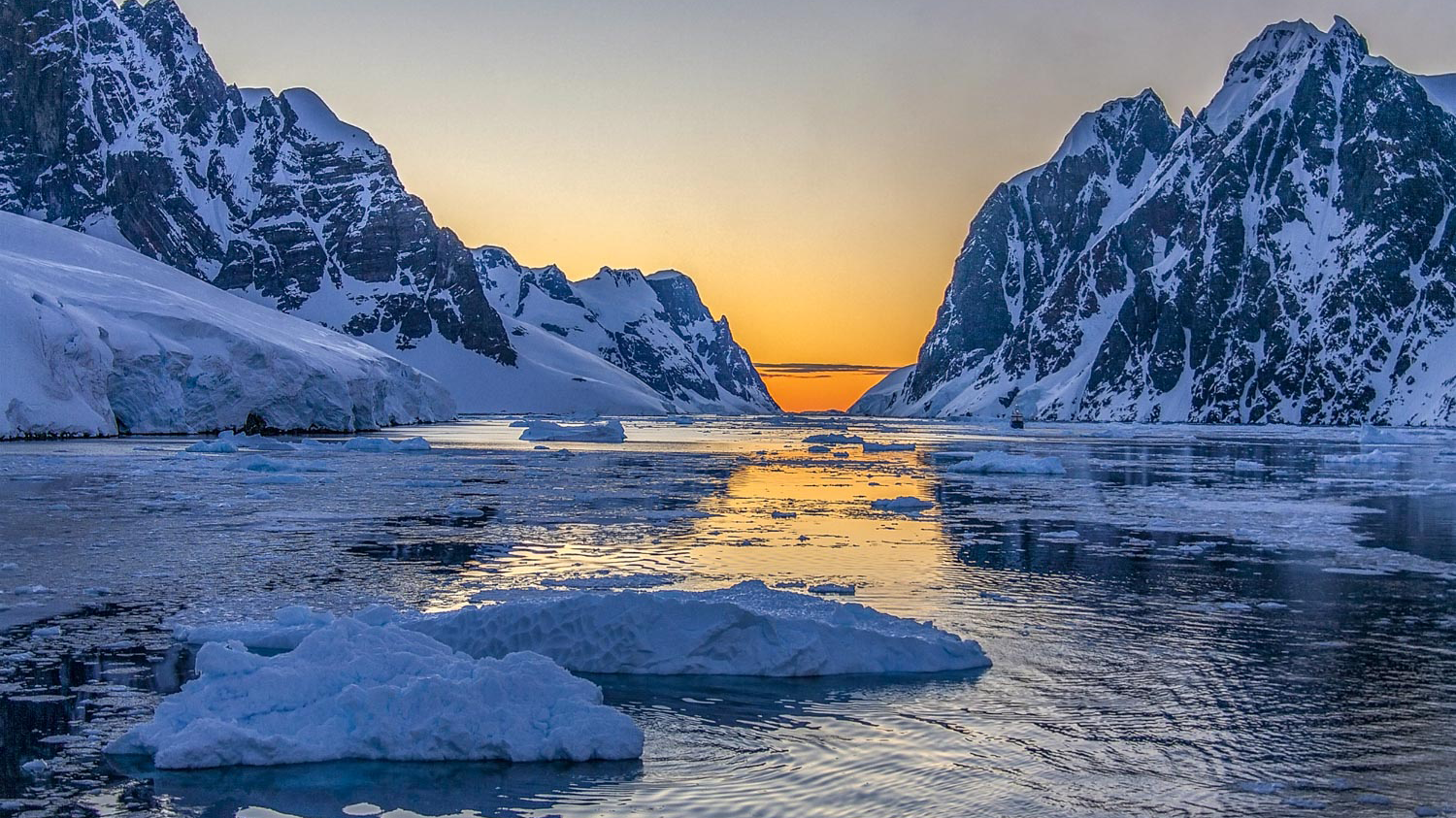
What waits on the other side is not a destination in any ordinary sense of the word. Antarctica is the largest wilderness remaining on the planet — a continent the size of the United States and Mexico combined, covered in ice two miles deep in places, home to no permanent human population. At the coasts and islands, penguins crowd your boots with the same curiosity as the animals of the Galapagos. The icebergs are blue in a way that has no reference point in ordinary experience: the blue of compressed millennia.
The silence, when the zodiac cuts its engine in a bay surrounded by glaciers, is of a different order than any silence you have known on land. It is not the absence of sound but the presence of a stillness so complete that it has its own voice and texture.
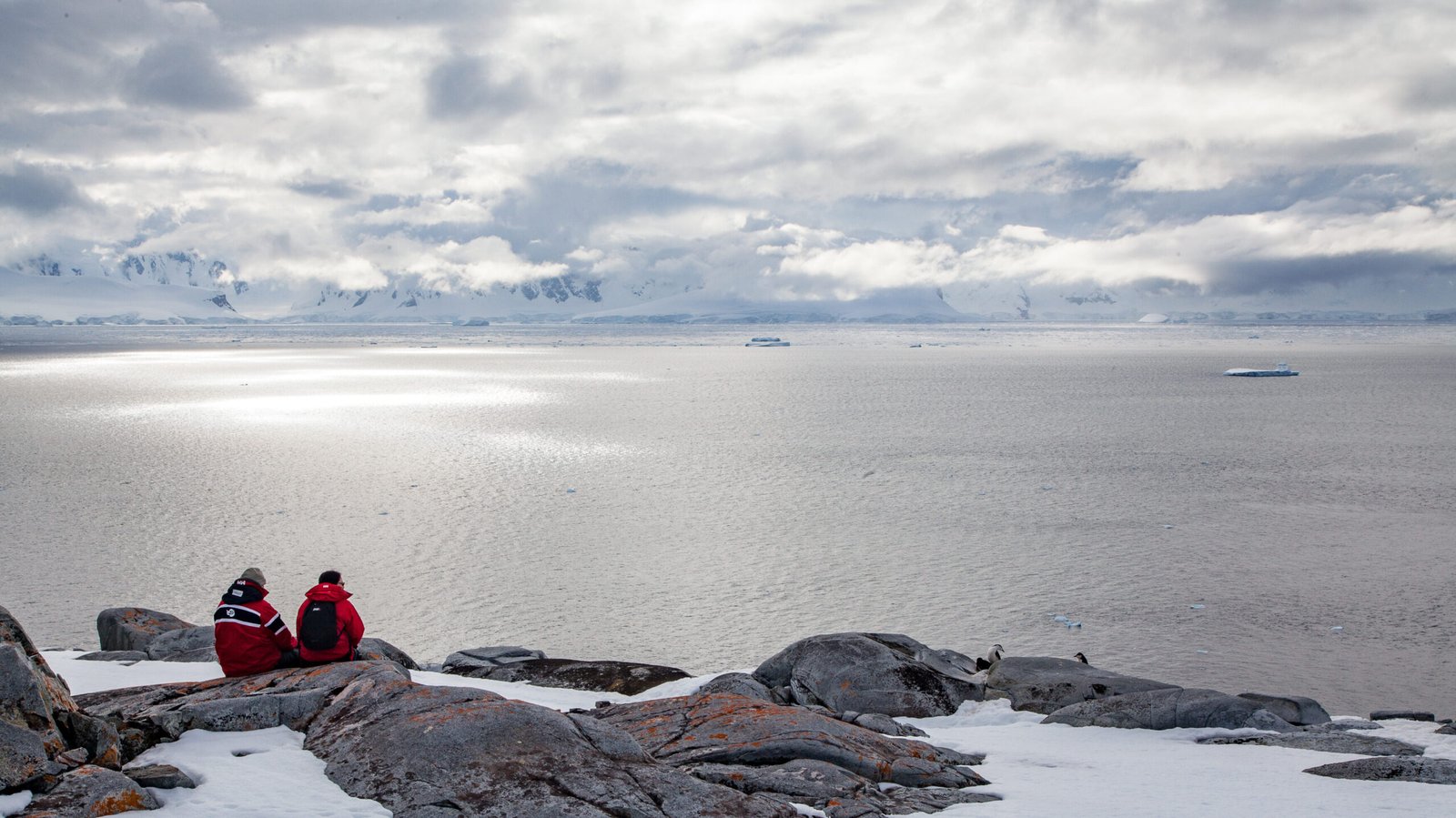
Travelers return from Antarctica changed in ways they struggle to express. Something about the scale of the ice, the clarity of the light, the absolute indifference of the continent to human needs. Antarctica permanently resets your internal compass.
Expedition seasons run from late October through March. Most itineraries depart from Ushuaia and include crossings of the Drake, landings on the Antarctic Peninsula. Flights also depart from Punta Areas, Chile to meet up with waiting ships in the South Shetlands.
Upon arrival, there may be opportunities for kayaking, camping on the ice, and diving in waters of such extraordinary clarity that the visibility reaches one hundred feet. It is not inexpensive and it is not easy to reach. It is, by the testimony of nearly everyone who has been, the most meaningful wilderness journey they have ever made.
BEST FOR
The ultimate wilderness experience
KEY EXPERIENCE
Elephant seal and penguin colonies; kayaking with humpbacks and leopard seals
WHEN TO GO
Late October to March
A Final Note
Latin America is not a region in the way that phrase usually implies — a grouping of countries with shared administrative characteristics. It is a world of encounters: a stage of such complexity and abundance that science has not yet finished cataloguing it, with human cultures whose histories extend back ten millennia before the arrival of Europeans, with landscapes so extreme in their variety that the traveler moving through them in the course of a single trip might experience the altiplano, the cloud forest, the desert, the salt flat, the tropical rainforest, and ancient ice.
These ten destinations — and the continent beyond — are not a checklist. They are an invitation to experience a particular kind of travel: slow, attentive, and transformative. The world, in Latin America, still has edges. Go. Participate. Experience. You’ll never be the same.