Peru is three countries in one, stacked vertically. The Pacific coast — dry, temperate, fogged by the Humboldt Current — operates in a different climate than the Andean highlands, which are vastly different from the Amazon Basin.
To travel Peru is to move between climate zones, each with its own wardrobe. The traveler who packs only for Machu Picchu will be unprepared for the Amazon. The traveler who packs only for the coast will be cold in Cusco and Lake Titicaca.
This guide covers some of the most popular destinations in Peru — Lima, the Sacred Valley and Cusco, Machu Picchu, the Amazon, and Lake Titicaca.
What Carries Across All Zones
Several items earn their place in every part of a Peru itinerary: a packable rain jacket (rain happens in every zone), merino wool socks (comfortable in heat, essential in cold), a reusable water bottle, a small first aid kit with blister treatment and altitude medication, and a daypack of twenty to twenty-five liters for daily excursions. Everything else is zone-specific.
“Our three-week trip through Peru with three teenage children was exactly that bonding and sharing experience we had hoped for. The rhythm, the variety, and the tone of locations and activities was spot on. With effective listening and probing skills, you built a good picture of what we were looking for, which was more complicated than “just” luxury. The result was a great trip, one that felt like it was very much made just for us. Beyond the expected expertise and knowledge of the country, we liked the fact that the guides, hoteliers, and others we met in Peru all knew and liked you personally. Because of your relationships, they really gave their best in making our trip memorable.” – Gesine Holschuh, LANDED Traveler
Lima: The Coastal Start
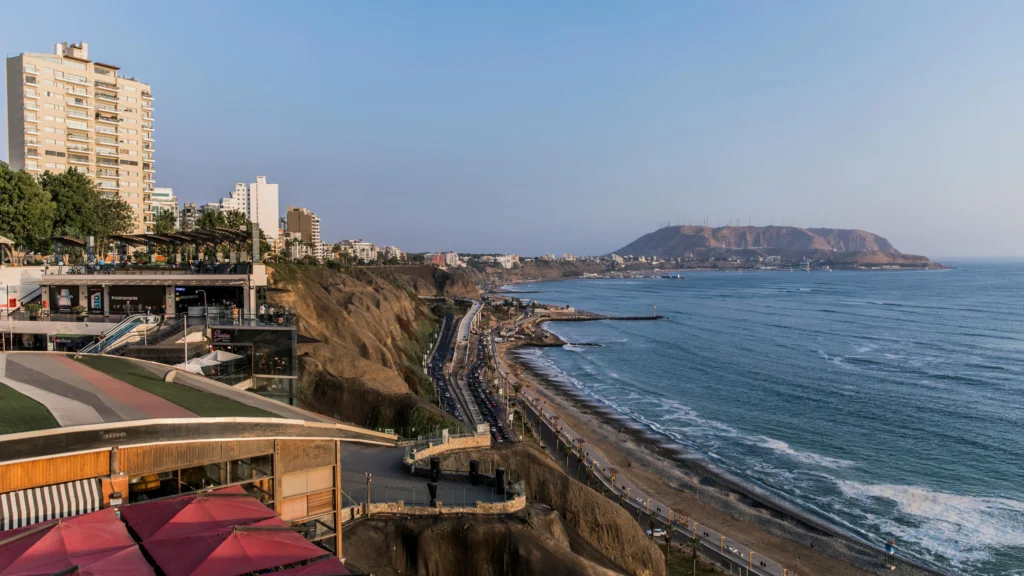
Lima is a city of perpetual overcast in the southern winter (June through October) — the garúa, a low marine fog driven by the Humboldt Current, sits over the city for months at a time. Temperatures are mild: 57 to 65 F, rarely warmer. In the summer months (December through March), the fog lifts and the sun arrives, pushing temperatures above 80 F.
For Lima, pack as you would for a mild, slightly damp urban environment: a light sweater or jacket, comfortable walking shoes, a layer for evenings near the Pacific. Lima has excellent shopping — leather goods, alpaca textiles, local fashion houses – leave space in your luggage for what you’ll find.
The Sacred Valley and Cusco: Altitude and Temperature Swing
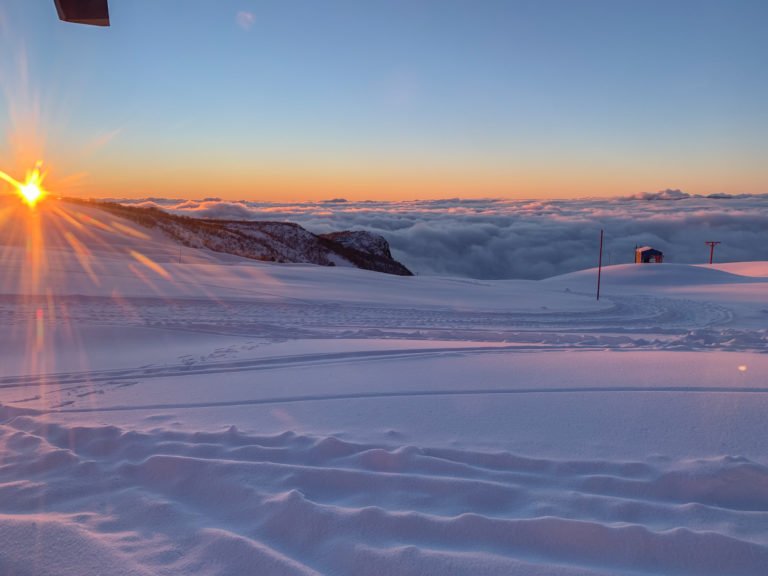
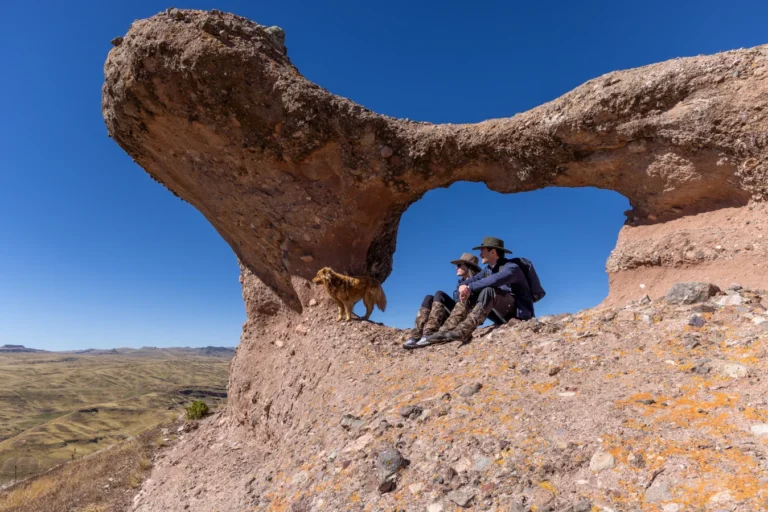
The Sacred Valley floor sits roughly 9,100 feet above sea level. Cusco is roughly 10,500 feet above sea level. Days can be warm in the dry season — 68 to 75 F in full sun — and nights drop sharply, sometimes to 20 F. This temperature swing is the defining packing challenge of the highlands.
The solution is a dedicated merino or alpaca wool layer system: base layer, mid-weight fleece or softshell, outer shell. Mornings and evenings in the Sacred Valley can require all three. Afternoons on the trail may require just one. The ability to add and remove layers in fifteen seconds on the trail is worth prioritizing over a single heavier jacket with binary use options.
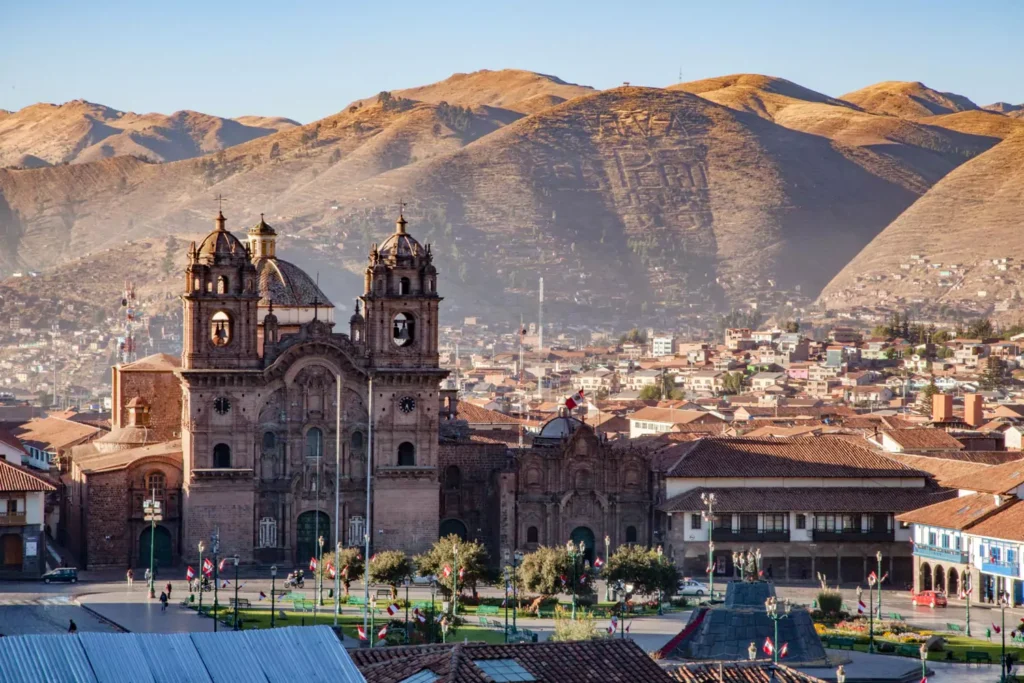
For footwear in the highlands: waterproof hiking shoes or lightweight hiking boots for the trail days, and a pair of comfortable walking shoes for the towns. Cusco’s cobblestoned streets are uneven and shockingly slick when wet; anything with a poor-grip sole becomes hazardous in the frequent afternoon rain of the wet season.
Peru is larger than the combined territory of France, Germany, and Italy. This land was the seat of more than a dozen ancient civilizations before the Inca, and its cultural traditions are astonishing. I’ve spent more than 25 years exploring Peru and feel there is still so much more to discover. – John Montgomery, Co-Founder of LANDED
Machu Picchu: The Variable Day
Machu Picchu is lower than Cusco or the Sacred Valley. It lies roughly 8,000 feet above sea level, on a ridge above a river valley in the transition from the altiplano to the Amazon.
The full Machu Picchu packing guidance is covered in LANDED’s companion Machu Picchu Packing List. The short version: layers, waterproof jacket, hiking shoes with traction, sunscreen, and a hat.
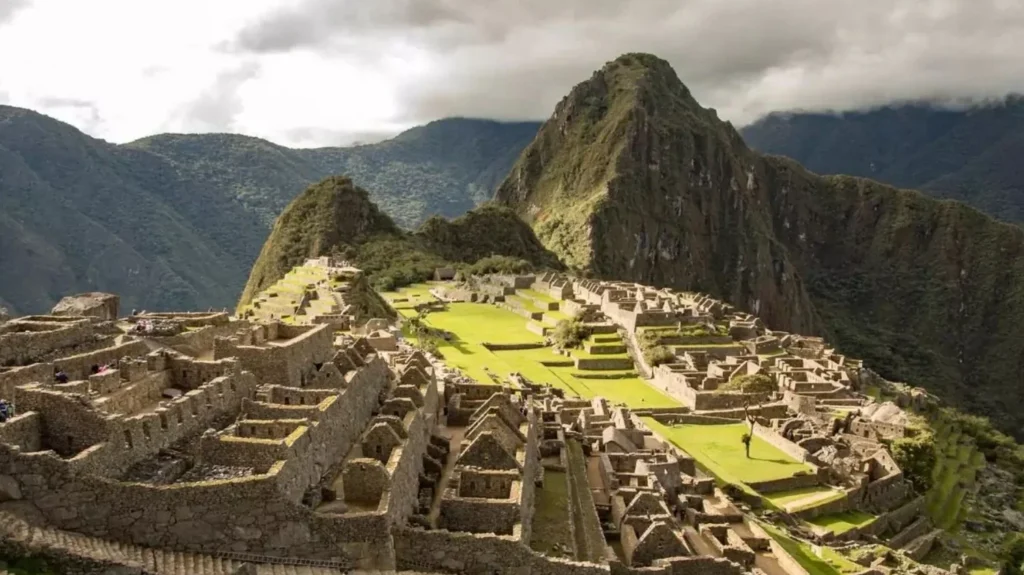
The citadel operates in its own microclimate — sun and cloud and rain in rapid alternation — and the altitude intensifies UV exposure even on overcast days. Dress for four seasons in one morning.
Download LANDED’s complete Machu Picchu Guide.
The Amazon: Heat, Humidity, and Long Sleeves
The Amazon Basin — whether you access it via Puerto Maldonado (Tambopata), Iquitos, or the Manu corridor — is low-altitude and high-humidity. Temperatures stay between 75 and 95 F year-round. Rain can come at any time, heavily, and stop within the hour.
Counterintuitively, long sleeves are the right choice for the Amazon — not for warmth but for insect protection. Lightweight, quick-drying long-sleeve shirts with UPF 50 coverage protect against both sun exposure (which is intense near the equator) and mosquito and sandfly bites.
DEET-based insect repellent (30% or higher concentration) applied to exposed skin handles what clothing does not cover. Yes, we too wish that natural alternatives worked well enough.
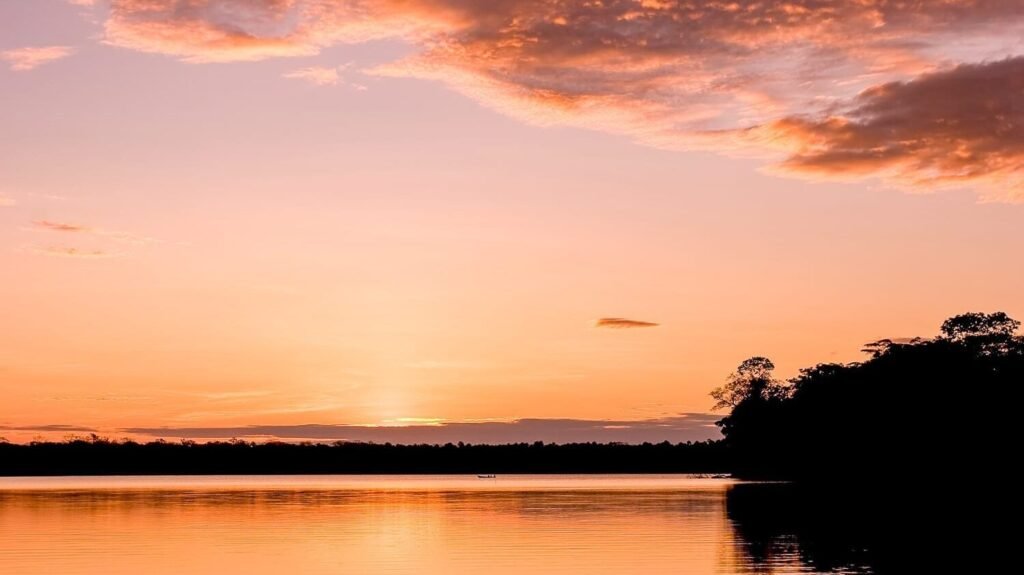
Footwear for the Amazon: rubber-soled waterproof trail shoes that can handle mud. The rainforest floor is often wet, and the trails move through terrain where ankle coverage matters. Sandals are comfortable at the lodge but inadequate on the trails.
Light cotton or synthetic shirts for evenings, minimal toiletries, and a packable dry bag for boat transfers on the river. The Amazon lodges are remote — resupply is not available — so bring what you need. Your LANDED designer will provide a specific list based on your lodge and the season.
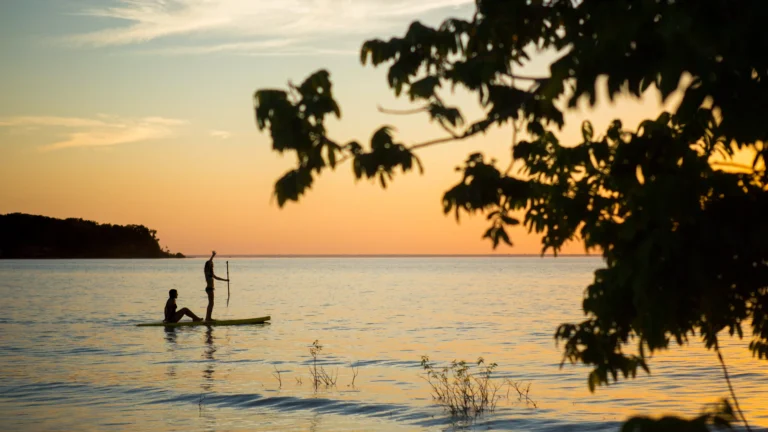
Lake Titicaca: The High Cold
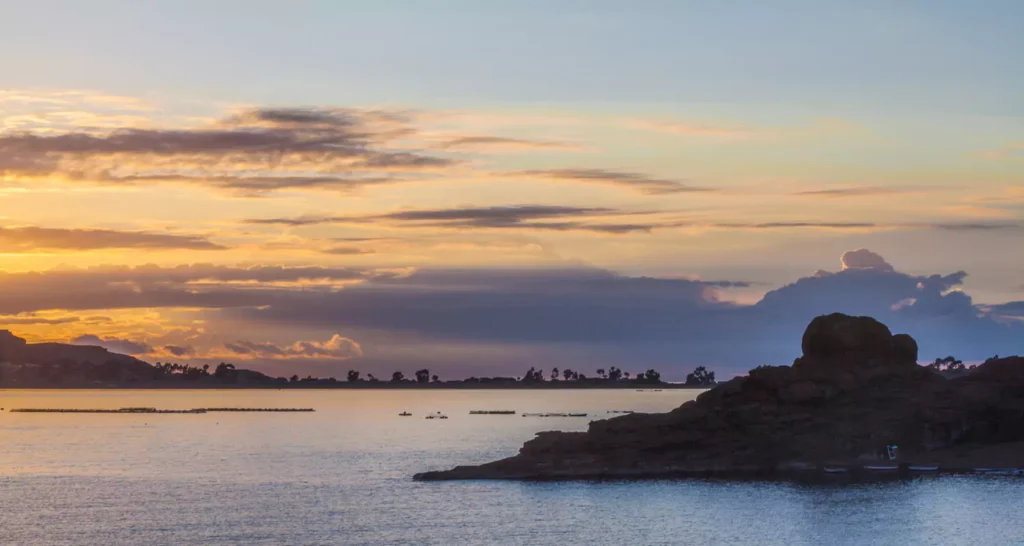
Lake Titicaca sits at roughly 12,500 feet above sea level — the highest navigable lake in the world. Nighttime temperatures can drop well below freezing in June and July, and even in the warmest months, the wind off the lake carries a chill. Pack your warmest layers for Titicaca, add a wind-resistant outer shell, and bring genuine gloves.
Altitude Sickness: Preparation Starts Before You Pack
The most important preparation for the Andean portions of Peru is in your travel medicine kit. Acetazolamide (Diamox) — prescribed by your physician before departure — is the standard prophylaxis for altitude sickness, taken beginning the day before arrival at altitude. It does not prevent symptoms in every case, but it reduces severity and frequency significantly. Ibuprofen for altitude headache. Oral rehydration salts.
When you travel with LANDED, we’ll be with you throughout your journey. If you need supplemental oxygen or medical attention, we have the resources. We’ll also design your journey with attention to order and length of stay at each destination, easing acclimatization.
“The country is a magnificent wilderness, where civilized man has, as yet, scarcely obtained a footing — the cultivated ground, from the Rio Negro to the Andes, amounting only to a few score acres.” – Henry Walter Bates
Peru is not a single climate or a single landscape. It is an entire continent compressed into one country. Come prepared. Pack in zones — coastal, highland, Amazon, altiplano — and you will be comfortable in all of them.
Speak with LANDED’s expert travel designers.