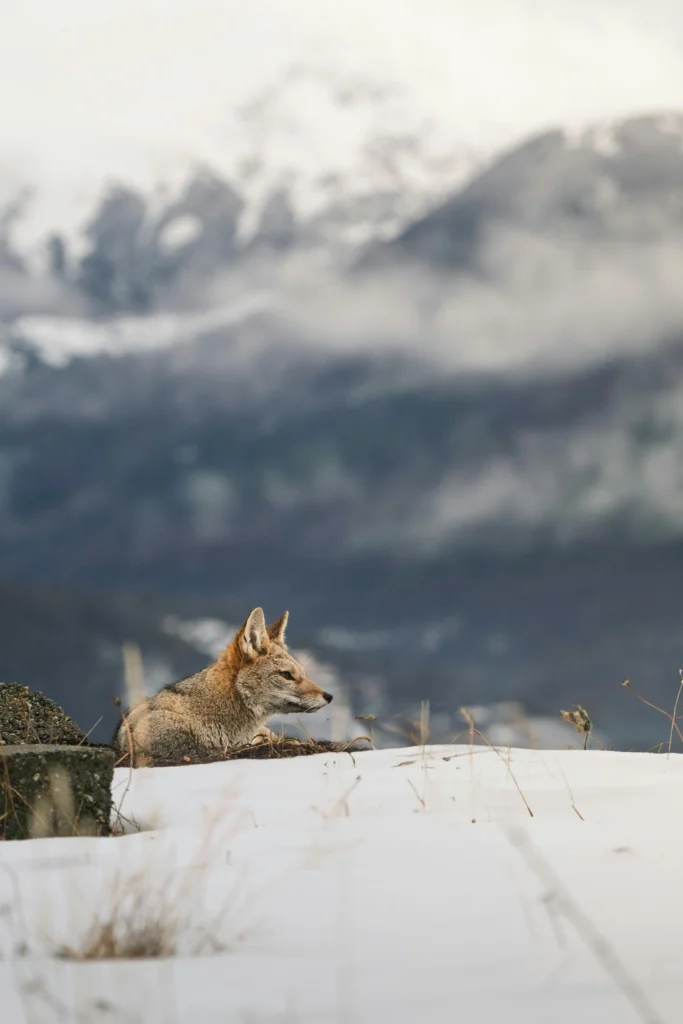
It’s commonly said that in Patagonia, you can experience four seasons in a single day. In practice, it means you should be prepared for cold, rain, and sun on every outing.
Southern Pacific and Antarctic currents drive weather systems across the Andean divide with a speed and unpredictability that makes hourly forecasts unreliable.
What you can rely on is the monthly pattern: the broad shape of each season, the prevailing wind direction, the typical temperature range, and what is likely to be happening in the sky. This guide covers all of it, month by month.
This page focuses on the most visited areas of southern Patagonia: Torres del Paine, Puerto Natalas, Punta Arenas, El Calafate, and El Chalten. If you want information about the northern Patagonia regions, see these pages on the Chilean Lake District, Pucon, and Bariloche.
Bariloche and the Lakes District, ArgentinaPucon, Chile Chiloe, ChileFutaleufu and Queulat National Park, ChileLos Alerces National Park, ArgentinaTierra del Fuego National Park, ChileTorres del Paine National Park, ChileThe Valdes Peninsula, ArgentinaEl Chalten and the Fitzroy Massif, ArgentinaThe Perito Moreno Glacier and Lago Argentino, ArgentinaSan Martin de los Andes & Junin de los Andes, ArgentinaGeneral Carrera Lake
October: Late Winter, Early Possibilities
October is the beginning of the Patagonian shoulder season. Snow is still present on the high trail approaches and some lodges are still in their pre-season preparations. Expect temperatures to range from 40 to 55 F, with the wind still dominant from the northwest. The wildflowers are beginning: the calafate is the first to show yellow, visible on the south-facing slopes by mid-month.
October visitors trade trail access for a Patagonia that few others see: the national park in its spring awakening, the condors re-establishing their soaring circuits, the first guanacos moving down from their winter-protected valleys.
Wind should be expected. Mornings and evenings are generally chilly—jacket and sweater weather. Still, you can expect sun at midday. In the most visited locations, rain rarely lasts long.
Patagonia is renowned for its natural beauty and acclaimed for its spirit. For those who roam, Patagonia is symbolic—a manifestation of wildness, freedom, solitude, and frontier. Of open road and untapped adventure. A new world to explore and revere.” – John Montgomery, Co-Founder of LANDED
November: The Season Begins
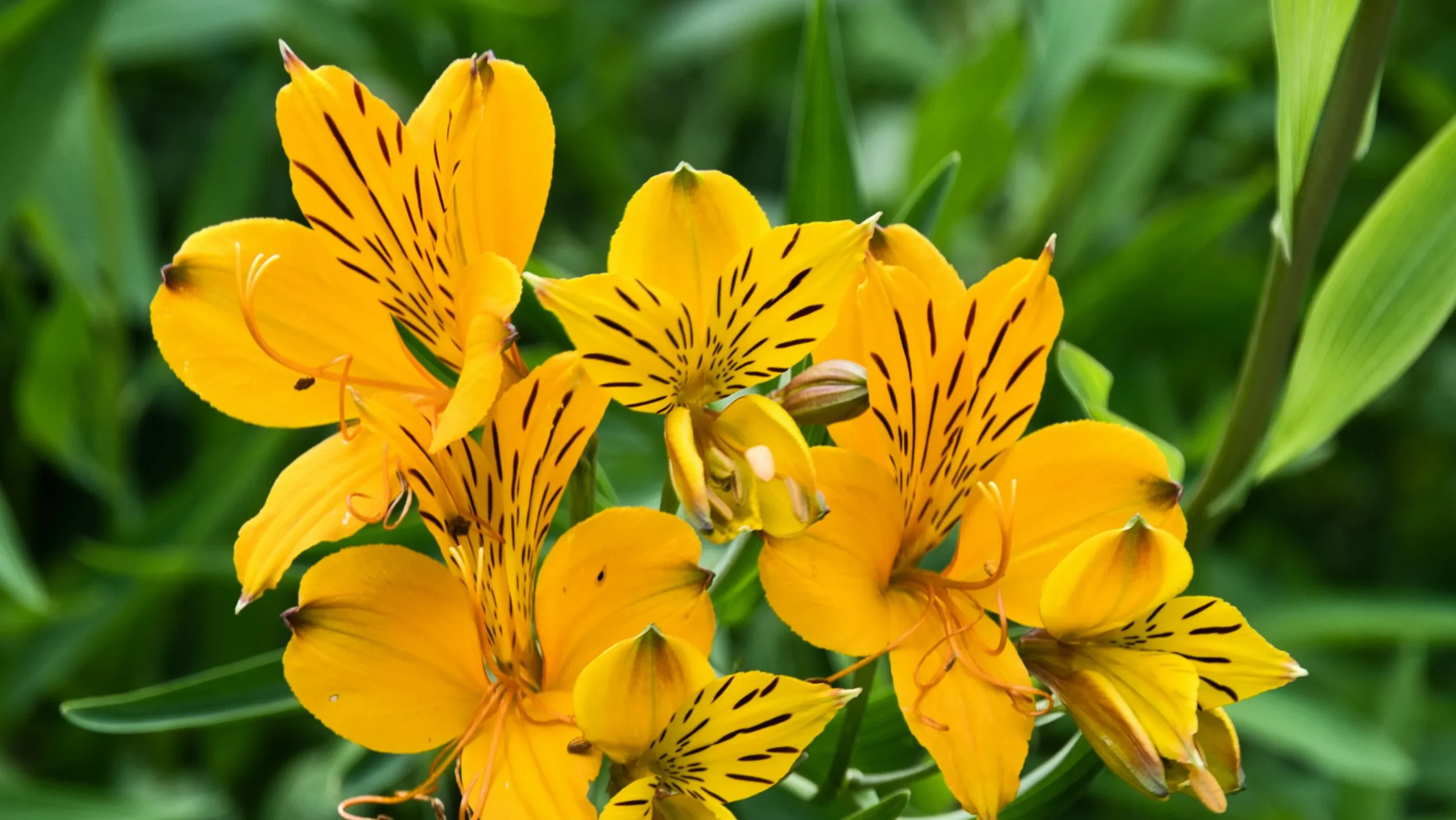
November is when Patagonia opens in earnest. The major trails in the keystone national parks are accessible. The marquee lodges are operational. The wildflowers — calafate, firebush, Lady’s Slipper, and amancay — are at peak bloom. Temperatures usually range from 45 to 60 F during the day; nights drop to near zero at the campsites.
The wind in November is building toward its peak. The Roaring Forties — the wind system that has been circling the Southern Ocean since the end of winter — arrive with increasing force through the month. Gusts of 25 to 40 miles are common. This is not dangerous for experienced hikers; still, it requires the right gear.
Photographically, November is exceptional. The flowers, the clean post-winter air, and the long golden days produce a cinematic version of Patagonia. Traveler volume is moderate — higher than October but significantly lower than December through February.
December: Peak Season Begins
December marks the beginning of peak season and the longest days. The sun sets after ten in the evening and returns before five in the morning, the light diffuse and golden in the extended twilight hours. Temperatures range from 50 to 65 F. The wildflowers have mostly given way to full summer vegetation; the lengas and nires take on a deep, settled green.
Demand for the best lodges peaks in December. Most of the well-known lodges are at capacity. The famous treks in El Chalten and Torres del Paine hit their upper limits.
January: Summer’s Peak
January is the warmest month in Patagonia — daily highs of 50 to 70 F, occasionally warmer in sheltered valleys. It is also the windiest. The Patagonian wind reaches its annual maximum in January, with gusts of 45 miles per hour or more recorded regularly at the exposed points of the Torres del Paine circuit. The wind is the price of admission, and part of what makes Patagonia feel so alive — the landscape asserting itself.
The guanaco herds are on the open Pampas. The condors are riding thermals, often in groups of three to five, although we’ve seen groups as large as 15. The puma population is most actively surveilling the guanaco herds, and January offers the highest probability of a sighting.
“The very names evoke so much, and are their own justification for this journey, for one must hurry if one is still to glimpse the earth’s last wild terrains. The greatest of these, the oceans and Antarctica excepted, lie not in Africa but within the mysterious continent of South America.”—Peter Matthiessen
February: Transition Begins
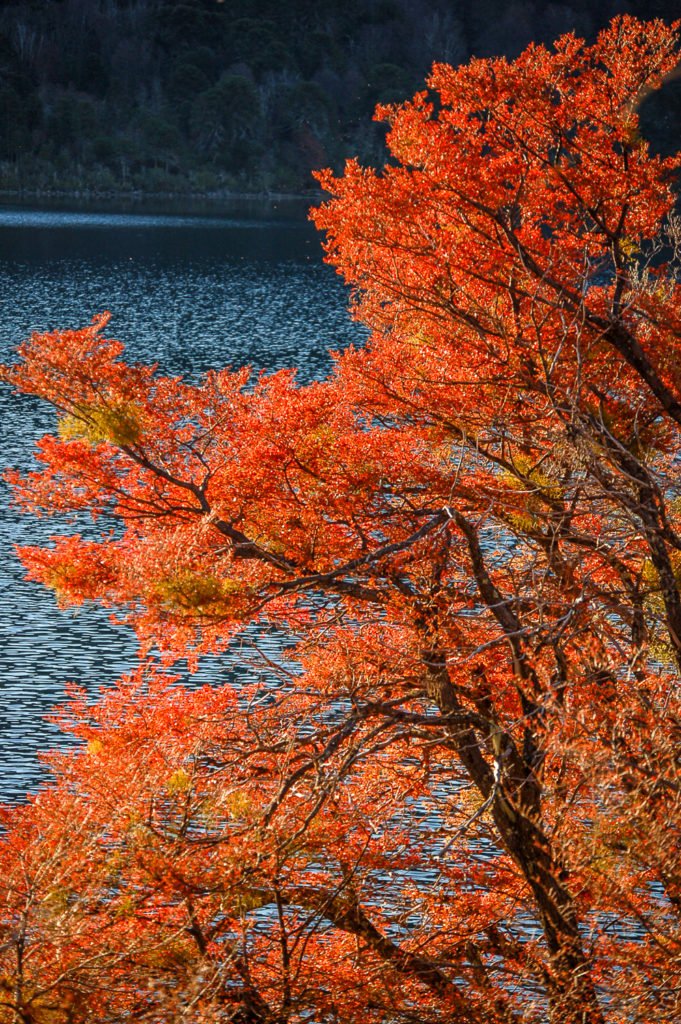
February is the last full month of peak season and the beginning of its most beautiful transition. The lenga beech begins turning in the second half of the month — first yellow, then orange, first at the higher elevations where the cold arrives earlier. The days are still long, the trails still reliable, and the crowds begin to thin in the second half of the month as the Southern Hemisphere’s school holiday season winds down.
The temperature range in February is similar to January: 50 to 65 F during the day, cold at night. The wind still asserts itself. We think February is one of the optimal months to visit — the full summer conditions of January without the summer crowds, and the first hints of what March will offer.
March: The Autumn Spectacle
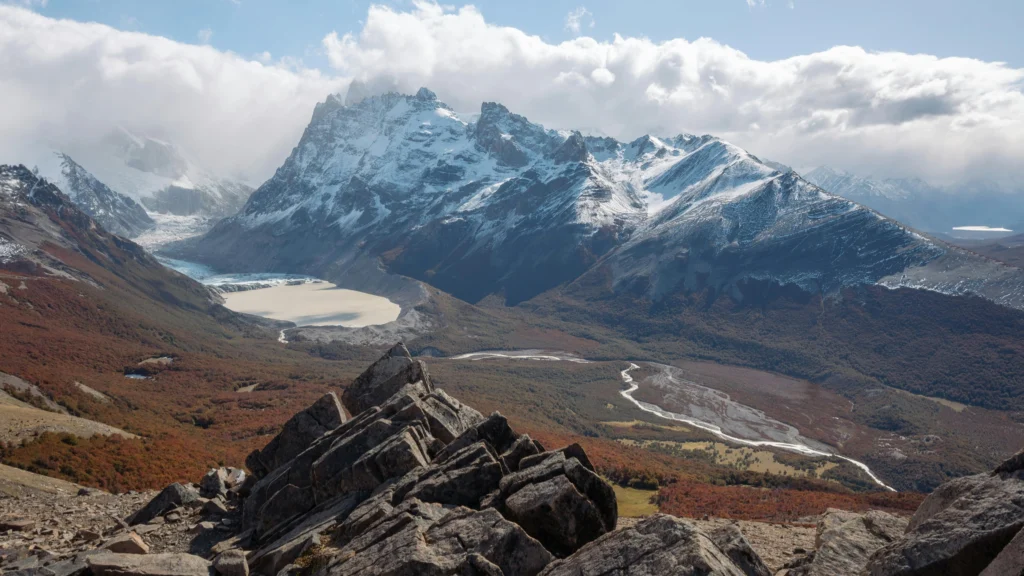
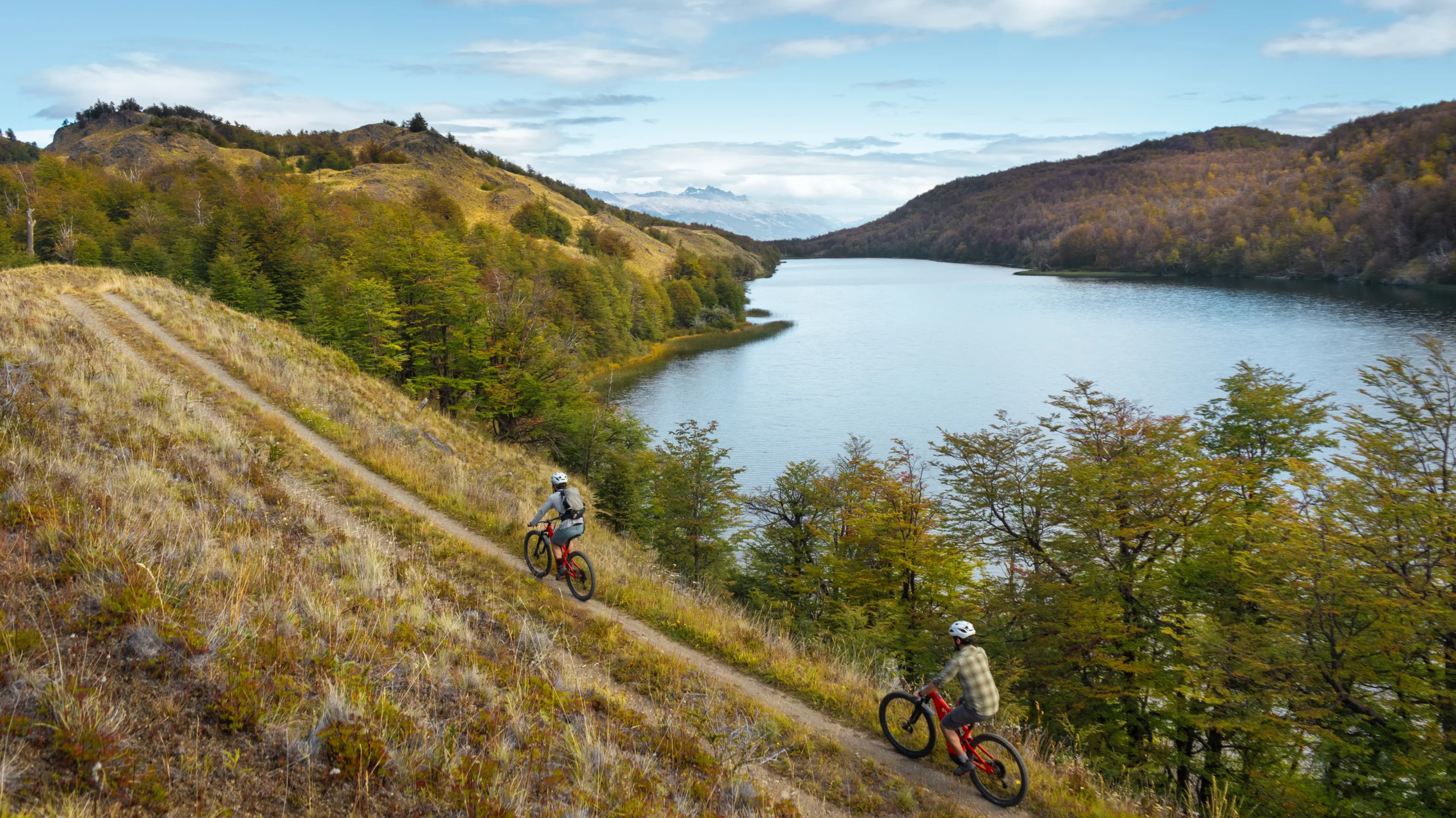
March is the month we usually visit. The lenga beech forest transforms in the first three weeks of the month — a process that moves from the high-elevation edges of the forest downward, turning the hillsides orange and red and amber. The light shifts, giving way to a warmer, lower angle, and the red-and-gold forest in that light is something that requires standing still to fully absorb.
Temperatures drop: 45 to 60 F during the day, with genuine cold at night. Snowfall is possible on the high approaches by late March. Some lodges close at the end of March or early April, as the number of visitors wanes. Prices begin to come down. March offers balance: of conditions, of visual spectacle, and of Patagonia tranquility.
April Through September: The Off-Season
April is the transition into winter. The lenga forest is at full autumn color through the first part of the month. Then leaves fall and greys and browns of the steppe reassert themselves. Most lodges close in April; a few remain open year round.
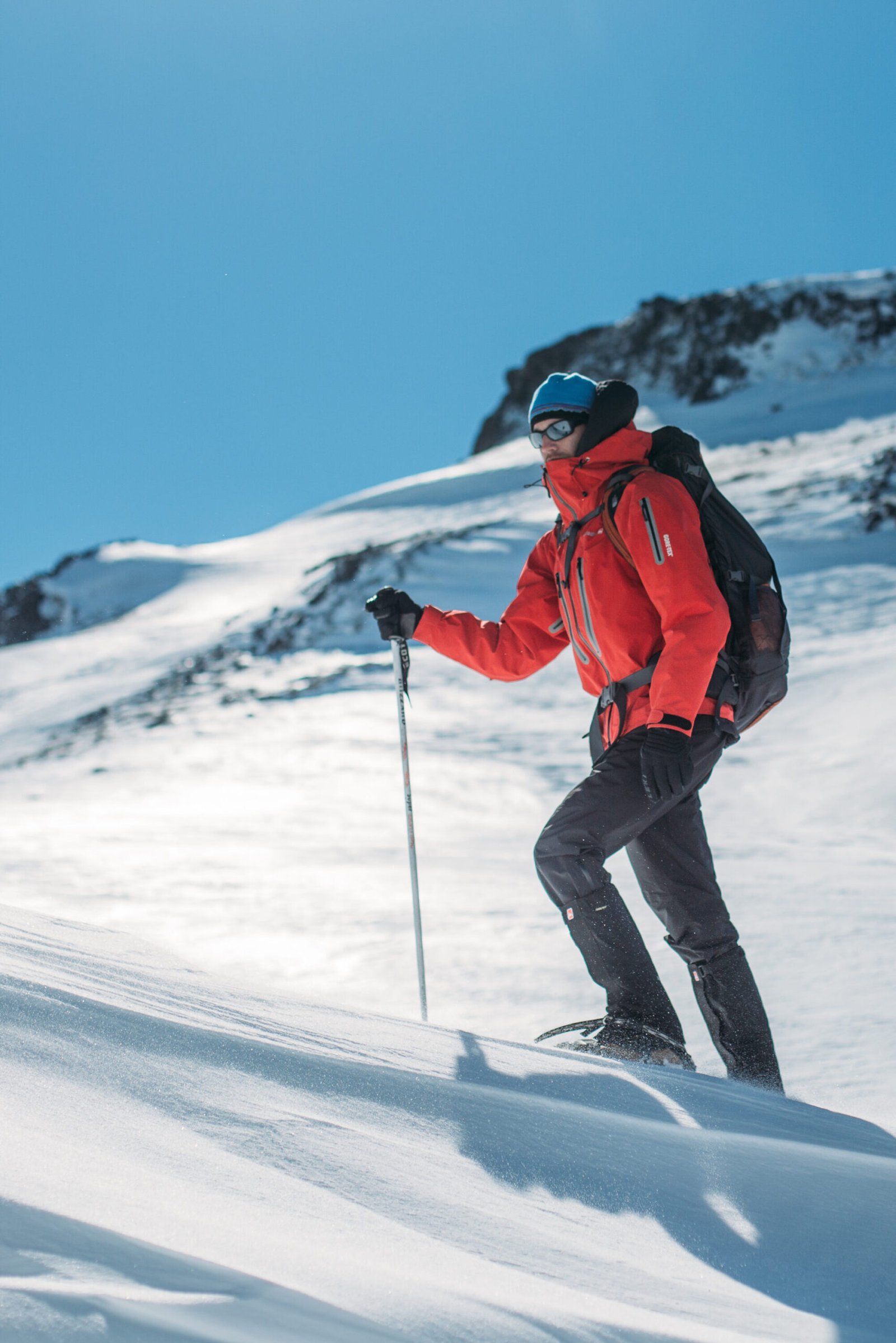
May through August are winter months. Snow covers the high trails. The national park is technically open but practically limited. The wind is at its strongest. Temperatures can drop to 10 F at night. This is the territory of the winter expedition traveler.
September bridges winter and spring: cold, potentially snowy, with some trail sections reopening late in the month. The shoulder season begins again in earnest in October.
You actually got to know us—to know just what we like. You promised the best trip ever, and you kept your promise. – B. Furstenberg, LANDED Traveler
A Note on the Argentine Side
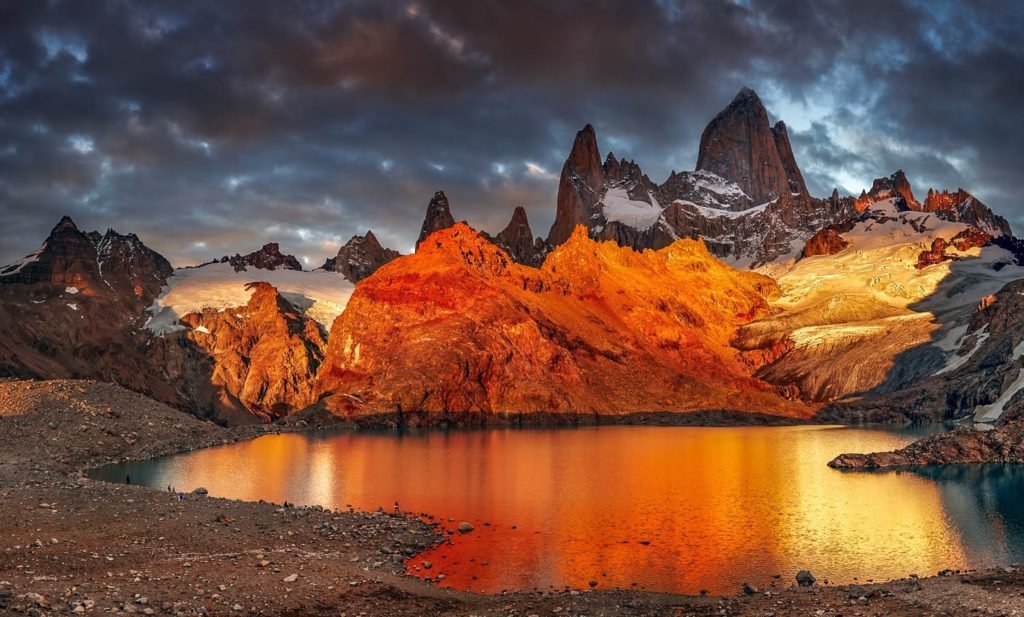
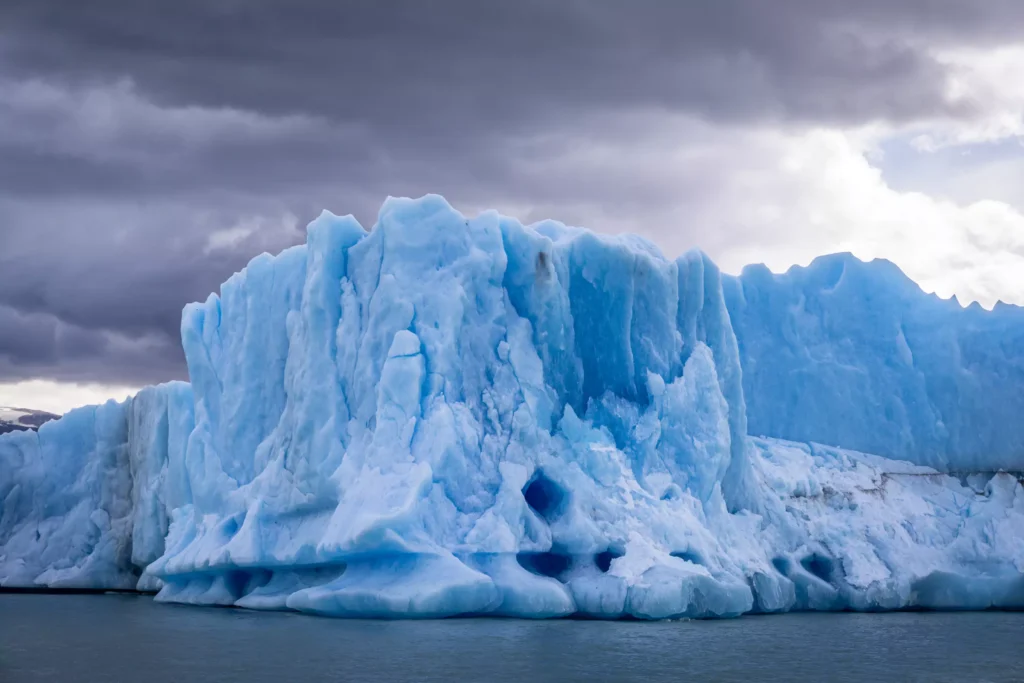
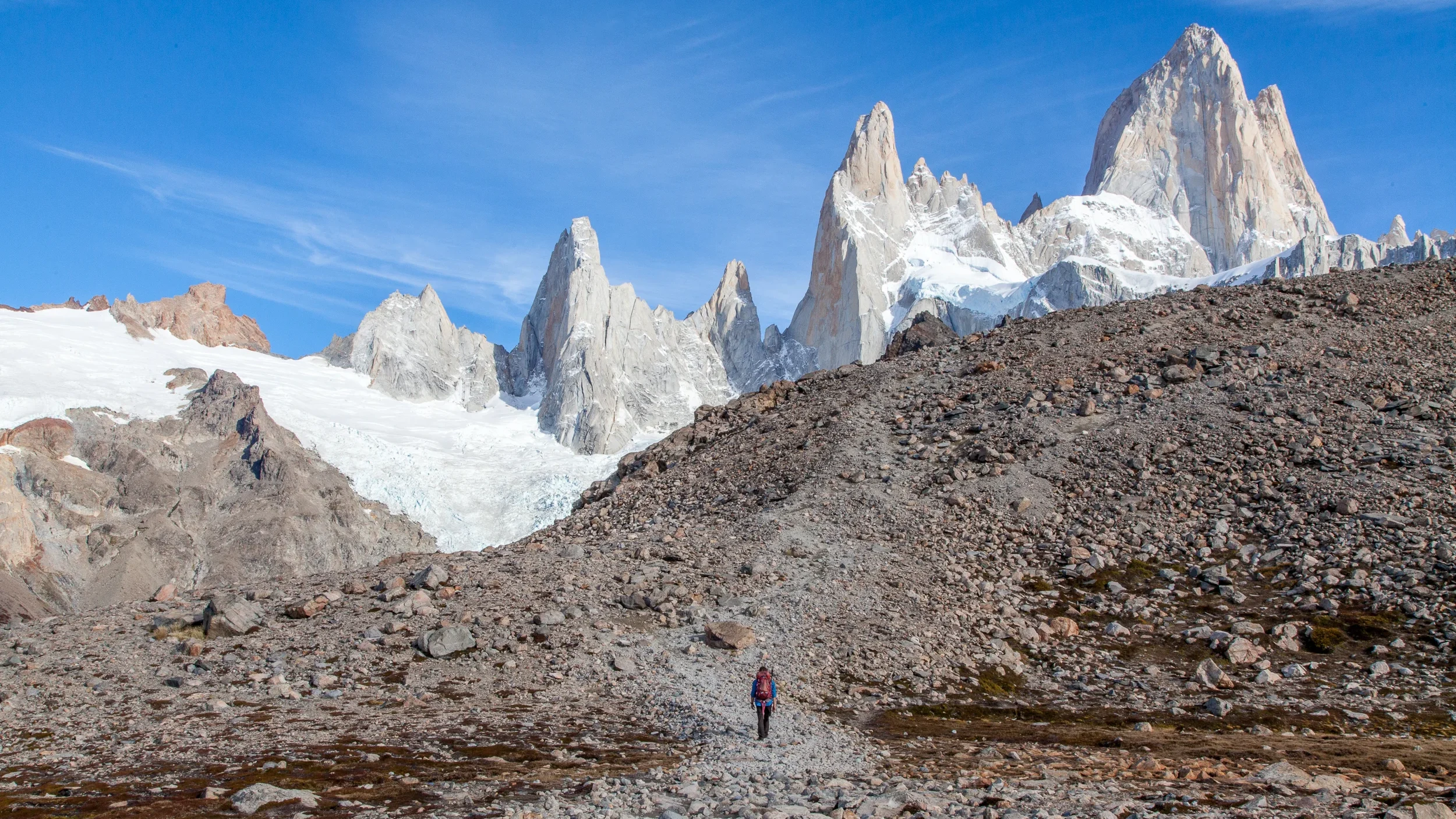
El Calafate and the Los Glaciares National Park on the Argentine side operate on a slightly different schedule than southern Chilean Patagonia. The Perito Moreno Glacier is accessible and spectacular year-round — the ice calves continuously regardless of season. El Chaltén, the hiking hub below the Fitz Roy massif, is accessible from October through April. The Argentine side is slightly more sheltered from the worst of the Patagonian wind, though not immune.
PRICING NOTE
A LANDED PATAGONIA TRIP TYPICALLY RANGES FROM $15,000 TO $35,000, DEPENDING ON LODGE SELECTION, ITINERARY LENGTH, AND WHETHER THE CIRCUIT COMBINES BOTH THE CHILEAN AND ARGENTINE SIDES. PEAK-SEASON LODGES REQUIRE BOOKING TWELVE TO EIGHTEEN MONTHS AHEAD. MARCH AND NOVEMBER OFFER EQUIVALENT QUALITY AT LOWER PRESSURE ON AVAILABILITY.
Plan for the wind. Pack for four seasons in one day. And know that whatever month you come, Patagonia will be worth seeing.