February is a month of Brazilian magnitude: Carnival in Rio, the streets of every neighborhood transformed into stages, the drumlines audible for blocks. It is also Antarctica’s peak — the expedition season at full intensity, the iceberg light and wildlife activity at their most extraordinary. Along the Pacific coasts of Central America, February holds the dry season’s most reliable weather, the humidity having settled into a warm background notes. For travelers willing to move between these registers — spectacle and solitude, crowd and wilderness, the human and the elemental — February offers more range than almost any other month.
Central America
Osa Peninsula, Costa Rica
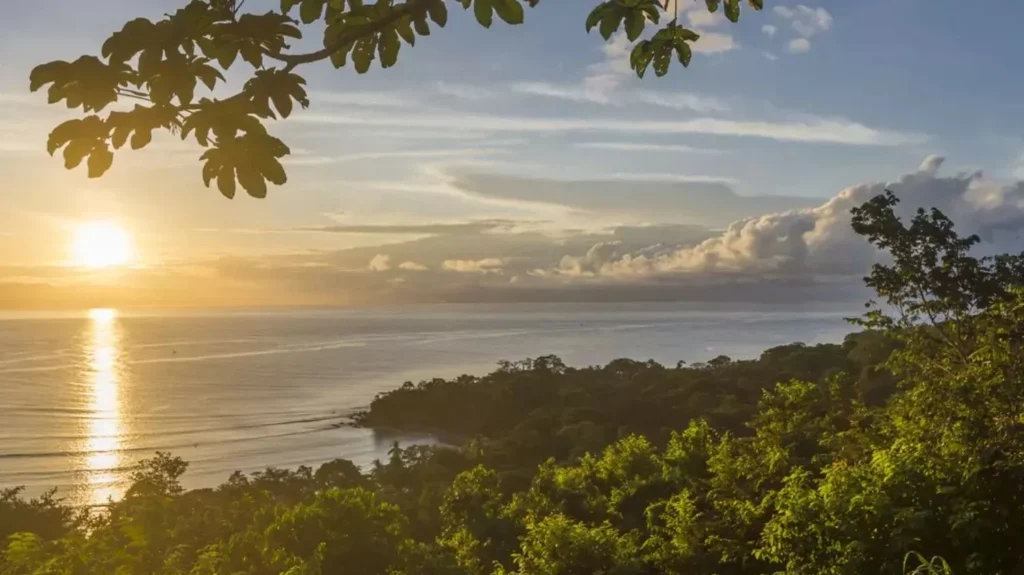
February continues the Osa’s peak dry season, and the jungle trails of Corcovado remain at their most accessible — dry underfoot, the rivers low enough to cross, the wildlife concentrated around the water that remains. The tapir comes to bathe in forest streams at dawn; spider monkeys move through the upper canopy in family groups whose social dynamics reward patient observation; and the beaches of the Golfo Dulce, warmed by the shallow bay, offer some of the finest kayaking in Central America. The lodges here fill to capacity through February and require advance reservations.
Wildlife
Tapir; jaguar tracks on beach at dawn; four sea turtle species; spider and howler monkeys
Natural Phenomenon
Golfo Dulce’s flat, warm water — a sheltered bay unique on Costa Rica’s Pacific coast
Culinary
Jungle-to-table dinners at Drake Bay lodges; fresh hearts of palm; tropical fruit at breakfast
Pacific Coast of Costa Rica
February’s Pacific coast — from the Nicoya Peninsula south through Manuel Antonio and Dominical — is dry, golden, and operating at its most seductive. The resort corridor of the central Pacific offers nesting olive ridley turtles at Ostional, surfing in swells that have traveled uninterrupted from the North Pacific, and the kind of wildlife-dense national parks — Manuel Antonio remains one of the most visited in the world for good reason — where squirrel monkeys and white-faced capuchins conduct their daily arguments at close range.
Wildlife
Olive ridley turtle arribada at Ostional beach; squirrel monkeys; three-toed sloths in Manuel Antonio
Natural Phenomenon
February Pacific swells — world-class surf at Dominical and Pavones
Culinary
Fresh tuna, wahoo, and mahi-mahi caught offshore; roadside soda casados
Belize
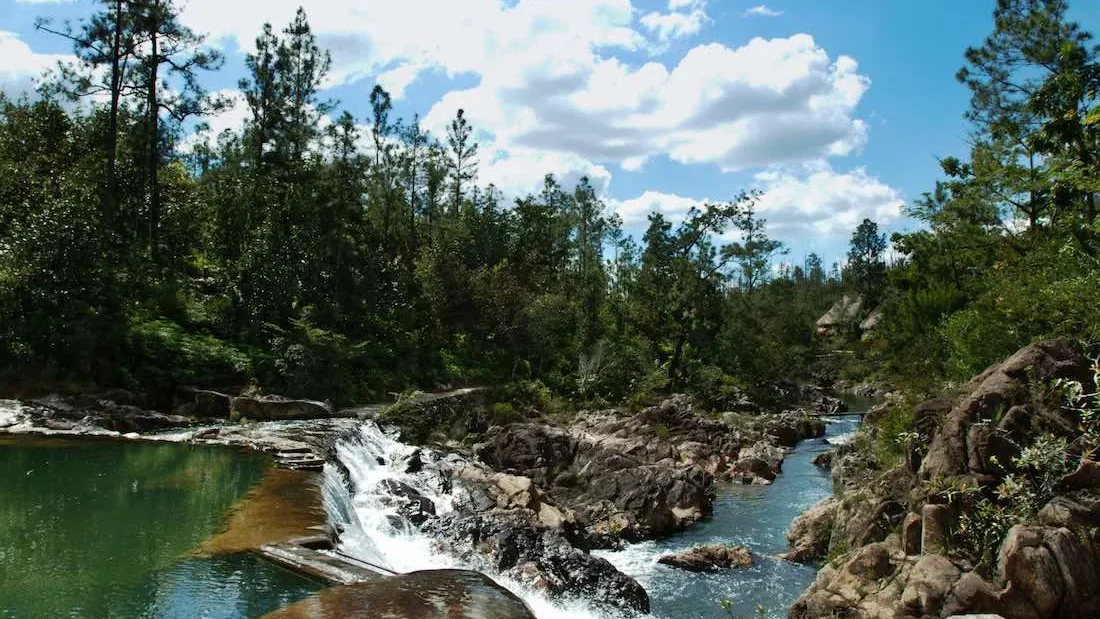
February is among Belize’s finest months — the dry season holding over the cayes and the offshore atolls, the trade winds keeping the days comfortable, the Caribbean water at its most crystalline. The Great Blue Hole, that perfect circle of deep navy visible from the air, plummets to 124 meters depth ringed with stalactites that tell the story of a Pleistocene cave system flooded by rising seas. Hol Chan Marine Reserve at Ambergris Caye produces daily encounters with nurse sharks, stingrays, enormous tarpon, and reef fish of implausible density. Inland, the ruins of Lamanai and Caracol emerge from the jungle with the authority of structures that once organized an entire civilization.
Wildlife
Whale sharks at Gladden Spit (March–June peak, but active Feb); manatees in the lagoons; howler monkeys
Natural Phenomenon
Great Blue Hole — one of the world’s great dive sites, best seen from air and water
Culinary
Garifuna drumming on the southern coast; Maya ceremonial sites in the Mountain Pine Ridge
Guatemala
February in Guatemala sits at the heart of dry season, and the morning processions of Antigua — whose Semana Santa preparations sometimes begin as early as February with alfombra carpet-making — add a layer of devotional beauty to a city already operating at a high aesthetic register. The volcanic skyline of Antigua (Agua, Fuego, Acatenango) provides context that no European colonial city can offer, and the hike to Acatenango’s crater, with active Volcán de Fuego erupting periodically in the middle distance, is among the most dramatic experiences in Central America.
Cultural
Early Semana Santa preparations; alfombra sawdust carpet making; cofradía processions
Natural Phenomenon
Volcán de Fuego erupting from Acatenango’s crater rim — lava visible at night
Culinary
Pepián, jocón, kak’ik turkey soup; cacao ceremony in the highlands
Nicaragua
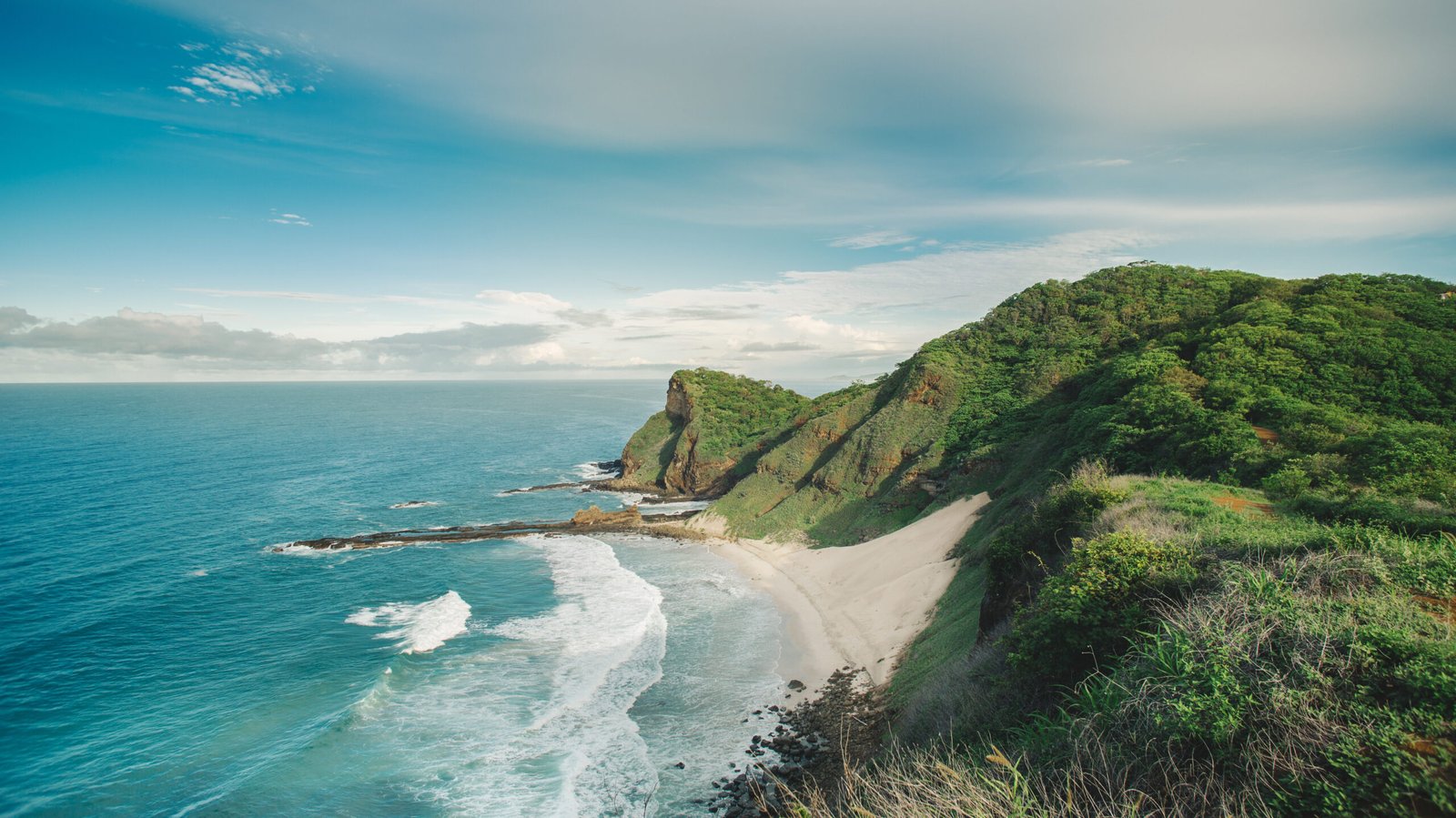
Nicaragua in February is dry season at its most convincing: the Pacific lowlands golden and warm, the colonial cities of Granada and León glowing in morning light of remarkable quality, the crater lake of Laguna de Apoyo — a perfectly circular volcanic caldera filled with warm, slightly acidic fresh water — available for swimming without the distraction of crowds. Granada, one of the oldest Spanish colonial cities in the Americas, offers a depth of architectural and cultural heritage that remains accessible to travelers willing to move with curiosity rather than agenda.
Cultural
Granada colonial architecture; folk Güegüense dance tradition (UNESCO Intangible Heritage)
Natural Phenomenon
Laguna de Apoyo crater lake; Masaya Volcano active lava lake viewable after dark
Culinary
Vigorón, gallo pinto, nacatamales; fresh lake fish from Lake Nicaragua
Panama
February’s Carnaval celebrations transform Panama City and smaller towns into four days of water fights, culecos (water trucks drenching celebrants), folk dancing, and music — a distinctly Panamanian celebration that differs markedly from Rio’s samba spectacle but carries equal emotional intensity. The San Blas Islands offer a counterpoint: flat February seas and extraordinary snorkeling clarity in a Guna-governed archipelago that has resisted commercialization with admirable determination.
Cultural
Carnaval de Las Tablas — the most traditional Panamanian Carnival, two-hour drive from Panama City
Wildlife
Humpback whale sightings in Pacific waters; harpy eagle in the Darién
Culinary
Festival foods: chicha fuerte, chicheme, Panamanian tamales
Honduras
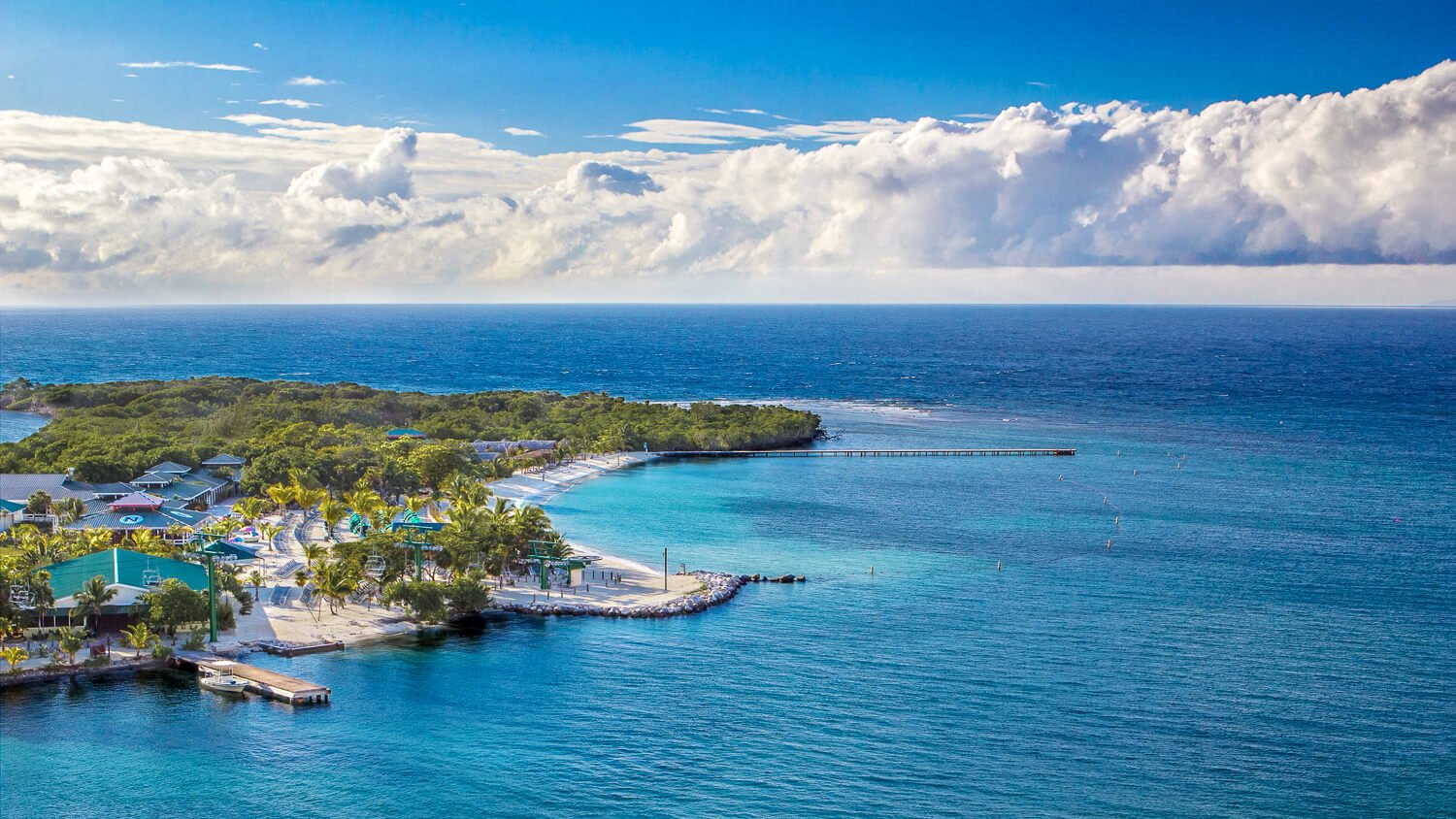
February’s dry season continues over the Bay Islands, where whale shark aggregations off Utila reach their seasonal peak and the Mesoamerican Reef shows its most favorable visibility. On the mainland, the colonial town of Copán Ruinas serves as a base for the archaeological site and for excursions into the surrounding cloud forest, where resplendent quetzals breed in February and March — their iridescent tail feathers visible in early morning light among the tree fern canopy.
Cultural
Copán’s Ball Court and Rosalila temple; local cacao farm tours
Wildlife
Resplendent quetzal breeding season (Feb–May); whale sharks off Utila; Baird’s tapir in La Muralla
Culinary
Honduran chocolate from Copán region; fresh Utila lobster; sopa de caracol
Colombia
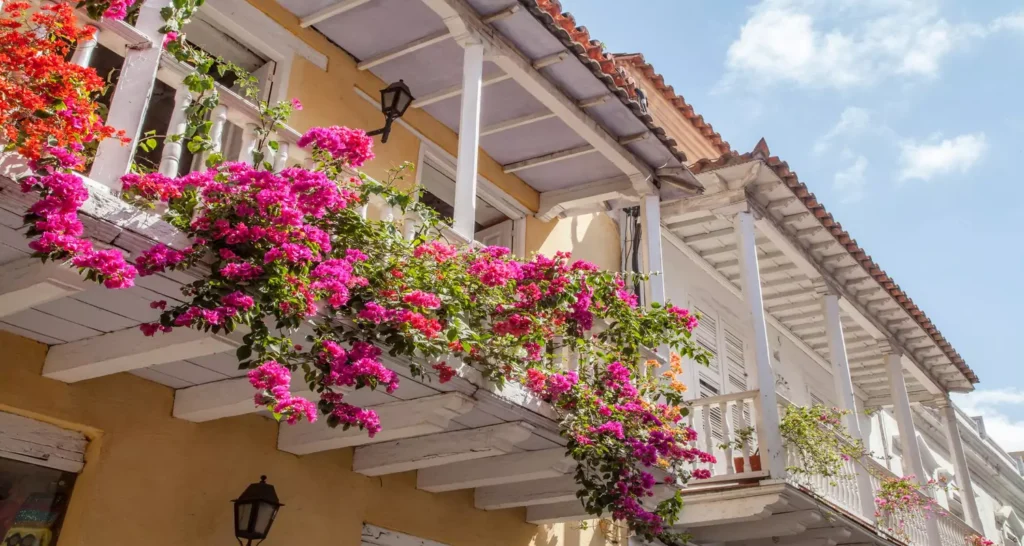
February in Colombia is the driest month on the Caribbean coast, and Cartagena in February operates at its most radiant: the city’s famous evening light falling on the Walled City’s facades in the long horizontals of late afternoon, the rooftop bars filling as the temperature drops from intolerable to merely warm, the Caribbean two blocks beyond the walls at its calmest and clearest. Inland, the coffee haciendas of the Eje Cafetero begin their minor harvest in February, offering travelers the rare opportunity to participate in a living agricultural tradition of genuine historical depth.
Cultural
Cartagena Hay Festival (late January/February) — major international literary gathering in the Walled City
Wildlife
Ciénaga Grande de Santa Marta — largest coastal lagoon in Colombia, extraordinary birdlife
Culinary
Coastal seafood; arepas de huevo; Cartagena’s Alma restaurant; coffee harvest at heritage haciendas
Galapagos Islands
February is the warm season in the Galapagos — the Humboldt Current retreating, water temperatures rising to 80°F, the skies clear and the snorkeling conditions among the finest of the year. Española Island hosts the world’s entire population of waved albatrosses (beginning their return in March, with some birds present in February), and the blue-footed booby courtship dances — those deliberate, earnest foot-lifting performances — continue through the warm months on multiple islands. Sea lion colonies are at their most socially active: pups nursing on beaches, bulls patrolling surf lines, juveniles inviting visitors into the water for what can only be described as play.
Wildlife
Blue-footed booby courtship display; sea lion pups; marine iguanas; Galapagos penguins at the equator
Natural Phenomenon
Warm-season water clarity — sea turtles visible at 20m depth; hammerheads in Darwin’s Arch area
Culinary
Fresh ceviche on the expedition vessel; locally caught tuna; Santa Cruz highland coffee
Bolivia – Uyuni Salt Flats
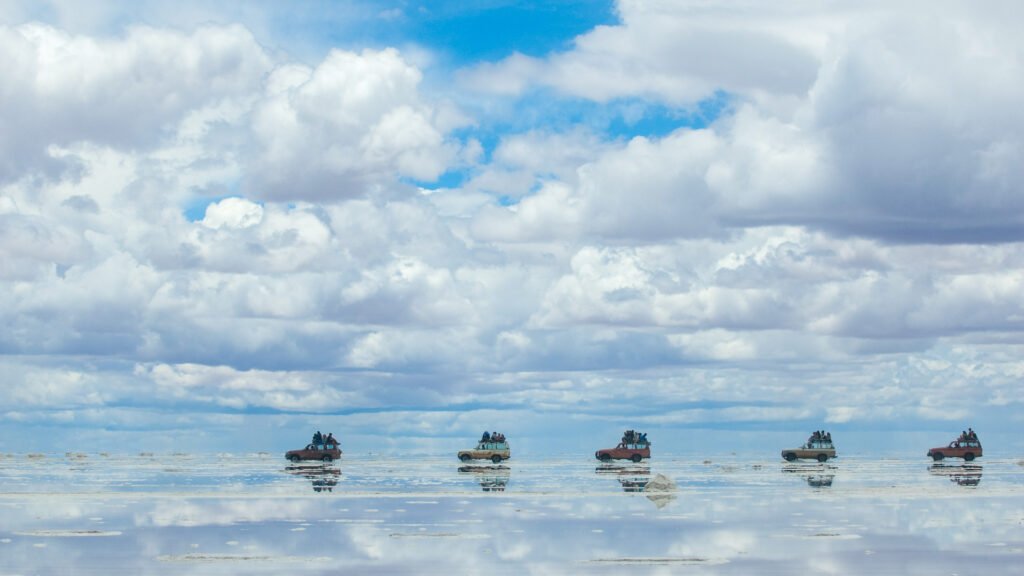
February continues the wet season on the Bolivian altiplano, and the Salar de Uyuni’s mirror effect is at full strength — the shallow lake of rainwater covering the salt flat erasing the horizon in all directions. The overnight journey from San Pedro de Atacama, crossing the altiplano through lagoons of violent color and past geysers and hot springs, is one of South America’s great overland experiences, best done in a small private 4WD convoy with a guide who knows the high passes.
Wildlife
Flamingo breeding colonies at Laguna Colorada; vicuña herds on the altiplano
Natural Phenomenon
Salar de Uyuni sky mirror — at full intensity in February; sunrise on the flooded flat
Culinary
Altiplano lamb; quinoa in every form; api caliente before the dawn geyser walk
Brazil
Rio de Janeiro — Carnival
Carnival in Rio is no mere event; it is the seasonal transformation of an entire city. The Sambadrome parades — floats taller than apartment buildings, samba schools of 3,000 moving in rhythmic unison, costumes representing months of labor and levels of artistry that belong in any serious conversation about performance art — are the televised face of Carnival. But the real Carnival lives in the street blocos: the neighborhood parties that begin in the weeks before Ash Wednesday and turn every hillside, every boulevard, every Ipanema backstreet into an open-air dance floor operating on a logic that overrides normal social coordination entirely. Private boxes at the Sambadrome, rooftop parties in Santa Teresa, and boat access to the bay offer luxury travelers the combination of immersion and perspective that the best travel always provides.
Cultural
Sambadrome parade schools — Beija-Flor, Mangueira, Portela; neighborhood blocos beginning in January
Culinary
Carnival street food: acarajé, coxinha, fresh coconut water; feijoada on Carnival Saturday morning
Natural Phenomenon
Pre-dawn over the Sambadrome — the city in an altered state that happens once a year
Trancoso, Bahia
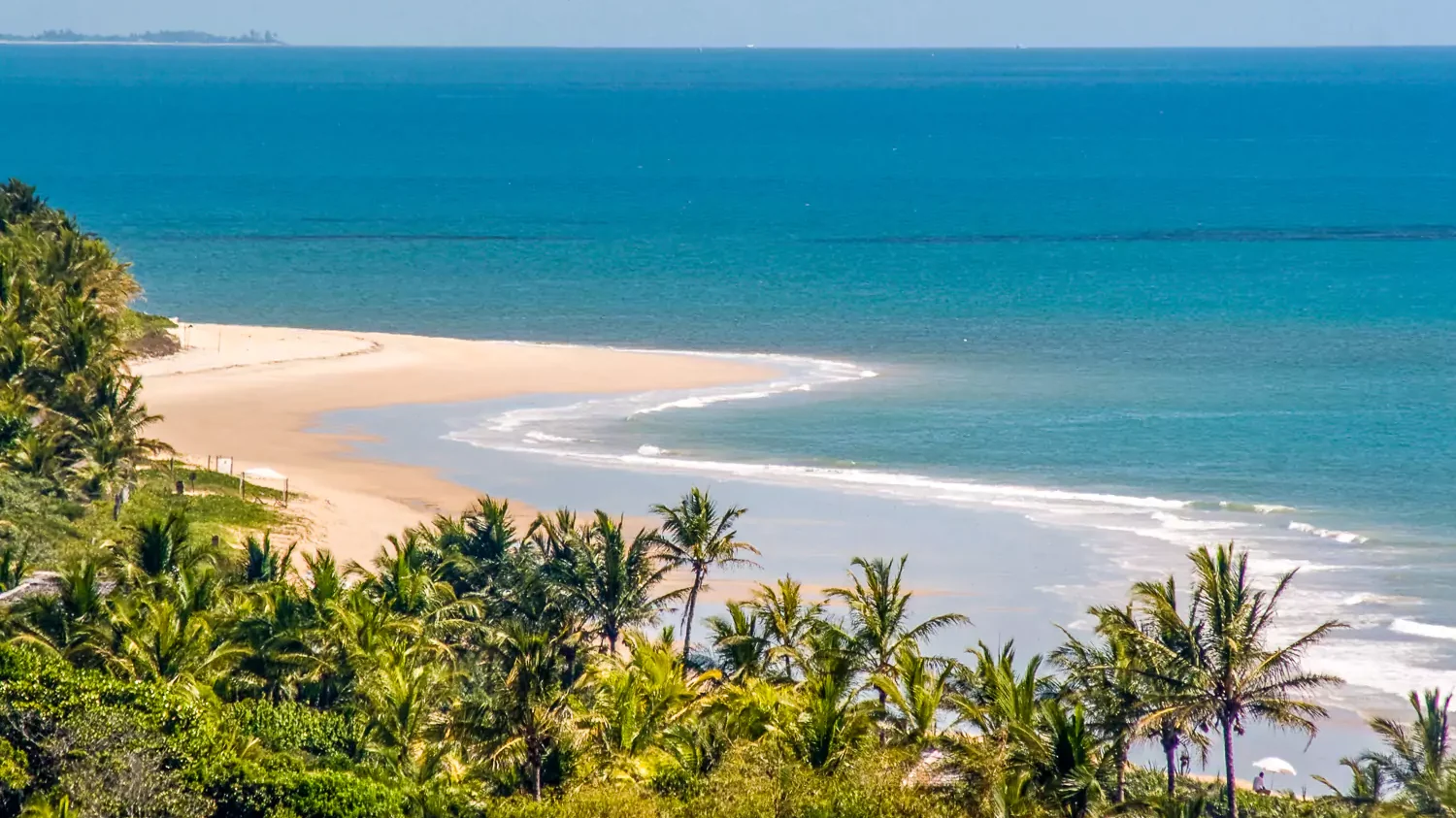
Trancoso in February offers a quieter counterpoint to Rio’s Carnival intensity — the village’s quadrado nearly deserted during the week between celebrations, the beaches of Nativos and do Rio available in a privacy that January’s high season does not permit. The Pataxó indigenous territory to the north is accessible by guided excursion; the cooking in the village’s low-key restaurants turns local ingredients — fresh fish, dendê palm oil, cacao, açaí — into meals of serious pleasure without serious pretension.
Cultural
Pataxó community visits; traditional Bahian Carnival in Salvador (one hour by road)
Natural Phenomenon
Near-empty beaches in the week before Carnival — extraordinary solitude on one of Brazil’s finest coastlines
Culinary
Moqueca with fresh catch; local honey; pure cacao powder at breakfast
The Amazon
February is the high-water season in the Brazilian and Peruvian Amazon, and high water — counterintuitively — is the finest time to explore the flooded forest. The várzea, or seasonally flooded igapó forest, becomes navigable by small canoe, and the wildlife that concentrates at river margins in the dry season disperses into the treetops, visible at eye level from a boat moving through forest that is simultaneously underwater and alive. Pink river dolphins navigate the flooded forest with their sonar. Giant arapaima fish surface periodically in channels too shallow for their bulk. This is one of the least crowded, most extraordinary versions of the Amazon experience.
Wildlife
Pink river dolphins in the flooded forest; giant arapaima; cock-of-the-rock leks; hoatzin colonies
Natural Phenomenon
Várzea flooded forest — canopy navigation by boat through trees 10 meters above the normal waterline
Culinary
Fresh tambaqui fish; jungle fruits — cupuaçu, buriti, bacuri; açaí at source in the Pará tributaries
Chile
Easter Island (Rapa Nui)
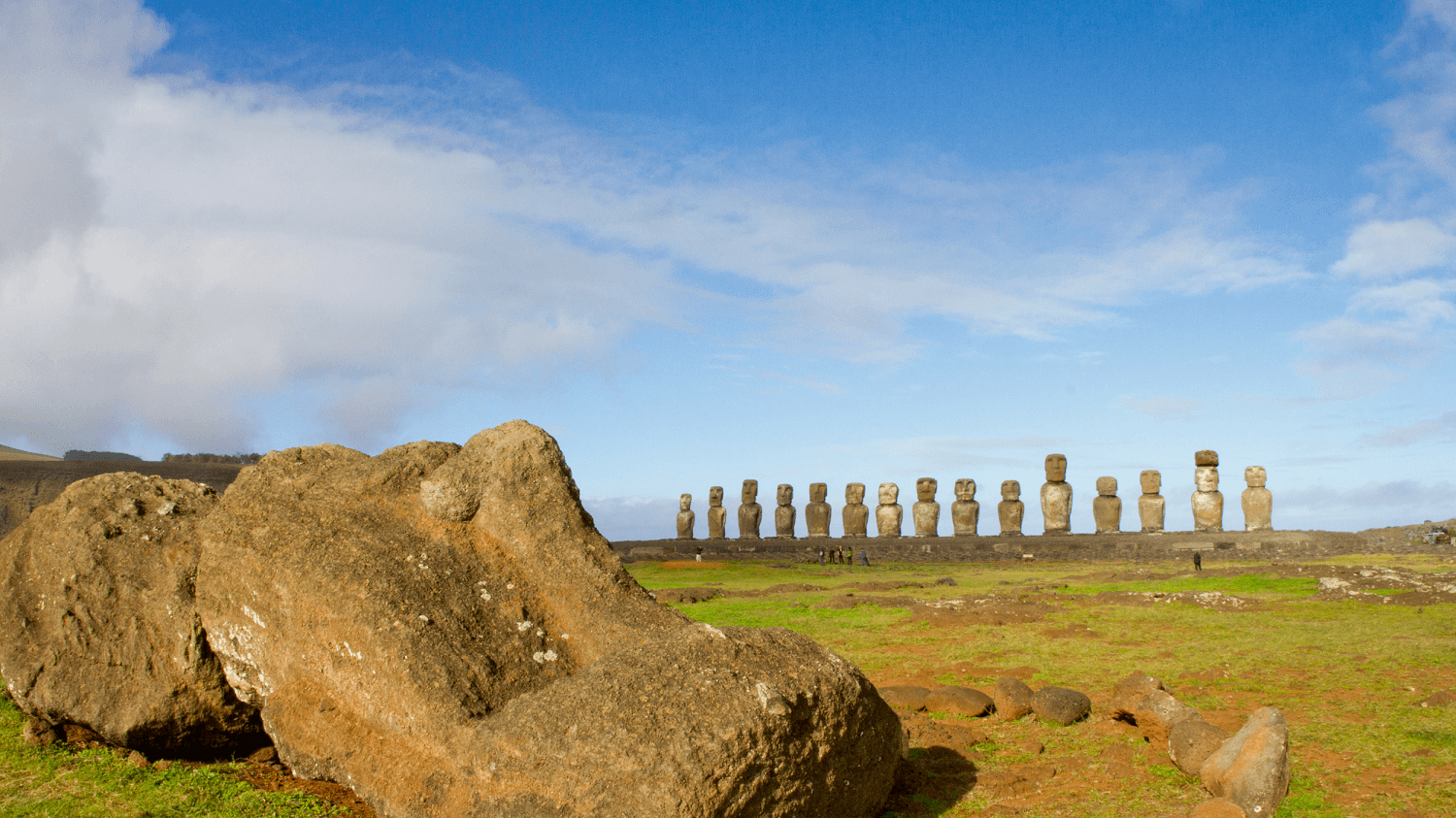
February brings Tapati Rapa Nui to its peak — the festival of traditional Rapa Nui culture that fills the island’s single town of Hanga Roa with music, dance, athletic competitions, and a living demonstration of a culture that has survived isolation, colonization, and the loss of most of its population with a remarkable persistence. The moai platforms of Ahu Akivi, Ahu Nau Nau at Anakena beach, and the great line at Ahu Tongariki are best visited at dawn and dusk, when the crowds are minimal and the light is doing something to the stone that no photograph fully captures.
Cultural
Tapati Rapa Nui festival peak (Feb) — body painting, canoe racing, traditional horse competition
Natural Phenomenon
Anakena beach — the island’s only white sand beach, framed by coconut palms and moai
Culinary
Umu Pae traditional earth oven cooking; fresh Pacific tuna with Polynesian preparations
Atacama Desert
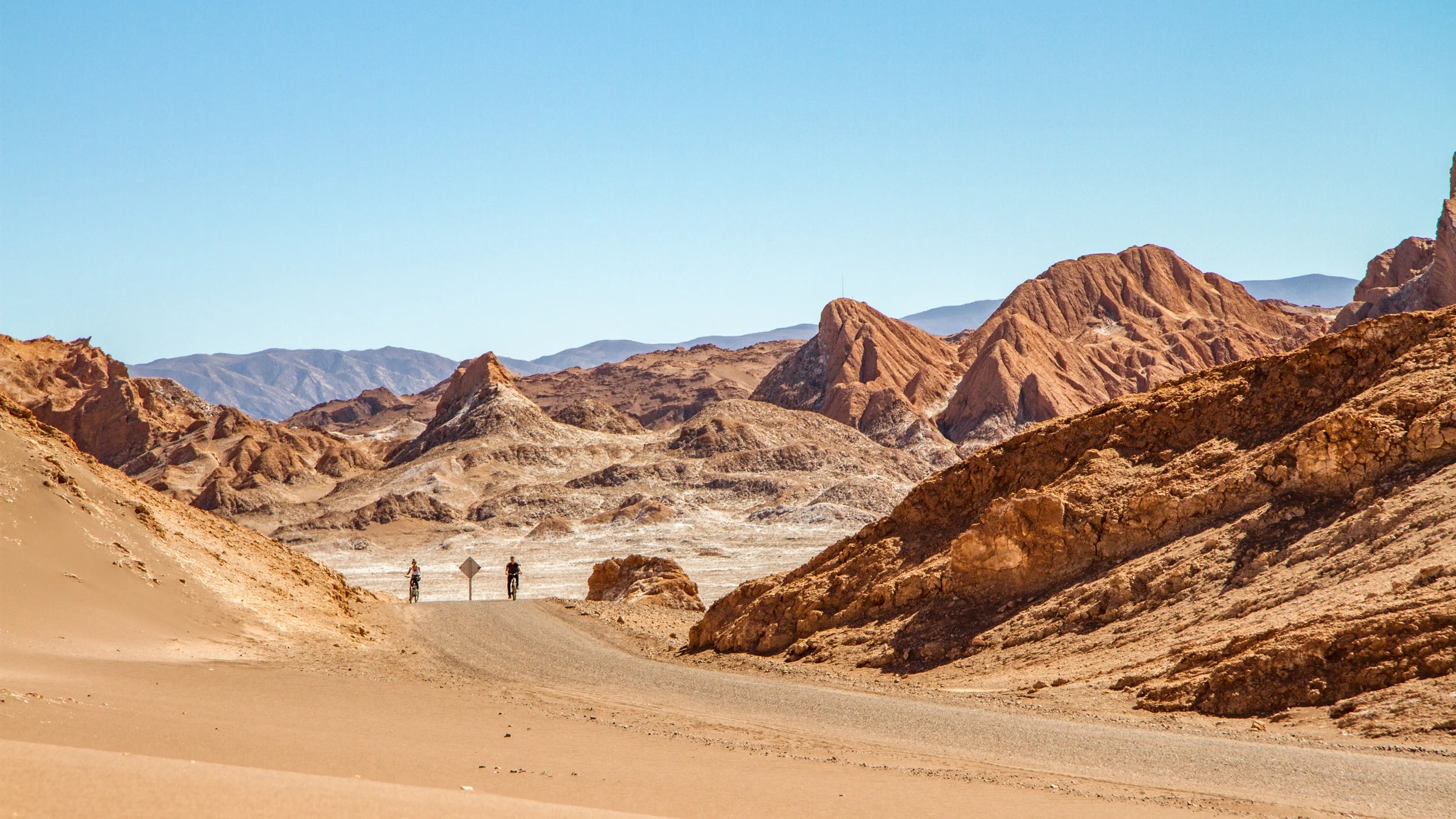
February in the Atacama is the tail of the altiplano rainy season — the occasional Bolivian thunderstorm on the eastern highlands sometimes driving the phenomenon locals call ‘desert bloom’: wildflowers appearing in the valleys below the salt flats in a spectacle that happens perhaps once a decade with full intensity and every few years with partial effect. The Valle de la Luna glows amber at dusk. El Tatio continues its 4:30 AM dawn performance above 4,500 meters. The pisco sours at the San Pedro hotel terraces improve as the temperature rises.
Wildlife
Atacama flamingos; vicuña herds at high altitudes; Andean fox near the town at dusk
Natural Phenomenon
Desert bloom (infrequent but extraordinary when it occurs); Atacama altiplano thunderstorms clearing to sunset
Culinary
Pisco sour with locally grown elqui pisco; altiplano lamb chops; chupe de camarones
Chile’s Wine Country
February is harvest season in Chile’s wine valleys — the most active and celebratory time in the vineyards, when grapes are picked at dawn to preserve aromatics and the bodegas operate around the clock in a controlled frenzy of pressing, fermenting, and tasting. Luxury estate stays during harvest offer access to this process at a level of intimacy that organized tours cannot approximate: working alongside pickers at first light, followed by a late-morning tasting in the barrel room with the winemaker, followed by an afternoon that belongs to the valley and the vines.
Culinary
Harvest-season winemaker lunches; Carmenere and Syrah from Colchagua; Pinot Noir from Casablanca Valley
Cultural
Family estates with century-old wine traditions; harvest festivals in Curicó
Natural Phenomenon
Harvest dawn — picking in the Andes foothills before the temperature rises, the peaks pink behind the vines
Argentina
Mendoza
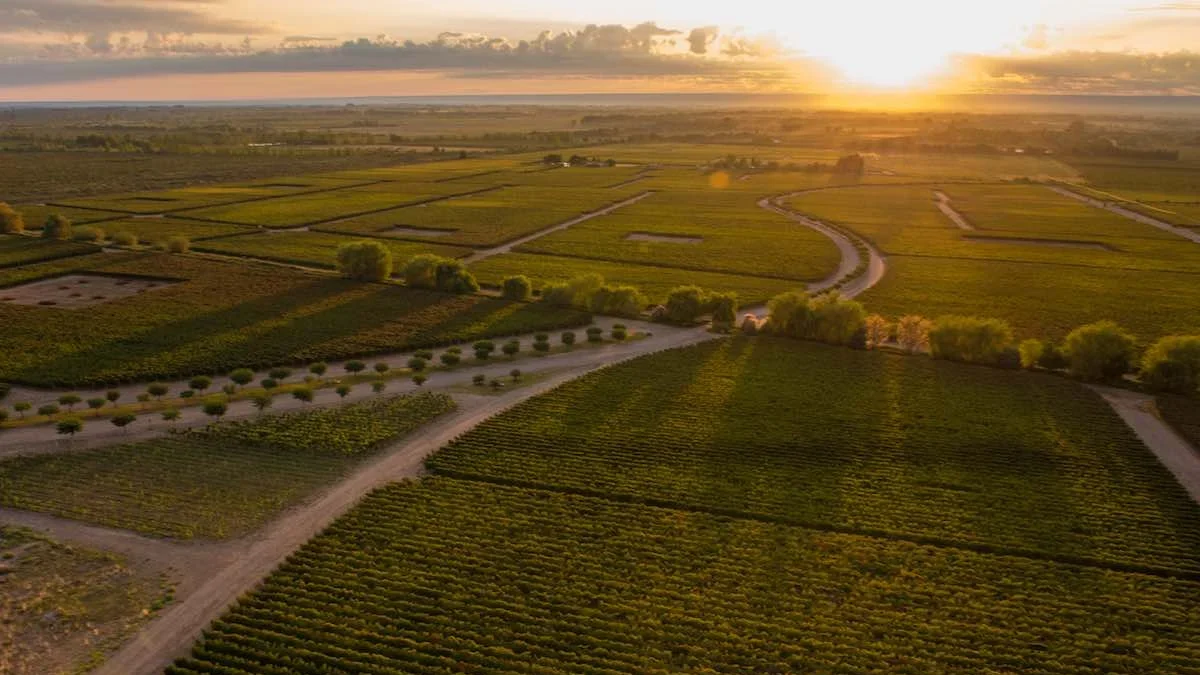
February is harvest in Mendoza — the Vendimia festival celebrations in early March are preceded by harvest activities that begin in February at the higher-altitude vineyards, and the Valle de Uco’s Malbec grapes are picked with a precision reflecting thirty years of premium winemaking ambition. The wine estates of Zuccardi, Achaval Ferrer, and Catena offer harvest-season programming that goes well beyond the standard cellar tour, including multi-day stays at on-estate lodges with access to vineyards, cellars, and winemakers in their natural habitat.
Culinary
Harvest Malbec; empanadas mendocinas; Francis Mallmann open-fire dinners at Siete Fuegos; olive oil tasting
Cultural
Vendimia harvest festival preparations; Huarpe indigenous history in the pre-Inca irrigation systems
Natural Phenomenon
Andes views from 1,500m Valle de Uco altitude vineyards — Aconcagua visible on clear days
Northern Patagonia
February’s long Patagonian days allow full-day hikes in Nahuel Huapi and Villarrica national parks, fishing on rivers too numerous to exhaust in a single visit, and kayaking on lakes whose glacial-flour blue refuses to look real in photographs and only confirms its reality in person. The chocolate shops and craft breweries of Bariloche provide an improbable domestic pleasure in the middle of a vast landscape, and boutique hotels welcome travelers to private lakeside retreats.
Natural Phenomenon
February light on Nahuel Huapi — the long Patagonian afternoons turning the lake copper at 9 P
Culinary
Smoked Patagonian trout; wild boar asado; artisan chocolate in Bariloche; craft cerveza artesanal
Wildlife
Huemul (endangered Andean deer); pudu in the Valdivian rainforest; Andean condor
Southern Patagonia — El Calafate and El Chaltén
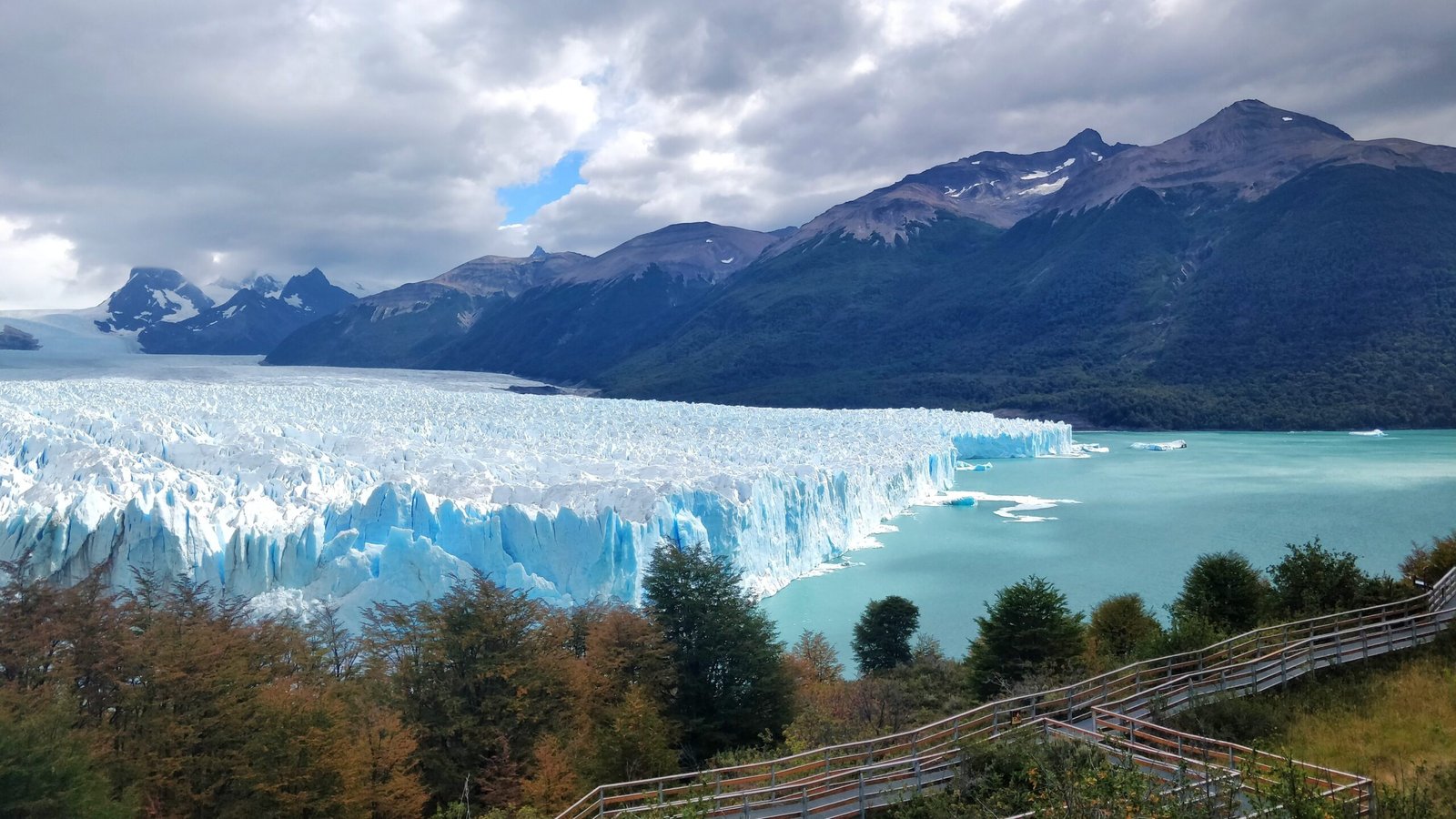
February’s winds in Patagonia are legendary — the westerlies arriving from the Pacific, bending the lenga beech trees into horizontal forms that have become the visual shorthand for Patagonian exposure. But the winds clear the sky with equal frequency. Glaciers and granite towers appear in that particular sharp-edged clarity that makes every photograph look retouched, and every in-person experience feel insufficient for the scale of what is in front of you. February is the driest month in the region.
Wildlife
Puma family groups most reliably seen February–April; guanaco herds on the pampas
Natural Phenomenon
February clear-sky probability is the highest of any month in this part of Argentina; pampas wildflowers in bloom
Culinary
King crab and lamb; local garden vegetables and herbs
Antarctica
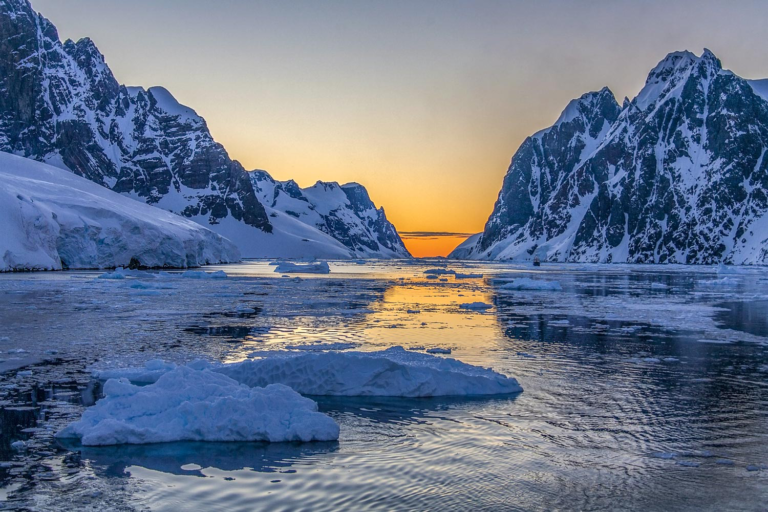
February represents the zenith of the Antarctic expedition season — the sea ice at its annual minimum, the Peninsula accessible to its southernmost points, the penguin colonies at their most dense and active. Chinstrap penguin chicks are large enough to form crèches; gentoo chicks are losing their gray down; and the parents of both species are making their final intensive feeding runs before the season ends. Humpback whales, feeding on the krill aggregations that the melting sea ice concentrates, are visible from ship and Zodiac in numbers that continue to surprise even experienced expedition naturalists.
Wildlife
Penguin chick crèches; humpback and fin whales at krill aggregations; leopard seals hunting
Natural Phenomenon
February ice minimum — furthest-south ship access of the season; the midnight sun at full intensity
Culinary
South Georgia option: Shackleton’s grave at Grytviken; king penguin colonies of 500,000 birds
Why Book in Advance
February is Antarctica’s single most competitive month for expedition berths — the finest small ships and suite categories book out eighteen months or more in advance. Rio Carnival accommodation at any level of quality requires a full year’s advance reservation; the best private Sambadrome boxes are allocated by personal relationship, not open sale. Fernando de Noronha’s daily visitor cap means January and February bookings must be made the previous year. Easter Island during Tapati fills its limited accommodation inventory within days of availability opening. Patagonia’s peak-season lodges operate at capacity through March, with February the most subscribed month. Book with intention.
READY TO PLAN YOUR JOURNEY?
Our LANDED travel designers craft bespoke itineraries for discerning couples, families, and multi-generational groups — blending deep regional knowledge with privileged access to the places, people, and experiences that define each destination.