Podcast: Play in new window | Download
Subscribe: Apple Podcasts | Spotify | TuneIn
LANDED Podcast 001
Petit Miribel
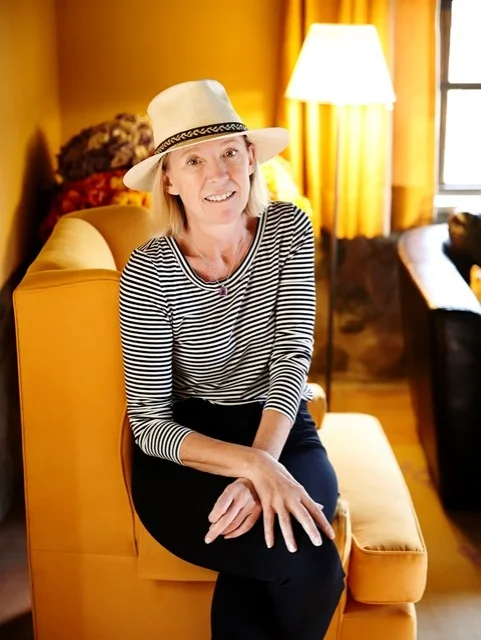
Marie Helene (know as “Petit”) Miribel and her husband Franz Schilter are the creators of Sol y Luna, a Relais & Chateaux boutique hotel located in the town of Urubamba, Peru. Petit was born in France.
She studied economics, and then came to Peru for her work in the mining industry. There she met Franz, and began exploring the Andes.
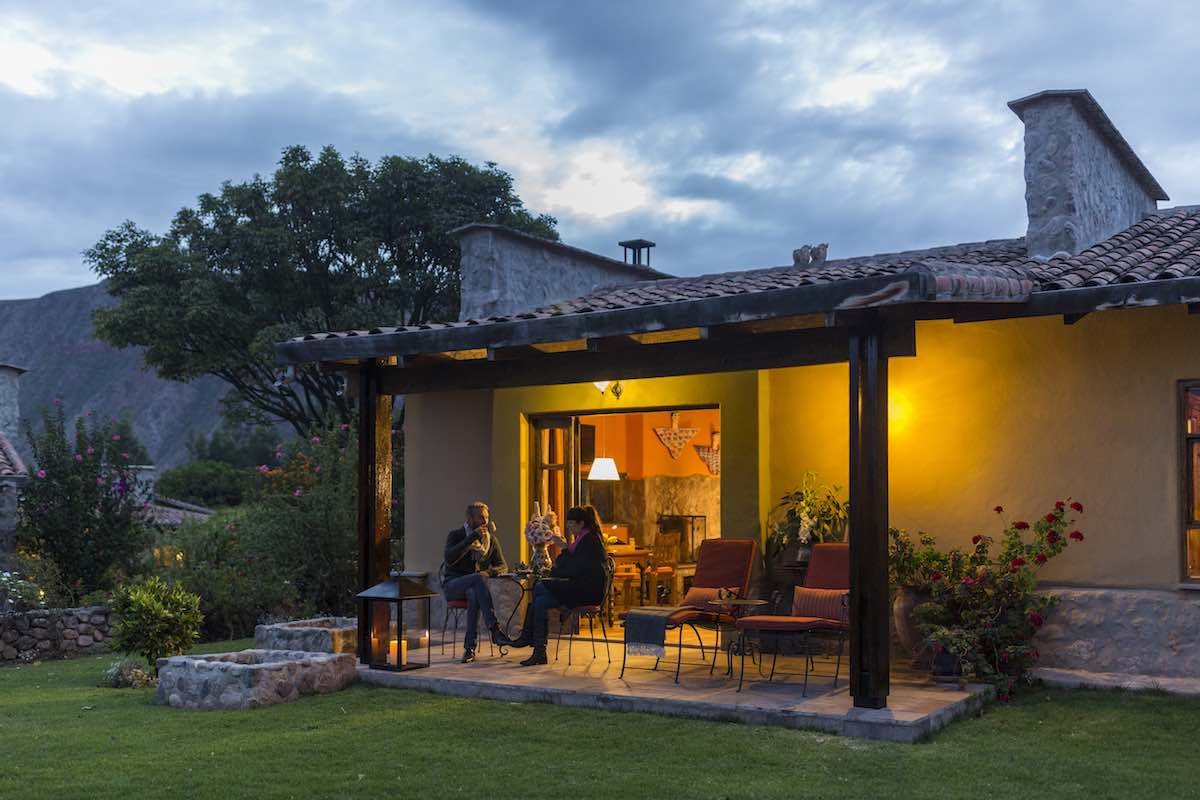
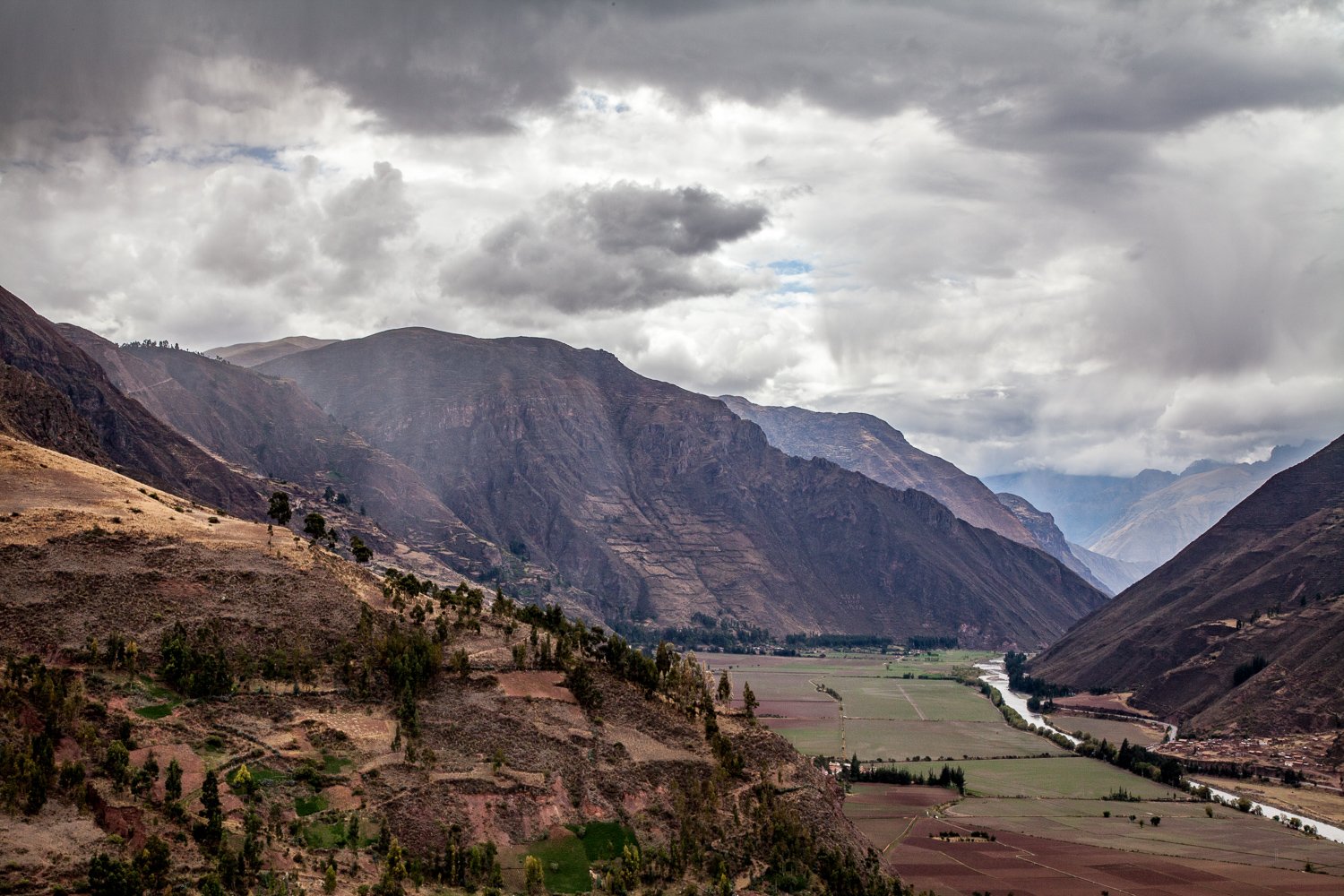
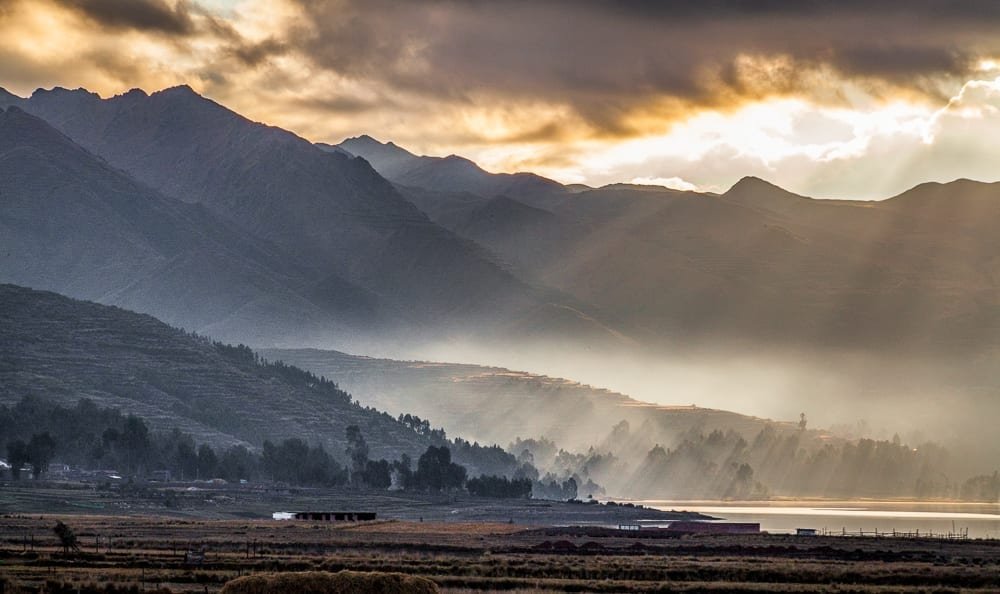
The Sacred Valley, between Cusco and Machu Picchu, seemed like the ideal spot for a hotel; the region was close to two major tourism centers, rich in natural beauty, and surrounded by active adventure opportunities.
In the early 2000’s Sol y Luna began operating as a cluster of cottages surrounded by gardens. In 2002, they added stables and a ranch.
The following year they completed 14 new casitas. The spa opened in 2007, Wayra Ranch was completed in 2009, and the Deluxe and Premium casitas were added in 2010. Additional improvements (such as the heated outdoor pool) were completed in 2016.
Early on, they identified the need for quality primary education for the community’s children. The hotel became a means of supporting a school, which opened in 2010.
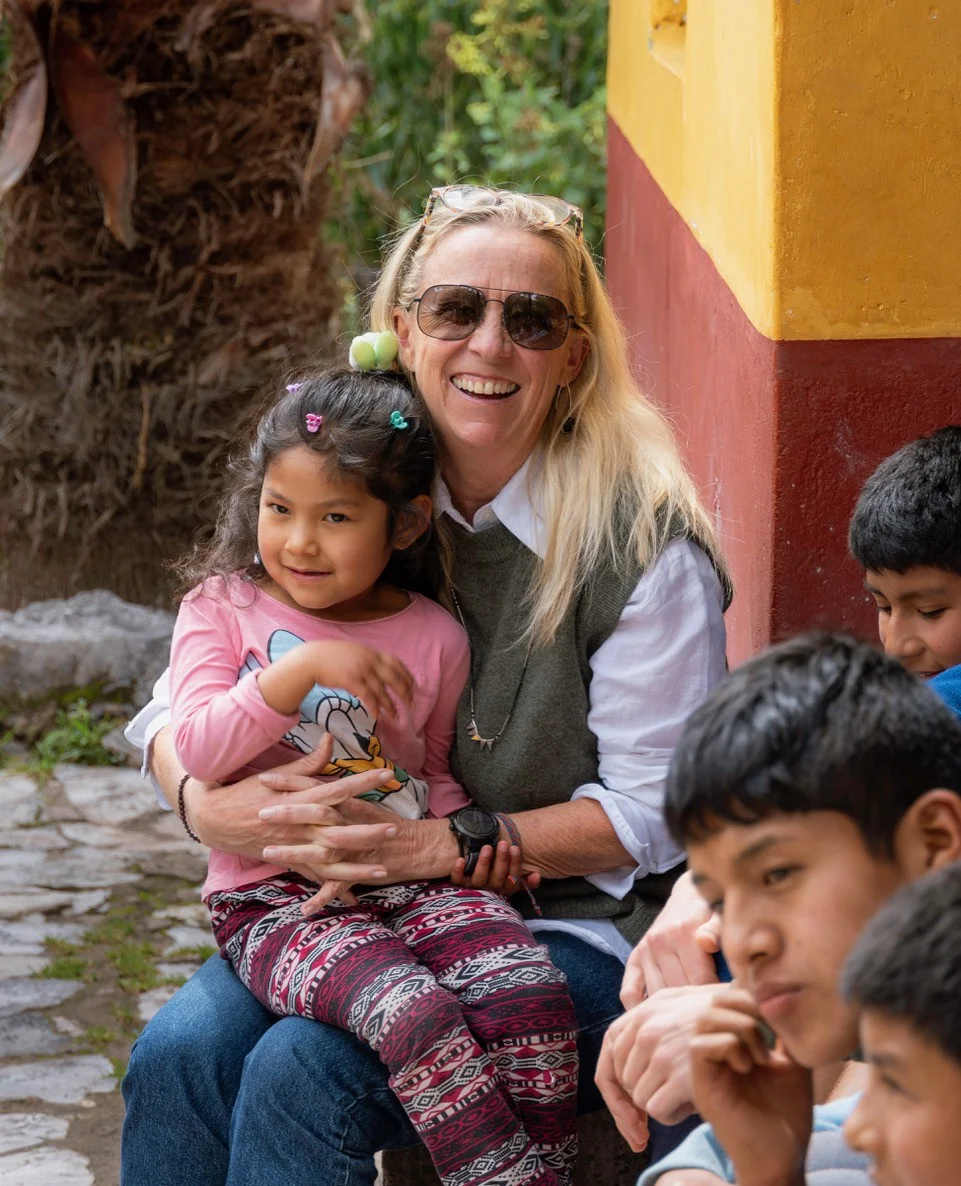
Today, Sol y Luna Intercultural School educates more than 200 children through a scholarship system. The school also provides housing, emotional support, meals, transportation, and special education.

Show Notes
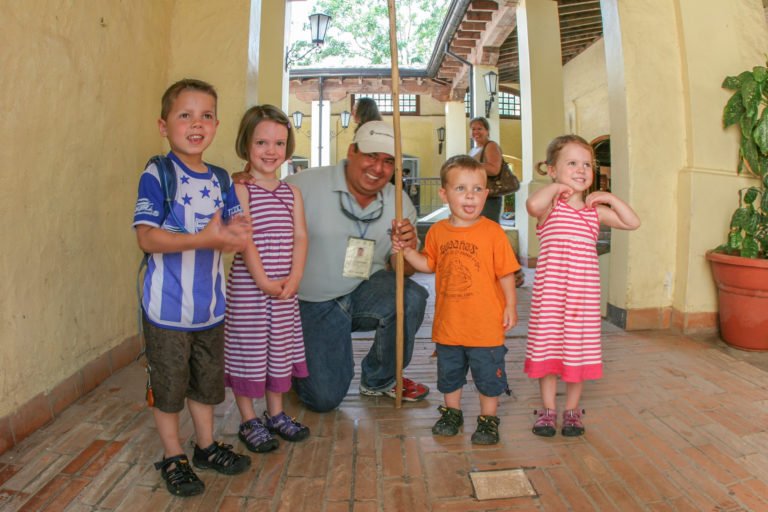
Sol y Luna has a special place in our hearts. LANDED sponsors two children at the school, and our own children spent a summer enrolled as students.
If you’d like to make a donation or learn more about sponsorships, please visit the sponsorship page or contact LANDED for additional details.
Rather read than listen?
Find the transcript below
Petit Miribel, we are here at Sol y Luna in Urubamba, Sacred Valley of Peru, and it’s a pleasure to be with you. You’re of course very special to us, to our family, and I wanted to welcome you to the podcast.
Petit: Thank you. Happy to be with you.
Can you tell us about the origins of Sol y Luna, how you came here, and what need you saw?
Petit: Well, we came here about 22 years ago, so it’s been a long time now. And I guess we really followed our path. No, we always had that need to work for other people or to feel that we needed to share our life. So at some point in our life, we just took the decision to change our life, you know, and to come to a place where we could be useful to other people. That’s how we came here.
You and Franz… you met in Lima, if I understand right.
Petit: Yes, we met in Lima.
And you were both competitive parasailors, paragliders.
Petit: Well, Franz was a competitive paraglider. I was just a weekend one.
And when you came to Urubamba, how did you identify this property?
Petit: Well, when we came to Urubamba, the Sacred Valley was not at all a tourist destination. Tourism was just recovering or was just starting, you know, after the complicated years of Peru with terrorism. So there was very little tourism, and the tourism would be Cusco and Machu Picchu. There was no hotel in the Sacred Valley at all. And we came to that valley, and it was just an amazing valley, and it surprised us that nobody would come here. We felt, “Wow, you know, this is…” I don’t mean much nicer than Cusco, but this is life, this is nature, this is the mountains, you know. This is what you want when you want to escape from your own life.
So, first, actually, we started to get involved with the local community, with the local school. We realized that there was so much work to be done in education that it would take our lives—hopefully it’ll be a very long one, but it would also require us to invest in education to make it a real project, you know. So that’s when we decided to create something. Franz is an architect, so we said, “There’s no way that in such a beautiful place there is no tourism, you know.” So that’s how we decided to create the hotel.
And that year… that was when? 1990?
Petit: I don’t really remember. I would say ’98, ’99. The hotel opened in 2000.
Yeah, I mean, the terrorism problems in Peru were radical socialist—that was Túpac Amaru—and you had violent Marxist, which was more Sendero Luminoso. And that stuff sort of got under control in the late ’80s or early ’90s, would you say?
Petit: I would say that it got completely under control in the early ’90s. But then it takes time, you know, to recover from that.
So Peru now is a comfortable place to be, a place where we’ve sent many, many travelers, a place where we’ve lived with our family, and not a place where we’re concerned about anything like that. But people like you have helped to change the situation for people more permanently, more so than what the government did. You know, you’ve invested so much of your time and your resources in creating something that not just provides jobs, but provides education and a long-term leg up for the people in the valley. The hotel sponsors a school. Can you tell us about the colegio(school)?
Petit: Yes, of course. Well, the purpose of Sol y Luna has always been to educate local children. From day one, about 9 or 10 years ago now, we decided to create our own school, and it was actually the result of working about 10 to 15 years before that with other schools. And the result, I guess, of being frustrated, you know, of really wanting to do work that would have results and give opportunity to those children. And then we decided that it would be much better if we created a school for those local children, but also to create a school that would be open to any children. We are against any form of segregation. We do think, and we do believe very strongly, that it doesn’t matter where you were born, what the color of your skin is, you know, we all have the same right, and it should start from education. Because if it doesn’t start from day one when you’re on earth and how you’re being educated, then definitely it would not work, you know. So the school is open to everybody. Of course, the reality is that I would say 99% of our children are being financed by the foundation—by the hotel and by people that help us, you know—but that’s how it works.
Let’s talk about the resources that fund the foundation. This hotel—how many rooms do you have?
Petit: We have 43 casitas.
This is the finest hotel in the Sacred Valley, in my opinion, in terms of spirit, comfort, service, food, and just the feeling of the place. It’s, I think, unmatched. The hotel takes a lot of time and energy to keep going, but somehow you also manage to run the school. Let’s talk about how much of the foundation is financed by the hotel and how much is financed by contributions from guests or from other funding sources.
Petit: Okay. Well, Sol y Luna is still, as of today, the primary sponsor of the foundation, but it’s something that we want to change. It’s something that we’ve been trying to convince people in the tourism industry to get on board with us, you know. I think when we work in tourism in Peru, we all, in a way, sell a little part of Peru, you know. So, I think we should all contribute to a project like that. So, little by little, we met friends, you know, we met the right people, and those people are now on board with us, helping us finance the foundation. We have now to try to convince more people. It’s not safe that the foundation is too dependent on the hotel, you know. So we have now to work… we want to create a board at Sol y Luna, we want to convince people to be with me. Today, the foundation is just Petit, so if anything were to happen to me today—I cross the street, and I have an accident—then I have 250 children that depend on me, you know. So I guess I have to take more responsible decisions now for the project.
But you also have two of your own kids to take care of, and a husband, and some dogs, and a bunch of horses, and a whole bunch of employees. How many employees do you have here?
Petit: We have 115 employees on the property and 42 at the foundation.
This is a huge difference maker in the valley. I know somebody that would serve on your board probably if you asked her.
Petit: I’ve been thinking about…
She’s got some talent in that category, we all know. So when guests stay, they have an opportunity to donate. There are Christmas ornaments at the checkout that sponsor a specific child. That’s beautiful—that’s almost like an impulse purchase. There’s information in the rooms, and you’re adding iPads that will teach people about the foundation. I would love it if there was a way to, on that iPad, make a point-of-purchase contribution right then and there: “add it to my bill, this much for this child.” That would be fantastic.
We also have a lot of guests who say, “Oh, I’d love to visit that school.” Visits to the school, though, are a little complicated. I mean, the kids are there, they’re learning, and we can’t keep interrupting them with visits. Are visits permissible sometimes? How does it work?
Petit: Yes, of course. When we started, we actually didn’t want to have visits at the school. I think we were very protective of the school and, you know, it’s a real project. It’s life, you know. So, it has to be done in the most serious way possible. When we began, as I said, we didn’t want anybody to come to the school, but we changed our mind throughout the years for different reasons. First, because I think what we do is amazing, but what the children do every day at school is amazing, and we have to share it with the world. We have to show people that, yes, we can all be educated together, so we have to open our doors. And second, we need friends. We need more friends because we need to grow, and we need people to help us, and that’s why we also needed to open the doors. So we found a way of doing it in a nice way, in a respectful way to the children. We did explain to them, you know, and we always explain to them again, why we have people visiting the school, so they know exactly what our reality is and why we do that. So I think it’s important. We developed some programs where guests can spend half a day or a full day at the foundation. They have a guide from the foundation receiving them at the front desk of Sol y Luna, if they are guests of the hotel, walking them to the school, explaining the story of the foundation, and then they have a program of what they will be doing during the morning or during the full day. So it’s not interrupting the class, you know—they will be part of the class, you know. So we developed those programs so it works in a much nicer way.
It’s not just poverty and lack of support at home -you know- financial support, education, no one to really help do homework with the kids in many cases. I mean, parents are working very hard on their own. Sometimes there are issues of physical abuse, alcohol abuse. You deal with the challenges of educating kids who are quadriplegic. Can you tell us a little bit more about that? You’re in a rural setting; it’s not so easy.
Petit: Yeah. Well, regarding, of course, the families that we work with, we have some families that do not even speak Spanish, you know. They are just Quechua-speaking; most of them come from the countryside. So they did not really receive any education. Of course, they will not be able to help their children do their homework. So, the way we work at school, at the foundation, is that they even do homework with us. Let’s say that at 3:00, class is finished for the day. They will stay on for an additional hour and do their homework with us, because we know that once they go back home, they are not going to receive the help they might get in our own houses, you know.
And it’s true that about three years ago, we met a little girl named Marina, and that is actually how it all started. She is an amazing little girl. She is now 14 years old, and she is multiply disabled. She came to school with a little sister who was three years old at the time, and it was requested that we take the little sister in. So we took Naida on, and then, you know, there was Marina next to Naida. We said, “Gosh, there’s no way that we have food, that we have heart, that we have capacity, and that we cannot do anything for Marina.” So that’s when we decided to open our hearts and our doors now to children and young adults with disabilities. You know, it was an amazing challenge. It is a challenge because it’s different needs, different financing. It’s physical therapy, speech therapy… It’s a whole different world, but it’s amazing, you know. We have those children now with us. It’s giving them life, you know. They have a place to go every day; they are not lying at home abandoned; they are with us…
…and have purpose, yeah, and a future and hope.
People can find out more about the foundation online.
I’m completely open to them just sending me an email. We can talk via Skype, WhatsApp, whatever, to explain to them what we do. A lot of people, you know, they will assume that we’re just another foundation. Well, I hope there will be many other foundations like Sol y Luna because there is a need for that, but I would like people to understand that, you know, it does work. We see change in our children every day. We know that the work we are doing is giving them a different life, a different purpose tomorrow. And, of course, we need you to help us.
We sometimes think that the money we provide doesn’t really matter, or that funding a child’s education is so expensive and long-term that maybe we’d be more efficient if we spent $40 per child curing river blindness or something else. I’ve got a lot of friends who look at it like that, in terms of efficiency analysis: “I can change this many lives for this many dollars.” That’s well and good, and I’m glad that they’re doing that work. But somebody’s got to do the really heavy, long-term lifting with kids like this, or we’ll never get to a place where Peru’s culture, Peru’s resources are protected, and Peru’s children have the kind of hope that you’re giving them. Can you tell us a little bit about what you see in the giving? I mean, sometimes there’s a funny relationship between money and people.
Petit: Well, definitely fundraising is the greatest challenge I have found in my life. I can work 24 hours a day, or I can invent more hours to work and to do what I need to do for my guests at the hotel, for the children at the foundation, but fundraising is very complicated. I think the world we created has developed in us human beings a very strange relation with money. We think we always need more. We fear that we will not have enough, you know, or we think that we need that new pair of shoes, or that new car, or that new whatever, you know. We have created fake needs in our lives, you know. So, therefore, when someone asks you to give money to educate poor children, or for health reasons, or for whatever, you know, they think they don’t want to. They are attached to money; people now have an emotional relationship with their money, you know. They don’t want to separate from it, and I think they don’t understand. And they always think, “No, myself, I cannot help because I don’t have that much money.” So they always think there is someone who has more money who will do it. It’s like when you do a crowdfunding campaign, you know—and I do it a couple of times a year—and you send it to so many people, and they all say, “Great, great, great,” but nobody pushes the donate button. And they say, “Great, great, great,” and I always say, you know, for each person who tells me, “Oh Petit, you’re so great, what you do is amazing,” or all those people I take to the school who give me a kiss, if I got $1 per kiss I receive, I would have built 10 schools already, you know. So it’s a matter of sometimes $1 per person, not a thousand or thousands. You know, if we would all really get together, our world would be a better place.
It’s kind of funny that the Indian flute is playing “Imagine” right now, but that’s pretty funny. So…
Petit: Well, nothing is a coincidence.
Nothing is a coincidence. So, if people want to get in touch with you, they can write to us at Landed, and we’ll put you in touch by email. You’ve just won a couple of awards. I know Relais & Châteaux—you’re part of the Relais & Châteaux family of hotels and restaurants—they just awarded you… What’s the name of the prize? Do you remember?
Petit: Well, I remember, but I don’t know if I can pronounce it. It’s the environmental award for the foundation, so we are very proud, you know. It’s like acknowledging the work that we are doing, and I’m super proud. When I came back from Madrid, where I received the prize, the first thing was to go to the school to share it with the children, because that’s them—that’s not me, that’s not Franz—it’s really the children. And in those children, it’s also my own children. You know, Thomas and Melanie have gone to the school since they were born. With those children, they made a lot of sacrifices, because I always say that I belong to the children of the foundation. Meaning that every time I come back from a business trip, the first thing I do is stop at the school. And there are all those running kids who come to me and kiss me, and I have that image of my daughter at the back looking at me like, “And me?” Well, she now knows today that, of course, she is in my heart, but it’s been difficult for them to learn to share their mom. But now they are 14 and 15. Not only do they understand it, but they are also completely part of the foundation, and I hope that tomorrow they will repeat that in their lives somewhere in the world.**
I hope so, too. Can you tell us some of the success stories for children who’ve been there and maybe have graduated now?
Petit: Well, we had the first graduating class out last year. For us, you know, a success is not necessarily a child that is going to go to university. It did happen—we have three children that entered university. But I would say the results are daily results. A child who had no self-esteem, you know, who would walk into school not even looking into your eyes, who would fear going to the toilet, who would not even be able to walk, and today is a child who comes running and smiling into school—that’s a result, you know. So the results are… not very little, but they’re not necessarily academic, you know. We have daily results. A child who today is happy, a child who recovered from all the baggage of suffering and abuse they had, and now has a life, you know, that’s a result. So I know that maybe the modern world always thinks that going to university and getting a degree is a result, you know. I think being happy, being strong enough in yourself with good self-esteem so that you know how to walk in life, is what we want for our children, and it’s also what I want for my own children. You know, I don’t necessarily want them to go to the best university or whatever. I want them to find their own path and to trust that their path is the right one.
Honored to be with you. There aren’t a whole lot of people that make me want to cry, but you’re one of them. We seem to always have a lot of fun together. Maybe it’s just that you’re such a great person. We’ve been with Thomas in Quito, we’ve been to the beach in Colombia with our families together, and had some fun times in Buenos Aires. It’s an honor to be here with you, and I hope that Landed can grow in its support of the foundation in the future. Thank you so much for your time and for your hospitality.