April is a month of arrival — the Peruvian dry season beginning its long, clear run toward October; the Central American seasonal rains still weeks away; Patagonia in full autumn color, the lenga beech forests gold against granite towers. The crowds have not yet arrived. The summer visitors of January and February have gone home. April belongs to the traveler who plans ahead and trusts their instincts.
Central America
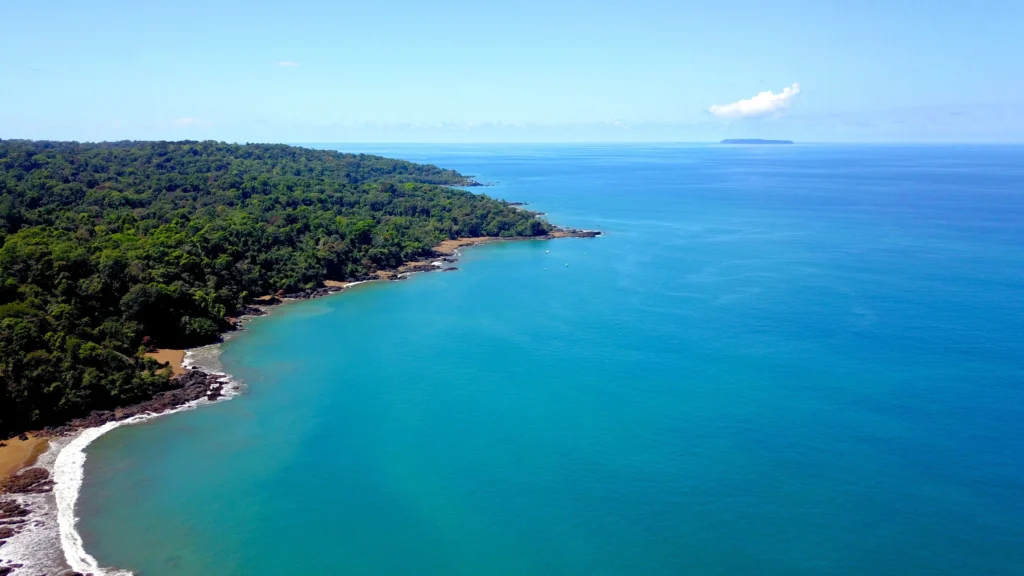
Osa Peninsula, Costa Rica
April is the final dry-season month on the Osa, the forest at its most penetrable, the rivers at their lowest and clearest, and the inshore fishing in the Golfo Dulce reaching peak season for roosterfish and cubera snapper. The Corcovado trails are dry, the bird sightings exceptional — the scarlet macaws that nested in February and March now flying in family groups, the harpy eagle occasionally reported above the primary forest canopy, the tinamous calling from deep in the undergrowth. Small-group lodges fill April quickly as travelers discover the window before May’s rains.
Wildlife
Post-nesting scarlet macaw family groups; harpy eagle; four sea turtle species on the beaches
Natural Phenomenon
April heat-shimmer on the Golfo Dulce — the bay at its warmest and most languid
Culinary
Catch-and-cook fishing; fresh hearts of palm; Tico home cooking at luxury lodges in private reserves
Monteverde, Costa Rica
April in Monteverde is the heart of the resplendent quetzal’s nesting season, and the cloud forest’s wild avocado trees are being visited with focused, almost proprietary intensity by birds that have come to be synonymous with the meaning of iridescence. The suspension bridges of the Monteverde Biological Reserve offer canopy access through a forest whose epiphyte load — bromeliads, orchids, mosses — makes every branch look like a miniature ecosystem. Families find Monteverde’s combination of accessible wildlife and educational infrastructure one of the most transformative experiences available in Central America.
Wildlife
Resplendent quetzal at peak nesting activity; three-wattled bellbird; emerald toucanet
Natural Phenomenon
Cloud forest in the dry season — the mist at its most photogenic, arriving mid-morning and lifting by afternoon
Culinary
Local blackberry wine; cloud forest honey
Guatemala
Semana Santa in Antigua is the reason April earns its place among the great travel months in the Americas. The alfombra carpets — those intricate creations of colored sawdust, flowers, pine needles, and fruit laid in the streets on the night before each procession and destroyed by the passage of the floats — are made by families who have been doing this work for generations. The processional floats themselves, carried on the shoulders of hundreds of cucuruchos in purple robes, are among the most powerful spectacles of devotional culture in the Western world.
Cultural
Semana Santa alfombras and processions — the most celebrated Holy Week in Latin America; book Antigua accommodation 12+ months ahead
Natural Phenomenon
Fuego and Acatenango volcanic activity as a backdrop to Easter processions
Culinary
Semana Santa bacalao estofado; traditional Guatemalan tamales; local Antigua coffee
Nicaragua
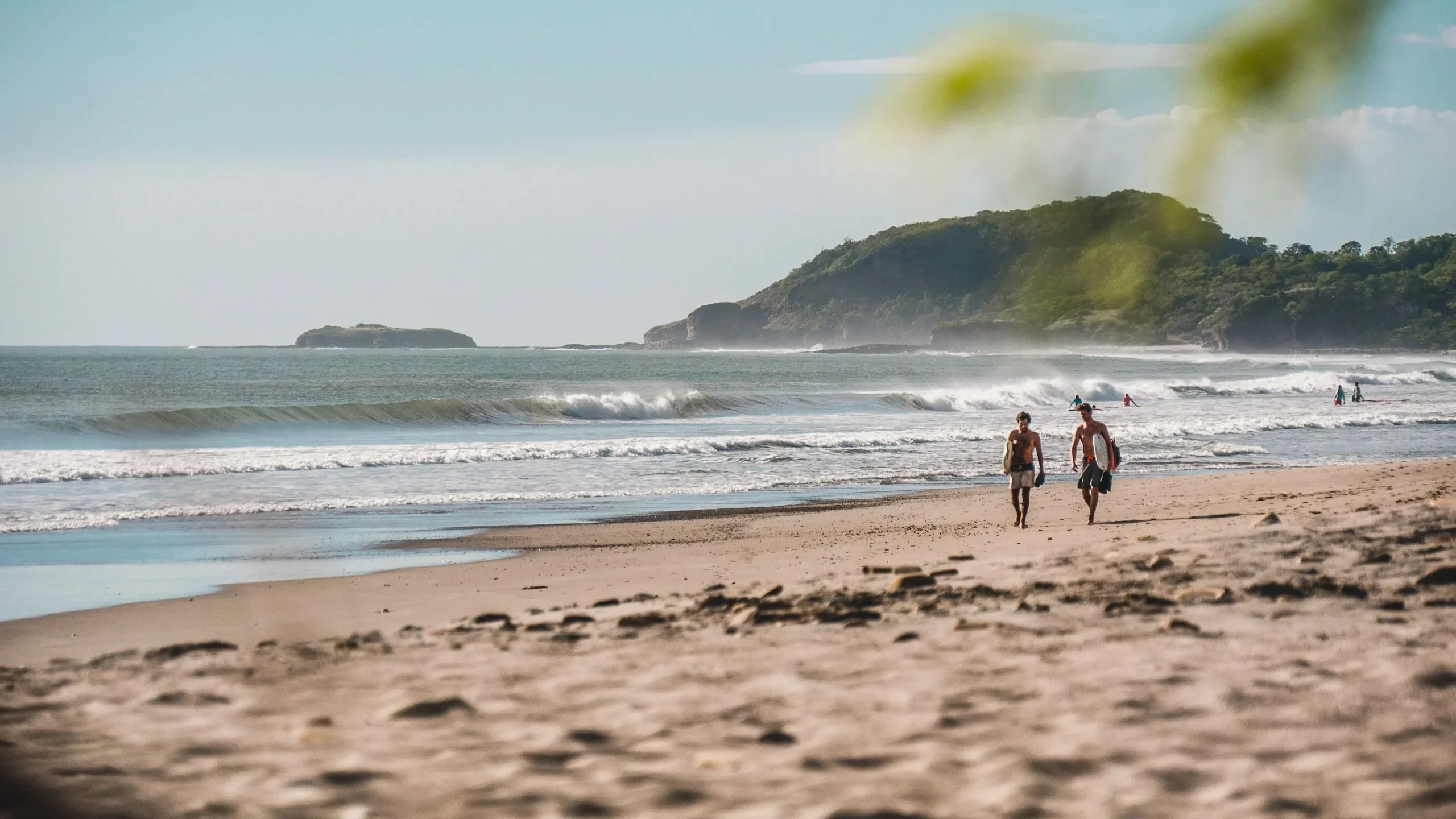
April in Nicaragua is the end of dry season — the volcanic lakes at their clearest, the colonial architecture of Granada and Leon at its most photogenic in the heat-shimmer light, and the Semana Santa celebrations drawing Nicaraguans to the Pacific beaches in a national holiday tradition that has its own coastal culture of processions, music, and extended family gathering. The Corn Islands in the Caribbean — two small jewels of reef and mangrove — offer world-class diving in April’s ideal Caribbean visibility.
Natural Phenomenon
Laguna de Apoyo crater lake — swimming in perfectly clear geothermal water in April heat
Wildlife
Laguna de Apoyo crater lake — swimming in perfectly clear geothermal water in April heat
Cultural
Nicaraguan Semana Santa — processions and beach culture combined in a uniquely Nicaraguan way
Panama
April in Panama’s Pacific provinces is the peak of the dry season — the temperatures are high, the skies are reliably clear, and the Panama Canal is running at its most visible efficiency against a backdrop of Panamanian dry-tropical forest. The Darien Gap — that extraordinary wilderness on the Colombian border, one of the last roadless regions in the Americas — is at its most accessible in the dry season, offering multi-day expeditions with specialist guides that reveal a world of extraordinary biological complexity.
Wildlife
Darien birding — Harpy eagle, crested eagle, golden-headed quetzal; jaguar and tapir
Engineering Marvel
Watching a Panamax vessel transit the canal
Culinary
Darién indigenous Emberá community cooking; fresh corvina in Panama City’s Mercado del Marisco
Honduras
April is Holy Week in Honduras, and the country’s smaller towns — Comayagua, Gracias, Santa Rosa de Copán — hold Semana Santa celebrations of genuine antiquity that draw far fewer visitors than Antigua and reward the traveler willing to leave the Bay Islands for the mainland’s cultural interior. The cloud forest of La Tigra National Park, above Tegucigalpa, offers quetzal sightings in April that rival those in Guatemala and Costa Rica, without the accompanying crowds.
Cultural
Comayagua Semana Santa — Holy Week processions of documented colonial-era tradition; 300-year-old floats
Wildlife
Resplendent quetzal in La Tigra National Park; whale sharks continuing at Utila through April
Culinary
Honduran baleadas; fresh Bay Islands conch; Copán-region cacao ceremonies
El Salvador
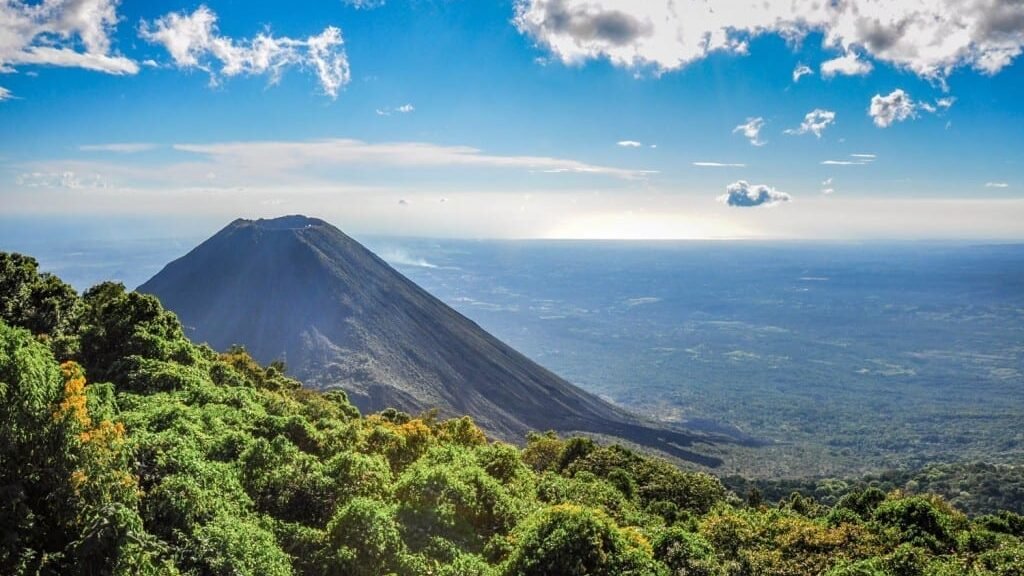
El Salvador is Central America’s smallest and most overlooked country, and April’s dry season rewards travelers willing to investigate. The Ruta de las Flores — a string of highland towns connected by a road through coffee farms and flower markets — offers one of the most pleasant days of travel in the region: local textiles, artisan ceramics, weekend markets, and food that reflects both indigenous and colonial traditions. The surf on the Pacific coast at La Libertad and Punta Roca operates year-round but peaks in April and May.
Natural Phenomenon
Ruta de las Flores weekend flower markets in Nahuizalco and Juayúa
Wildlife
Quetzal in the Montecristo cloud forest (trifinio border with Guatemala and Honduras)
Culinary
Pupusas from roadside comiderías; Salvadoran coffee in the highlands; yuca con chicharrón
Belize
April in Belize is the hottest and driest month — the Caribbean almost preternaturally calm, the reef visibility exceptional, and the inland jungle at its hottest and most wildlife-concentrated. The Great Blue Hole is at its most accessible; the whale shark aggregation at Gladden Spit — where full moon nights in April through June bring whale sharks to feed on snapper spawn — is one of the world’s most reliably extraordinary wildlife encounters.
Wildlife
Pupusas from roadside comiderías; Salvadoran coffee in the highlands; yuca con chicharrón
Natural Phenomenon
Pupusas from roadside comiderías; Salvadoran coffee in the highlands; yuca con chicharrón
Cultural
Garifuna drumming in Hopkins and Dangriga; Maya ceremonial tradition at Lamanai
Colombia
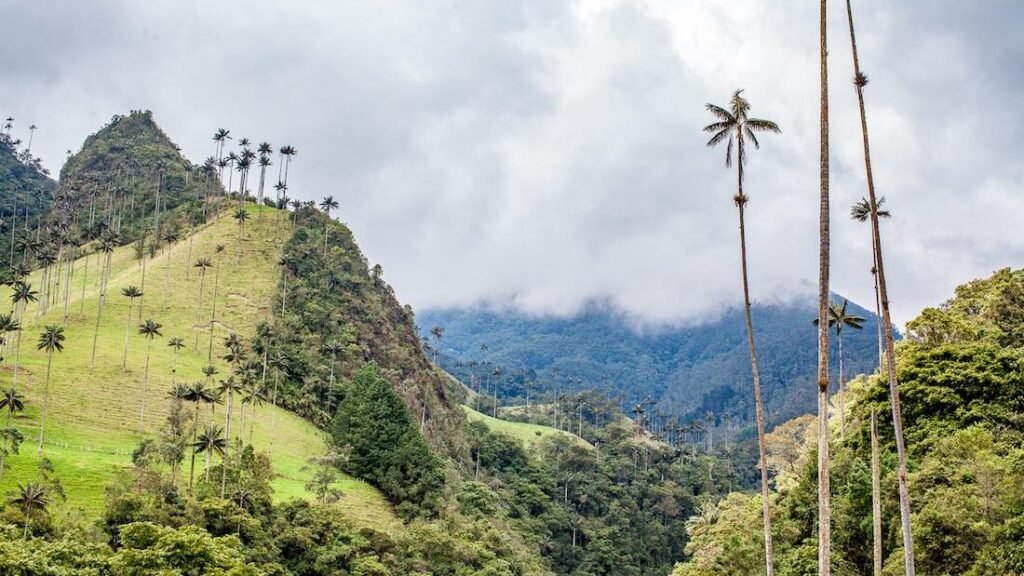
April in Colombia represents the beginning of the first equatorial rainy season on the Andean slopes, but the Caribbean coast remains dry, and the Coffee Region benefits from the light rains that keep the hillsides green and the rivers flowing. The Lost City trek (Ciudad Perdida) in the Sierra Nevada de Santa Marta — a four-to-six-day trek through jungle to a pre-Columbian city predating Machu Picchu — is best completed in April before the rains arrive in earnest. The Kogí and Wiwa indigenous communities, who maintain guardianship of the surrounding mountain, are among the most culturally intact indigenous peoples in South America.
Cultural
Ciudad Perdida trek — 4–6 days through Kogí indigenous territory to a pre-Columbian city older than Machu Picchu
Wildlife
Sierra Nevada cloud forest birding; endemic species found nowhere else on earth
Culinary
Sierra Nevada indigenous food on the trek; Bogotá’s Central Cevichería; Caribbean lobster in Santa Marta
Peru
Machu Picchu
April marks the beginning of Peru’s dry season in the highlands — the mists lifting earlier, the skies holding clear through midday, and the ruins of Machu Picchu revealing themselves in the sharp-edged morning light that makes every stone appear freshly placed. The Inca Trail opens from the February maintenance closure with reservations fully booked through high season, but April remains achievable with advance planning, offering the classic four-da y walk in conditions that are warm enough for comfort and clear enough for the views the trail was designed to deliver.
Natural Phenomenon
April dry season beginning — Machu Picchu in clear morning light; orchid season transitioning to wildflower season
Wildlife
Spectacled bear; Andean condor; torrent ducks on the Urubamba River below
Culinary
Aguas Calientes organic markets; Cusco tasting menu scene at peak confidence
Cusco & Sacred Valley
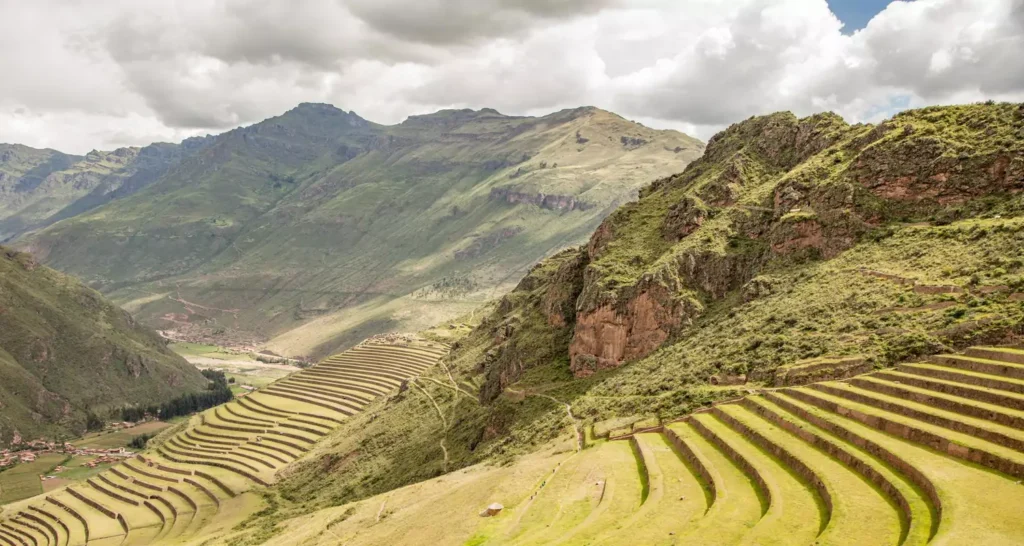
Cusco in April is entering its long, beautiful dry season — the skies are clear blue, the air thin and invigorating at 3,400 meters, the light falling at angles that make the city’s UNESCO-listed colonial baroque architecture look as though it was designed to be photographed. The Sacred Valley’s Pisac Sunday market, the agricultural terraces of Moray, and the salt pans of Maras are all accessible in the clear April weather with a quality of light that the wet season simply cannot provide. The valley’s luxury lodges are filling up; April represents the last month of relative availability before high-season premiums and limited inventory take effect.
Cultural
Pisac Sunday artisan market; Ollantaytambo Inca fortress fully accessible in dry weather
Culinary
Mil restaurant at Moray — one of South America’s most celebrated tasting menus, in a circular Inca agricultural laboratory
Natural Phenomenon
April Andes light — the altitude and clarity produce a quality of light that photographers pursue specifically
Lake Titicaca
Lake Titicaca in April is entering its clear-season months — the altiplano skies deepening to a blue that seems achieved rather than merely observed, the lake surface at 3,812 meters reflecting that sky in a way that makes the altitude visible. The floating Uros islands of totora reeds, the Taquile and Amantani islands with their Quechua-speaking weaving communities, and the ancient ruins of Tiwanaku on the Bolivian shore are all accessible in April’s reliable weather. The local communities offer homestay experiences that are among the most culturally substantive available in the Andes.
Cultural
Uros floating reed islands; Taquile island weaving tradition (UNESCO Heritage); Tiwanaku ruins on the Bolivian shore
Natural Phenomenon
Lake Titicaca altitude light — the world’s highest navigable lake in April’s crystalline air
Wildlife
Titicaca water frog (world’s largest aquatic frog); Andean flamingos on the lake margins
Galapagos Islands
April is the final month of the Galapagos warm season, and the transition toward the cooler Garua season brings a particular quality to the islands’ light — warmer than the cool-season blue, still clear enough for excellent snorkeling and diving. The waved albatross has returned to Española in full force by April, with the entire world population of 35,000 birds present on a single island, their courtship displays audible from hundreds of meters. This is one of the most concentrated wildlife spectacles available anywhere.
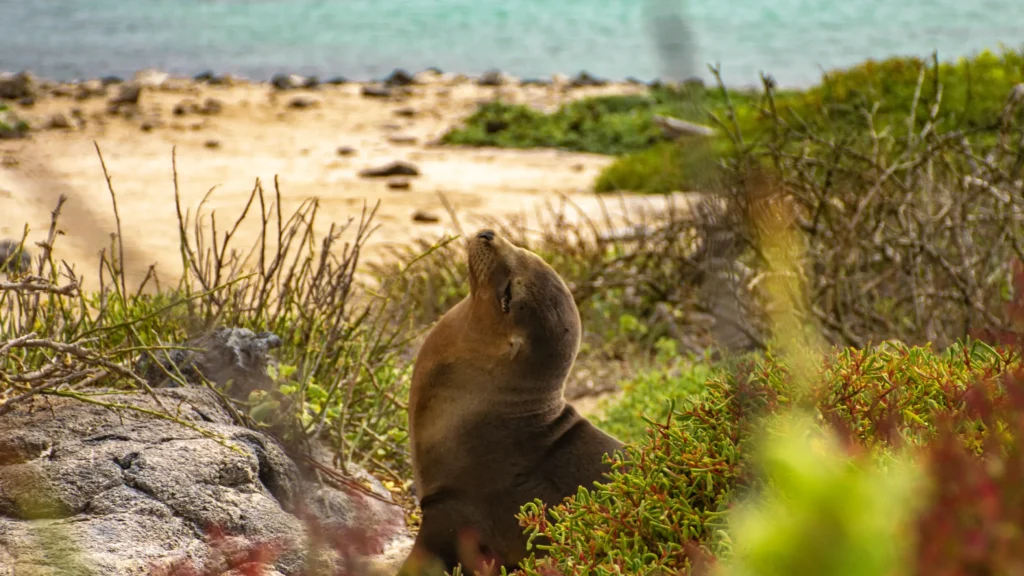
Wildlife
Waved albatross full colony on Española — entire world population present April–December; blue-footed booby chicks
Natural Phenomenon
Warm-to-cool season transition — both warm-water and cold-water species are present simultaneously
Culinary
Fresh-caught tuna sashimi aboard expedition vessels; Galápagos coffee from San Cristóbal highlands
Brazil
Chapada Diamantina, Bahia
The Chapada Diamantina — a highland plateau of sandstone mesas, black-water rivers, and waterfalls that have been cutting their channels for millions of years in the Brazilian interior — is at its finest in April: the wet season rains retreating, the waterfalls still running at full volume, and the trails dry enough for multi-day trekking through a landscape that has no equivalent in the region. The Fumacinha Waterfall, the world’s second-tallest freefall, descends 340 meters into a canyon that the late afternoon light turns to amber. The cave systems of Poço Encantado and Poço Azul — underwater caves lit from above, the turquoise water seeming to generate its own light — are best visited in April when the water table is optimal.
Wildlife
Maned wolf on the cerrado margins; giant anteater; toco toucan in the gallery forests
Natural Phenomenon
Poço Azul cave — sunlit underwater grotto, turquoise water illuminated April–September at peak clarity
Culinary
Bahian jacá (jackfruit) stew; local honey; doce de umbu at the trail-head villages
Iguazu Falls
April continues the high-flow season at Iguazu, the upper Paraná basin’s rains maintaining the falls at a volume that makes the Garganta del Diablo’s 80-meter drop look geological in scale. The trails along the Argentine Lower Circuit allow visitors to stand in the spray of individual falls, the mist so dense that waterproof clothing is recommended even on sunny days. The surrounding Iguazú National Park is a subtropical forest alive with toucans, butterflies, and the coatis who have learned to evaluate every picnic bag with the focused intelligence of creatures with something at stake.
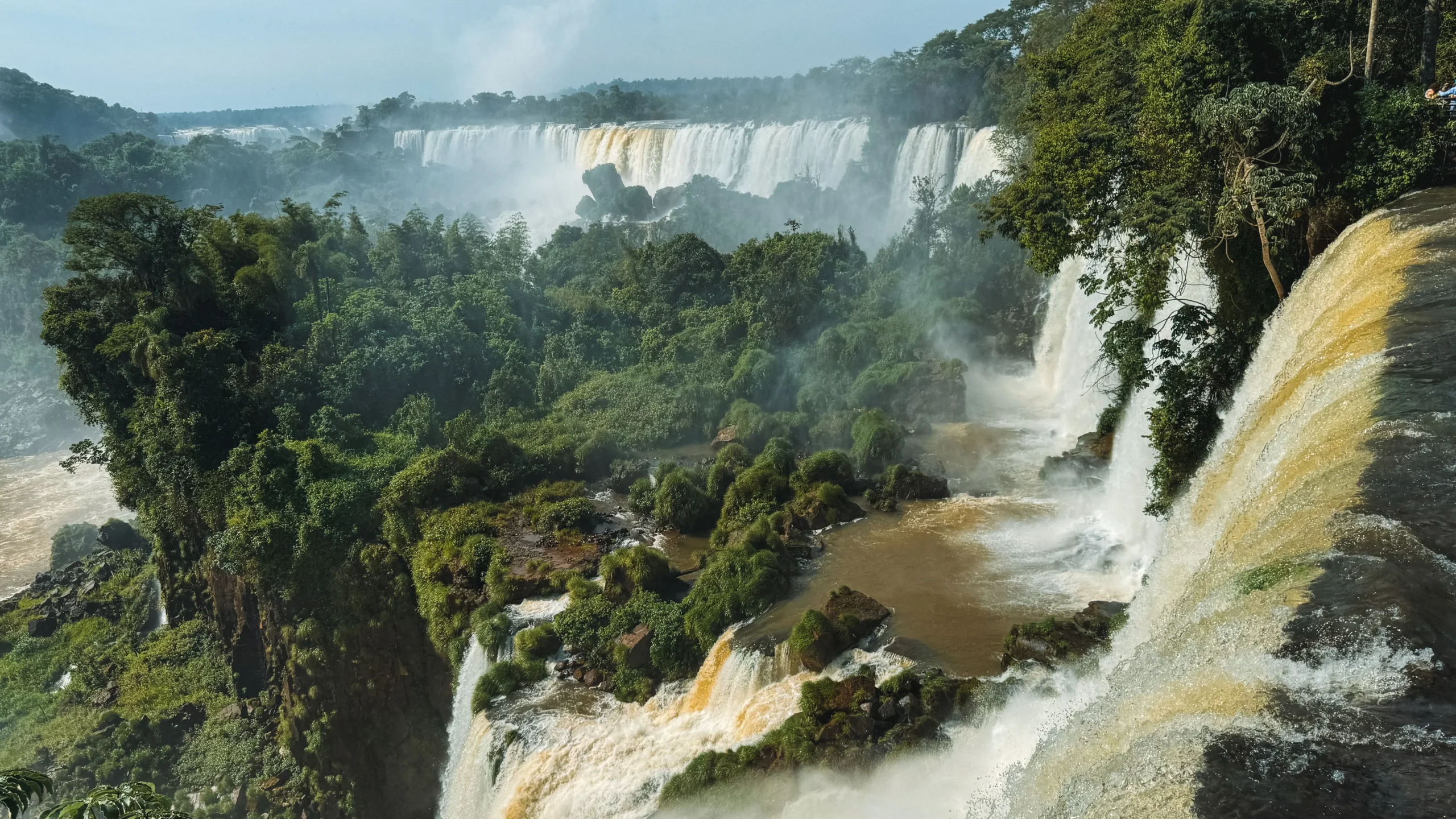
Natural Phenomenon
April high-flow volume — Iguazu at its most powerful; Devil’s Throat at full force; permanent rainbow formation
Wildlife
Giant river otter sightings on the Iguazu River; toco toucan; coati; capuchin monkey
Culinary
Argentine parrilla in Puerto Iguazú; Guaraní food at community-run restaurants in the park
Chile
Atacama Desert
April in the Atacama is the beginning of the dry season’s most reliable stretch — the altiplano rains ended, the salt flats at their whitest, the geysers and hot springs operating in the cold, clear air that makes the dawn excursions at El Tatio simultaneously brutal and magnificent. The light quality in April shifts slightly from summer — the angle lower, the colors warmer — and the Valley of the Moon takes on a palette that photographers specifically pursue in April and May.
Natural Phenomenon
April light in the Valle de la Luna — lower sun angle turning the salt and mineral formations amber and rose at dusk
Wildlife
Vizcacha on the rocky outcrops at El Tatio; vicuña herds near the Salar de Atacama
Culinary
Patagua: traditional Atacameño potato stew; Carmenere from the Elqui Valley nearby
Chile’s Wine Country
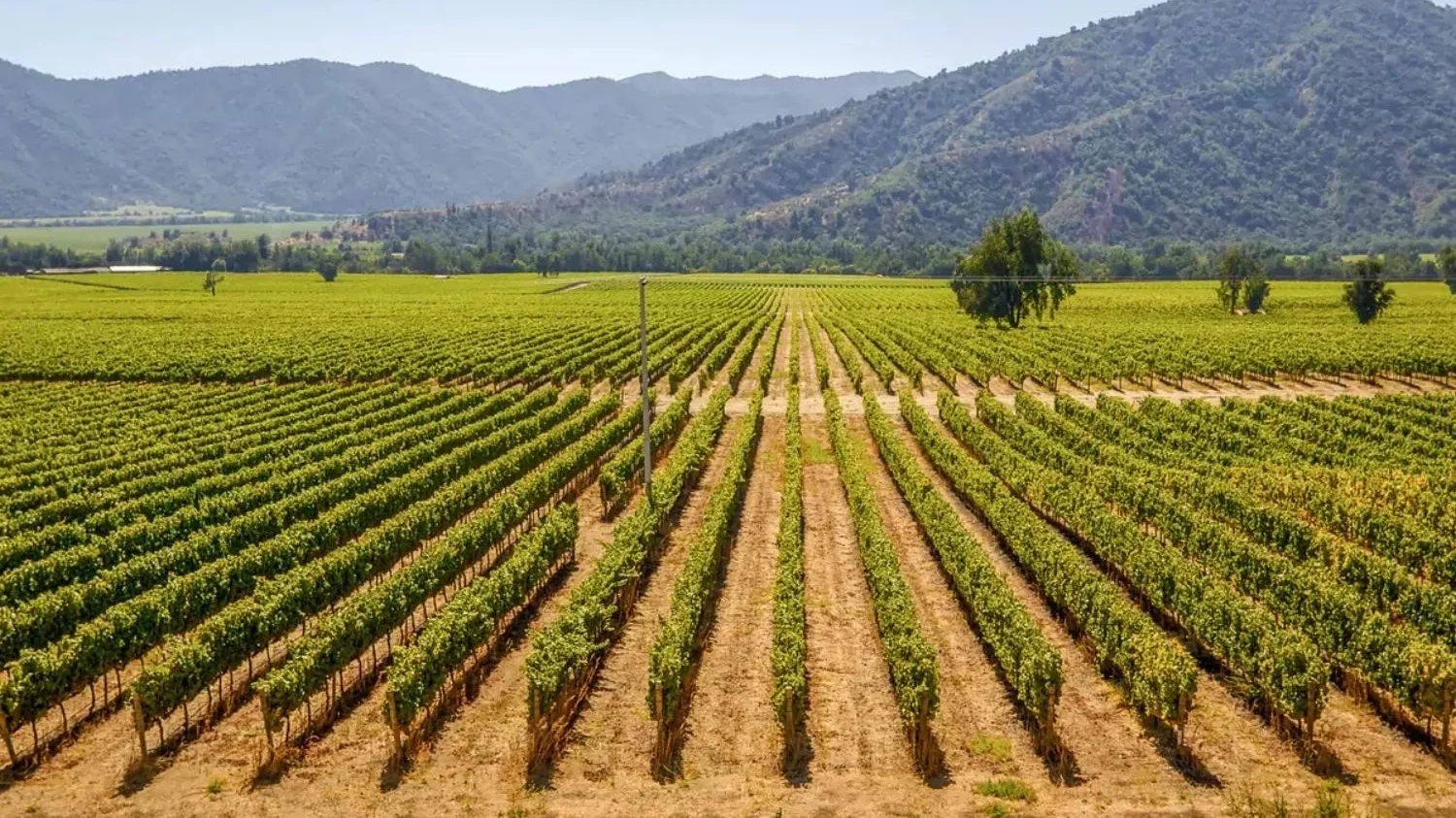
April is post-harvest in Chile’s wine valleys, and the vineyards enter their autumn phase — the leaves turning gold and red against the Andean backdrop in a display that gives the wine-country tour an unexpected visual dividend beyond the glasses. The bodegas are now processing their harvest, and cellar tours in April involve the active sight and smell of fermentation: the must working in the tanks, the winemakers making decisions in real time that will be reflected in the bottles opened three years from now.
Culinary
Post-harvest cellar tastings — the new vintage in fermentation; blending workshops with the winemaker
Natural Phenomenon
Autumn color in the vineyards — Chile’s version of fall foliage, with the Andes as backdrop
Cultural
Clos Apalta estate; Viña Montes’s Andean vineyard chapel
Argentina
Buenos Aires
Buenos Aires in April is at what many consider its finest: the summer humidity entirely gone, the shade trees of Palermo beginning their autumn change, the city’s cultural season in full stride — theaters programming their best work, restaurants launching their autumn menus, and the tango milongas filling nightly with a mix of locals and visitors who have been drawn by something in the music that is not reducible to its description.
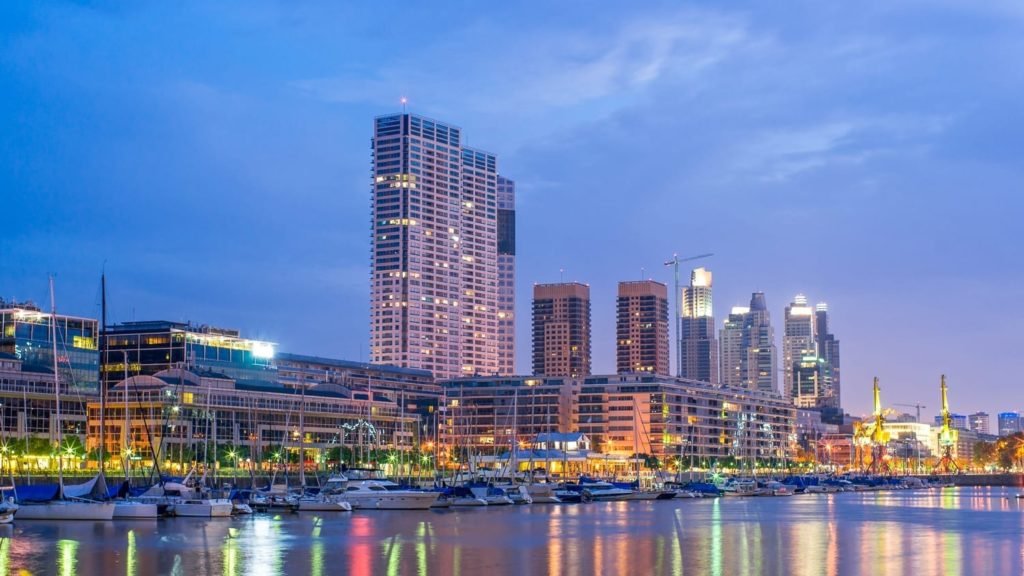
Cultural
Theater season in full stride: Teatro Colón, MALBA, Fundación Proa; tango milongas
Culinary
Autumn menu launches; Palermo wine bar season
Natural Phenomenon
Río de la Plata autumn light — the world’s widest river at its most reflective in April
Mendoza
April in Mendoza is post-harvest autumn — the vineyards gold, the picking complete, and the wine estates offering a quieter, more reflective version of their hospitality after the festival intensity of March. The Valle de Uco at 1,500 meters is particularly beautiful in April’s afternoon light: the Andes behind, the vines turning red and gold in front, and the air carrying a crispness that arrives with the first cool nights of autumn and makes a glass of Malbec on a terrace something close to a philosophical statement.
Culinary
Autumn Malbec cellar tastings; olive harvest in April — fresh pressed olive oil at estate breakfasts; quinces and pears
Natural Phenomenon
Valle de Uco autumn color — vineyards turning gold and crimson against the Cordillera
Cultural
Mendoza city’s San Martín Park in autumn; artisan handicraft markets in Luján de Cuyo
Northern Patagonia
April is peak autumn color in Northern Patagonia’s lake district — the beech forests burning gold and red from the tree-line down, the lakes below still and deeply blue, the fishing season continuing on rivers that have the particular clarity of cold alpine water in autumn. The drive from Bariloche to Puerto Montt along the famous Lakes Crossing — a combination of boat and bus passage through seven lakes with the Andes always present — is at its most beautiful in April.
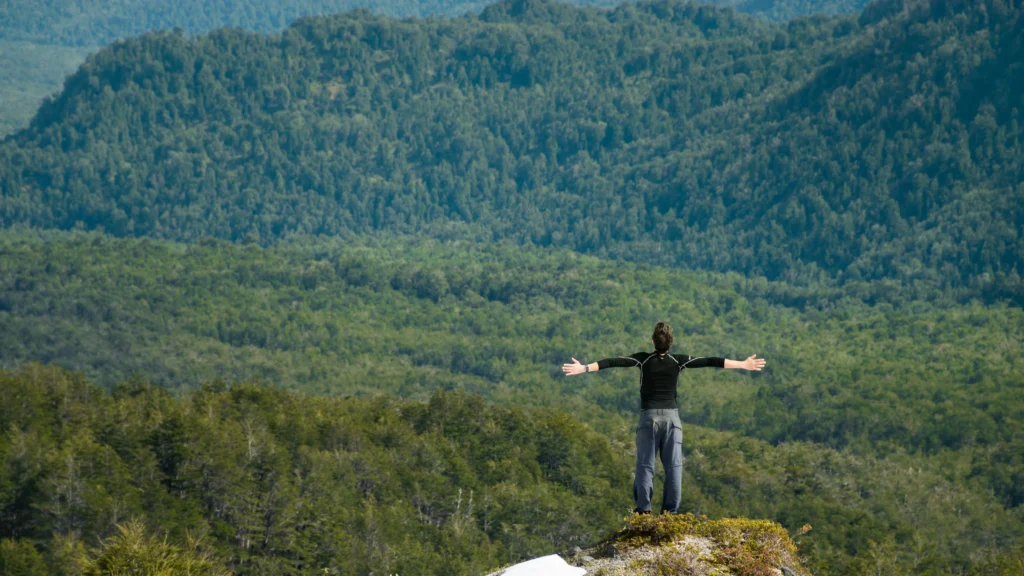
Natural Phenomenon
Peak lenga beech autumn color — among the world’s most dramatic fall foliage, accessible by car from Bariloche
Culinary
Wild mushroom season: porcini, chanterelles; autumn Patagonian lamb; craft cider from the orchards
Wildlife
Fly-fishing for brown and rainbow trout; huemul deer more visible as vegetation thins
Southern Patagonia — El Calafate and El Chalten
April is widely considered the finest month in this region of Argentine Patagonia — the crowds dramatically reduced from the January-February peak, the autumn colors on full display in the beech forests, the winds moderating from their February-March intensity, and the probability of clear sky windows reliably higher than summer statistics suggest. Wildlife populations reach peak activity, with puma family groups — a mother with juveniles — commonly seen on the pampas as guanaco herds begin their seasonal movements.
Natural Phenomenon
April autumn color + granite peaks and glaciers
Wildlife
Puma family groups at peak visibility; guanaco herds on the pampas; condors thermal-riding above the towers
Culinary
Patagonian lamb on a cross-spit at local estancias
Salta & the Northwest
April brings the best of the Calchaquí Valleys — the harvests of Torrontes grapes and corn complete, the roads through the Quebrada de Humahuaca drying after the last rains, and the multi-colored geological formations of Purmamarca, Maimará, and Tilcara at their most saturated in the autumn afternoon light. The Bodegas of the Calchaquí Valley produce a Torrontes white wine of extraordinary aromatic intensity from vines growing at 1,750 meters — the highest commercial vineyards in the world.
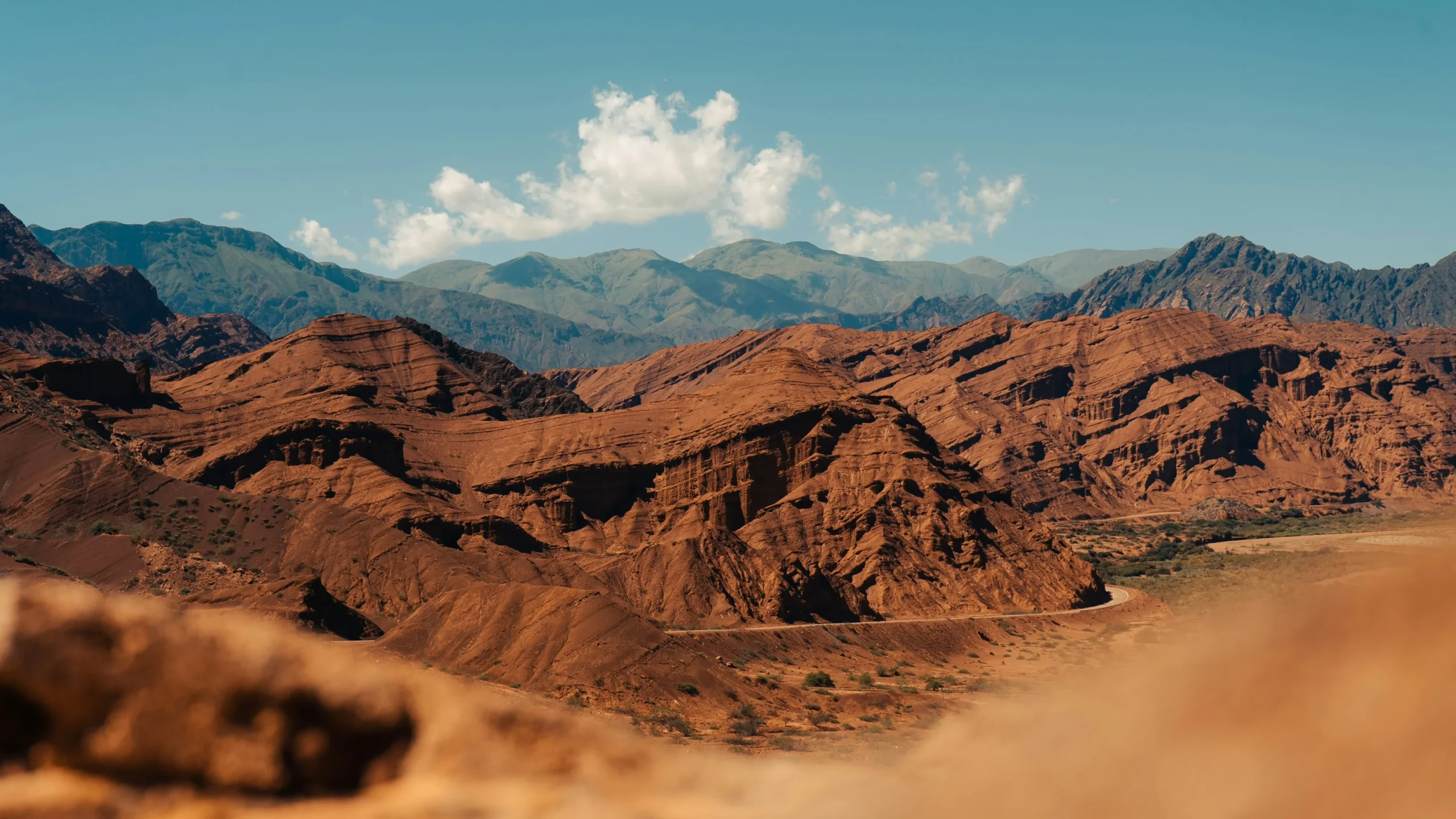
Wildlife
Cerro de los Siete Colores in April’s clean post-rain air — the mineral colors at their most saturated
Culinary
Calchaquí Valley Torrontés — high-altitude white wine of floral intensity; locro stew on cold evenings
Natural Phenomenon
Pachamama (Earth Mother) ceremonies in indigenous communities of the valley
Why Book in Advance
April is a month of arrival — the Peruvian dry season beginning its long, clear run toward October; the Central American seasonal rains still weeks away; Patagonia in full autumn color, the lenga beech forests gold against granite towers. The crowds have not yet arrived. The summer visitors of January and February have gone home. April belongs to the traveler who plans ahead and trusts their instincts.
READY TO PLAN YOUR JOURNEY?
Our LANDED travel designers craft bespoke itineraries for discerning couples, families, and multi-generational groups — blending deep regional knowledge with privileged access to the places, people, and experiences that define each destination.