Podcast: Play in new window | Download
Subscribe: Apple Podcasts | Spotify | TuneIn
LANDED Podcast 002
Experiencing Belize and Guatemala with Coppola Family Hideaways
Francis Ford Coppola is widely regarded as one of the best directors in the history of cinema; a 2002 Sight & Sound readers’ poll put him at #4, and the critics’ poll listed him at #10.
His films have earned more than 20 Oscars and 17 Golden Globes. His body of work includes such classics as The Godfather trilogy, Apocalypse Now, The Cotton Club, Patton, Bram Stoker’s Dracula, American Graffiti, Peggy Sue Got Married, The Black Stallion, The Rainmaker, Tetro, and Don Juan de Marco.
You probably know all that. You might also know of his winemaking and magazine publishing. What you might not understand from the legends and documentaries is that “Mr. Francis” is a world-class husband, father, and grandfather. Really?
Certainly. He sincerely regards family as the ultimate source of wealth. He’s been married to Miss Ellie since 1963. He composes songs and stories for his children and grandchildren.
Out of a desire for more family connection, he acquired Blancaneaux Lodge in the Mountain Pine Ridge of Belize in the early 1980s. It was a family retreat until 1993, when it opened as a 20-room riverside resort.
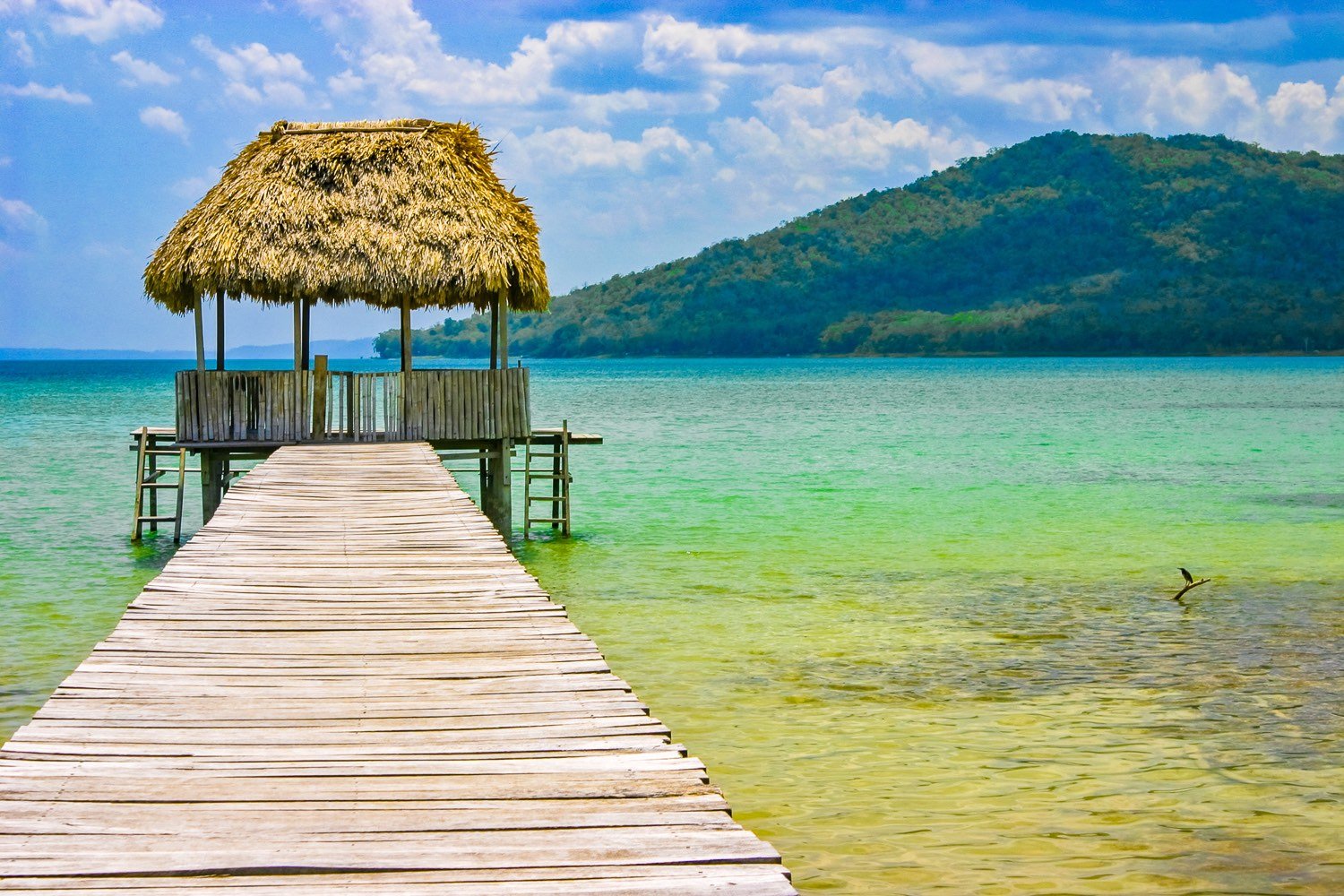
Turtle Inn, located on Belize’s central coast, was the next addition, followed by La Lancha on Lake Peten Itza near Tikal, Guatemala. These retreats (along with two others in Bernalda, Italy and Buenos Aires, Argentina) are known collectively as The Family Coppola Hideaways.
This podcast was recorded at Jardin Escondido, Mr. Coppola’s lovely boutique hotel in the Palermo Soho neighborhood of Buenos Aires.
This is one of our favorite places to stay in BA; it feels like staying in the home of a gracious friend. True enough, I was staying as the guest of Christine Gaudenzi (Director of Sales and Marketing for The Family Coppola Hideaways) and Martin Kredit (Manager of Turtle Inn).
When I checked in, I was surprised to find Mr. Coppola sitting in the back garden, pecking away at his laptop while wearing saffron silk pajamas and Gucci loafers.
With Christine and Martin, we stayed up late into the night listening to “Mr. Francis” spin tales of his college years and family life. He’s a thoughtful and generous conversationalist; he listens to opinions, considers alternative viewpoints, and encourages discussion.
At breakfast the next morning, he followed up with deeper questions and additional insights.
Martin and Christine are some of the kindest and most thoughtful people in travel. Since this episode was recorded, we’ve seen each other again in Morocco, explored cayes and reefs in Belize, and planned an upcoming trip to the western islands of the Galapagos.
These are the kind of friends you know you’ll have for life.
The theme of family runs through each of the Coppola Hideaways. Bernie Matute, who manages Blancaneaux, has worked on the property for more than 20 years; he started out as a porter.
Dozens of the Coppola staff have worked for the company for more than 10 years. It’s a pleasure working with these properties; when we send our clients, we know they’ll be cared for with genuine kindness and sincere hospitality.





Show Notes
Not sure why I was in the mood to latinize Christine’s name and pronounce Martin’s surname like a goof; it was probably the Diet Coke.
Rather read than listen?
Find the transcript below
Francis Ford Coppola: I’m Francis Ford Coppola, and I’m here to introduce my friend John and his company Landed, which is going to discuss several resorts and wonderful travel options and opportunities to get away in some exotic and interesting and beautiful places. He’s very knowledgeable. He’s been all around and has a lot of opinions that are interesting. And I’ve learned a few things, and I’m sure by listening to this, you’ll also learn a few things.
“Interesting” is what you call an ugly baby. But thank you so much. All right, we’re here at Jardín Escondido in Palermo Soho, Buenos Aires, Argentina. Today is… does anybody know? Does anybody care?
Christine Gaudenzi: Tuesday, April 17th.
And I’m here with Christine Gaudenzi and Martin Kredit. Christine, I think of you as the sales manager for the Coppola Resorts, and Martin, I think of you as the on-site general manager at Turtle Inn.
Martin Kredit: That’s pretty much what I do.
And now a Placencia homeowner.
Martin Kredit: I am proudly a Placencia homeowner and will probably be for a very long time.
So Placencia is on the central coast of Belize, and the hotel that Martin manages, Turtle Inn, is part of a portfolio owned by the Coppola family, Francis Ford Coppola and his family. He’s been owning these properties for, I guess, up to 30 years if you look at Blancaneaux’s history. When did Turtle Inn join the family of properties?
Martin Kredit: He acquired this in 1999, and it was a very small little fisherman’s-type feel village run by a biologist. There were about nine cottages. He was hosting a lot of students to teach them about preservation and saving turtles and taking care of the reef. And he probably also taught them to drink a lot of rum because that’s what you do in Belize. Skip White was this gentleman’s name, and he sold it to Francis. Francis wanted to keep it very much in keeping with what it was all about. But unfortunately, a hurricane in 2001 called Iris devastated the area and blew literally everything away. So, there was nothing left except for a few microscopes from the marine biologist, which are now proudly displayed on the bar. But anyway, this gave Francis an opportunity to rebuild the place the way he really wanted it. Inspired by Bali and the Philippines after filming Apocalypse Now, he gave it that culture and that look mixed in with some Belizean nuances and built a beautiful seaside thatch-roof screened-room resort, still called Turtle Inn because he likes to keep things as they are, and built about 25 rooms at that point and opened it up again in 2003.
I mean, the fact that the buildings are Balinese seems a little odd at first, but the climate’s so similar and, you know, architecture in Belize is still an evolving science, I suppose. It’s only been an independent country since 1981.
Martin Kredit: This is actually how Francis stumbled upon Belize because he initially wanted to buy a place in the Philippines after filming Apocalypse Now, and he grew fond of the culture and wanted to buy a place in the Philippines called Hidden Valley. His wife put a stop to that because she said it’s too far away and we’ve been in the Philippines too long.
Miss Ellie.
Martin Kredit: Miss Ellie. So that kind of went away, and when he came back to the US, he opened up a newspaper and one of the articles spoke about Belize going independent. So this was 1981. So he thought, “Let’s go take a look in Belize,” and he went with his firstborn son. When they arrived in Belize City, there was absolutely nothing there. Little hotels, little shacks. He stayed in a very shabby hotel, and his son woke him up at 3:00 in the morning and said, “Dad, dad, (you can wake Francis up for food)I found lobster and cold beer. Let’s go.” His son was about 17 at that point. So they got up and went to this little place, and there Francis ended up speaking with a local guy whom he told his story to, and this gentleman said, “Hidden Valley… you wanted to buy a place called Hidden Valley in the Philippines? There’s a place called Hidden Valley right here in Belize.” So Francis thought, “That’s meant to be. I need to go check this place out.” And that place ended up being right next door to Blancaneaux Lodge.
It’s in the Mountain Pine Ridge Reserve. There’s a place there called Hidden Valley Inn, but not very far from Blancaneaux. Yeah.
Martin Kredit: Right there. So, he found Blancaneaux because of that and that’s how his Belize adventure started, really.
How large is Turtle Inn now?
Martin Kredit: We have 28 rooms on our own, and then we manage some properties, some bookend properties next door-
Those are probably private villas or something that you can take on your own.
Martin Kredit: Correct. Which then get all the Turtle Inn services. It’s about 17 acres total. Our entire compound with three restaurants, dive shop, spa, and all the water activities and inland and nautical tours that you can think of in a country like Belize.
One of the reasons I love that part of Belize is you’re close to Mayan cultural heritage. You have ancient Mayan sites. You have living Maya culture, chocolate farms, and then offshore you’ve got amazing water clarity and reefs and caves that you can go to pretty easily.
Martin Kredit: Yeah, the reef is just 50 minutes away from Turtle Inn, and the closest dive site is 35 minutes away. And you pass all these beautiful little mangrove islands and private islands with crystal clear water. Dolphins will accompany you. And the fishing, of course, is incredible in Belize. A lot of people come for fly fishing and try to hit the grand slam and catch the elusive permit, which happens quite often.
Tarpon.
Martin Kredit: Tarpon and then snook, and they want bonefish, of course. So, turtles, stingrays, nurse sharks, spotted eagle rays… everything will swim around you when you go to little islands called Silk Cayes. And the dive sites are in abundance. There are beautiful places. Laughing Bird is close to us.
Laughing Bird is closest to us.
Martin Kredit: Laughing Bird is closest to us. Then you have South Water Caye, you have the Sapadillas, you have Round Caye and, of course, we have our own caye. We have a little island called Coral Caye which you can rent in its entirety just for you and your loved ones or you and your family, and you get a butler and a chef and a dog, and you’re well taken care of.
My kids are in.
Martin Kredit: Yes, we almost have the tagline “must love dogs” for the private island.
Isn’t it… it’s actually axiomatic that the best properties have a dog?
Martin Kredit: I think so, yeah. Everybody needs a companion.
So, when people come to Belize, they shouldn’t really expect some of the things you’d find in other parts, like, say, Nicaragua or Costa Rica, where you’re going to have surfing opportunities. That’s not really Belize. Belize… like, I think, if I’m not wrong, Turtle Inn, I would say it’s on a lee, right? There’s not a whole lot of wave action there. It’s almost a sideways wave action.
Martin Kredit: Yeah, you can kite surf very well in Belize, but wave surfing is not part of the country. And I think that’s the only thing we don’t have compared to some other Central American countries that have another coast. But the beauty of Belize is the ridge-to-reef experience. I mean, you can be up in the Maya Mountains or up at an incredible waterfall, sunset hike, night hike, jaguar preserve… You name it. It’s all within an hour of Turtle Inn.
As far as I know, that is the world’s only jaguar preserve.
Martin Kredit: Yes, it is. There’s about a thousand jaguars in the country. They have estimated there are about 250 of them that they have recorded and are tracking with motion cameras. But you do have to do a lot of night hikes in order to catch them because they’re nocturnal.
But they hunt at night, right? So, yeah, you might want to be careful.
Martin Kredit: But…
Put some bacon in your pockets if you want to find one. Really helpful.
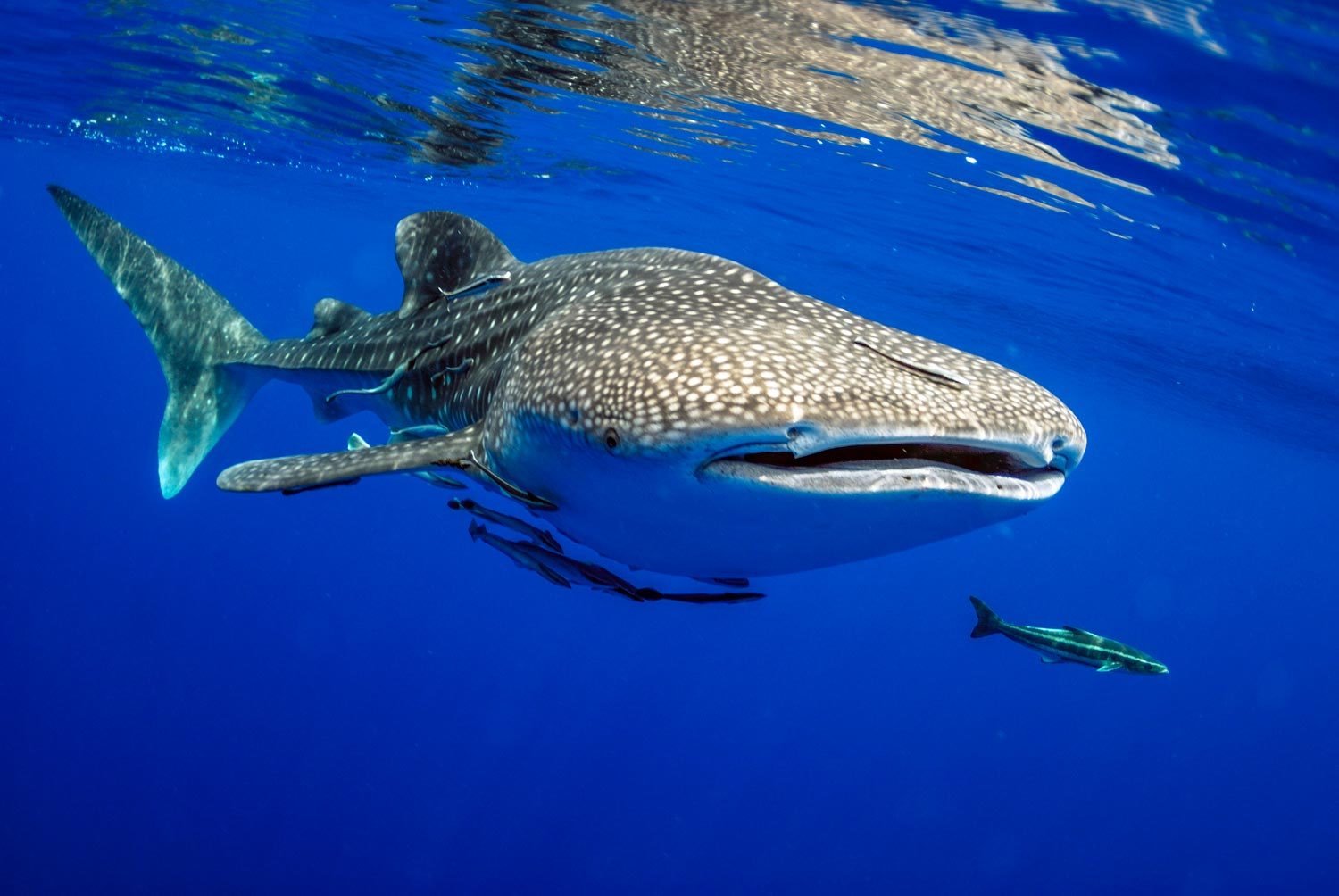
Martin Kredit: They’ll come up. But an hour later, or the next day, you can be on the reef snorkeling, fishing, scuba diving, or perhaps, if you’re lucky, swim with a whale shark.
And the Gladden Spit is accessible from where you are in Placencia?
Martin Kredit: Yes, it is.
This is the place to come for whale sharks.
Martin Kredit: It is. They have been seen a little less in the last few years. It’s Mother Nature; it’s unpredictable. But Gladden Spit is about an hour and a half boat ride, and this season they’ve seen a couple, and we’re still kind of early in the season. But they are around, and believe it or not, a few years ago someone even saw an orca.
Wow. So, you know, when you think of Belize, and you think of wildlife… wow, there are this many cat species and monkey species and lots of… so many bird species. But the most amazing and accessible megafauna is under the ocean. If you go to a place like Laughing Bird or the Sapadillas…
Martin Kredit: Sapadillas.
…you say Sapadillas. Okay, I got to learn that. That’s more… it’s more of an English… the Sapadillas. Then you’ve got giant tarpon and spotted eagle rays. I mean, these things are swimming past you and have no interest in eating you, but it’s a little intimidating to see an animal like that just glide by.
Martin Kredit: Yeah. But it also… You know, it’s magical, and it’s like hearing music underwater. The first couple of weeks I was in Belize, which is now seven and a half years ago, I went for a snorkeling day, and we came across a manta ray which we snorkeled with for about 10 minutes in shallow waters. I mean, it was the most incredible thing I’ve ever seen. Christine came to Belize for the first time, and we were swimming in between 12 dolphins who were above us, under us, and beneath us. And you don’t forget moments like that. That’s all right there.
Christine, tell us your dolphin moments. Tell us your favorite parts of Belize.
Christine Gaudenzi: Well, that’s a true story what Martin just shared. I had just started—I’d just been hired by the Coppolas a little over five years ago and I flew down to see all of the properties the Coppolas owned, starting in Belize, and met Martin in the evening, had a nice dinner. The next morning, I took a yoga class with the intent of sitting down with Martin and having a sales and marketing PR meeting, and suddenly one of the staff came running up to me: “Mr. Martin says there will be no meeting today. It’s a beautiful day. It’s time to snorkel,” which was part of my work. I had to go see what we have to offer.
That’s like a snow day where I live. Sorry, everybody. No working, no meetings.
Christine Gaudenzi: And literally… and the funny part for me about that story is that I actually hadn’t snorkeled in a long time, and I’m a little fearful of the water. But this was a brand new job and I thought, “I’m not going to show my fear. I’m going to just be like, ‘Oh, sure. I’m a snorkeler. I’m totally confident around everything in the water.'” I didn’t really expect the first experience to be, “We’re stopping the boat. We’re jumping in with a pot of dolphins.” I was a little nervous. It was so fantastic. Memory of a lifetime, yeah. We still have a video of it.
Well, I’d love to include that in the show notes.
Christine Gaudenzi: Yeah, sure.
And it graduated from that to… within two hours we were out in the water snorkeling with nurse sharks and…
Christine Gaudenzi: Giant sea turtles. It was just amazing. Nice way to get oriented to a new job.
What a job. So, pushing past limits like that… let’s talk about that for a minute. I mean, Belize is a great place to do that. What are some of your favorite experiences for guests?
Christine Gaudenzi: The Actun Tunichil Muknal (ATM) caves near Teakettle. You know, Nat Geo named it one of the top 10 most sacred caves in all the world.
I mean, I’m so glad Nat Geo is around to rank these things for us… how sacred it is. But what it is, guys, you go into a cave and you need to be comfortable with going into, you know, chest-high water as you go into this thing. There’s some parts where you need to swim and squeeze through small spaces, but then you get to see a skeleton that is encrusted with… what would you say it is?
Christine Gaudenzi: Calcite.
It’s like crystallized. A skeleton that is crystallized. So it’s gleaming in your flashlight, and it’s like…
Christine Gaudenzi: …nothing I’ve ever seen. There’s some pottery and other things there, too. But it was a Maya sacred site.
Yeah. And people describe it as a life-changing experience. And some people, you have to talk them into it because it sounds too adventurous for them. But we’ve yet to have a guest turn around and say, ‘No, I can’t handle this.’ We have the best guides, and we shepherd people through something that might feel a little like a push of the comfort zone, but people adore it.
Christine Gaudenzi: And then they come back in again and again because there’s Caracol and there’s Barton Creek and then visiting the Mennonites, right?
Martin Kredit: The Mennonites make the best ice cream.
I haven’t had the…
Martin Kredit: …and, I’m told, coffee.
They do make good ice cream and… yeah, it’s true. Up on the Hummingbird Highway, there’s a place where you can stop over, and they have really good scoops. Coffee… I mean, they grow watermelons. They’re fresh, they’re amazing and big and juicy. They sell fresh-squeezed orange juice alongside the road. You can really live healthy in Belize—except for the ice cream, maybe.
Martin Kredit: …and the Belikin…
…Belikin beer environment after a day of snorkeling. Yeah.
Martin Kredit: So…
So, the cave experiences you mentioned… are there other things that you’d encourage people to try if they’re willing to step out on a limb?
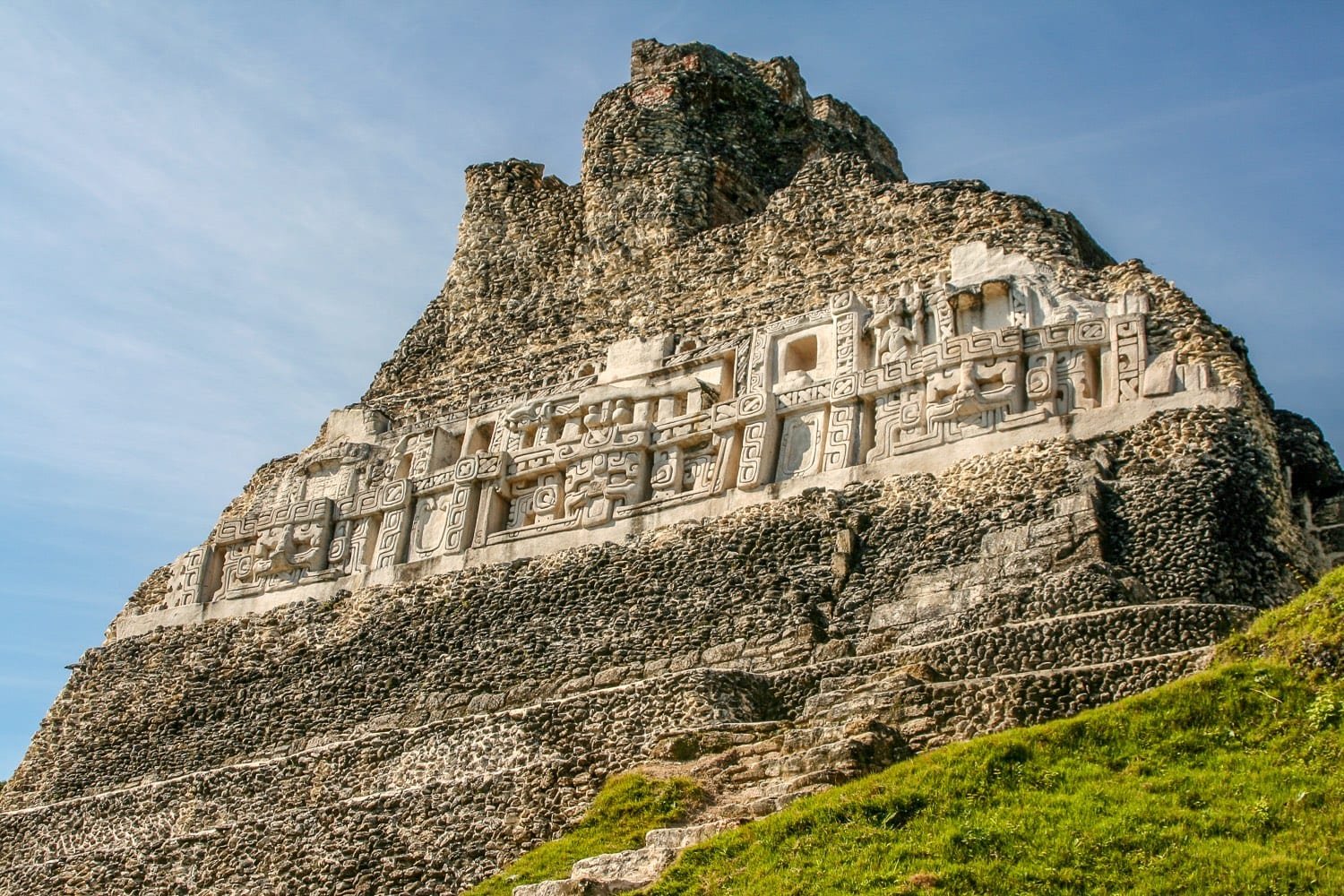
Christine Gaudenzi: I would encourage people to explore all of our properties. You know, maybe start in Guatemala, come to La Lancha. Even though it’s right over the border from Blancaneaux Lodge, our property up on the hillside in Belize near San Ignacio, you cross that border and the terrain feels completely different. The lake setting is so peaceful and magical. And Tikal—I mean, if you’re only going to see one Mayan ruin in your life, make it Tikal.
It’s the Manhattan of the Maya world.
Christine Gaudenzi: That’s a good way to put it.
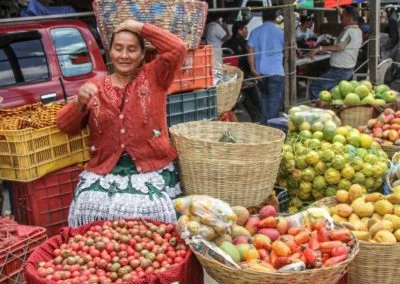
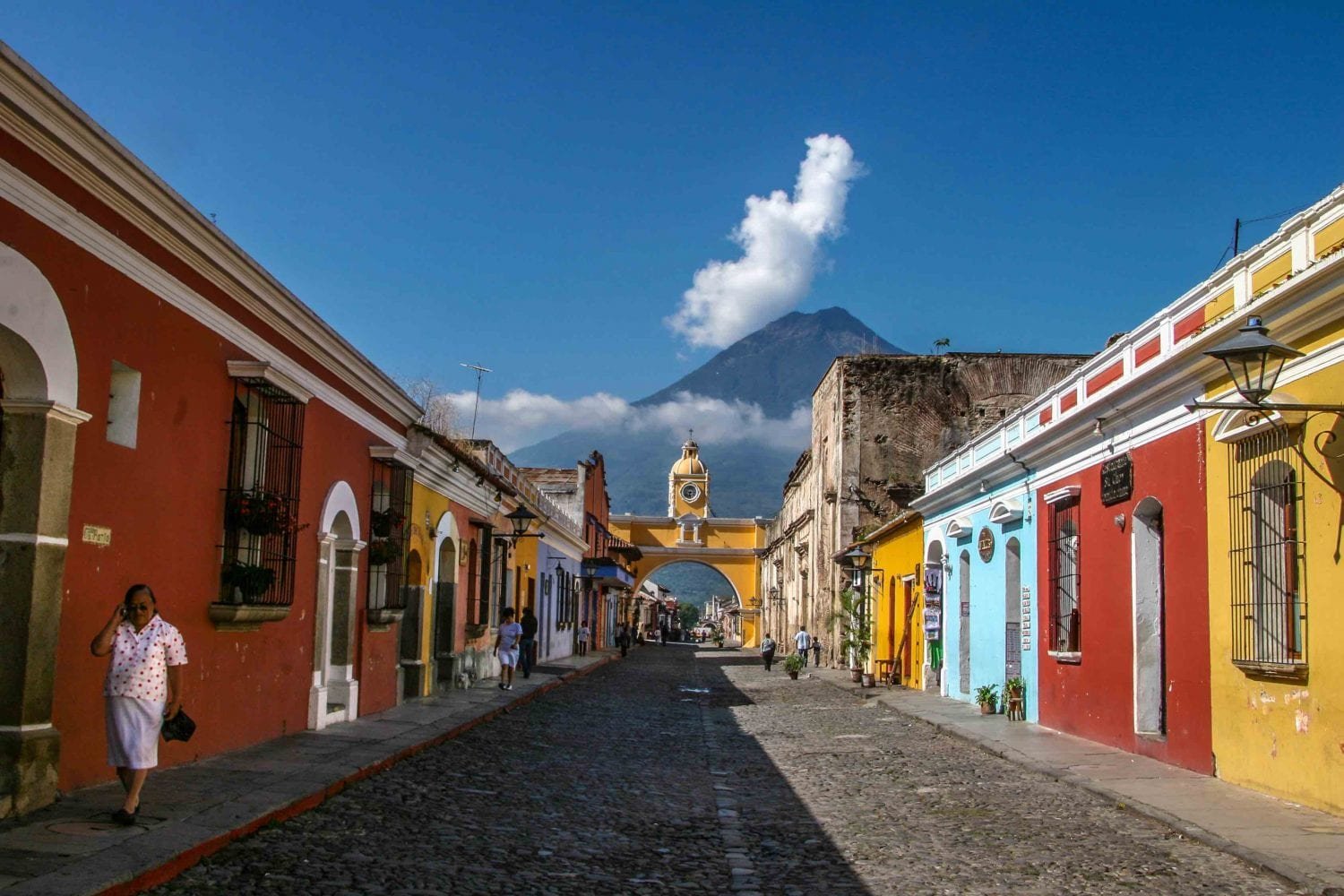
I mean, giant temples, plazas that drip with jungle at the edge, underground tunnels, tombs, and quite a large collection of art, you know, and some of it just strewn around in piles. Macaws, monkeys… hard to beat Tikal as a day. But if you’re going, it’d be very easy to start in Guatemala City, spend a few days either in Guatemala City visiting places like Kaminaljuyu or the museums there, or go out maybe 30 minutes to Antigua, spend two or three nights there if you can get to some of the market experiences or some of the highland places, and then fly up to Tikal. We can helicopter, we can charter, you can do regular commercial flights.
Christine Gaudenzi: You can arrive by boat at La Lancha and then take our new funicular, which basically is an outdoor elevator in the jungle to take you to your guest check-in experience at a 10-room lodge on a gorgeous lake.
So, how do you come by lake? You land in Flores. Can you go by boat across… is that Lake Petén Itzá also?
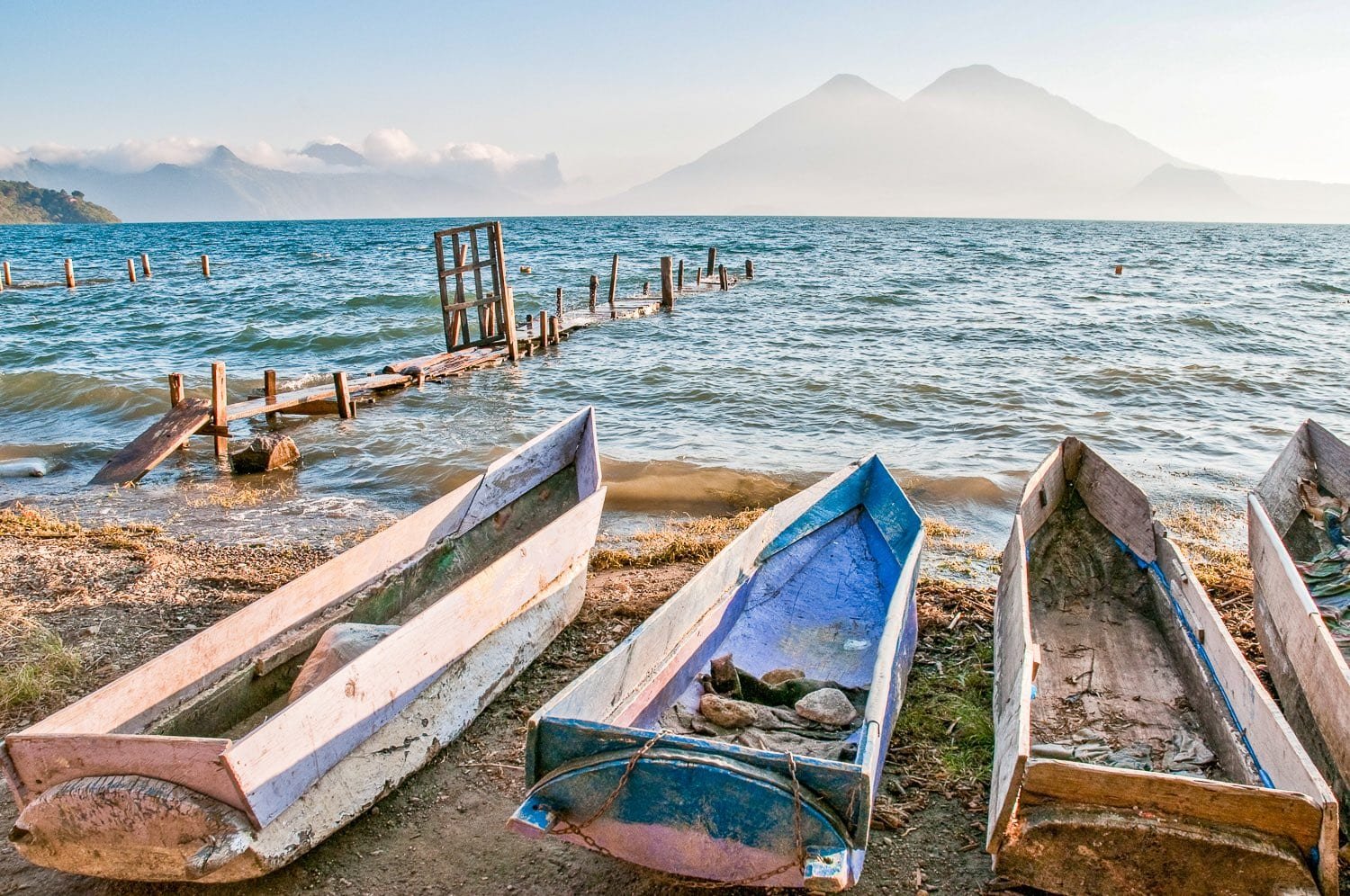
Christine Gaudenzi: Yes, you will cross on Lake Petén Itzá, but it’s a 30-minute boat ride. It’s really magical. Actually, we’ve just put a beautiful video up on our website that shows that experience. It’s not a lake with water sports, so it’s a very peaceful, calm lake. And then you pull up to this lake dock in the middle of the jungle, and you feel like, ‘Where am I going?’
Christine Gaudenzi: And you get in this funicular, you’ll have a welcome drink, ride the jungle elevator up to the top of the property.
John: And there are days when the color of the lake is almost turquoise.
Christine Gaudenzi: Yes, most days. And, you know, I think if I gave people advice on going to La Lancha in that area, don’t stay only a night or two. People think, ‘All right, I’m going to spend one night there, see it, and move on.’
You’ve got Yaxhá, Topoxté, Uaxactún…
Christine Gaudenzi: …and my very favorite experience I’ve had in Guatemala is being in an inner tube on the lake and a cold glass of Coppola wine in my hand looking up at the howler monkeys in the trees.
This podcast is sponsored by Coppola Wine…
Christine Gaudenzi: …and Diet Coke.
That’s great. So that sounds lovely. So three nights would be the recommended. If you can push it to four, that makes sense. Craft shopping in Flores. You can enjoy our temazcal. So we now have a temazcal experience—traditional Mayan sweat lodge experience you can have on-property at La Lancha. Spend some time in the lake and get to Tikal. Sorry, [someone] is distracting us and pulling up a photo of me snorkeling with dolphins right now. And then we’ll take you over the border to Blancaneaux Lodge, just about a two-and-a-half-hour drive.
Yeah, the border crossing is pretty straightforward. And, you know, it’s probably an hour, an hour-fifteen from La Lancha, I would guess, to the border, and then another similar distance. And you guys have paved a lot of the roads near Blancaneaux Lodge, which is up in the Maya Mountains. It’s sort of tropical dry forest. Lots and lots of birds. I don’t know if I’ve ever seen a monkey there.
Martin Kredit: No, you will see monkeys at Caracol, but you won’t necessarily see them at the property.
Martin Kredit: Hear them sometimes because you’re right on the cusp of the pine tree forest and the broadleaf forest. So, they’re right there, behind the airstrip, basically. That’s where the jungle starts. And you can hear them sometimes from a distance, but they don’t necessarily venture out into the pine tree, the needle forest. That’s not their territory.
Yeah, it’s not their diet, I guess. People don’t really understand, and maybe I don’t understand, but my understanding so far is that pine trees sort of stop right around the border with Guatemala and Belize. There aren’t too many of them south of that in Central America, and then it’s all deciduous. And then when you get down to southern Chile, you find analogous-type trees like araucaria and things like that, almost succulents that have grown into big, you know, thousand-year trees. So, the monkeys, not so much, but lots and lots of birds, waterfalls, caves, because it’s all sort of limestone like you find in Yucatan.
Martin Kredit: Yes, absolutely. And the Privassion Creek runs right through it. And they do spot and have some motion cameras there for jaguars. You do see them in the Blancaneaux area. They do live there.
So when I get to Blancaneaux…
Martin Kredit: Mhm.
…to me it’s always felt like… because the drive in, you know, it’s… let’s say you’re coming from the border, call it an hour, hour-fifteen, hour-and-a-half. The last 20-30 minutes is a bit of a Belizean massage, right? It’s not really paved, and you’ll be bumping around. But so, once you get there, you probably want to stay three nights plus, right?
Martin Kredit: Yes, depending on what your experience has been. If you’ve never been to Belize, you want to be there at least four nights so that you can make sure you get to Caracol. You can get to ATM—it’s a full day to do that cave experience. You really want some time on the property just to enjoy the property. We have a three-and-a-half-acre organic garden that we’ve had for many years, and there are a lot of chefs touting using their garden, but it tends to be a small herb garden.
It’s almost always a garden the size of a pallet.
Martin Kredit: When you get there and you go see the garden, you actually tour the garden with the gardener versus a chef. And then you dine in a new palapa that we’ve built out of the garden, on all the ingredients coming from the garden. It’s absolutely my favorite experience.
Three and a half acres. So it’s a little bigger than a pallet.
Martin Kredit: Yeah, bigger than a wood pallet. But to sum that up, John, if you have 12 days or slightly more, you can do an excellent Central American safari starting at La Lancha for Mayan culture and history and soak up Tikal, see the ruins for two nights, three days. Enjoy the lake, enjoy Flores, enjoy the ruins. Maybe go for a horseback ride. Then you move on, cross the border, go to Blancaneaux, which is just a two-and-a-half-hour drive, and stay there for three nights, four days, and do all the caving, tubing, more horseback riding, ziplining, or just truly enjoying the organic garden, the food, and the surroundings.
We haven’t even talked about… there’s a naturally heated hot tub on property that’s huge. It’s sort of a torus shape, and it’s…
Martin Kredit: …horseshoe we call it.
Yeah, and it’s heated by a generator that runs off the creek. Incredible. And the creek itself is fun to swim in and play.
Martin Kredit: Absolutely, there’s lots of different levels and little waterfalls. You can cruise up and down a little bit, and there are big swimming holes. Thai massage, horseback riding, hiking, Thousand Foot Falls, all this stuff.
Martin Kredit: Big waterfalls, 40-minute hike away.
So then… yeah, and from there…
Martin Kredit: …and from there you continue on to the coast, and you have this beautiful drive through the Maya Mountains over the Hummingbird Highway. You can make a stopover at the inland Blue Hole, which is kind of like a cenote. Or you go ziplining, or you go caving or tubing to break up the day, have lunch or a picnic somewhere, and then you arrive on the coast at Turtle Inn where you stay four nights. And why four nights? Because then you also have enough time to get certified in scuba diving.**
Awesome. Right. And that drive, the Hummingbird Highway, is like all the major highways in Belize, very well paved, well-maintained, and scenic. I mean, that’s one of my favorite roads in Central America. But that drive takes about…
Martin Kredit: …three and a half hours.
Okay, three and a half. But you break it up with ice cream made by Mennonites, stop at the inland Blue Hole, which is this, like you said, a cenote but with this luminous blue water in the middle of a forest.
Martin Kredit: Correct. And then you end up on the coast where you can do all the activities you’d like to do as far as snorkeling, paddleboarding, sailing, fishing, scuba diving, or truly just relax on the beach and pick a hammock.
Bring a book. Is it catch and release?
Martin Kredit: There’s a lot of catch and release. There’s a lot of fly fishing going on, but there’s also some good trolling available on the reef. And we have plenty of guests that come back with amazing bonitos or jack or barracuda.**
…or future sushi.
Martin Kredit: Yes, correct. And we cook it up in two or three different ways for them, and it makes for a beautiful prize at the end of the day.
So, it’s almost the perfect vacation plan for Central America. Why? But wait…
Martin Kredit: But wait, there’s more. Then, after you have a little bit more time and you are done on the coast, you go take your own private island for two more nights.
What?
Martin Kredit: I mean, it just keeps on going. The gift keeps on giving. And then you have your butler, your chef, and you really cut off from the world and take over little Coral Caye, which is about 2 acres, to unwind if you haven’t done so already.
But my hint on Coral Caye is to end the trip… if you want to be the hero partner or spouse, you surprise…
Martin Kredit: Exactly.
I do. I do. You surprise your loved one by saying, “You know what? We’re going to go on a little snorkeling trip, but I have a surprise. Throw a few extra things in the bag.” Because literally when you get to Coral Caye, a cover-up in a bathing suit is all you need. No matter how many nights you’re there, you have a private island to yourself. All the meals are done for you, and you stop at the island for some snorkeling. You say, “You know what? This island’s ours for a couple of nights.”
Martin Kredit: Clothing optional.
Christine Gaudenzi: Exactly.
Martin Kredit: Yeah, but you win some major points if you surprise…
Christine Gaudenzi: Yeah, you have the trip followed by the vacation.
The length is ideal. You’re seeing ancient culture, living culture, natural beauty, and wildlife. You’ve got the beach at the end, and you go back refreshed. Well, how can you top that in Central America?
Martin Kredit: I have yet to discover any place or any organization that could top such a combination. I think we have a pretty unique situation going on. You have basically four vacations in one trip. You keep moving and have completely different experiences within the same company culture. So, it makes it all very easy and seamless. And we do all our transfers and tours in-house.
I would say, too, that there’s no really difficult transportation day. There’s something that can be added to every day of travel that makes it special…
Martin Kredit: …including a helicopter.
Well, that’s another option. You can fly from Blancaneaux to Turtle Inn. You can even fly to the little island. The pilot… we have a little mini-island next to Coral Caye where he says he can land. So, be the first one to do that, please. Okay, so we did this with our kids in, let’s call it, 2012 or 2013. They were pretty young. I think my youngest was around three or four, and my eldest would have been around 10. And they love Belize so much. They lived in Guatemala first. They lived in Antigua for most of a summer, and then we moved up, went to Flores, and went across, and finished on the coast. And it was such a great vacation as a family. Do you get a lot of families?
Christine Gaudenzi: We get a lot of families, and what I like, though, is the way Francis truly curated the property and laid it out. Every guest room is an individual dwelling. What I find amazing is that families are able to coexist with couples there who want more privacy and romance and maybe don’t want to be around young children, because Francis laid out this property so that every guest room is an individual dwelling. So, the two-bedroom villas are separated from the more individual cottages for couples. There’s a separate pool area for adults versus families. The name of our company is the Family Coppola Hideaways. We encourage families, but it doesn’t feel like a Club Med.
So, we’re here in Buenos Aires, and we’re at part of the family… tell us about this property.
Christine Gaudenzi: Jardín Escondido is in the Palermo Soho neighborhood. I find it the most charming neighborhood of all of Buenos Aires. There are some gorgeous palace hotels here. To me, they don’t have the same sense of place as this little hidden garden in Palermo Soho. The reason Francis has a property here is really because he shot a film here…
Tetro.
Christine Gaudenzi: Tetro, and he lived here for the two years that he was writing, filming, and editing. And Francis likes to have a whole place to himself. His family can come visit him, everybody can have their own bedroom. And once he departed, he thought, ‘Why not turn tourists on to this fantastic neighborhood that he fell in love with while he was here?’ I wouldn’t stay anywhere else but here. I love the privacy and the discretion, but I can walk right a block away to all the exciting nightlife.
We just walked to some crazy stores. We had a nice afternoon lunch…
Christine Gaudenzi: …of Malbec…
…and you can take this entire house on an exclusive basis because it’s, you know, six, seven rooms…
Christine Gaudenzi: Six rooms and a studio.
It’s got a private garden, which is why it’s called Hidden Garden. And you get your own passkey to get in the front door. Breakfast, lunch, and dinner could all be served here, right?
Christine Gaudenzi: Yes, we have a traditional parrilla barbecue setup in the center of the garden in the courtyard, and we can bring in a private chef to do the traditional Argentine parrilla experience. Which is something you would do, definitely, if you took this over as a family or a bunch of couples. Martin and I have talked about maybe having one of our milestone birthdays here with a group of friends. So, if you work for the company and you actually want to stay at the property and bring all your friends, it’s a good sign that it’s a special place.**
It feels special. It has, like all the other Coppola properties I’ve seen… I haven’t seen the one in Rome yet.
Christine Gaudenzi: Not Rome.
No, sorry. Not Rome.
Christine Gaudenzi: Basilicata, in the arch of the boot, near to Puglia.
Oh, Puglia. Yeah, okay. So, I haven’t been to the one in Italy yet, which is…
Christine Gaudenzi: You will.
It’s called…
Christine Gaudenzi: Palazzo Margarita.
Palazzo Margarita. Near Puglia.
Christine Gaudenzi: Near Puglia.
In the arch of the boot.
Christine Gaudenzi: In the arch of the boot. In a region called Basilicata, and 40 minutes away from a UNESCO site called Matera, which happens to be Europe’s capital of culture next year in 2019. Yeah, a nine-suite amazing former palace in a very simple, poor village, really, where people still hang their laundry on the line and dry their peppers on tables on the streets. Why do we have a property way down in the south of Italy? Francis’s grandfather is from that village. And Francis has gone back year after year and fallen in love with the food, the wine, the sense of genuine hospitality in a place that doesn’t see tourism. And it gives people a chance to discover old-world Italy, something that really doesn’t exist in a lot of overdeveloped areas of Italy.”
Amazing. It’s very special. I also have a grandfather from southern Italy… great-great-grandfather, and it’s kind of a crazy story and all.
Christine Gaudenzi: Well, Mr. Coppola is here at the hotel. I would love to tell it to you if I could tell it to him as well because it’s such a crazy story.
You would be delighted to hear it. No doubt he’s not shy of listening or talking. We got to have tea together today, and that was magical. Thank you for that. Yeah, nice surprise. So, any other recommendations? For people considering coming to Belize, what would you tell them they should look forward to, and what do they think they need but they don’t need?
Martin Kredit: Well, get ready for diversity and get ready to fall in love with the Belizean people. That’s definitely going to happen. They are so warm, welcoming, genuine, practical, funny, common sense… they have such an amazing combination of characteristics, and I have never worked with better people in my career, and I’ve worked in the US, in Holland, in the Caribbean. I’m very confident in saying that I’ve been there for all these years because of them and because of the Belizean people. Of course, it’s great to work for a family like the Coppolas, and they have beautiful places, but the people make it. And so a lot of my guests… all you have to do is go to our reviews, and everybody comments on how fantastic the staff is, and they just genuinely want to create and make you have a fantastic experience. So get ready for falling in love, not only with the country and its diversity, but mostly the people. And depending on where you go, we have very eco-chic, barefoot-elegant type of resorts and places. For example, at Turtle Inn, we have screened-in rooms, which we take a lot of pride in, because you have the Caribbean breeze going right through your room. So, no, you don’t need AC. It would ruin the essence of what this property is about. You hear the birds, the waves, and the incredible sounds early in the morning, the sunrise, the sunsets that beam right into your room. You don’t want to close that up, so forget about AC. If you do go to all three of them… at La Lancha, we do have air conditioning simply because of the way the place is situated on the side of the lake, and it blocks the airflow, so there’s practicality behind that. Blancaneaux is up in the mountains, and you want a jacket sometimes; it cools down. There’s a fireplace in the lobby. It’s really magical. So it’s yet again a very different experience within your same one holiday.
It’s so unique. I mean, to be in a tropical climate but have a cool evening with pine forest and running water nearby… what? That’s just so different.
Martin Kredit: Candles lit everywhere, the smell of citronella and pine wood. It’s really special. And of course, Turtle Inn on the coast with sun, salt, sea breeze, and then the island where the breeze runs over the whole island. You don’t need air conditioning for that. So the combination and the different experiences altogether is what makes people want to buy property in Belize. So get ready to go for a visit at the local real estate office.
Get ready for new neighbors. Exactly.
Christine Gaudenzi: Leave… you asked what do you leave behind? Do not bring your high-heel wedge shoes. I did that on my first trip, and I thought, ‘Well, I work here. I should make sure I’m quite dressed up for all my meetings.’ It is a barefoot-elegant place. Bring your flip-flops. You can be chic but be casual at the same time. It is not a place where people put on airs. I’ve been to some Caribbean properties and places in Hawaii where people are buying a lot of new clothes so they can look a certain way at dinner. It’s so much more low-key in Belize. I love that about it.
The typical person who comes to us with a request for Belize probably has a pretty strong sense of adventure. They’re well-traveled. They’re interested in the underwater aspect, but they also care about the culture. I mean, there are a lot of places in the Caribbean where you can go where there’s clear blue water and great sparkling beaches. Belize is a different thing. It’s special. You know that the culture is unique. It’s a blend of Spanish, English, Mayan, Garifuna. You don’t find that somewhere else. And, you know, there are chicken signs all over the country that say Dis Da Fi Wi Chicken. So….