Podcast: Play in new window | Download
Subscribe: Apple Podcasts | Spotify | TuneIn
LANDED Podcast 005
Luxury of Experience – Matias de Cristobal, Director General of Awasi
Matias de Cristobal is the Director General of Awasi. He’s also a member of the Executive Committee and Board of Directors of Relais & Chateaux, and a Board Member of the W Hotel in Santiago, Chile.

In a relatively short time, Awasi has developed a reputation for operating some of the finest lodges in South America.
- Awasi Atacama — a boutique hotel in the heart of San Pedro de Atacama. Private vehicles and one guide per guest room. Canyons, volcanoes, salt flats, lagoons, hot springs, and pre-Columbian sites. This is one of our favorite destinations for multi-generational families.
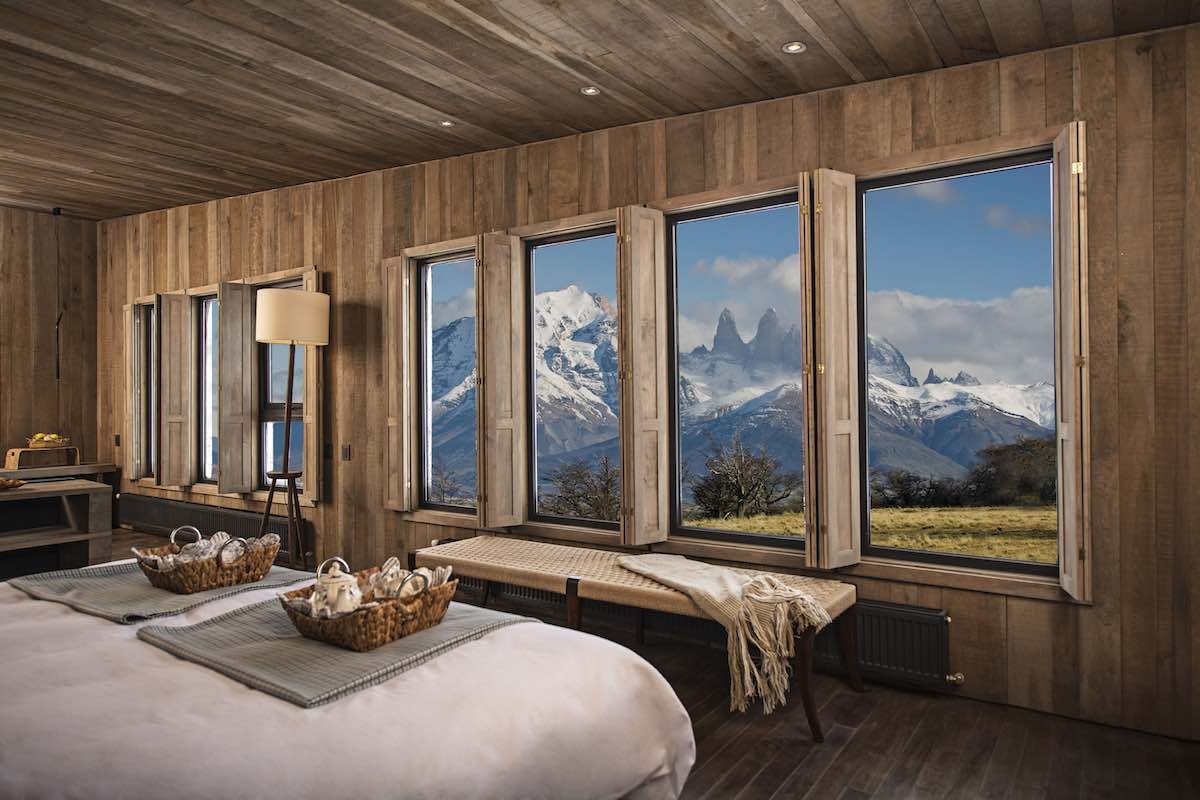
- Awasi Patagonia — set on a private reserve looking out on the Torres del Paine. After a full-day of privately guided hiking, riding, biking, or puma tracking, it’s hard to beat a soak in your private wood-fired hot tub overlooking the Paine Massif.
- Awasi Iguazu — located on the Argentine side of the falls, this lodge has changed the way visitors experience Iguazu. It’s no longer just a day trip or an overnight stay; now guests have a rationale for 3 and 4-night stays, visiting private reserves, hidden waterfalls, and Guarani villages.
Much of Awasi’s success—the brand’s vision, personality, and strategy—can be credited to Matias. He’s a keen student of design, customer service, and philosophy.
He’s helped broaden the vision of what travel can mean—how the people we encounter, and the experiences we share, can shape our lives.
In this episode we discuss:
- How he developed his outlook on meaningful life experiences;
- His definition of what a true luxury is; and
- Define what he calls “the Awasi spirit”.
Matias is a true friend, a mentor, and an innovator. Most of our conversations take place in noisy restaurants in Buenos Aires, so we recorded this interview by Skype. One day soon I hope we’ll be recording a follow up from the Grand Canyon.








Matias de Cristóbal, general director of Awasi Lodges, welcome to the podcast.
Matias: Thank you so much for inviting me. Very glad to be here.
John: Where are you today?
Matias: I’m in Santiago de Chile right now with a really hot day. But I’m mostly based in Buenos Aires in Argentina, where my family is, and generally traveling a lot between our lodges, Europe, and the US, where most of our customers come from. So yeah, one of my challenges is that I travel a lot.
Matias, you and I have a lot in common in terms of career. We both began working for banks. How was banking for you?
Matias: The banking industry was my first approach to professional life. I started working for a bank while I was still at the university studying business, and I discovered that there were two things that didn’t match my lifestyle. One was that the corporate life wasn’t making me very happy. I started to discover that I had an entrepreneurial style of working, and sometimes I thought that at that time, banks and corporations in general didn’t necessarily encourage people to use the best of their entrepreneurial minds.
Then suddenly I discovered that I was working in a bank in the dealing room, in the finance area of the bank, building relationships with other banks. At the end of the day, I was coming back home and asking myself, “What did I do today?” I helped somebody to lend money to another bank, and that really wasn’t very fulfilling as a professional experience. So eventually I started to look for other horizons.
I worked in consulting at one of the top five consulting companies—this was Coopers & Lybrand before their merger with Price Waterhouse. I discovered that consulting was something really interesting because it allowed me to meet different people and companies, and to understand different challenges and problems that these companies were facing. I have always been anti-routine, so consultancy helped me to learn a lot while also giving me a lot of challenges and fun.
Eventually, you need to have fun at work. I always say that 50% of what you get from your job is money, and the other 50% is fun, meaning, and feeling that you are really being useful and doing something that is helping others or changing other people’s lives. That’s what I eventually discovered a profession or job was about.
The way that I came to the tourism industry or the hotel industry was really strange. I had lost my job in Argentina while working for an exhibition cinema company. Argentina went into one of its cyclical economic troubles in the year 2000. It was the worst economic crisis Argentina experienced. I was there in charge of developing new multiplex cinema centers in Argentina and South America. This US company decided to leave the country because they couldn’t stay. It was really a mess.
So you knew you were going to lose your job.
Matias: So I knew that I was going to lose my job, and I started to think, “What am I going to do?” At that time, my third kid had just been born. So I said I needed to inspire myself and see what I was going to do. I saw an opportunity because I used to travel in South America, visiting different little towns and discovering that there were lots of artisans creating amazing crafts, like ponchos or pottery, using ancient tools and techniques.
I said, “We could use these elements, put them in value, and offer those elements that have a strong presence of centuries of culture passed through generations.” These people were still doing it, but nobody was recognizing the value behind those arts and crafts. I was in Salta the first time I was inspired by this, in one of the old town markets.
Yeah, a market where, in those town markets, you can find an amazing handmade poncho.
Matias: Exactly. Woven by hand, dyed with natural colors, and produced on looms for weeks. It really takes some months to do one of those pieces. I used to work in retail before, and I said retail is not only about location; retail is also about putting value on things. Looking at this little town, I was inspired and thought that I could help these people by selling their goods for a higher value, for a higher price.
So, we decided with a friend who was a decorator to create a small store that would only sell goods produced by the local native communities of South America. But it was going to be a non-pretentious, non-ostentatious store. Each item that we sold had to be identified with the name of the artisan and the origin of the culture of that piece of art, pottery, wood, or textile. The other condition was that those items had to have a practical purpose or a clothing purpose. So we started working also with designers and using those elements to create fashion clothing.
There’s a funny story: I used to go to a little town called Londres—London of the New World—a really tiny town in the province of Catamarca.
Yeah, London of New Spain. It’s a very ancient little town in the middle of nowhere in the desert.
Matias: With a modest name! Not ambitious at all! So I was there and started talking with a lady who had this old loom that was owned by her grandmother, and her grandmother had taught her how to weave. I also met her son, and this lady had a technique of weaving which was very unique—a technique that had been almost lost because it was very hard to do. I said that if this lady passes away, this technique will eventually get lost.
I also saw her son, who was a teenager at that time, doing nothing—he was really lazy, not going to school, not doing anything. Ten years later, I met this lady again, and she reminded me about this story and the effect that this story produced. She told me she was really worried about her son consuming a lot of alcohol, maybe going into drugs, and doing nothing.
So I said to this boy, “Why don’t you help your mother make this poncho? Because she will finish this poncho that I’m buying from her in a much shorter period of time.” He was not very interested. I said, “I’m going to advance you half of the money of the cost that we are going to pay for this poncho, but you need to do it and finish it with your mom in two weeks, because otherwise I will not pay you the other 50%.”
John: And these are not inexpensive ponchos. I’ve seen these sold from the maker for several hundred, right?
Matias: We sold those ponchos for $1,000, and we guaranteed 50% of that price to the producer. That was our way of dealing with them: we would pay 50% of the price that we could get, and of course we would take care of all the costs. So I advanced $250 because the final price was going to be $500. He did it, and he started his career in poncho making. Now he’s a great artisan.
You know that life with some people is a cycle where you get to know the messages that are eventually important. God, in a way, puts these messages for you. Ten years later, I met this lady again at an art fair in Santiago. She was invited there, and we hugged when we met. She reminded me about this story and told me what happened with her son. I was with my daughter, and I was very happy that my daughter heard this story because she didn’t remember that after I lost my job, I started this business with arts, crafts, ponchos, and artisans.
That was an important lesson: sometimes when you are in the middle of the storm and don’t know where the exit is or why you are facing this situation, the message is there. I was going to very humble places after losing my job at a major American corporation where I was flying business class, and suddenly you need to reorganize your household economy and start a new business, risking your own money. But it was really a gift for me, both because of the stories I learned and because that store opened the door to my job in Awasi.
Anna came to visit you, right? The owner of Awasi came to your store. Did she come to the one in Barcelona or the one in Buenos Aires?
Matias: She came to the one in Buenos Aires. She said, “I love your store, and I’m starting a business in Chile. We think we have something in common because you are taking care of so many details in your store, taking care of your customers, and putting value on things done by hand.”
It was really a luxury product in the sense that it had quality, took time, and used fine materials, but it was unique to the local community. We opened a second store in Buenos Aires and a third store in Barcelona, Spain, but it wasn’t a big international brand. Awasi had the spirit of that store and the spirit of things done by hand. What we do by hand at Awasi is deliver memorable travel experiences that are catered and designed by hand.
When you’re there on the very first day, you sit by the fire, the guide opens up the map and book of possible experiences, and you map out together how your stay will go. Everything’s driven by where the wildlife is, what the weather’s like, how you’re feeling—it’s a completely custom experience.
Matias: Yes. The reason is that when you think of luxury in general, we tend to confuse something luxurious with something ostentatious. We tend to think of gold, red carpets, or very expensive international brands. But if you go to the dictionary—at least the Spanish dictionary—one definition of luxury is “something scarce to your regular means.”
So the first conclusion is that luxury is something subjective. What can be luxurious for me may not be luxurious for someone living in a little town or in the middle of the desert. For example, luxury for me is having free time, relaxing without any phone, emails, or WhatsApp messages sounding.
John: We talked about this before in Buenos Aires—that luxury can be a beautiful picnic on a hillside. It’s not about the cost of the materials; it’s about the setting and the feeling.
Matias: Exactly, and the feeling. For people living in big cities who may be very wealthy, they rarely have free time with their families, or they need to find a moment of silence and contemplation of nature with the ones they love. We understand luxury as that.
Our guests love that about Awasi—that we really take care of them and prepare to receive them. There’s a cliché in the hotel industry that says “we want you to feel at home.” We don’t want you to feel at your home; we want you to feel that you’re in the home of a special friend in a different place. It’s a place you’re not used to—not used to this landscape or this food—but you are going to learn something different at a friend’s home. When you travel and have a local friend there, it’s a totally different travel experience because this local friend will take you to the best places.
Yes, that’s the reason you want to go: you want to experience their life, something different.
Matias: Exactly. If you go with a travel guide like Lonely Planet, you will go where most tourists go. At Awasi, all we teach new members of our staff is to figure out what Awasi is by imagining that they are welcoming friends of friends who live abroad.
You took us to Barreal before anybody was even going there, and we were the only vehicle in the area—it was just us and cattle, and a great experience for a day.
But you hire people from different industries; you’re not hiring people solely from tourism. That gives a very broad set of resources to your team.
Matias: Well, I must confess that the main reason is because I never worked in tourism before! I’m the first example of somebody coming from a totally different industry, and I think outsiders tend to think differently.
Once we hired a manager for one of our lodges who had a lot of experience working for big international resort chains, and she didn’t work out well because she had that corporate mindset of big hotels. We are different. We have lots of staff who were not working in tourism before, but they love nature, they are well-traveled, they have interests in other cultures, they are eager to learn, and they are humble and generous in terms of serving others—which eventually is what we do. We serve others with love.
John: So when you hire someone, are you looking for that kind of empathy in an employee? What are you hiring for? Do you have a mental checklist of traits?
Matias: In order to be in the middle of the desert or the middle of Patagonia, first of all, you need to love nature. If you need to be connected 24/7/365, surrounded by lots of people, and going to a bar every other day, Awasi is not for you.
We have a video on our website about Clara, a young woman from the UK who was tired of working as a consultant. She moved to Santiago to work for a mining company, but realized after a couple of months that she was living a similar life to the one she had in London. She always loved nature, so she came to us; we trained her, and she became one of the best guides we had.
It’s very enriching to have people with different cultures, languages, and backgrounds—geologists, psychologists. Years ago, we had Paz from Chile, who was a psychologist working with dolphins in Mexico, with kids and elderly people with mental disabilities. She learned a lot about human needs, and she was one of the best guides working with families and senior couples.
I also learned that Cirque du Soleil does the same thing: they take lots of people with different backgrounds and cultures from all over the world.
The circus.
Matias: The circus, yes! I love that they do that. When I read that they were doing that, I thought, “We’re really on the right track.”
You are the circus manager, to be sure!
Matias: Absolutely! In the circus, you need to do many tasks. For instance, I don’t have a secretary—we make our own calls and manage our tasks, which keeps the spirit of sacrifice. It really is like a circus.
Let me go back for a second to the day that Anna walks into your shop and discovers not only that you’re selling beautiful products, but that you’re telling a story with each product, providing a fair income to the artisans behind them. She says, “This matches what I want to do, the spirit of what I want to do. Let me buy you a coffee.” How did you know that was a real opportunity you should pay attention to?
Matias: My wife Veronica and I always had the idea of living abroad as a family. We were a bit tired of Argentina at that time with its economic instability, while Chile had a much more stable economy. I’ve always had a passion for developing new ideas, starting new businesses, taking risks, and going abroad.
Anna invited me to see what she was building in Atacama—that was our first lodge. At that time, they wanted to do something more like a bed and breakfast with excursions. When I saw what they were building- the quality of construction and the attention to detail- it was really a handmade hotel. I said we could do something different here by including private tailor-made tours and excursions. That was the challenge: there was nothing similar in South America. Very few lodges in the world assign or guarantee 100% tailor-made private experiences.
Not many, even today.
Matias: Yeah, not in South America. So it was a big challenge. Anna is a great person with high human quality, and I knew I could work with her.
So you recognized something in her personality that drew you in.
Matias: Experience helps you read people. When I think somebody is a good person with good values that I share, I’m rarely wrong. That’s what I read in Anna.
The challenge of creating a new concept and building a company from zero was a great opportunity. Veronica said, “Let’s go,” so we moved with our family to Santiago and stayed there for 10 years. Eventually we moved back to Buenos Aires to start Awasi Iguazú in Argentina. But what called me to take this challenge was that first chat with Anna.
And your kids—you have a daughter who’s 18 and two sons, 16 and 13. When you’re away from Olivia, Francisco, and Gaspar, how do you stay close to them?
Matias: I always try to keep them informed of what I’m doing and share my work with them. If I’m away at a travel show in Marrakesh, I share pictures with them and tell them who I met. If I’m on journeys searching for new locations for Awasi, I share the trips and photos with them.
Matias has a fantastic Instagram feed—he’s an excellent photographer.
Matias: I try! Getting your family involved in your work gives you a fresh perspective. My wife Veronica is really intelligent and wise, and whenever I have a big decision to make, I always seek her advice because she brings a completely different perspective.
I have the same experience. My wife, Erynn, is so emotionally intelligent and aware of how people feel about a decision in a way that I can never be.
Matias: Exactly. And now my teenage kids use tools like Instagram and have a different vision of communication media, helping me make decisions. We are planning a refresh of the Awasi brand, and I asked my kids for their feedback because they represent future travelers and consuming trends. They are great advisors at home!
We stay connected wherever we are. Yesterday my daughter Olivia left with friends on a backpacking trip to Torres del Paine to do the W Trek, sharing photos from Puerto Natales, while my wife and sons are at my grandparents’ farm and I’m in Santiago. Technology allows us to feel close together. When I’m at home, I focus on having high-quality time with them.
What does quality time mean? How do you carve that out?
Matias: Quality time for us is having dinner together as a family—it’s something religious. The table should be a moment of sharing. In Buenos Aires, we have the tradition of cafes and coffee where a coffee meeting can last an hour or two. I do the same with my kids: at least once a month, I take one or two of them out for coffee or lunch, picking them up from school to have a 1-on-1 conversation.
That’s very similar to my strategy with my four girls—taking each one out on Friday for an hour or two one-on-one for dinner or an activity they look forward to.
Matias: Exactly! Sometimes I bring a slight topic to talk about, but often we just sit, listen, and let amazing conversations start naturally.
What more would you like to leave with us? What insights have you come to recently that you would like to share?
Matias: I’ve had tough times and bad moments in my life. Those situations made me tougher, stronger, and more respectful of the people I lead today. Work is a secondary part of my life; the main meaning and purpose of my life is my family.